
Doba vs. Spocket in 2026: The Ultimate Dropshipping Platform Showdown
Introduction: The State of Dropshipping in 2026
The dropshipping industry enters a new era of maturity. Valued at approximately $543.53 billion, the global market continues to expand rapidly. However, this massive influx of capital and consumer interest has brought an inevitable consequence: hyper-competition. For modern entrepreneurs and digital storefront owners, success no longer relies on merely finding a winning product; it hinges entirely on infrastructure, automation, and choosing the right operational partner.
As merchants look to scale their operations—particularly on powerhouse ecosystems like Shopify—two major contenders consistently lead the conversation: Doba and Spocket.
While both platforms bridge the gap between retailers and wholesale suppliers, they serve fundamentally different types of businesses. Spocket remains a curated, beginner-friendly ecosystem prioritizing selective suppliers primarily based in the US and Europe. Conversely, Doba has evolved into a fully realized central operations hub, boasting an inventory of over one million SKUs, aggressive multi-channel capabilities, and an advanced AI agent known as Doba Pilot.
This comprehensive analysis examines how Doba and Spocket compare across pricing, ease of use, AI capabilities, supplier vetting, fulfillment, and long-term scalability.
Chronology and Evolution: How Both Platforms Reached 2026
To understand where Doba and Spocket stand today, it is essential to look at their developmental trajectories over the past several years.
- The Early Directory Era: Historically, Doba functioned primarily as a traditional supplier directory. Retailers paid for access to lists of manufacturers, but much of the heavy lifting—such as inventory synchronization and automated order routing—required manual intervention or clunky plugins.
- The Curated Pivot: Meanwhile, Spocket launched with a distinct vision: solving the quality and shipping-time crises plaguing platforms like AliExpress. By curating a strict network of local US and EU suppliers, Spocket carved out a dominant niche for boutique Shopify and WooCommerce store owners who valued aesthetics and fast shipping over massive product volume.
- The AI and Multi-Channel Revolution (2024–2026): As marketplace dynamics shifted toward multi-channel selling (TikTok Shop, Walmart, Amazon), Doba underwent a massive structural overhaul. It transitioned from a simple directory into an automated operations hub. The introduction and subsequent 2026 upgrade of Doba Pilot transformed it from a basic search assistant into an end-to-end AI agent capable of market research, smart sourcing, automated multi-channel publishing, and post-sales exception management.
- Spocket’s Refinement: During the same period, Spocket focused heavily on refining its core strengths: tightening supplier vetting protocols, introducing better filtering systems for regional shipping, and enhancing its branded invoice capabilities. However, its foundational architecture—charging a separate subscription fee for every newly connected store—remained a point of friction for expanding enterprise users.
Supporting Data: Feature, Pricing, and Capability Matrix
| Comparison Point | Doba | Spocket |
|---|---|---|
| Best Fit For | Growing dropshippers, multi-channel sellers, and US-focused brands | Beginners focused on product curation and localized suppliers |
| Monthly Starting Price | $29.99 / month | $39.99 / month |
| Catalog Size | Over 1 million SKUs (heavy US warehouse presence) | Almost 1 million products (strict US/EU focus) |
| Store Connections | Up to 15 stores (depending on the plan) | Multi-store management, but requires a separate subscription per store |
| Sample Ordering | Supported (via individual supplier coordination) | Dedicated "Order Samples" button with bulk purchase limits |
| Branding Options | Blind shipping; branding varies by supplier | Branded invoices available on higher-tier plans |
| Supported Channels | Shopify, Amazon, Walmart, eBay, TikTok Shop, WooCommerce, etc. | Shopify, Wix, WooCommerce, BigCommerce, Squarespace, Amazon, eBay |
| Advanced Controls | Doba Pilot AI agent, API, FTP, bulk downloads, listing migration | Supplier chat, premium products, bulk checkout on select tiers |
| Primary Drawback | Steeper learning curve due to extensive feature set | Expensive overhead when managing multiple storefronts |
Pricing and Total Cost of Ownership
When evaluating dropshipping software, upfront subscription costs tell only half the story. Merchants must factor in multi-store overhead, inventory purchase costs, and hidden platform limitations.
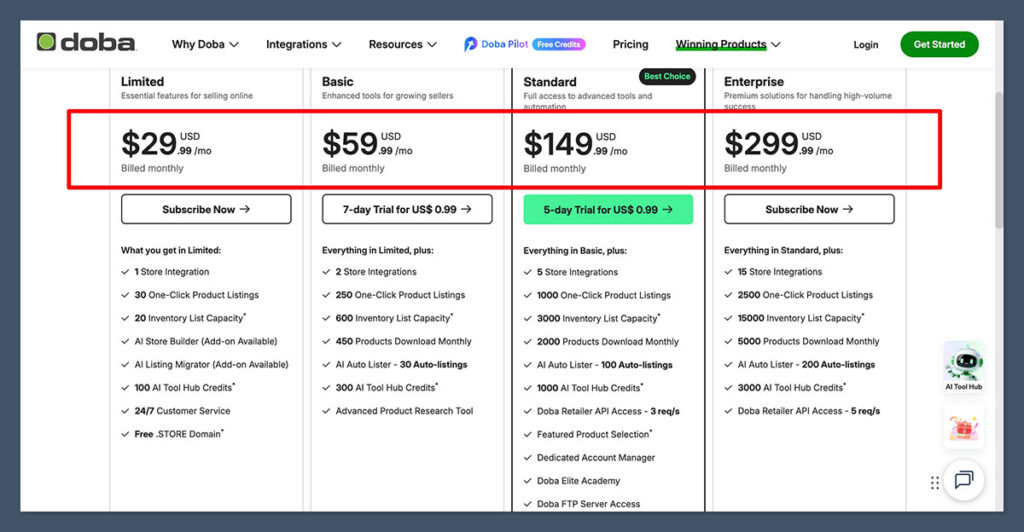
Doba Pricing Structure
Doba undercuts its competitor at the entry level:
- Limited Plan ($29.99/month): Offers 1 store integration, 30 one-click product listings, 20 inventory list capacity, 100 AI Tool Hub credits, and a free
.storedomain. Quarterly and annual billing options offer 5% and 15% discounts, respectively. - Basic Plan ($59.99/month): Expands capacity to 2 store integrations alongside increased limits for AI credits and product storage.
- Standard Plan ($149.99/month): Geared toward high-volume sellers, providing robust API access, featured product selections, a dedicated account manager, FTP server access, and enrollment in the Doba Elite Academy.
Spocket Pricing Structure
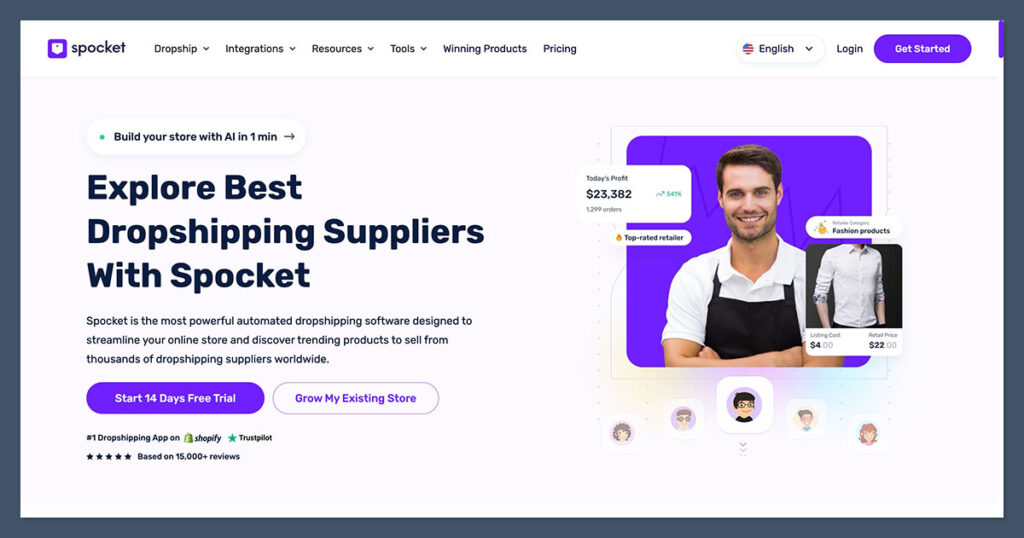
- Spocket starts at $39.99 per month, though promotional incentives (such as up to eight months free on specific annual commitments) can mitigate initial costs.
- The entry-level tier unlocks the full product catalog, support for up to 25 unique products, access to AliExpress dropshipping modules, and multi-store management interfaces.
The True Cost Factor
While Doba’s tiered pricing accommodates scaling operations more fluidly, Spocket introduces a hidden financial penalty for multi-store operators: every newly connected store requires its own independent paid subscription. For portfolio entrepreneurs running multiple niche brands, Spocket’s overhead scales aggressively. Furthermore, neither platform’s subscription covers the wholesale cost of goods sold (COGS); merchants must continuously account for item purchase prices alongside platform fees.
Ease of Use and Onboarding Experience
User interface design dictates how quickly a beginner can transition from concept to operational storefront.

Spocket: Simplicity First
Spocket wins the initial onboarding phase for absolute beginners. The platform presents a clean, minimalist interface with minimal feature bloat.
- Workflow: Users browse the curated catalog, add desired items to an import list, tweak product descriptions and pricing, and push them live to their store.
- Friction Points: Products must generally be imported individually for initial review, making mass-catalog importation more tedious. Additionally, shipping calculations must be factored in manually during early setup.
Doba: Feature-Rich Operations Hub
Doba is undeniably more complex. Because it functions as an enterprise-grade operations hub—complete with an AI store-builder and automated workflow configurations—new users face a steeper learning curve.
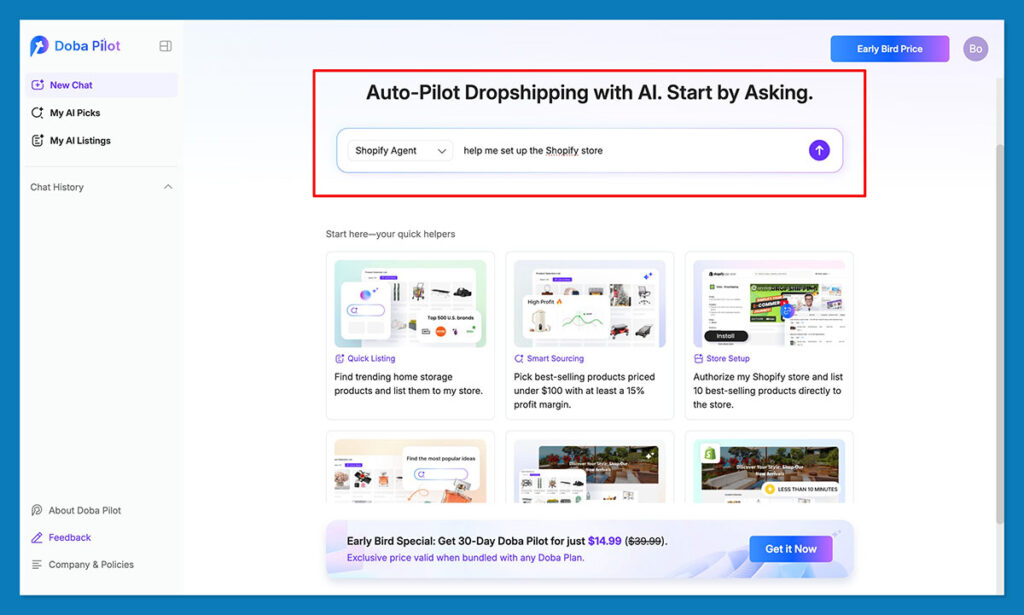
However, the integration of Doba Pilot has significantly softened this blow. During the initial setup hour, users can converse naturally with the AI agent to source products, connect storefronts (such as Shopify), and deploy initial listings. While the platform still possesses a vast "surface area" of features compared to Spocket, Doba compensates by providing extensive educational resources, including the Doba Elite Academy available on higher tiers.
AI, Automation, and Advanced Product Research
The integration of Artificial Intelligence separates modern dropshipping platforms from legacy supplier directories.
Doba Pilot: The All-in-One AI Agent
Doba’s recent technological upgrades have turned Doba Pilot into a comprehensive AI dropshipping agent. Its capabilities span four distinct operational pillars:
- Market Scout: Conducts automated research evaluating real-time market demand, competitor pricing landscapes, and seasonal trends before capital is committed.
- Smart Sourcing: Translates plain-text product descriptions, target price points, and geographic shipping preferences into precise product recommendations, drastically reducing manual filtering time.
- Multi-Channel Listing Workflows: Beyond Shopify and BigCommerce, the system supports automated product attribute mapping, UPC uploads, and bulk publishing for Walmart, TikTok Shop, Wix, and eBay.
- Order and Fulfillment Management: Retailers can track logistics statuses, investigate fulfillment exceptions, and attempt to intercept unshipped purchase orders when store cancellations occur—all within a conversational interface without switching browser tabs.
New Doba users receive 30 free Doba Pilot Credits upon signup, though heavy users must monitor their credit allocations across automated tasks. (Specialized tools like the AI Store Builder and AI Auto Lister operate on separate plan quotas rather than standard AI credits).
Spocket’s Approach to Automation
Spocket takes a more traditional approach to intelligent filtering. Rather than utilizing generative conversational AI agents, Spocket relies on robust database filters. Merchants can sort items instantly by origin, destination, wholesale price, supplier tier, and best-seller status. While Spocket automates core order processing and inventory updates effectively, it currently lacks the generative multi-channel listing and conversational operations management seen in Doba.
Product Range, Quality, and Supplier Vetting
Product integrity directly impacts customer retention and brand reputation. Both platforms approach supplier quality with strict parameters, but their philosophies differ.
- Doba’s Scale and Variety: Doba hosts over one million SKUs spanning diverse categories, including homeware, consumer electronics, beauty supplies, and automotive goods. While Doba actively vets its supplier network, the sheer volume of suppliers means quality control can vary. To mitigate this, Doba heavily highlights products shipping from domestic US warehouses (representing roughly 90% of its active fulfillment footprint), which significantly reduces international transit friction.
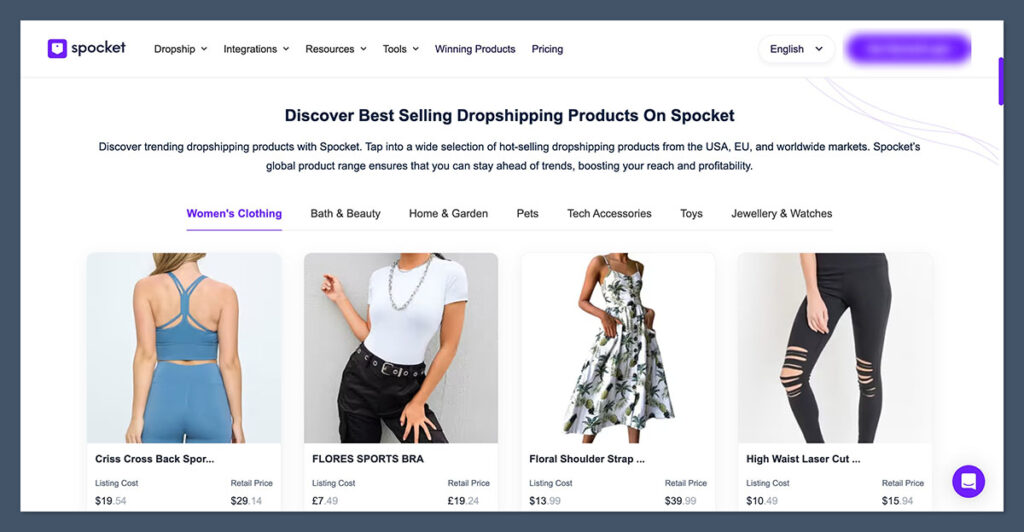
- Spocket’s Strict Curation: Spocket maintains tight control over its supplier ecosystem. Every supplier must either physically manufacture or hold inventory locally, or grant retailers a minimum 25% discount off public retail pricing. Spocket’s network focuses almost exclusively on verified suppliers situated within the United States and the European Union, ensuring higher baseline product quality and predictable delivery timelines.
Shipping, Fulfillment, and Returns Policies
Logistical execution determines whether a dropshipping brand survives past its first six months.
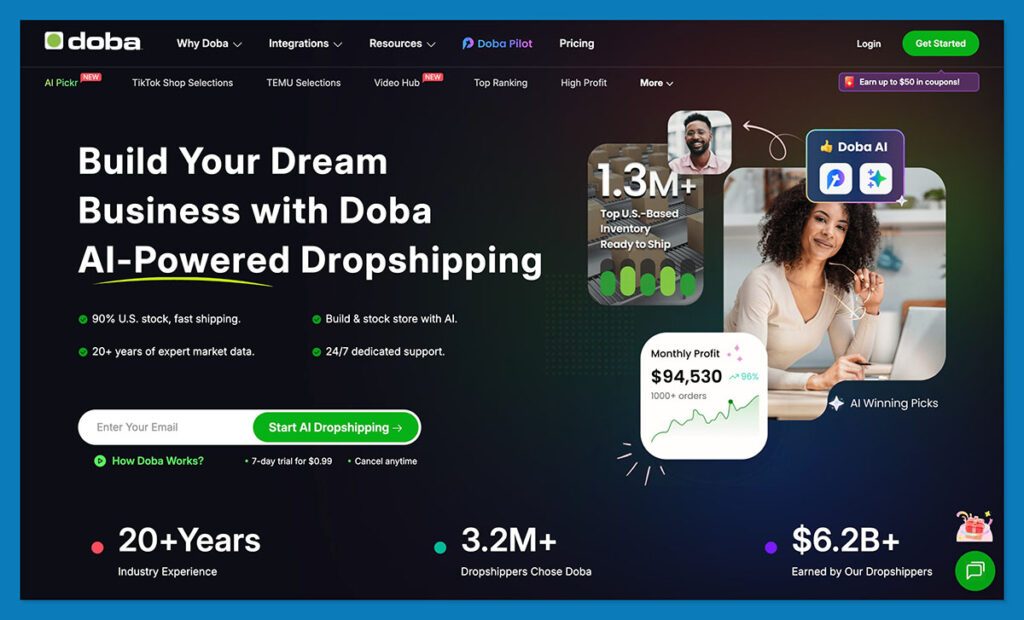
- Speed and Domestic Footprint: Both platforms offer robust domestic shipping options. Spocket emphasizes its localized US/EU networks, while Doba reports that approximately 90% of its catalog ships directly from US-based warehouses. This heavy domestic focus minimizes customs delays and lengthy overseas transit times.
- Accountability and Guarantees:
- Doba enforces strict penalties on suppliers who miss processing windows, requiring automatic refunds for undispatched orders. Furthermore, Doba provides prepaid return labels for damaged items and offers optional After-Sales Protection Services to shield retailers from non-defective remorse returns or "delivered-but-not-received" disputes.
- Spocket requires suppliers to maintain a 95% order success rate, provide reliable tracking details, and answer inquiries within 24 to 47 hours. However, individual suppliers retain the right to write their own return policies, meaning some may enforce strict no-return rules that merchants must pass along to end-consumers.
Integrations, Multi-Channel Scalability, and APIs
Modern e-commerce rarely happens on a single website. Brands must scale across marketplaces to capture market share.
- E-Commerce Builders: Both Doba and Spocket integrate natively with major storefront builders, including Shopify, WooCommerce, Wix, BigCommerce, and Squarespace.
- Marketplace Reach: Doba holds a distinct advantage in multi-channel flexibility. It provides robust out-of-the-box synchronization for external marketplaces such as Amazon, eBay, Walmart, Temu, and TikTok Shop. Once connected, inventory levels and order statuses sync automatically across all active channels from a single centralized dashboard, preventing stockouts and overselling. (Note: While Doba integrates with many platforms, Doba Pilot’s automated listing workflows currently target Shopify, BigCommerce, Wix, Walmart, TikTok Shop, and eBay).
- API Capabilities: Spocket’s API is engineered primarily for streamlined storefront checkout and inventory tracking. Doba’s API, by contrast, is built for heavy enterprise data streaming, supporting bulk data downloads, multi-channel marketplace synchronization, and automated fulfillment routing.
Official Responses and Industry Implications
As the dropshipping landscape adapts to increasing consumer expectations for fast delivery and multi-channel availability, platform developers emphasize different value propositions.
Industry analysts note that platforms are moving away from being mere product catalogs and are aggressively transforming into operational control centers. Doba’s heavy investment in AI agents and multi-channel marketplace routing reflects a broader industry shift: merchants no longer want to manage three or four different software extensions to run a dropshipping empire. They demand unified dashboards that handle everything from trend discovery to post-sale logistics.
Conversely, Spocket’s continued dedication to curated supplier networks highlights the enduring importance of brand integrity. In an era where low-quality items flood social commerce platforms, brands targeting discerning consumers will continue to rely on strict vetting processes to protect their profit margins and customer satisfaction scores.
Final Verdict: Which Platform Should You Choose?
The choice between Doba and Spocket ultimately depends on your current business scale, technical comfort level, and long-term growth ambitions.
- Choose Spocket if: You are an absolute beginner launching your very first e-commerce store (typically on Shopify or Wix), you prefer a clean and uncluttered user interface, and your primary goal is sourcing high-quality products from vetted local suppliers in the US and EU with minimal setup friction.
- Choose Doba if: You are running an ambitious, scaling e-commerce operation, plan to sell across multiple external channels (such as TikTok Shop, Walmart, and Amazon), and want to leverage advanced automation and AI tools (Doba Pilot) to slash administrative overhead. While it features a steeper initial learning curve, Doba provides the structural depth and operational horsepower necessary to grow a modern multi-channel retail brand in 2026.
