
The Ultimate Print-on-Demand Showdown: Printify vs. Ninja POD (2026 Edition)
Introduction: The Battle for Shopify Supremacy
Choosing the right print-on-demand (POD) partner can make or break an e-commerce business. For Shopify entrepreneurs, the debate increasingly boils down to a strategic choice between scale and specialization.
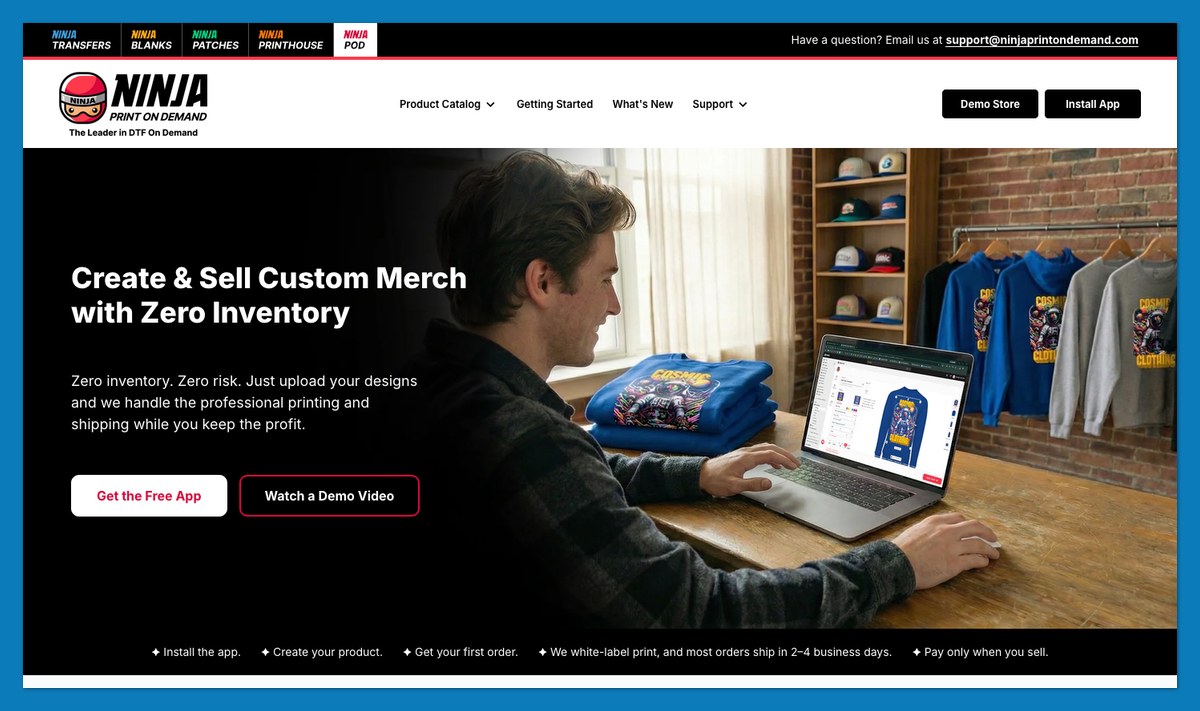
As of late 2026, the marketplace features two heavyweights vying for merchant attention: Printify, the established multi-provider giant known for global reach and diverse printing methods, and Ninja Print on Demand (Ninja POD), a specialized, direct-to-film (DTF) powerhouse backed by industry veteran Ninja Transfers.
Based on comprehensive cross-platform testing, catalog analysis, and shipping audits conducted in November 2026, Printify remains the best overall choice for most sellers, earning a 4.6/5 rating. However, Ninja POD (rated 4.3/5) presents a formidable alternative, clinching the crown for US-based merchants laser-focused on DTF-printed apparel basics like Gildan and Comfort Colors.
Main Facts: Core Differences at a Glance
To understand how these platforms stack up, one must examine their fundamental operational models. Printify relies on a decentralized network of over 70 third-party print providers spanning more than 140 facilities worldwide. This allows for immense product variety (2,000+ items) and multiple print techniques, including Direct-to-Garment (DTG), DTF, embroidery, and all-over printing.

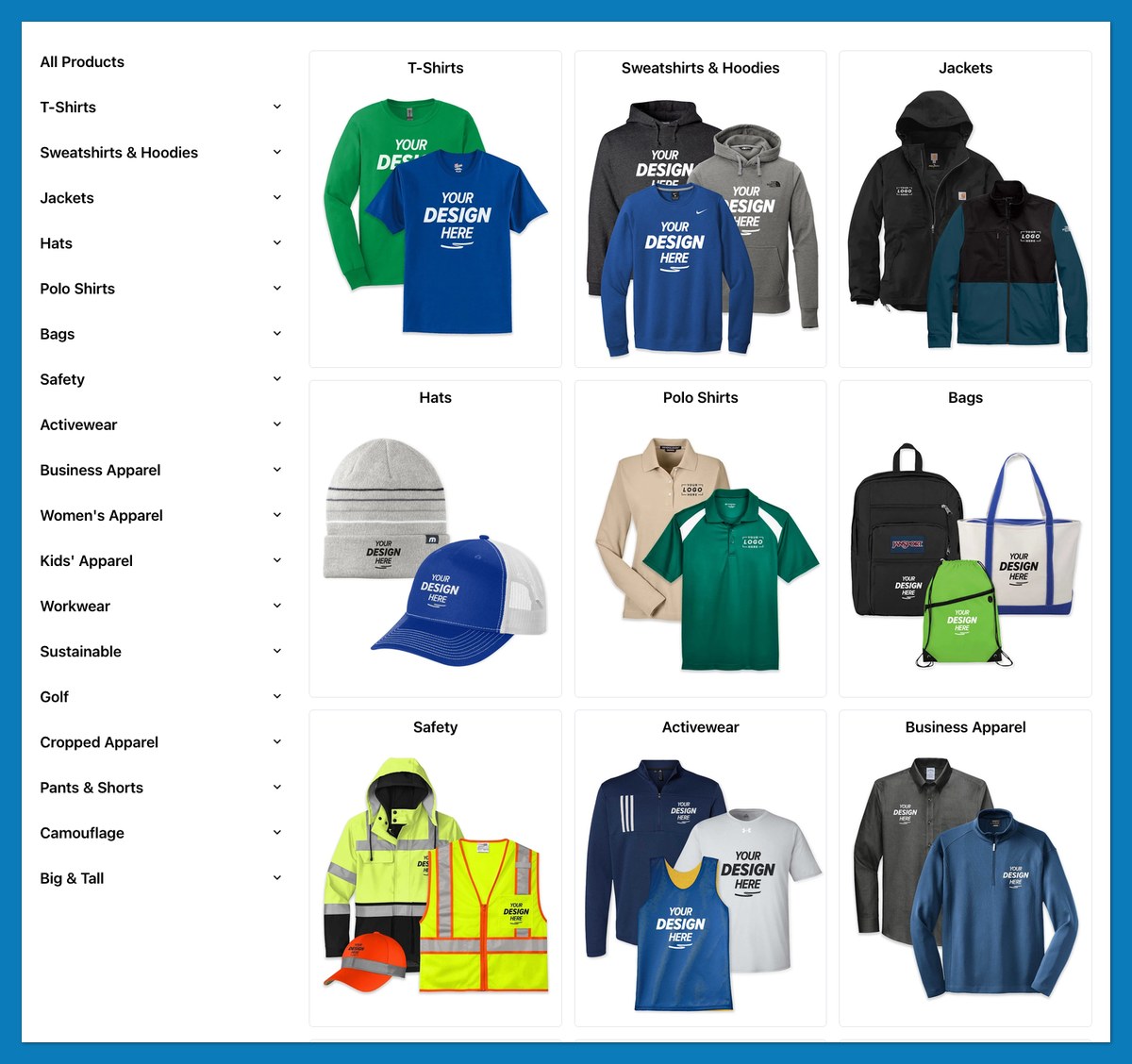
Conversely, Ninja POD operates with a centralized, in-house fulfillment model. It boasts a catalog of over 2,500 items centered exclusively on apparel, hats, and bags—all printed via DTF technology. While Printify integrates with 11 different sales channels (including Etsy, WooCommerce, and TikTok Shop), Ninja POD is strictly built for Shopify and TikTok Shop via Shopify integrations.
Quick Comparison Matrix
| Feature | Ninja POD | Printify |
|---|---|---|
| Overall Rating | 4.3/5 | 4.6/5 |
| Starting Price | Free (Pay per order) | Free plan available |
| Paid Subscription | None | Premium: $39/mo ($24.99/mo billed yearly) |
| Product Catalog | 2,500+ items | 2,000+ items |
| Primary Print Methods | DTF only | DTG, DTF, Embroidery, All-Over Print |
| Fulfillment Facilities | In-house (US-based) | 70+ Independent Providers (Global) |
| Geographic Reach | US and Canada | Worldwide (Provider-dependent) |
| Shopify App Store Rating | 4.4/5 (79 reviews) | 4.7/5 (4,370 reviews) |
Chronology and Evolution of the POD Landscape
The print-on-demand sector has undergone rapid maturation since the early 2010s. When review platforms like Ecommerce-Platforms.com began tracking the space in 2012, POD was characterized by long shipping times, limited blank availability, and rigid pricing structures.
- 2015–2020: Printify popularized the aggregator model, connecting independent print shops to global e-commerce merchants and driving down blanks costs through competition.
- 2023–2025: DTF (Direct-to-Film) printing emerged as a major disruptor to traditional DTG, offering vibrant colors on dark fabrics without requiring heavy pretreatment.
- Late 2026: Ninja Transfers capitalized on this shift by launching Ninja POD, introducing a vertically integrated DTF solution directly into the Shopify ecosystem to challenge aggregator models with predictable, in-house quality control and rapid US dispatch times.
Supporting Data: Pricing, Costs, and Margins
Pricing strategies dictate merchant profit margins. Neither platform charges an upfront setup fee, but the true cost of goods sold (COGS) depends heavily on subscription tiers and specific blank selections.
Base Product and Shipping Cost Breakdown (US Market)
Prices and shipping benchmarks as of November 2026:
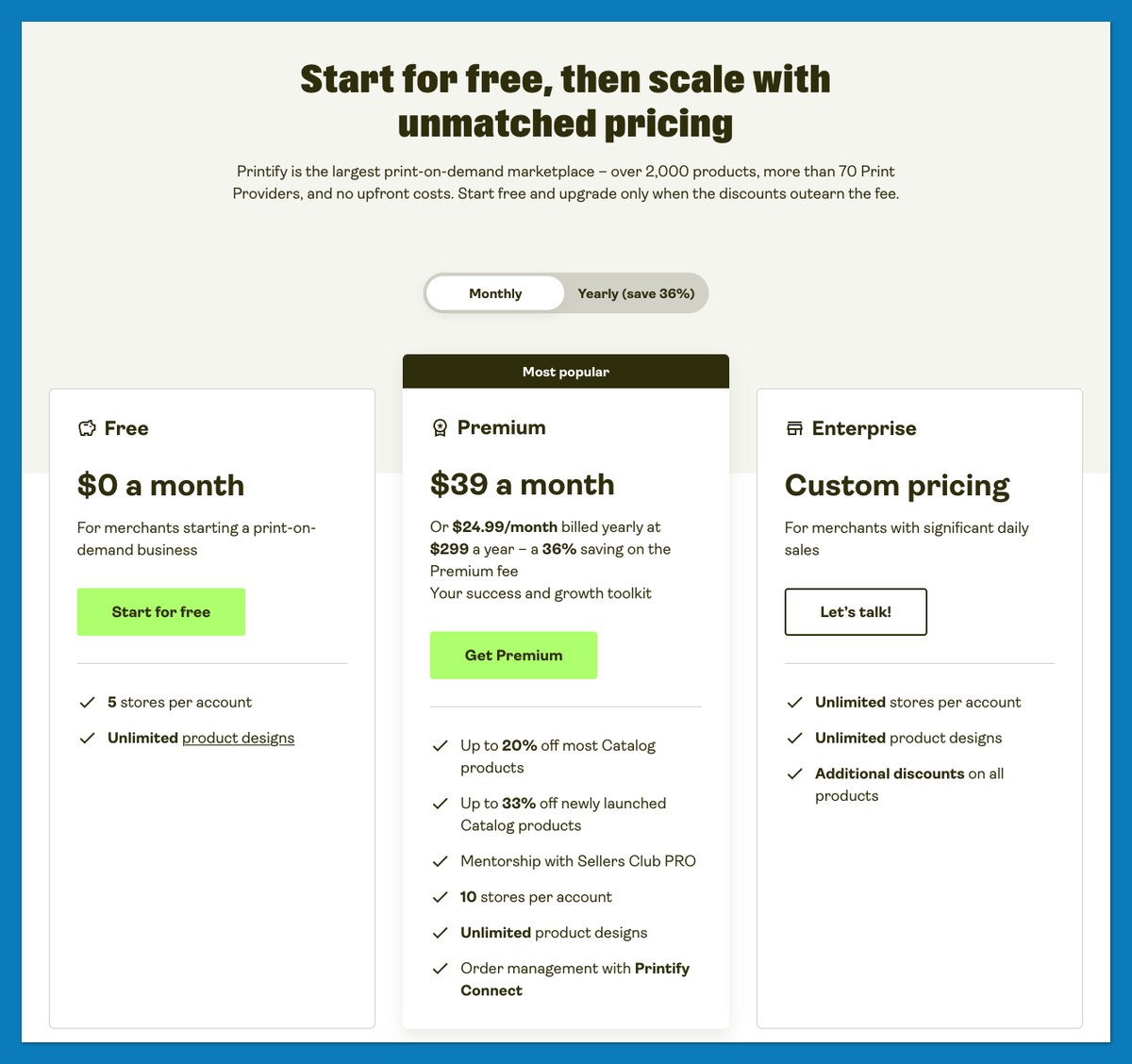
- Gildan 5000 Tee: Ninja POD ($7.19) vs. Printify Free (from $8.55) vs. Printify Premium (from $6.33).
- Bella+Canvas 3001 Tee: Ninja POD ($14.38) vs. Printify Free (from $11.29) vs. Printify Premium (from ~$9.00).
- Gildan 18500 Hoodie: Ninja POD ($16.49) vs. Printify Free (from $21.58) vs. Printify Premium (from $15.89).
While Printify Premium heavily undercuts Ninja POD on Bella+Canvas tees and general baseline items once the subscription fee is factored in, Ninja POD wins decisively on heavy garments like Gildan hoodies and Comfort Colors 1717 tees on free tiers.
Furthermore, Ninja POD charges a flat US shipping rate ($4.99 for the first tee, $7.99 for the first hoodie), whereas Printify’s shipping costs vary depending on the chosen print provider. However, merchants shipping to Canada face a steep $20 flat fee for tees through Ninja POD, making Printify the more economical choice for cross-border northern shipments.
Official Responses and Platform Policies
Customer support and policy enforcement represent critical points of differentiation between an aggregator network and a centralized fulfillment house.
Ninja POD: Centralized Accountability
Because Ninja POD handles production internally (primarily out of facilities in Philadelphia and San Diego), its support structure is tightly controlled.
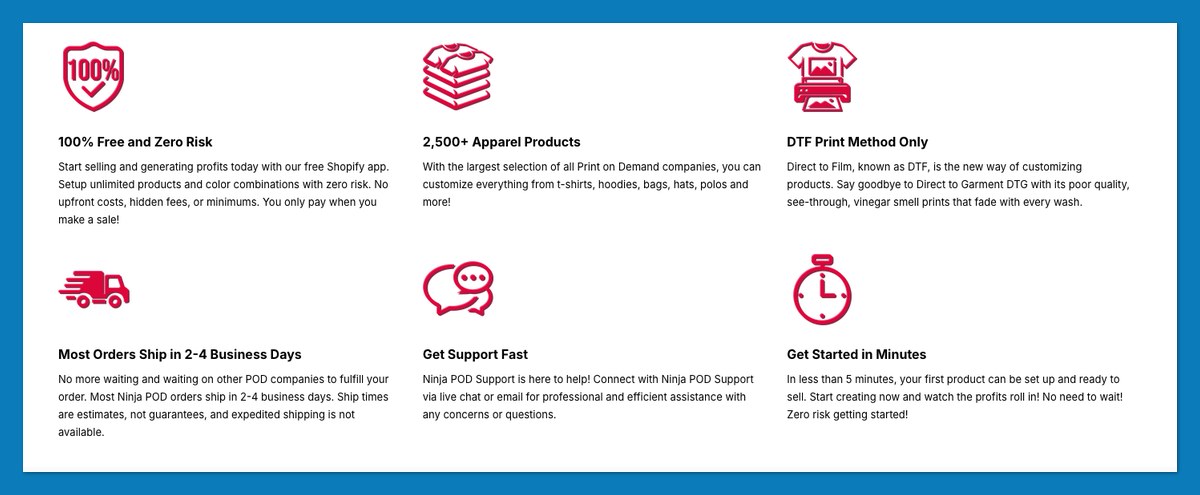
- Pros: Daily chat/email support backed by parent company phone lines. They offer an exceptionally generous reprint policy covering not just misprints, but select customer dissatisfaction issues and lost parcels.
- Cons: Stock visibility can occasionally lag within the Shopify dashboard, leading to unexpected fulfillment bottlenecks on items appearing available.
Printify: Distributed Network Dynamics
Printify acts as a technology layer connecting merchants to independent providers.
- Pros: 24/7 live chat and email support. Providers are monitored weekly, and ratings below 7.5 trigger internal reviews.
- Cons: Quality can vary depending on which provider fulfills your order, as the system can dynamically switch producers based on stock levels. Additionally, Printify Premium subscription fees are strictly non-refundable.
Implications for Shopify Store Owners
Choosing between Ninja POD and Printify requires a careful audit of your business model, target demographic, and product catalog.
When to Choose Ninja POD
- US-Centric Audience: If 90% or more of your buyers reside in the United States, Ninja POD’s Amazon Ground-backed logistics (averaging 2–4 business days dispatch) offer incredible speed and reliability.
- Streetwear and Heavy Basics: Brands relying heavily on Gildan 18500 hoodies, Comfort Colors, and vibrant DTF chest graphics will enjoy lower base costs without needing a paid subscription.
- Shopify-Exclusive Operations: If you have no intention of branching out to Etsy, eBay, or WooCommerce, Ninja POD’s streamlined app setup is frictionless.
When to Choose Printify
- Multi-Channel Expansion: Sellers aiming to list products across Etsy, TikTok Shop, Shopify, and WooCommerce simultaneously need Printify’s expansive API and channel integrations.
- Design Versatility: If your catalog demands embroidery, all-over-print accessories, or nuanced DTG finishes on lightweight tees like the Bella+Canvas 3001, Printify’s 2,000+ item catalog is unmatched.
- Global Reach: Merchants targeting international markets or significant Canadian customer bases will benefit from Printify’s localized global provider network.
Conclusion
Ultimately, Printify remains the reigning champion for scalable, multi-channel e-commerce brands that value product diversity and flexible pricing tiers. Yet, Ninja POD is a phenomenal tactical weapon for US-based Shopify merchants seeking high-margin DTF apparel basics with predictable in-house fulfillment.
Before committing your store to either platform, audit your top three product designs, calculate shipping overhead to your primary customer ZIP codes, and order physical samples. Aligning your supplier with your operational reality is the surest path to long-term e-commerce profitability.
