
The New Frontier of Visibility: Why LLM Rankings are the Next SEO Revolution
Large Language Models (LLMs) have transitioned from experimental tech curiosities to the primary gateways for digital information retrieval. If the traditional Google Search experience functioned as a digital map—providing a list of coordinates for users to explore—LLMs act as highly sophisticated tour guides. They synthesize, summarize, and curate, effectively pushing traditional blue-link search results into the background.
For businesses and marketers, this shift represents a fundamental transformation in visibility. If your brand is not appearing in the synthesized answers provided by AI tools like ChatGPT, Claude, Gemini, or Perplexity, you are effectively invisible to a growing segment of high-intent consumers. This is the era of "LLM Rankings," and the race to capture the AI-generated recommendation space is already underway.
The Evolution of Search: From Blue Links to AI Answers
The transition from traditional SEO to AI Optimization (AIO) is not merely a change in terminology; it is a structural shift in how consumer intent is met. In the early 2000s, businesses scrambled to understand Google’s algorithm, realizing that the first page of search results was the ultimate digital storefront. Today, the "first page" is being replaced by conversational responses.
A Chronology of the Shift
- 2022: The public release of ChatGPT triggers a paradigm shift in user behavior, demonstrating that users prefer direct answers over lists of websites.
- 2023: Major search engines like Google and Microsoft begin integrating LLMs into their search interfaces, creating the "Search Generative Experience."
- 2024: Niche models like Claude and Perplexity gain significant market share, forcing brands to realize that "optimizing for Google" is no longer sufficient.
- 2025: AIO becomes a formalized marketing discipline. Companies begin auditing their presence not just on SERPs (Search Engine Results Pages), but across the vast, distributed ecosystem of AI models.
What Are LLM Rankings?
At its core, LLM ranking is the measure of a brand’s presence, sentiment, and authority within the responses generated by AI assistants. Unlike traditional SEO, which relies on backlinks, keyword density, and site speed, LLM rankings are dictated by the model’s "internal knowledge"—a combination of its training data and real-time web retrieval capabilities.
If a potential customer asks, "What is the best project management software for remote teams?" the AI tool parses its vast database to curate a recommendation. If your brand is absent from that list, you have lost a qualified lead before they even clicked a link.
Why You Cannot Afford to Ignore the AI Ecosystem
Ignoring LLM rankings is akin to ignoring the rise of search engines in 2005. The implications for brand equity are severe:
- High-Intent Conversion: AI-driven recommendations are often the result of complex, multi-layered queries. Users seeking these answers are typically further along in the buying funnel.
- Market Fragmentation: In the past, Google held a near-monopoly on search. Today, the audience is split. Some users prefer the nuance of Claude; others rely on the speed of Perplexity or the integration of Gemini. A brand that ignores this fragmentation will find itself missing entire segments of its target demographic.
- The "Hidden" Loss: Unlike a drop in Google rankings, which is easily tracked via Search Console, a drop in LLM visibility is often silent. You won’t see a "404" or a sharp decline in traffic; you will simply notice that your brand is no longer part of the conversation.
The "Big Four": Navigating the Landscape
While there are dozens of models, the current market is dominated by four key players, each with unique retrieval and recommendation behaviors.
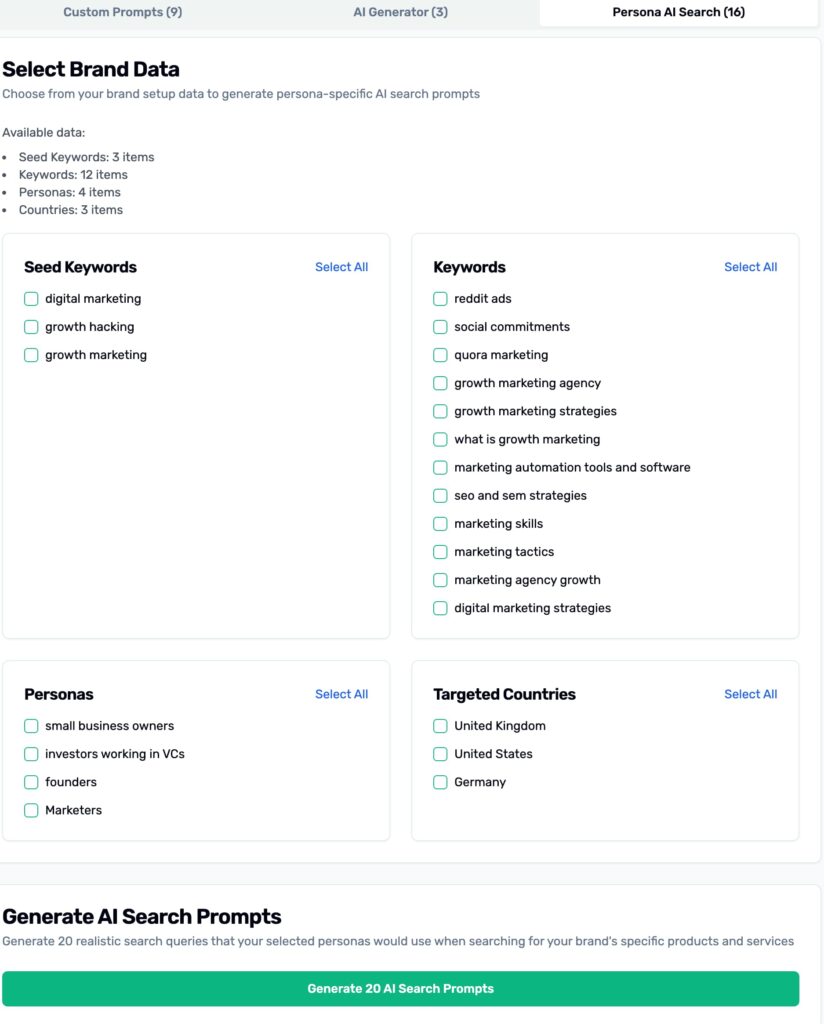
1. OpenAI (ChatGPT)
As the pioneer, ChatGPT commands massive mindshare. Its ability to integrate with plugins and browse the live web makes it a critical node for consumer research.
2. Google Gemini
Gemini possesses a distinct advantage: its native integration into the Google ecosystem. By bridging the gap between traditional search results and generative summaries, Gemini is the most likely tool to influence the largest volume of users.
3. Anthropic (Claude)
Known for its long context window and sophisticated reasoning, Claude has become a favorite among professional and enterprise users. If your brand is B2B, your performance within Claude’s responses is a key performance indicator (KPI) for authority.
4. Perplexity
Perplexity functions less like a chatbot and more like a real-time research engine. It is arguably the most dangerous competitor to traditional SEO, as it provides direct, cited answers to queries that would have previously required multiple clicks to a website.
The Technical Reality: Why API Access is Mandatory
To track performance across these platforms, organizations cannot rely on manual, browser-based queries. Because LLMs are non-deterministic—meaning they can produce different answers to the same prompt—you must use API-based testing.
Accessing these models via API allows for:
- Consistency: Running the same prompt across hundreds of iterations to find the statistical average of your visibility.
- Scalability: Testing thousands of queries simultaneously to cover a broad spectrum of user intent.
- Data Integrity: Storing and analyzing the exact text of the response, including the sentiment and context in which your brand appears.
The Methodology: How to Audit Your AI Presence
Since there is no "LLM Search Console," you must construct your own framework. The process involves four critical steps:
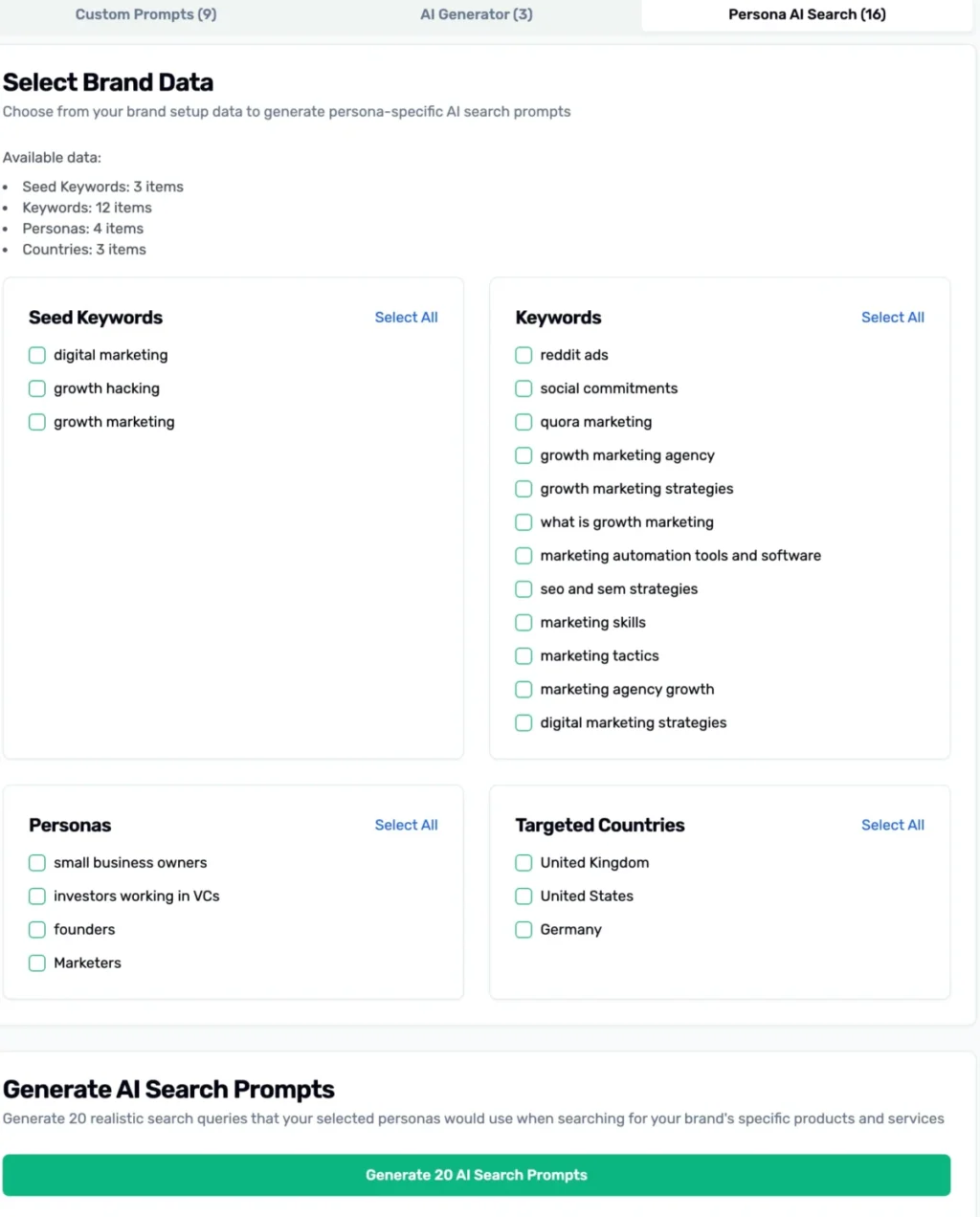
- Define the Query Corpus: Develop a robust list of prompts. These should span informational (e.g., "What is [Industry]?"), navigational (e.g., "Best [Product] for [Goal]"), and transactional (e.g., "Buy [Product] vs [Competitor]").
- Execute via API: Run these prompts through the major models.
- Analyze the Output: Do not look solely for a mention. Analyze the context. Is your brand recommended as a top choice? Is it mentioned in passing? Is the sentiment positive or negative?
- Pattern Recognition: Because of the randomness of LLMs, look for consistency. If a competitor appears in 80% of your test runs, they have successfully optimized for the "AI memory" of that model.
The Role of Prompts in Shaping Visibility
The quality of your data is entirely dependent on the quality of your prompt set. A sophisticated prompt strategy accounts for:
- User Persona: "Act as a CTO searching for cloud infrastructure."
- Pain Points: "I need a solution that is cost-effective but scalable."
- Competitive Landscape: "Compare Brand X with its top competitors."
Pro Tip: Even if you believe a certain prompt is obscure, track it anyway. AI models often make recommendations based on "latent associations"—links between topics that aren’t immediately obvious to human marketers but are baked into the training data.
Financial Implications and Resource Allocation
Implementing an LLM monitoring program is an investment. The costs are primarily driven by three factors:
- API Usage Fees: Every token consumed by the major models adds up when running large-scale, automated audits.
- Infrastructure Costs: The compute required to store, process, and analyze massive amounts of textual data.
- Human Capital: The expertise required to interpret these findings and convert them into actionable marketing strategies.
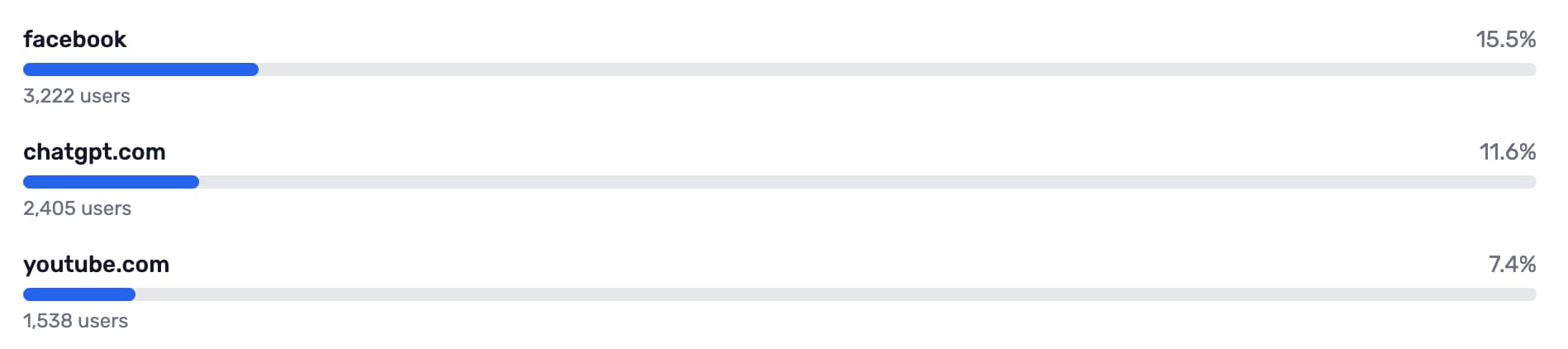
However, the cost of inaction is higher. As AI-driven traffic begins to account for 10–13% of total inbound visits—and as that share continues to climb—brands that fail to optimize will see their conversion rates erode.
Moving from SEO to AIO (AI Optimization)
Once you have established a baseline of data, the real work begins: Optimization.
- Influence the Corpus: AI models are trained on high-quality content. By creating authoritative, data-rich, and citation-heavy content, you increase the likelihood of your brand being "ingested" by the model as a source of truth.
- Technical Optimization: Ensure your website structure is clean, your schema markup is accurate, and your core brand values are clearly articulated. AI models look for structured, verifiable facts.
- Strategic Positioning: If sentiment analysis shows your brand is perceived as "too expensive," you must adjust your public-facing messaging to emphasize value and ROI, effectively "retraining" the AI’s understanding of your brand.
The Bottom Line
We are witnessing the most significant shift in digital discovery since the invention of the search engine. LLM rankings are not a temporary tech trend; they are the new foundation of digital visibility.
Brands that start tracking and optimizing their presence today will secure their place in the AI-generated future. Those that wait will eventually find themselves excluded from the most important conversations their customers are having. The battle for the AI recommendation is officially on—the only question is whether your brand is prepared to compete.
