

Crazy Egg vs. Optimizely: A Comprehensive Strategic Guide to Website Optimization Platforms
In the competitive landscape of digital experience and conversion rate optimization (CRO), choosing the right platform can be the difference between stagnant growth and explosive conversion. For many marketing and product teams, the debate often narrows down to two industry stalwarts: Crazy Egg and Optimizely.
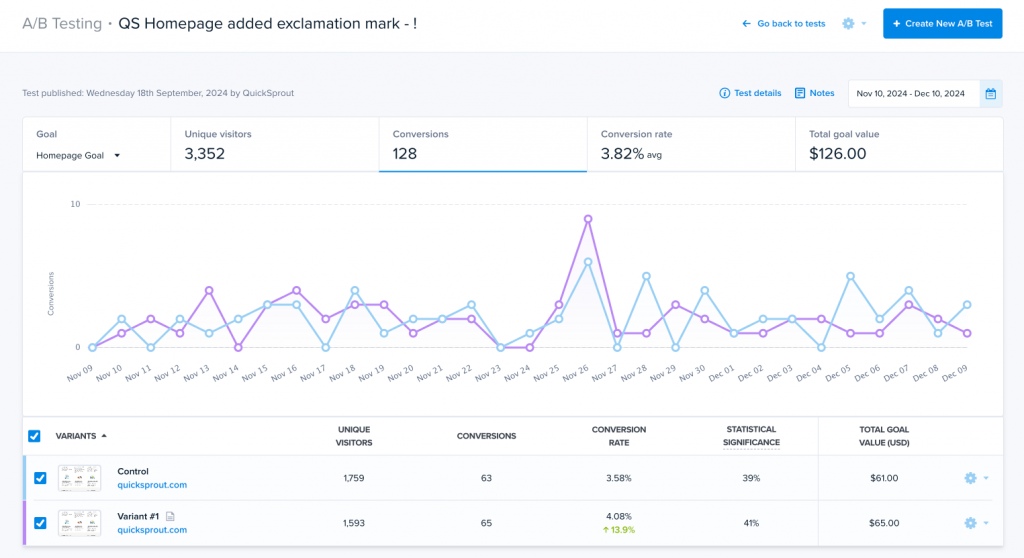
While both tools are designed to help businesses optimize their websites, they cater to vastly different operational philosophies and organizational needs. Understanding the fundamental divergence between these platforms is essential for any stakeholder looking to scale their digital presence.
The Core Philosophy: All-in-One Utility vs. Enterprise Ecosystem
The fundamental tension between these two platforms lies in their scope.
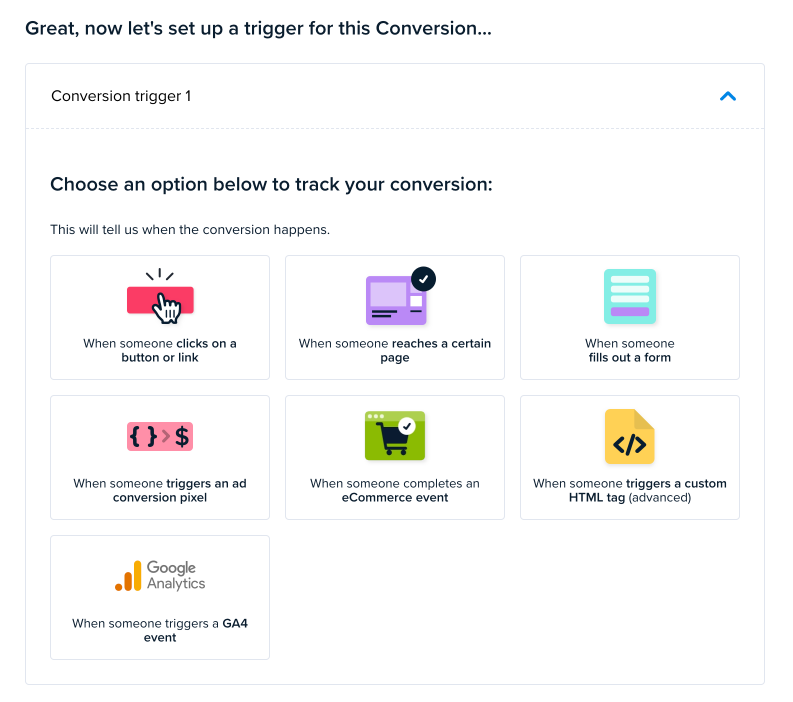
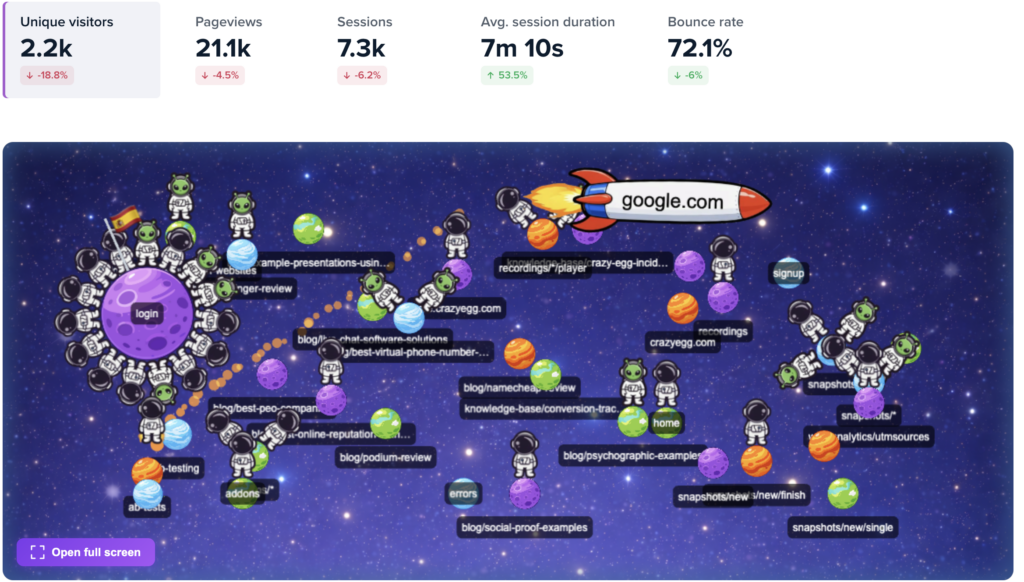
Crazy Egg operates on an "all-in-one" philosophy. It is designed for agility, providing a holistic toolkit—heatmaps, session recordings, A/B testing, surveys, and web analytics—within a single, unified subscription. Its strength lies in accessibility and speed to insight, making it a favorite for teams that need to iterate rapidly without navigating complex technical hurdles or multiple vendor contracts.
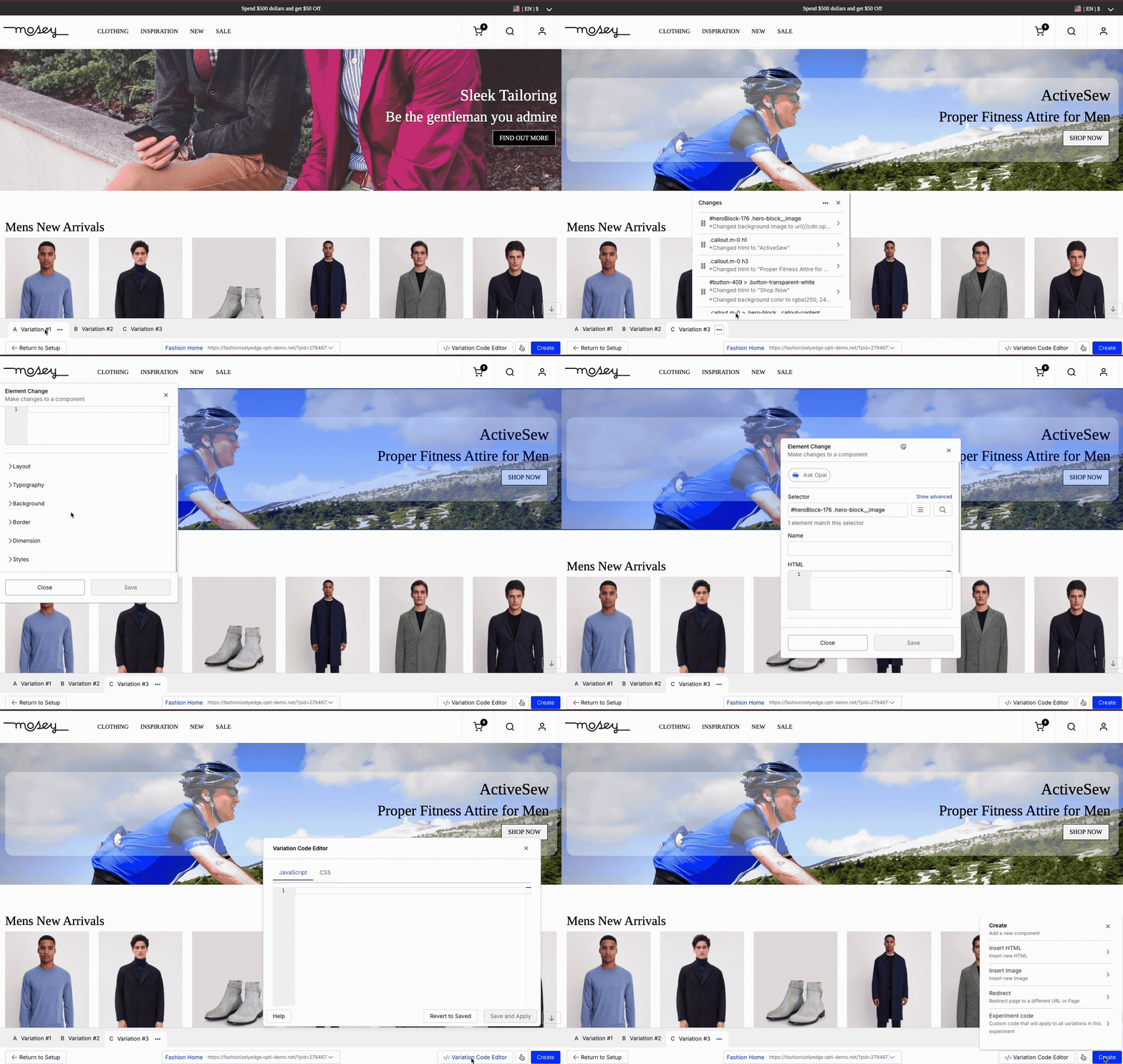
Optimizely, by contrast, is a powerhouse for enterprise-grade digital experience management. It is not merely an optimization tool but a comprehensive suite that includes server-side experimentation, feature flagging, and a vast ecosystem of commerce, content management, and data platform tools. Optimizely is built for teams that require deep, complex multivariate testing and integration into a sophisticated data warehouse infrastructure.
A Chronology of Platform Evolution
To understand where these platforms stand today, one must look at their developmental trajectories.
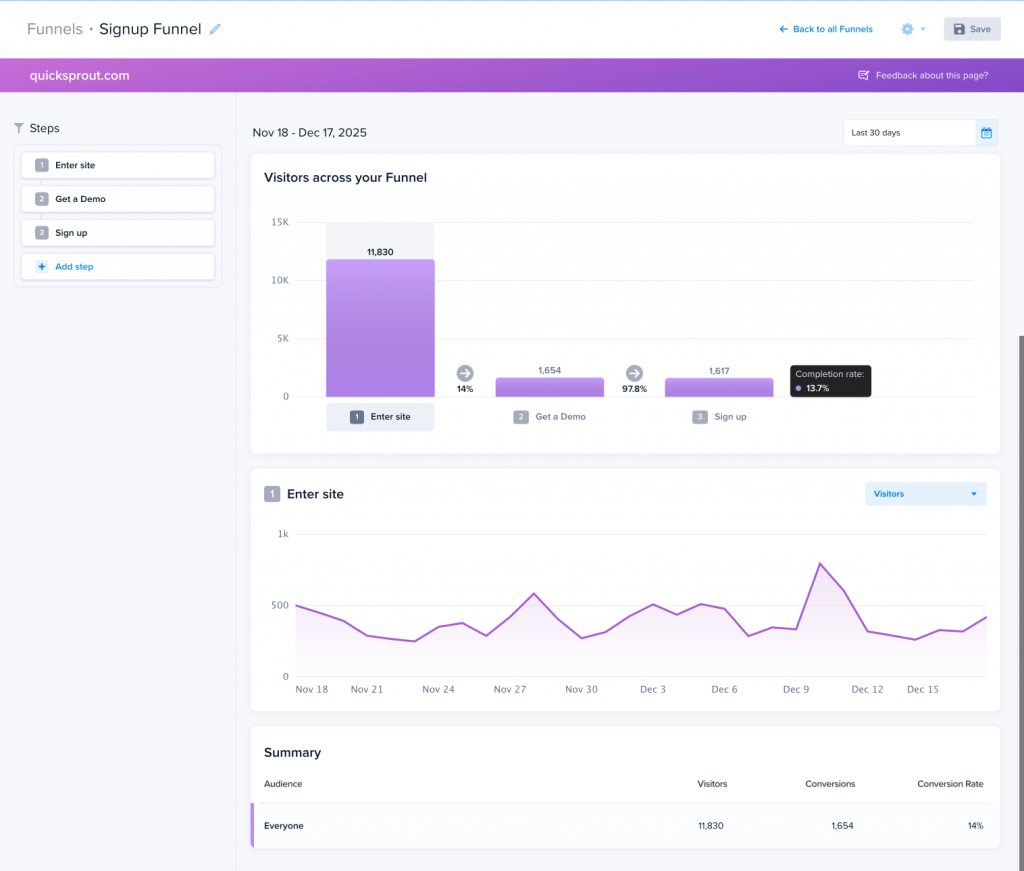
- Early Days (2000s–2010s): Crazy Egg emerged as a pioneer in the visualization space, specifically focusing on the "what" and "why" of user behavior through heatmaps and scroll maps. It democratized the ability for small-to-medium businesses to see exactly where users were clicking. Optimizely, meanwhile, rose to prominence as the gold standard for A/B testing, focusing heavily on statistical rigor and massive-scale web experimentation for high-traffic enterprises.
- Expansion Phase (2015–2020): Both companies significantly expanded their horizons. Crazy Egg began bundling conversion funnels and A/B testing into its dashboard, effectively becoming an "all-in-one" suite. Optimizely began its transformation into a "Digital Experience Platform" (DXP), acquiring CMS and commerce capabilities to support end-to-end digital lifecycle management.
- The AI Era (2023–Present): Both platforms have pivoted toward AI-driven orchestration. Crazy Egg has integrated AI to interpret behavioral data into plain-English recommendations. Optimizely launched "Opal," an agent-based orchestration platform that enables complex, multi-step automated workflows across their entire suite of products.
Supporting Data: Feature Comparison Snapshot
| Feature | Crazy Egg | Optimizely |
|---|---|---|
| Experimentation | A/B, Split-URL, Multi-Arm Bandit | Multivariate, Server-side, Feature flags |
| Behavioral Insights | Native heatmaps, recordings, surveys | Requires 3rd-party integration |
| Analytics | Included (Web & Conversion) | Separate warehouse-native product |
| Pricing Model | Transparent, self-serve tiers | Custom, quote-only enterprise contracts |
| Setup Time | Immediate (single script) | Complex (requires professional services) |
Deep Dive: Experimentation and Behavioral Insights
The Case for Crazy Egg’s Integrated Approach
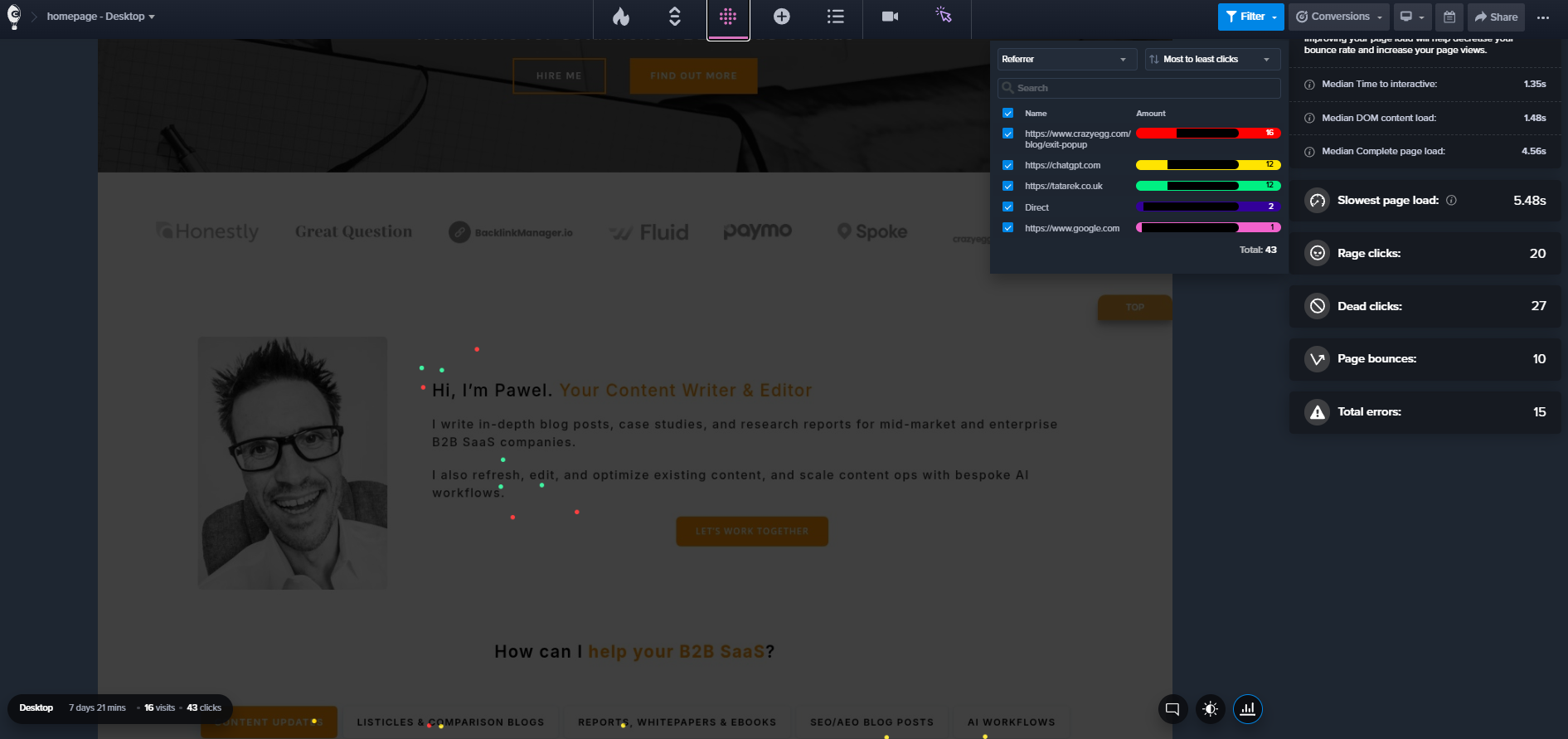
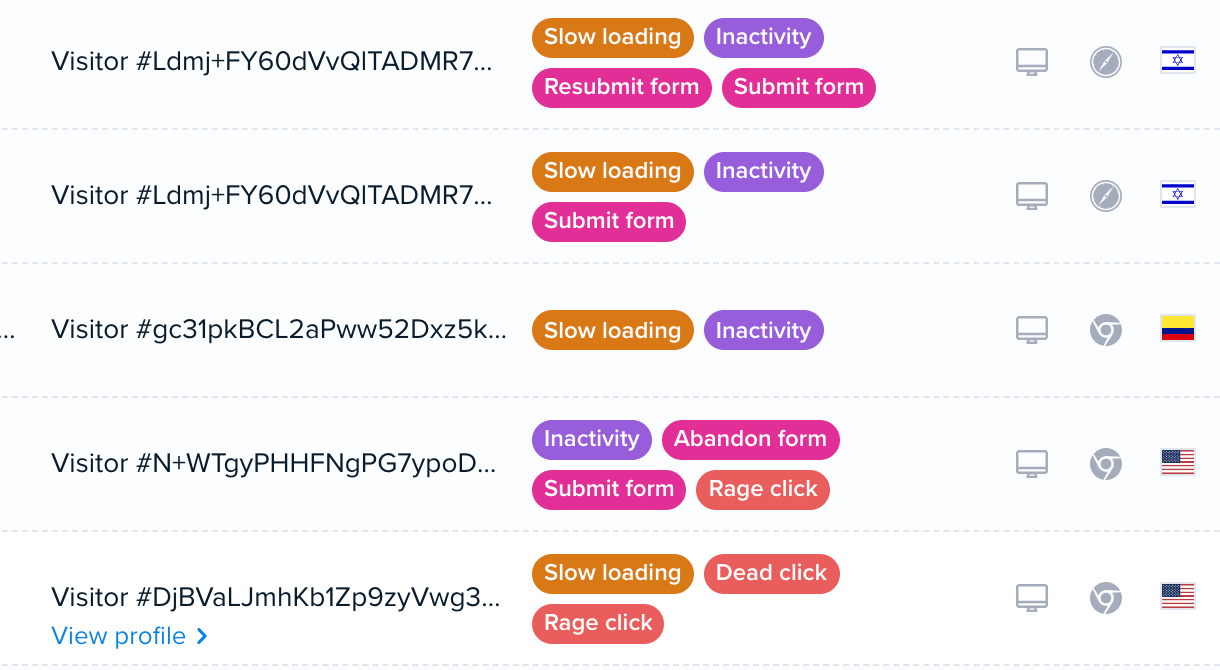
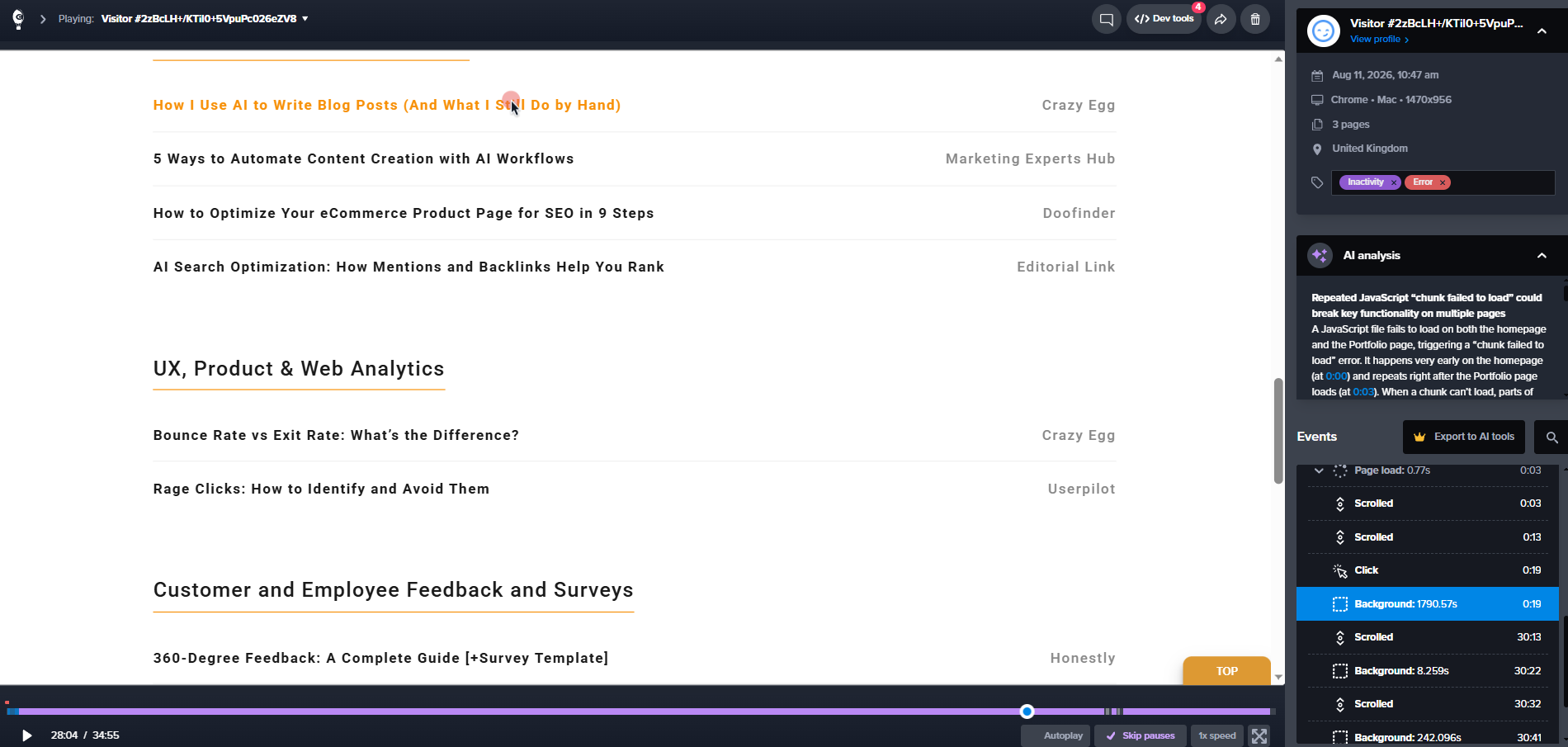
Crazy Egg provides a seamless feedback loop. When you launch an A/B test on a landing page, the platform automatically generates heatmaps and session recordings for every variant. This allows marketers to not only see that a variant is winning, but why it is winning. By observing user behavior—such as "rage clicks" or hesitation—directly on the test variant, teams can form better hypotheses for their next experiment.
The Case for Optimizely’s Advanced Rigor
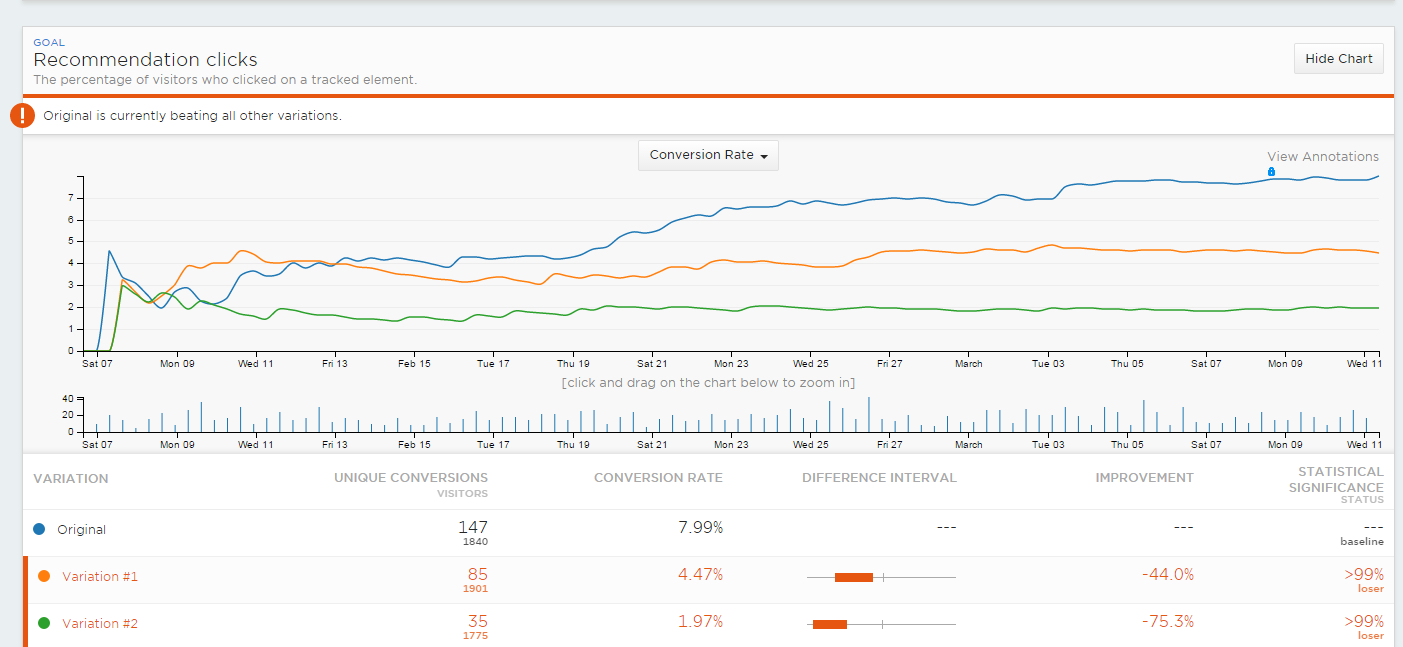
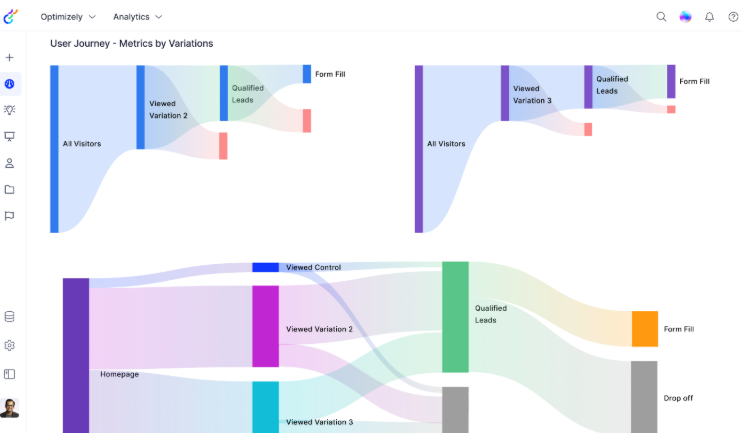
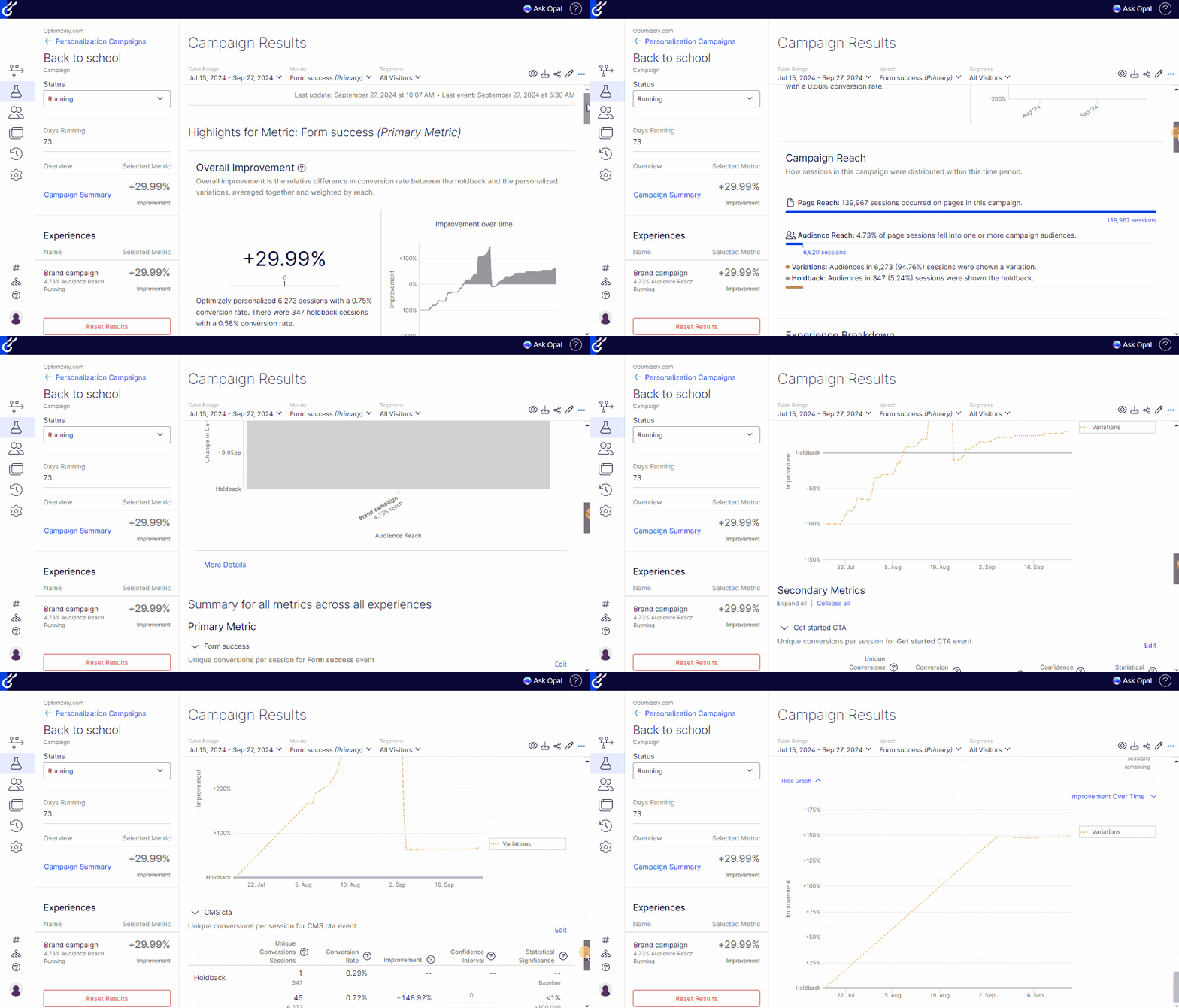
Optimizely excels where traffic volume is immense and statistical complexity is high. Its support for multivariate testing (testing multiple variables simultaneously) and multi-page experimentation is unmatched. Furthermore, because Optimizely integrates with data warehouses, companies can run experiments based on offline data or complex customer segments that simply don’t exist in a client-side-only tool.
Implications for Organizational Workflow
The Cost of Complexity
For the average marketing team, the "hidden" costs of an enterprise tool like Optimizely are significant. Beyond the license fees, which often run well into six figures, there is the cost of human capital. Optimizely implementations often require dedicated developers, data scientists, and a platform manager to handle configurations, server-side flags, and complex audience targeting.
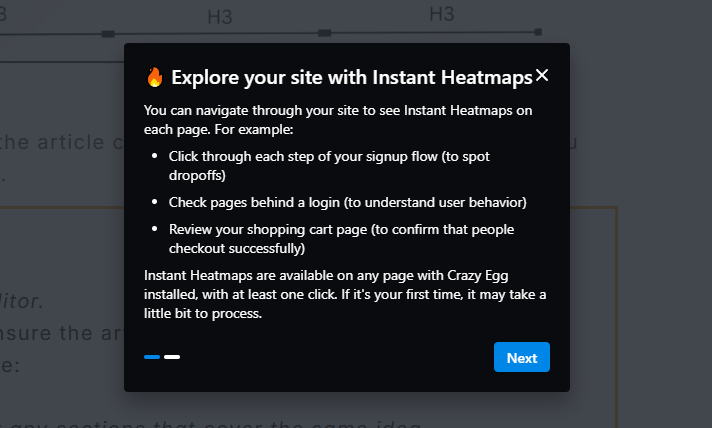
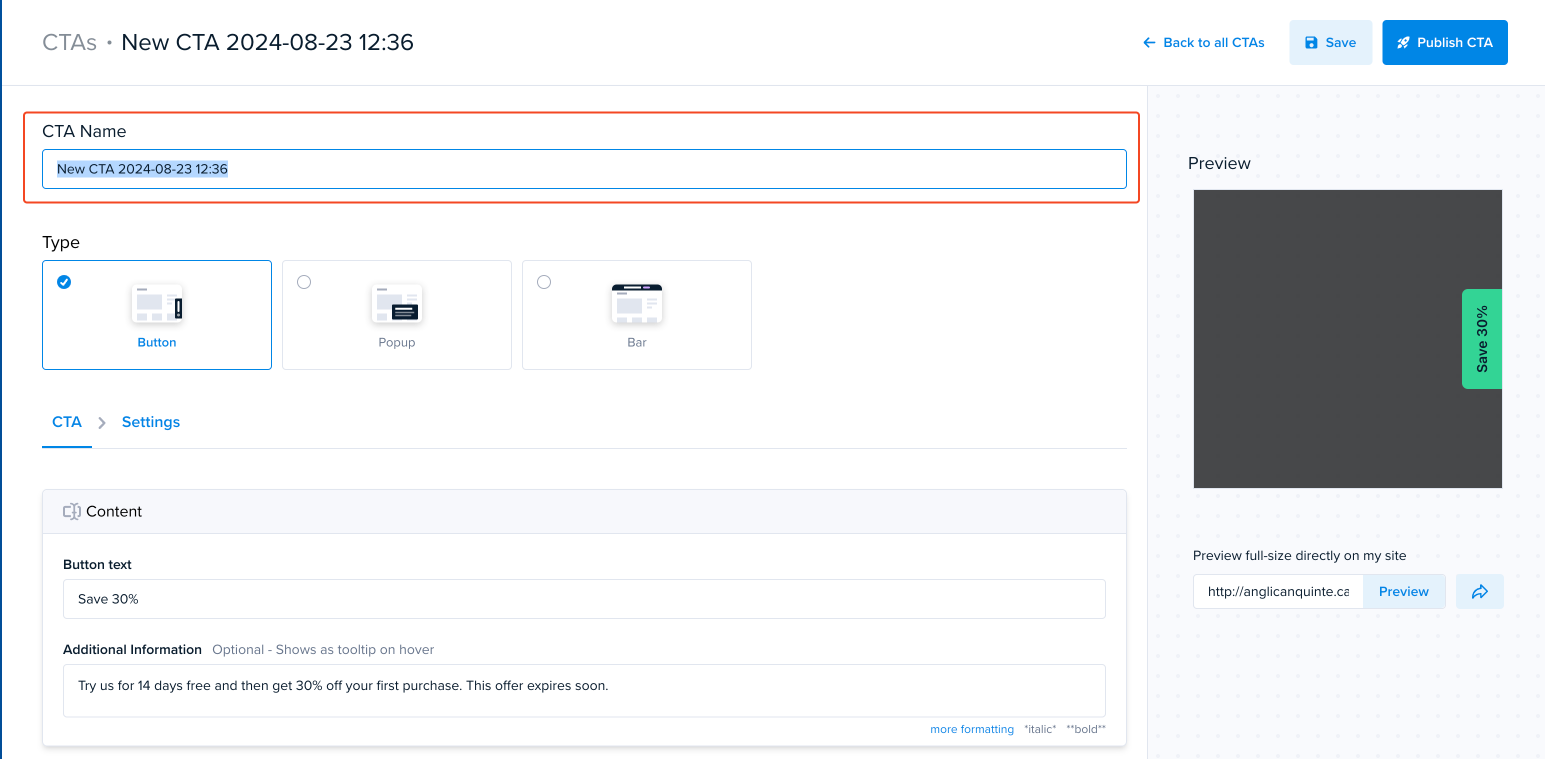
Crazy Egg, conversely, is built for a self-serve model. A single marketing manager can install the tracking script and be running a heatmap and an A/B test within an hour. This efficiency is a massive competitive advantage for smaller, agile teams that prioritize speed of implementation over deep-tier customization.
Data Privacy and Security
Both platforms take data privacy seriously, though their implementations differ. Crazy Egg offers "privacy-by-default" features, including automated IP anonymization and the masking of sensitive form inputs. Optimizely provides a more robust certification portfolio, including ISO 27001 and SOC 2 Type 2, which are often non-negotiable requirements for large, publicly traded corporations or heavily regulated industries (finance, healthcare).
Official Perspectives: The "Opal" vs. "Tasks" AI Strategy
The divergence in AI strategy reflects the core mission of each company.
Optimizely’s Opal: Optimizely is betting on "Agentic AI." Opal is designed to orchestrate entire workflows. For example, it can analyze a drop-off in a funnel, suggest an experiment, draft the copy, and push it to the CMS. It is an orchestration layer for complex, high-stakes environments.
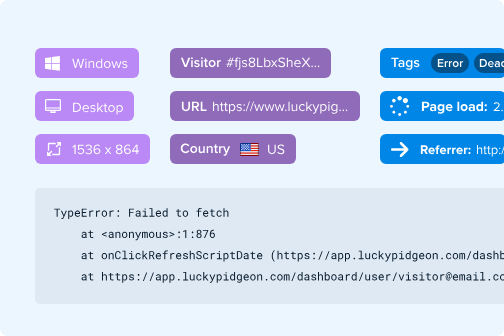
Crazy Egg’s AI Tasks: Crazy Egg is betting on "Actionable Insight." Its AI is focused on closing the loop between data and action. By delivering an "executive-ready" report that summarizes what is happening on a site and offering specific, implementable suggestions, Crazy Egg aims to save the marketing practitioner hours of manual analysis time.
Final Verdict: Which is Right for You?
Choose Crazy Egg If:
- You are a mid-market company or a high-growth startup.
- You want an all-in-one platform where heatmaps, recordings, and A/B testing are under one roof.
- You prioritize transparent pricing and self-serve deployment.
- Your team wants to spend more time running tests and less time managing vendor infrastructure.
Choose Optimizely If:
- You are a large enterprise with massive traffic volumes.
- Your requirements include server-side testing, feature flagging, or complex multivariate experimentation.
- You are already invested in the Optimizely ecosystem (CMS, DAM, Commerce) and want a unified DXP.
- You have the budget and the technical staff to manage a complex, multi-year, enterprise-scale implementation.
Ultimately, the choice comes down to your organizational stage. If you are in the business of rapid, iterative growth, Crazy Egg offers the most frictionless path to success. If you are in the business of massive-scale digital transformation and complex infrastructure integration, Optimizely provides the robust, if expensive, foundation required for that journey.
Disclaimer: This article provides a strategic overview of both platforms based on current market data and feature sets. Organizations should conduct a POC (Proof of Concept) with both vendors to determine which best aligns with their specific technical architecture and internal resource capabilities.
