
The "Vibe" Revolution: How AI is Redefining Creativity, Coding, and the Future of Marketing
In the fast-paced corridors of Silicon Valley and the burgeoning landscape of modern MarTech, a peculiar new buzzword has emerged, eclipsing even the industry-standard obsession with "agentic" AI. That word is "vibe." What began as a shorthand for intuitive, LLM-assisted software development has rapidly mutated into a cultural and professional framework. As we navigate the 2025 "Summer of Vibes," it is time to peel back the layers of this phenomenon to determine whether it represents a genuine paradigm shift in human-computer interaction or merely the latest linguistic trend in an era of techno-optimism.
The Genesis of Vibe Coding
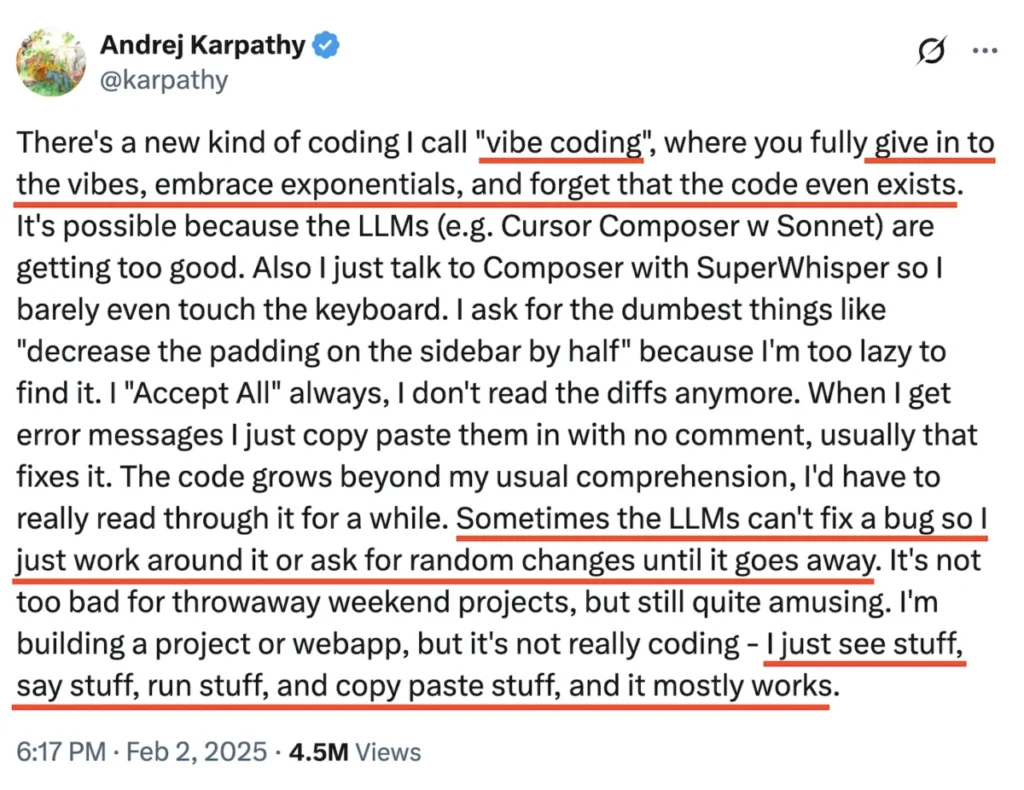
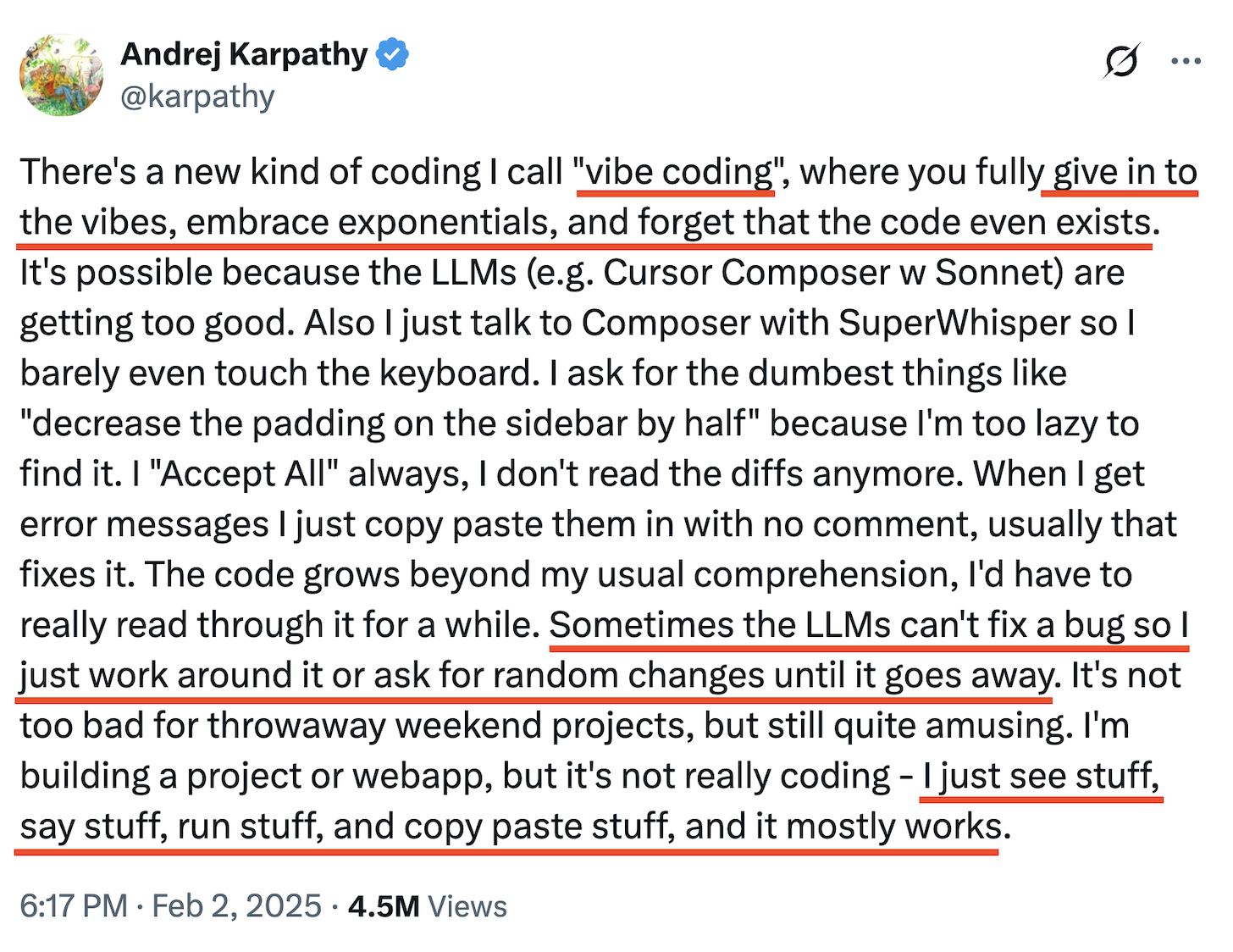
The term "vibe coding" did not emerge from a corporate boardroom, but from the raw, iterative process of software creation. Andrej Karpathy, a founding member of OpenAI and a luminary in the field of computer science, famously coined the term in early 2025.
Karpathy described a workflow that felt revolutionary in its simplicity: "I just see stuff, say stuff, run stuff, and copy-paste stuff, and it mostly works." This methodology represents the next evolution of the no-code/low-code movement, turbocharged by the vast reasoning capabilities of modern Large Language Models (LLMs). By abstracting the syntax and structure of traditional programming, vibe coding allows developers—and, increasingly, non-engineers—to manifest software through natural language conversation with AI agents.
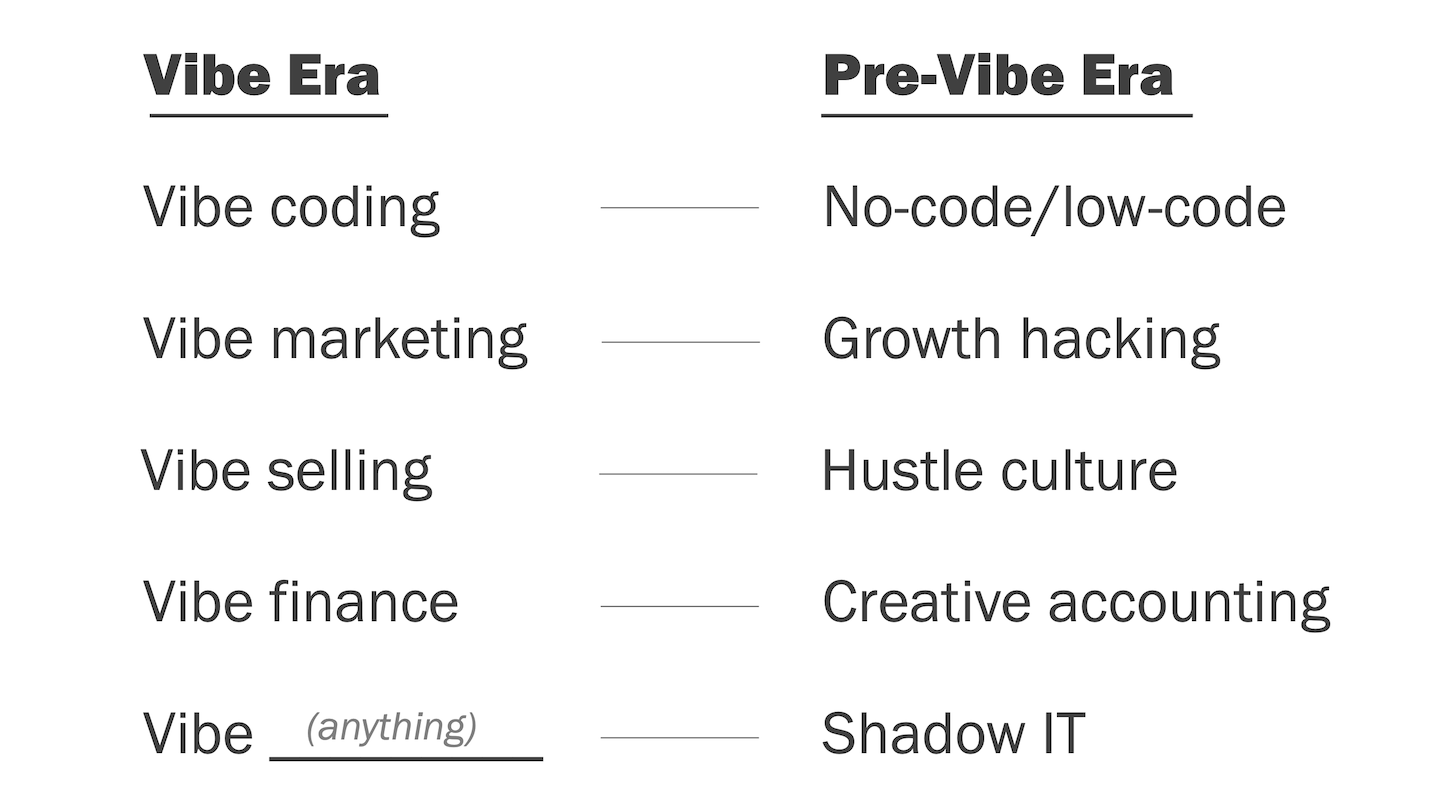
While the "it mostly works" caveat might induce heart palpitations in veteran software engineers concerned with technical debt and system stability, the shift is undeniable. For the first time, the barrier to entry for building complex digital tools has been lowered to the speed of thought.
A Chronology of the Vibe Movement
- Early 2025: Andrej Karpathy posts his thoughts on "vibe coding," sparking a viral conversation across X (formerly Twitter) regarding the future of software development.
- Spring 2025: The rapid ascent of AI-native development platforms, most notably Lovable, captures the market’s attention. Lovable achieves a historic $100 million ARR milestone within just eight months of its inception, signaling that the "vibe" approach has significant economic viability.
- Summer 2025: The concept of "vibe coding" begins to bleed into the marketing sector. Thought leaders like Jason Lemkin of SaaStr document their own experiences, sharing both the triumphs of rapid prototyping and the frustrations of dealing with non-deterministic AI outputs.
- Late 2025: The conversation shifts from technical implementation to "vibe marketing," as industry analysts begin to define how these agentic, AI-driven workflows can be applied to growth hacking and customer experience.
Supporting Data: The Lemkin Scale
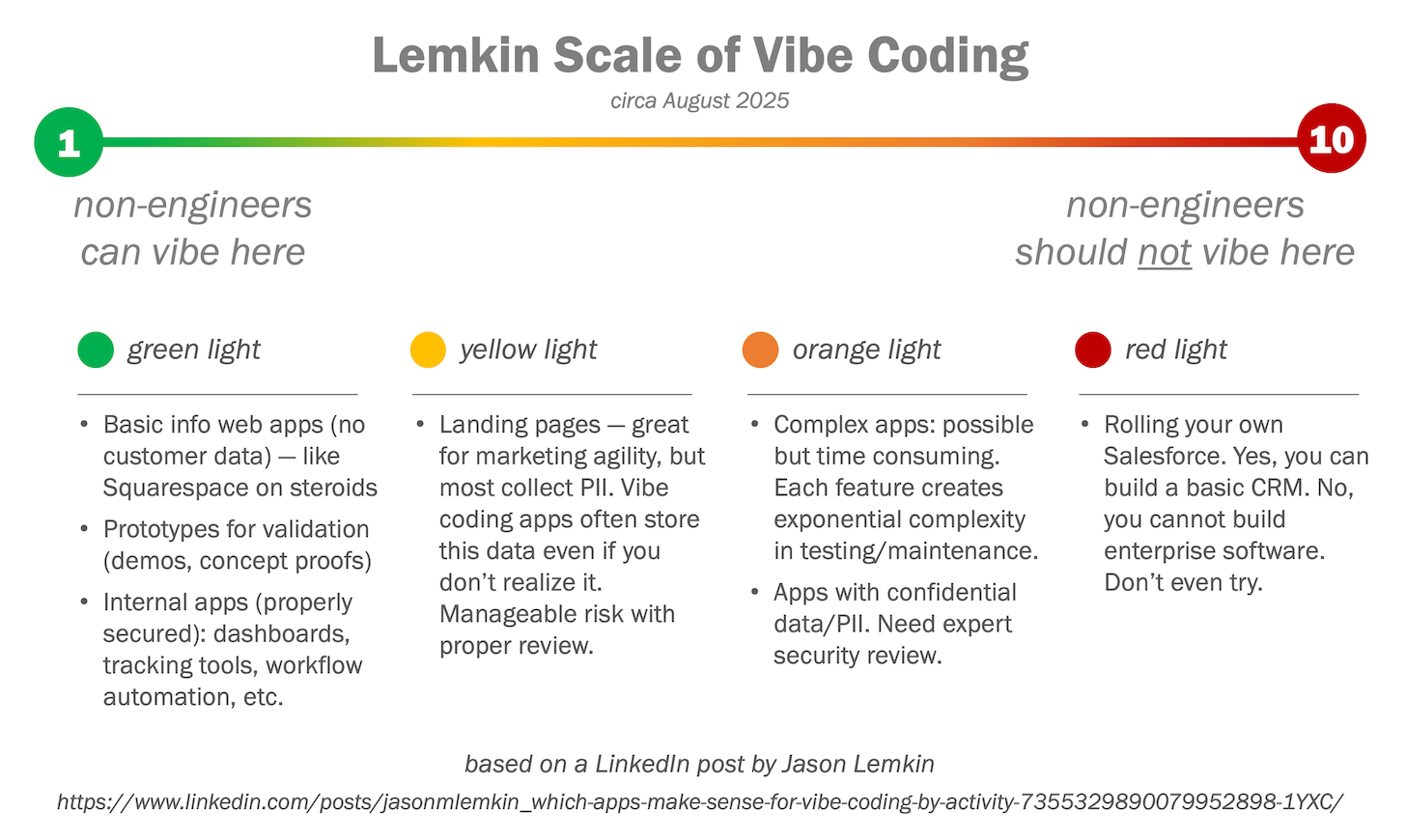
The practicality of vibe coding is not universal. Jason Lemkin’s extensive documentation of his own 100-hour journey building an app on Replit highlights the nuanced reality of the trend. His experiences led to the creation of the "Lemkin Scale of Vibe Coding"—a heuristic tool that categorizes projects based on their feasibility for non-engineers.
On this scale, a "1" represents "viable vibing"—projects such as internal dashboards or simple personal workflow automations that are highly forgiving of AI hallucinations or minor code inconsistencies. At the other end of the spectrum, a "10" represents "here-be-dragons" territory: projects like attempting to rebuild an enterprise-grade platform like Salesforce from scratch.
This scale is not meant to be a precise measurement, but rather a reflection of the "pain" associated with current AI capabilities. However, the trajectory is clear: as models improve, the "red light" projects of today will move toward the "green light" of tomorrow. This "shift left" in difficulty means that what is considered an advanced, professional-only task today will become a weekend hobbyist project in the near future.
From Vibe Coding to Vibe Marketing
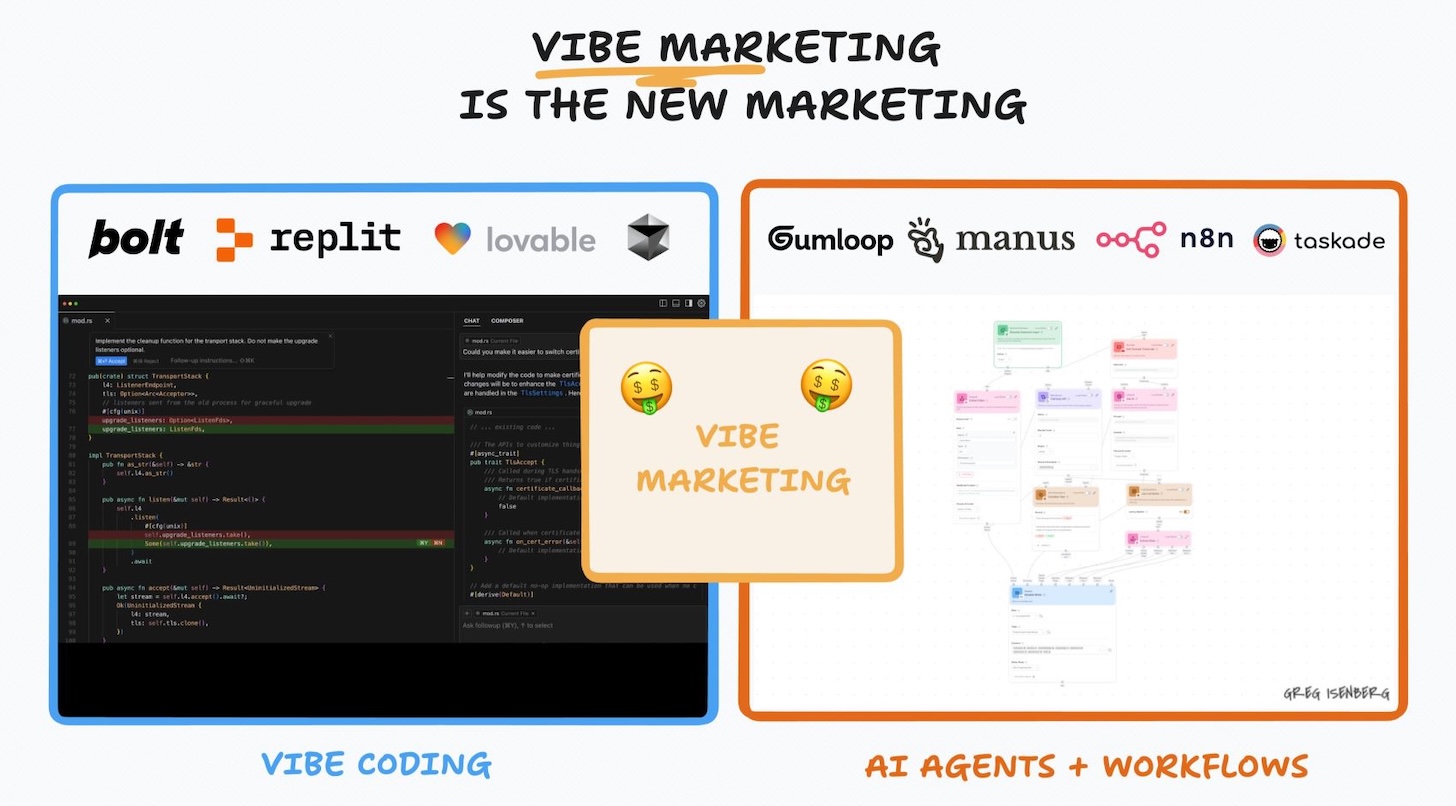
Following the success of vibe coding, the term was inevitably co-opted by the marketing world. Greg Isenberg is widely credited with bringing "vibe marketing" into the mainstream discourse.
The initial definition suggested that vibe marketing is the practice of using AI agents to achieve what previously required a specialized team. It implies a world where individual marketers act as "GTM (Go-to-Market) engineers," shipping ideas at a velocity previously reserved for high-end dev shops. However, this definition risks reducing the "vibe" to mere automation.
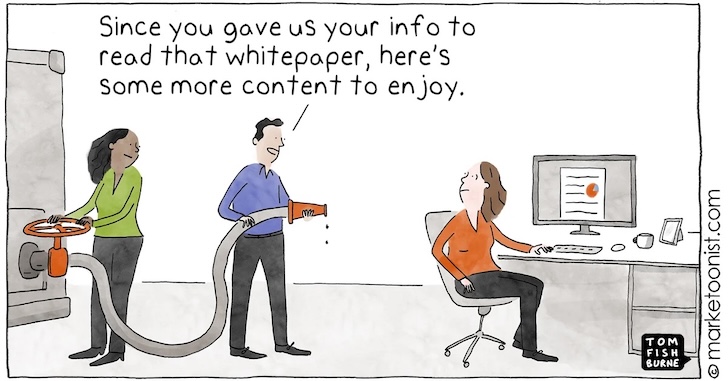
True vibe marketing, when viewed through a more critical lens, should not be about the machinery of content generation or data scraping—the "spam, spam, spam" of the modern web—but rather about the spirit of Big Experimentation.
Implications: The Era of Big Experimentation
If the "Big Data" era of the 2010s was about capturing volume, velocity, and variety in data, the "Vibe Marketing" era is about harnessing those same metrics for rapid-fire experimentation.
The implication for marketing operations teams is profound. Rather than policing the creative process, the role of the modern Ops professional is to build the "scaffolding and safety nets" that allow the rest of the team to experiment safely.
- Democratization of Insights: Using AI to mine data warehouses for answers to "I wonder…" questions that were previously too expensive or time-consuming to pursue.
- Hypothesis-Driven Creative: Using generative AI to create dynamic, multimodal prototypes that can be tested against a segment of the audience in real-time.
- The Feedback Loop: Rapid iteration. If an experiment vibes with the audience, it is promoted to production; if it fails, it is jettisoned without the typical overhead of project management.
Addressing the Critics: Governance and Ethics
The "vibe" approach is not without its detractors. Critics argue that relying on AI-generated code or copy without deep domain expertise invites brand risk, privacy violations, and a lack of systemic reliability.
Professional organizations are responding by emphasizing that "vibing" does not equate to "unmanaged." The most successful companies are those that build internal AI policies—governance frameworks that ensure data privacy, compliance, and adherence to brand standards while still allowing the marketing team the freedom to ideate. The goal is to provide a sandbox where creativity can flourish without endangering the company’s structural integrity.
Conclusion: The "Good Vibrations" of the Future
While the specific linguistic label of "vibe" may prove to be as ephemeral as any other Silicon Valley buzzword, the underlying shift it represents is permanent. We are entering an era where the cost of creativity and the cost of building have been decoupled from technical proficiency.
Whether we call it "vibe marketing," "agentic growth hacking," or simply "the future of work," the core value proposition is clear: the ability to turn imagination into reality at speed. For the modern marketer, the opportunity lies in striking a balance. Don’t get lost in the machinery of the automation itself. Instead, use these new powers to become a "customer whisperer," tuning into the actual, human-centric needs of your audience and iterating your way toward better experiences.
The "Summer of Vibes" may pass, but the creative power unleashed by this new generation of tools is only just beginning to hum. As the industry matures, those who learn to conduct the "good vibrations" of AI-driven experimentation will undoubtedly lead the market, while those who wait for the buzzword to fade may find themselves left in the silence of the old way of working.
