
The Undeniable Power of Customer Insights: Fueling Brand Success in the Digital Age
In today’s fiercely competitive marketplace, some brands consistently resonate with their audience, fostering unwavering loyalty and driving sustained growth. This magnetic appeal isn’t magic; it’s the calculated outcome of a deep understanding of their customers, meticulously cultivated through robust customer insights and analytics. By dissecting trends, aggregating vast datasets, and attentively heeding feedback, businesses are empowered to engineer exceptional customer experiences and execute strategic, profit-maximising manoeuvres. This article delves into the critical role of these insights, exploring how they enable organisations to anticipate market shifts, outmanoeuvre rivals, and ensure customers return time and again.
What Exactly Are Customer Insights and Analytics?
At their core, customer insights represent the profound understanding derived from the analysis and interpretation of customer data. This comprehension serves as the bedrock for informed business decisions and continuous enhancements to the overall customer experience. These insights are not merely surface-level observations; they emerge from the meticulous identification of trends, the collection of both quantitative and qualitative data, and a thorough analysis of customer feedback, all aimed at unearthing a deeper understanding of customer needs, motivations, and preferences. In essence, customer insights provide the crucial "why" behind customer behaviour and related business questions, moving beyond "what" happened to reveal the underlying drivers.
Customer insights are frequently used interchangeably with customer analytics, and for sound reasons. The technological infrastructure and methodologies employed to scrutinise customer behaviour, monitor interactions, and interpret data trends often overlap or are identical across both disciplines. However, a subtle yet significant distinction exists. Customer insights typically encompass a broader scope, delving into various facets of customer behaviour, underlying motivations, and overarching preferences. Conversely, customer analytics leans more towards the practical implementation, focusing on configuring analytical tools, developing statistical models, and executing the processes required to collect and process raw customer data. In essence, customer analytics furnishes the technological capabilities and systematic techniques necessary to generate actionable insights. It is the engine that powers the discovery process, transforming raw data into meaningful intelligence.

The Evolving Landscape of Customer Understanding
The journey of understanding the customer has transformed dramatically over time, shifting from rudimentary market observations to today’s sophisticated, data-driven science. Historically, business decisions were often guided by intuition, anecdotal evidence, or limited, expensive market surveys. This approach, while sometimes effective in simpler markets, is woefully inadequate in the hyper-connected, fast-paced digital era. The imperative to stay aligned with rapid and evolving customer needs has never been greater.
The main purpose of customer insights today is to provide businesses with an agile framework to navigate this constant flux. By understanding the intricate patterns of customer behaviour, organisations can make informed decisions, refine their strategies with precision, and elevate the customer experience beyond mere satisfaction. With potent customer insights, businesses can confidently address critical strategic questions such as: "What truly motivates my customers to purchase?", "Which product features are most valued, and which are lacking?", "What friction points exist in the customer journey?", and "How can we preempt customer churn?" Ultimately, robust customer insights empower businesses to make data-driven decisions that not only boost customer satisfaction but also serve as a powerful engine for long-term sustainable growth.
Harnessing Data: Pillars of Customer Insight Gathering
Gathering valuable customer insights requires a strategic approach, beginning with the identification of appropriate methods and tools for data collection. The following sections explore a multifaceted approach to systematically acquire these crucial insights.

1. Strategic Market Research
Gaining customer insights isn’t solely confined to existing paying customers; it extends to understanding potential customers who might one day purchase from you. Whether a business is already established or still in the nascent stages of product development, market research is indispensable for assessing viability and potential for success within a target market. It provides answers to fundamental questions: "Who is our target audience?", "What are their needs and pain points?", "Who are our primary competitors?", and "What is the size and potential growth of our market?"
Market research also plays a pivotal role in refining pricing strategies by offering insights into customers’ perceived value and willingness to pay for a product or service. Fundamentally, it facilitates a deep understanding of your audience and aids in the precise definition of your ideal customer profiles. While many user-friendly tools are available for conducting independent market research, larger or more complex projects might benefit from the expertise of specialized firms or freelancers.
-
Statista: A globally recognised data aggregation tool, Statista compiles extensive public third-party data, presenting it in an easily digestible and visually compelling format. Renowned for its intuitive visualisations, it enables researchers to quickly grasp market trends. Beyond aggregated data, Statista conducts its own surveys and analyses, offering exclusive insights across diverse industries. It provides excellent overviews and comprehensive reports, making it an invaluable resource for preliminary and in-depth market research. Many statistics and reports are accessible without registration, with a free account offering access to over 220,000 statistics, infographics, and historical data. Premium reports and advanced features are available through subscription plans, such as the Starter Plan at USD $1,299 per year, which unlocks unlimited queries and access to the latest market data.

-
Similarweb: Highly regarded for market intelligence, Similarweb allows businesses to analyse websites, including those of direct competitors, to discern audience demographics, preferred channels, and traffic flow across various digital properties. Beyond granular digital traffic insights, Similarweb offers advanced functionalities like competitive benchmarking, comprehensive industry research, and even investment-related data. While its extensive capabilities necessitate a paid subscription for deep analysis, its free website traffic checker provides a useful glimpse into its power.
-
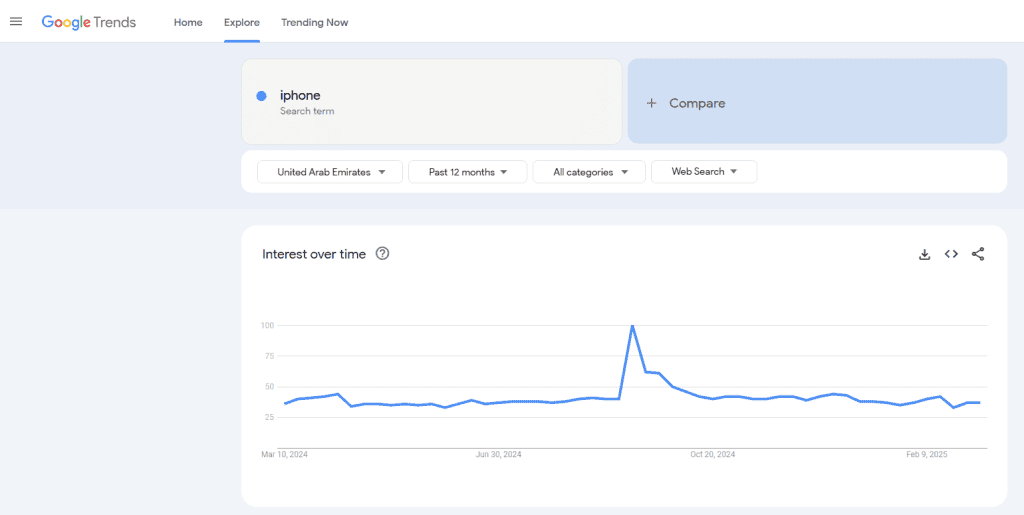
Google Trends: This complimentary Google tool is a powerful asset for analysing audience interests, developing content strategies, and identifying trending topics across specific industries and geographical regions. It excels at tracking real-time trends and monitoring subtle shifts in audience behaviour. Google Trends is particularly effective for uncovering new market opportunities, understanding seasonal demand fluctuations, and maintaining a competitive edge by identifying emerging interests within your market segment.
-
Market Research Services: While DIY tools offer accessibility, they come with limitations, particularly concerning the time commitment and the nuanced expertise required to accurately interpret complex data. For businesses with larger budgets or specific, intricate research needs, engaging specialised market research firms or experienced freelancers can significantly expedite the research process and provide expert strategic guidance. These professionals leverage their industry acumen to address complex questions, offering bespoke insights on market positioning, optimal pricing, and intricate customer behaviour patterns. Combining self-service research with professional insights establishes a robust foundation for informed business decision-making.
2. Unlocking Website Data
For businesses that conduct sales or provide services via their websites, the data generated by these digital platforms serves as a direct, invaluable source of customer insights. This data can be accessed through various means: the website’s built-in analytics, third-party analytics tools, or specialized behavioural analysis platforms. While basic built-in analytics might suffice for rudimentary queries such as "Where are my buyers originating from?" or "What are my most popular pages?", we strongly advocate for the implementation of more powerful analytics tools for deeper, more actionable insights. The combination of quantitative web analytics with qualitative behavioural analysis tools can illuminate both what users are doing and why they are doing it.
-
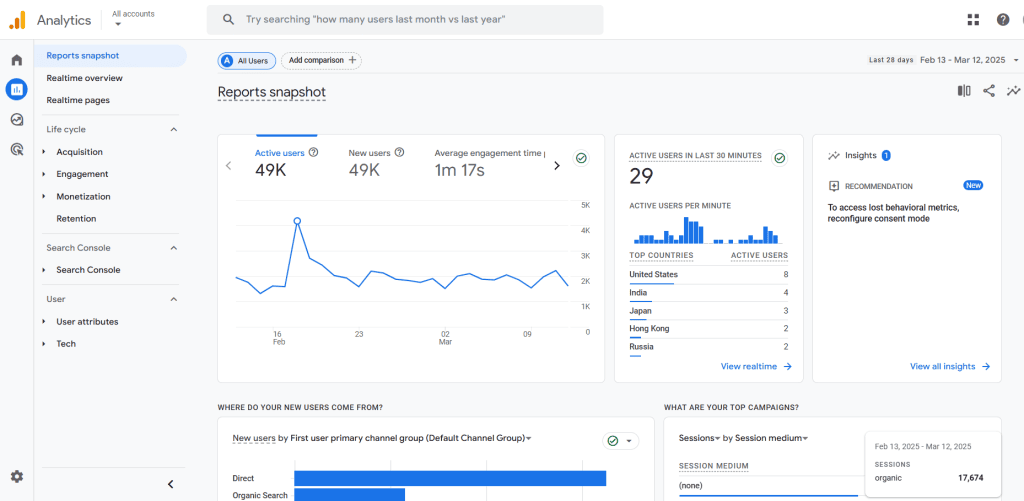
Google Analytics (GA4): As one of the most widely adopted web analytics platforms, Google Analytics, particularly its latest iteration, GA4, offers unparalleled advanced tracking capabilities. GA4’s event-driven data model provides a holistic view of user behaviour across websites and apps, tracking everything from page views and session duration to conversion paths, user flows, and engagement metrics. It helps businesses understand user acquisition channels, audience demographics, user behaviour within the site, and the effectiveness of various marketing campaigns. Its machine learning capabilities also offer predictive insights, helping businesses anticipate future customer actions.
-
Microsoft Clarity: This is an indispensable tool for deciphering the enigma of why users fail to convert. Microsoft Clarity is a free behavioural analysis platform celebrated for its intuitive heatmaps and session recordings. It allows users to visually observe anonymous replays of how visitors navigate their website, identifying areas of interest, frustration, or confusion. Leveraging AI, Clarity can now provide summarized insights from numerous session recordings in mere seconds, saving countless hours of manual review. From a technical standpoint, it also functions as a straightforward web analytics tool, ideal for those seeking practical, uncomplicated insights without impacting website performance. Its completely free model, easy installation (manual or via Google Tag Manager), and AI-powered capabilities make it a transformative resource for understanding user behaviour.

3. Navigating the Social Media Landscape
The vast majority of modern audiences actively engage with at least one social media platform. These platforms offer fertile ground for gathering customer insights, fostering dynamic online communities where individuals freely express opinions, share content, and discuss brands. If your business lacks an active social media presence, the market research tools previously mentioned can help identify which platforms your ideal customers frequent. Regardless of the platform – Meta (Facebook), Instagram, TikTok, X (Twitter), or others – each offers built-in analytics tools to help understand audience demographics and basic engagement.
However, it’s crucial to acknowledge that each social media platform cultivates a distinct user mindset and content consumption pattern. For instance, TikTok users gravitate towards quick, visually engaging, snapshot-style content, while Facebook users may engage more readily with longer-form posts and discussions. This is precisely why we recommend integrating an external analytics tool like Google Analytics 4 (GA4) to centralise and compare your social media traffic sources, providing a unified, comprehensive view of performance.
-
Why Use Google Analytics 4 to Analyze Social Media Traffic?
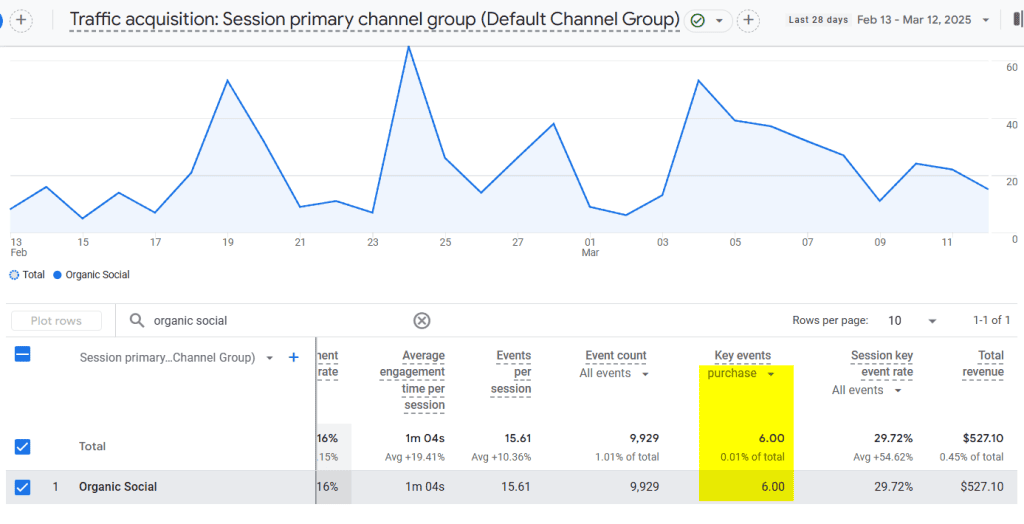
- Centralized Performance Analysis: GA4 enables the measurement and comparison of performance across multiple social media sources within a single interface. Instead of reviewing fragmented analytics from each platform, GA4 allows comprehensive tracking of all social traffic, leveraging its full suite of features to analyse results. By creating a sales funnel (e.g., categorising actions into awareness, engagement, and conversions), businesses can determine which social media sources are most effective at each stage of the customer journey. For example, using the GA4 Traffic Acquisition report can reveal the precise contribution of organic social media efforts to final purchases.
- Understanding User Behavior Beyond Social Media Analytics: Native social media analytics can indicate how many individuals clicked a link, but they rarely explain what transpired once those visitors landed on your website. GA4 provides answers to deeper behavioural questions: "Which social media platform drives the highest quality traffic?", "What content keeps social media visitors engaged on our site?", "Do users from Instagram convert differently than those from Facebook?", and "Are there specific social media campaigns that lead to higher customer lifetime value?" Unlike social media analytics, which can sometimes be biased towards vanity metrics, a dedicated analytics tool like GA4 provides unfiltered insights into holistic customer behaviour, helping identify unmet needs beyond what users explicitly express on social media.
-
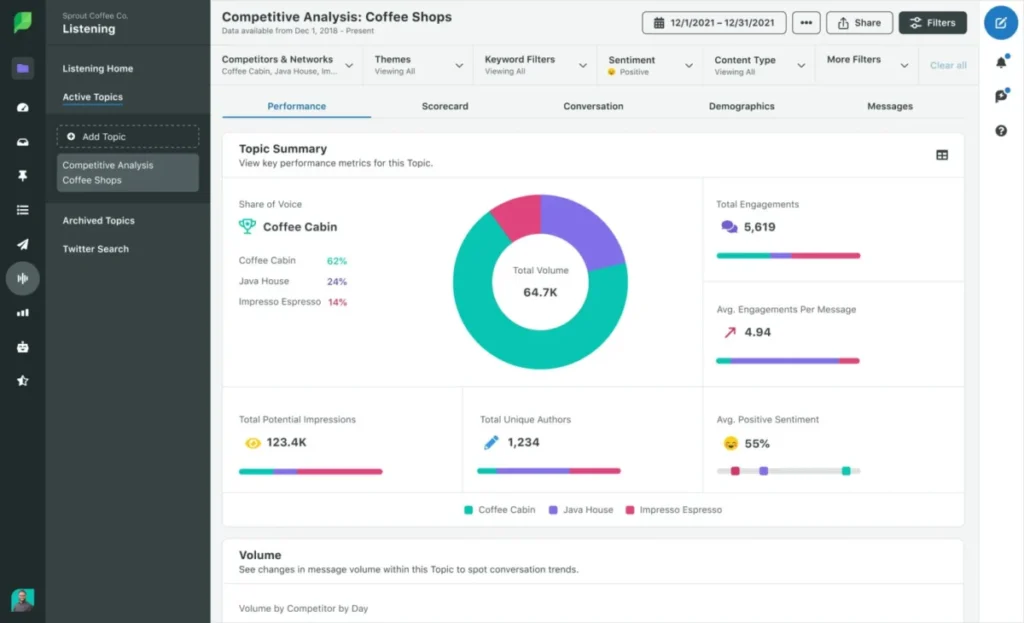
Social Media Listening: This proactive strategy involves continuously tracking brand mentions, industry keywords, and online conversations across various social platforms to uncover emerging opportunities, gauge sentiment, and identify potential issues. Instead of manually sifting through the vastness of the internet, specialised tools like Mention or Sprout Social automate this process, aggregating relevant discussions and providing sentiment analysis, allowing businesses to respond strategically and proactively.
4. Direct Customer Feedback
Customer feedback offers direct, unfiltered insights into your audience’s thoughts, desires, and expectations. Regularly collecting and rigorously analysing this feedback is paramount for uncovering invaluable opportunities to refine products, enhance services, and elevate the overall customer experience.
-
Feedback Widgets: These are small, unobtrusive applications or pop-ups embedded directly into a website, designed to ask visitors direct, contextual questions or conduct micro-surveys. They allow customers to rate their experience or share comments in real-time, often at critical junctures of their journey. How they work: the widget appears at a specific moment (e.g., after a purchase, on an exit intent); customers provide feedback (e.g., star rating, text comment); the feedback is collected and analysed; businesses then use this real-time data to make immediate improvements. Tools like Appzi offer such functionalities.

-
Focus Groups: Focus groups provide a qualitative depth that no analytics tool can fully replicate. They are specifically designed to yield in-depth insights into customer preferences, motivations, and emotional responses, typically involving 5 to 10 carefully selected participants. Unlike structured surveys, focus groups facilitate open-ended discussions, allowing participants to articulate their thoughts and feelings more freely. A structured methodology involves precise participant selection, preparation of guiding questions, and expert moderation to ensure the gathering of valuable insights. A significant advantage of focus groups is their ability to reveal hidden or subconscious emotions customers may hold about a product, service, or brand – insights that are often elusive through quantitative methods alone.
-
Surveys: Surveys remain one of the most effective and scalable methods for collecting customer insights. Modern tools simplify the process of gathering meaningful data. Platforms like SurveyMonkey or FreeOnlineSurveys offer ready-made templates tailored to specific markets, topics, and niches, providing a quicker and more structured approach. These templates save time by providing pre-validated questions aligned with industry best practices. For those on a budget, Google Forms allows for free survey creation, though it requires more effort in design, question sequencing, and data structuring. While AI tools can assist in generating questions, human refinement remains crucial for audience relevance.
-
Polls: Distinct from long-form surveys, polls are concise tools used for rapid opinion gathering from an audience. They serve various purposes, such as giving audiences a voice, collecting real-time feedback during presentations, or testing knowledge. Content creators frequently use polls to guide future content topics, often with simple "Yes" vs. "No" choices. Free tools like DirectPoll.com enable quick poll creation and widespread distribution, displaying results instantly as graphs and charts for easy interpretation.
-
Customer Reviews: Customer reviews, found on dedicated platforms like Trustpilot or directly on product pages (e.g., Amazon), offer a treasure trove of insights into customer pain points, expectations, and overall satisfaction.
- Using Tools for Review Analysis: For a large volume of reviews, automated tools connected to various review sources (e.g., Sprout Social) can quickly analyse sentiment and identify trends based on ratings, keywords, and date ranges. This helps identify common feedback themes without manual sifting.
- Manual Review Analysis (for those on a budget): For businesses with fewer reviews or limited budgets, a manual approach is still highly effective. Browser extensions can help download and compile reviews, which can then be analysed using AI tools like ChatGPT for sentiment analysis and key insight extraction. A strategic starting point is to focus on 3-star and 4-star reviews, as they often provide balanced opinions, highlighting both strengths and areas for improvement. Subsequently, examining extreme ratings (1-star and 5-star) helps understand worst-case scenarios and overly optimistic biases.
Translating Insights into Action: Official Responses and Strategic Implications
The true value of customer insights and analytics lies not just in their collection but in their actionable application. Leading organisations consistently translate these insights into concrete strategies and operational improvements, demonstrating an "official response" to market demands and customer needs. This commitment manifests across various business functions.
For instance, product development teams leverage insights from focus groups and surveys to inform new feature rollouts or entirely new product lines, ensuring offerings are genuinely aligned with customer desires. Marketing departments use website analytics and social media listening to refine campaign messaging, target audiences more effectively, and optimise channel spend for maximum ROI. Customer service operations frequently overhaul processes based on pain points identified through feedback widgets and review analysis, transforming choppy user experiences into effortless journeys that boost conversions and foster loyalty.

This strategic application signifies a cultural shift towards deep customer-centricity, where every business decision is, in some way, informed by the voice of the customer. The implications of such an approach are profound: enhanced customer satisfaction, reduced churn, increased customer lifetime value, accelerated innovation, and a significant competitive advantage.
Looking ahead, the future of customer understanding will be increasingly shaped by advanced technologies. The ongoing rise of Artificial Intelligence (AI) and Machine Learning (ML) will enable more sophisticated predictive analytics, allowing businesses to anticipate customer needs and behaviours with unprecedented accuracy. Personalisation at scale, once a lofty ambition, will become a standard expectation, driven by AI-powered insights. However, this advancement also brings critical ethical considerations to the forefront. Data privacy (e.g., GDPR, CCPA) and the responsible use of customer data will remain paramount. Companies must navigate the delicate balance between leveraging insights for growth and upholding customer trust and privacy. Continuous adaptation, both in tools and strategy, will be the hallmark of successful businesses in this evolving landscape.
Conclusion
This deep dive underscores the critical importance of uncovering valuable insights into what your customers genuinely want and need, ultimately driving sustainable business growth. There is no singular "best" method for gathering customer insights; instead, the key lies in adopting a holistic approach, combining multiple methodologies such as strategic market research, detailed website analytics, comprehensive social media listening, and diverse direct customer feedback mechanisms. This multi-faceted strategy provides a 360-degree view of your audience, enabling a complete and nuanced understanding.

A particularly impactful area where customer insights yield direct returns is in enhancing user experience. By meticulously analysing user journeys and pain points, businesses can quickly transform frustrating interactions into seamless experiences, significantly boosting conversion rates and customer satisfaction. The journey of customer insight gathering is continuous, demanding constant learning and adaptation. How do you currently leverage customer insights to refine your strategy? Are there particular tools or methodologies you would recommend? We invite your thoughts and experiences in the comments section, fostering a shared understanding in this vital domain of business intelligence.
