
Global Reach, Local Presence: VIOOH and Grupo IMU Transform Mexico’s Programmatic DOOH Landscape
LONDON/MEXICO CITY — On July 16, 2026, the digital out-of-home (DOOH) ecosystem witnessed a significant shift as VIOOH, the London-headquartered supply-side platform (SSP), announced a strategic partnership with Grupo IMU, one of Mexico’s most established outdoor media operators. This collaboration opens more than 400 premium digital screens across six major Mexican cities to the global programmatic marketplace, marking a pivotal moment in the modernization of Latin American advertising infrastructure.
By connecting Grupo IMU’s extensive inventory to VIOOH’s technology stack—which currently serves 37 markets worldwide—the agreement bridges the gap between local Mexican street-level media and international media buyers. This move is the latest in a rapid, aggressive expansion by VIOOH, which has spent the first half of 2026 weaving a global web of inventory ranging from German gas stations to American grocery aisles.
The Strategic Anatomy of the Deal
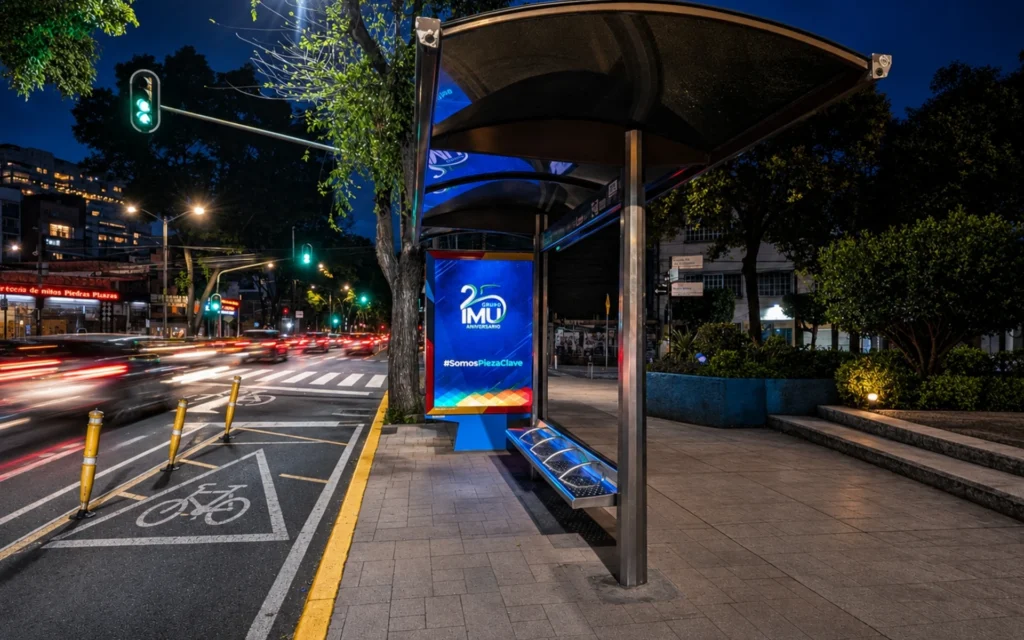
The partnership grants programmatic access to an inventory mix that goes beyond standard roadside billboards. Grupo IMU’s network includes highly coveted urban touchpoints: airport terminals, bus shelters, and digital panels positioned strategically near shopping centers, high-end gyms, beauty salons, and dense residential corridors.
Geographic and Environmental Scope
The agreement covers a broad swathe of Mexico’s economic engine, focusing on high-traffic hubs. The inventory is distributed across:
- Mexico City: The primary metropolitan pulse of the country.
- The State of Mexico: A critical suburban and industrial demographic center.
- Regional Powerhouses: Puebla, Guadalajara, Monterrey, and Mérida.
- Travel Hubs: Including placements within the Mexico City International Airport.
This geographic distribution allows for a multi-layered targeting strategy. Advertisers can now deploy campaigns that capture the "daily journey" of the Mexican consumer—reaching commuters at bus shelters during the morning rush, targeting fitness enthusiasts near gyms, and engaging travelers during the extended dwell periods found in airport terminals.
The Technological Bridge
Transactions are facilitated through VIOOH’s supply-side platform, which acts as the middleware between media owners and over 50 connected demand-side platforms (DSPs). For international agencies and brands, this eliminates the need for fragmented, manual negotiations with local Mexican sales teams. Instead, buyers can use their existing DSP seats to bid on inventory in real-time.
Standard programmatic protocols apply, allowing for granular targeting based on time of day, location, audience data integrations, and specific environment types. This level of precision is expected to drive higher yield for Grupo IMU while offering advertisers the flexibility to pivot campaigns based on live performance data.
Chronology of Expansion: A Global Aggregation
The Mexico deal is not an isolated event but rather the latest link in an unusually dense chain of integrations for VIOOH. The company’s trajectory over the past eighteen months illustrates a deliberate effort to consolidate the fragmented global OOH market.
- Late 2025: VIOOH reports presence in 35 markets, setting the stage for a massive 2026 push.
- January 2026: A banner month for the platform, securing 5,000 screens in US transit and grocery hubs via Dolphin OOH and 784 displays at German Shell forecourts.
- March 2026: A landmark deal with OUTFRONT adds 7,600 screens to the VIOOH network, bringing roughly 25% of the total US DOOH market into the programmatic fold.
- April 2026: Integration of 60,000 moving vehicle-top and rideshare screens through Firefly.
- May 2026: Expansion into Canada’s largest digital network.
- June 2026: Integration of UK motorway service areas via i-media.
- July 2026: The Mexican entry, solidifying the Latin American corridor.
This sequence reveals a strategy of "environmental diversification." By acquiring inventory in grocery stores, gas stations, transit hubs, and now Mexican residential and shopping zones, VIOOH is positioning itself as the "utility layer" of the modern advertising world.
Supporting Data and Regional Context
The Latin American market is currently undergoing a digital transformation that makes it an attractive theater for programmatic investment. According to data from the World Out of Home Organization, the Latin American OOH market hit a valuation of $2.7 billion in 2024. Brazil is currently the dominant force, accounting for over one-third of that total, with 31% of regional OOH already shifting toward digital formats.
Mexico, as the region’s second-largest economy, serves as the vital link between the North American market—already heavily programmatic—and the emerging South American markets. The VIOOH-Grupo IMU partnership follows successful integrations in Colombia (iCo Medios) and Brazil (RZK Digital), creating a cohesive regional programmatic block.
The Efficiency Argument
The shift toward programmatic is driven by the demand for efficiency. Previously, a brand looking to execute a multi-country campaign in Latin America faced a logistical nightmare: separate insertion orders, disparate reporting frameworks, and manual measurement for every local media owner. By funneling these through a single SSP, VIOOH allows for a unified workflow. A buyer in London or New York can now synchronize an ad campaign across screens in Bogotá, São Paulo, and Mexico City using the same targeting logic and reporting interface.
Official Perspectives: Aligning Visions
The framing of the deal from both sides highlights the mutual benefits of the integration.
Gavin Wilson, Global Chief Commercial Officer at VIOOH:
"This partnership with Grupo IMU marks an important step in VIOOH’s expansion across Latin America. Mexico is a market full of potential for pDOOH [programmatic digital out-of-home]. Grupo IMU’s inventory puts brands right at the centre of it, from major metropolitan hubs to regional audiences that are harder to reach through other media channels."
Angel Romo, Marketing Director at Grupo IMU:
"Integrating with VIOOH’s global supply-side platform gives our inventory unique reach among international media buyers. This partnership opens new doors for brands to activate campaigns across our network programmatically, with the precision and measurability that today’s advertisers demand."
These statements underscore a shift in the power dynamic: media owners are no longer merely selling "space" on a billboard; they are selling "access" to a defined, measurable audience segment.
Implications for the Future
While the exact financial terms remain undisclosed, the industry implications of this deal are profound.
1. The Death of the "Siloed" Local Buy
For Mexican advertising professionals, this integration changes the competitive landscape. While local agencies retain their existing relationships, they must now contend with an influx of international demand. If VIOOH delivers on its promise of increased yield, local screens that were previously underutilized will likely see higher occupancy rates, effectively raising the floor for digital ad pricing in Mexico.
2. Standardized Measurement and Sustainability
A critical component of VIOOH’s value proposition is its focus on standardized reporting, including carbon footprint tracking. In 2024, the company reported an emissions intensity of 0.041 grams of CO2 equivalent per ad impression. As brands face mounting pressure to report the environmental impact of their media buys, the ability to include Mexican inventory in a "green-verified" programmatic report becomes a competitive advantage for Grupo IMU.
3. The "Programmatic Everywhere" Forecast
VIOOH’s 2026 State of the Nation report suggests that programmatic DOOH will appear in 48% of all global campaigns within the next 18 months, with budgets expected to rise by 44%. This indicates that the Mexico integration is arriving just as the demand-side appetite is hitting an inflection point. The deal is timed perfectly to capture the transition of "traditional" ad budgets into the automated sphere.
4. Remaining Questions
Despite the fanfare, several variables remain. The industry has yet to see a breakdown of how the 400 screens are distributed across the six cities, nor is it clear how much of Grupo IMU’s total inventory is being made available versus the amount held back for direct-sold premium inventory. Furthermore, the success of this partnership hinges on the actual volume of international bids that will materialize in the Mexican market.
Conclusion
The partnership between VIOOH and Grupo IMU is more than a technical integration; it is a signal that Mexico’s OOH market has reached a level of maturity that demands global connectivity. By aligning with the world’s leading programmatic pipes, Grupo IMU has effectively "internationalized" its local assets. As the industry moves toward a future where media is bought on audience movement rather than physical location, this alliance provides the infrastructure necessary to participate in the next generation of global advertising.
