
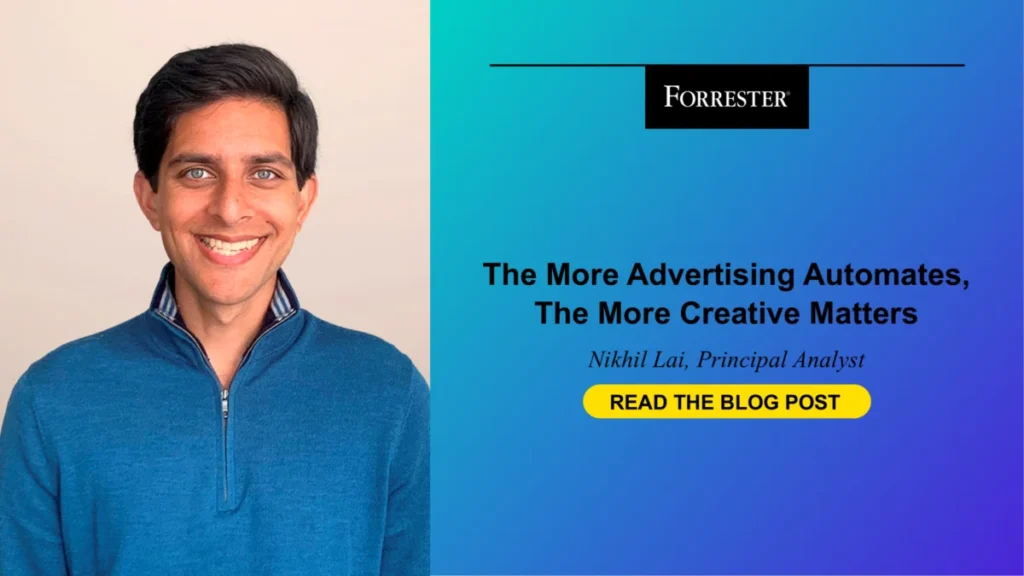
The Rise of the Creative Technologist: How AI, Walled Gardens, and Automation Are Reshaping the Future of Advertising
Main Facts: The Great Commodity Trap in Modern Advertising
The architecture of digital advertising is undergoing a foundational shift. Automation has firmly entrenched itself at the core of advertisers’ daily workflows, fundamentally altering how campaigns are conceptualized, bought, and executed.
Media buying—once a manual discipline dependent on the intricate skills of human traders delicately balancing budget allocations, dayparting, and bid management—has been largely reduced to the push of a button. Today, self-attributing platforms (SAPs) leverage advanced algorithms to auto-optimize campaigns toward an advertiser’s desired conversion outcomes. Concurrently, customer understanding and audience insights are increasingly centralized within the "walled gardens" of tech giants like Amazon, Google, and Meta. These proprietary ecosystems turn media planning into conversational interactions with massive repositories of big data.
Because these walled gardens glean peerless, first-party signals from their own expansive inventories, these data interactions inevitably result in ad spend concentrating heavily on the tech giants’ proprietary content.
As artificial intelligence continues to commodify media execution—favoring ecosystem giants with seemingly endless research and development budgets—brands are running out of traditional levers for competitive advantage. In this hyper-automated landscape, compelling creative has emerged as the advertiser’s ultimate durable differentiator. Uniquely memorable ideas and distinctive brand expressiveness are entirely impervious to commodification because AI cannot democratize true originality. Creative distinctiveness—built on scarce ideas that capture attention, encode brands deep into consumer memories, and give identical underlying optimization technologies something differentiated to amplify—is now recognized as the single biggest catalyst for long-term brand growth.
Chronology: From Artisanal Craft to Algorithmic Monoculture
To understand how the advertising industry arrived at this critical juncture, it is essential to trace the historical evolution of media execution and creative development over the past two decades.
- The Early 2010s: The Rise of Programmatic Trading. Media buying shifted from human-to-human negotiations to programmatic auctions. While technology automated ad placement, human traders remained vital for setting bidding strategies, managing frequency caps, and tuning audience segments.
- The Mid-2010s: Consolidation and the Walled Gardens. Major tech platforms locked down their data ecosystems. Privacy regulations and cookie deprecation crippled third-party tracking, forcing brands to rely more heavily on the closed-loop measurement and targeting tools provided by Google, Meta, and Amazon.
- The Early 2020s: Generative AI and Automated Workflows. Generative AI tools exploded onto the market, democratizing low-level asset production. However, rather than freeing creatives, this technology accelerated a demand for volume, pressuring creative teams to feed the endless appetite of multivariate and performance-marketing engines.
- The 2026 Landscape: The Commodification Tipping Point. Media execution is now entirely automated. With algorithms leveling the playing field for media distribution and targeting, the industry has realized that technology alone cannot drive growth. The focus has decisively pivoted toward creative excellence—and the structural crisis of how to scale it without losing its soul.
Supporting Data & Industry Insights: The Creative Bottleneck
Despite the universal acknowledgment that creative distinctiveness is the primary driver of brand equity, delivering it at scale remains an elusive operational challenge. Modern marketing organizations are caught in a web of conflicting pressures, cumbersome testing methodologies, and architectural silos.
The Breakdown of Traditional Testing
For years, brands relied on focus groups and pre-market testing to validate major campaign directions. However, these methods are increasingly proving inadequate for the fast-paced digital era:
- Cumbersome and Slow: Traditional focus-group methodologies are too slow to keep pace with "always-on" digital marketing environments, resulting in insights that arrive long after a campaign has run its course.
- Biased Outputs: Pre-testing often yields heavily biased results that fail to predict real-world consumer behavior or long-term brand health impacts.
- Granularity Traps: Conversely, hyper-frequent digital creative testing often produces overly granular, myopic insights. These micro-optimizations may lift short-term click-through rates while inadvertently eroding broader brand equity.
The Heavy Toll of Dynamic Creative Optimization (DCO)
Dynamic Creative Optimization promised to solve the personalization puzzle by assembling ad variations on the fly based on user data. In practice, however, DCO has become an operational nightmare. As one Chief Marketing Officer recently noted in a Forrester interview, "The effective implementation of DCO demands meticulous planning and substantial creative resources." Rather than liberating creative teams, DCO often bogs them down in taxonomic data structures and template management, diverting talent away from high-impact storytelling.
Official Responses and Organizational Shifts: Creative Excellence Needs a New Owner
Most brands and agencies are currently structured to scale creative production rather than improve creative effectiveness. They suffer from no shortage of automatable processes and are aggressively stitching together modern creative adtech stacks designed to accelerate and de-risk content workflows.
However, this rush toward volume has created a structural imbalance. Performance marketers continually demand exponentially more creative variations for multivariate testing. This relentless demand diverts creative directors away from designing deeply resonant, culturally impactful advertisements and forces them to focus entirely on throughput.
To bridge this widening chasm between creative output and creative excellence, forward-thinking organizations are pioneering a brand-new role: The Creative Technologist.
Defining the Creative Technologist
Unlike creative strategists, marketing technologists, or data scientists—who typically specialize within a single silo—creative technologists orchestrate intersections across multiple disciplines. They are not mere translators speaking the dual languages of art and code; they fundamentally redesign how creativity and technology work together.
The core responsibilities of a creative technologist include:
- Transforming Workflows: Shifting artisanal, ad-hoc creative processes into adaptive, accountable, and scalable systems.
- Preserving Human Discretion: Ensuring that technological efficiencies do not strip away the human nuance, empathy, and originality that make creative campaigns truly memorable.
- Orchestrating Ecosystems: Connecting creative strategy, production pipelines, raw performance data, media activation, and experimentation frameworks so that real-time brand health signals actively shape what gets produced next.
According to industry analysts, ideal candidates for this emerging role must possess a rare, hybrid blend of capabilities: exquisite taste-making, insatiable technical curiosity, rigorous experimental mindsets, and powerful change-leadership skills.
Implications: Navigating the Future of Brand Growth
The transition toward automated media buying and walled-garden dominance is irreversible. Advertisers who continue to view media optimization as their primary differentiator will inevitably find themselves trapped in a race to the bottom, competing on algorithmic parity where margins shrink and brand differentiation vanishes.
The implications for the broader marketing ecosystem are profound:
- The Marginalization of Pure-Play Generalists: Traditional generalists who understand neither the technological underpinnings of modern adtech stacks nor the artistic nuances of brand storytelling will struggle to deliver value in automated environments.
- The Re-Centering of Human Creativity: By offloading repetitive operational tasks, administrative DCO mapping, and basic asset generation to machines, organizations can free human talent to focus exclusively on decisions machines cannot make—such as emotional resonance, cultural relevance, and disruptive originality.
- Adoption of New Organizational Frameworks: Enterprises must align their people, processes, and technologies toward a unified goal of creative distinctiveness. Industry resources, such as Forrester’s specialized role profiles for creative technologists and forthcoming evaluations of creative adtech stacks, will serve as essential navigational tools for CMOs looking to restructure their departments.
Ultimately, the future belongs to brands that recognize a fundamental paradox: the more automated and commodified media execution becomes, the more valuable truly distinctive, human-driven creativity will be. By empowering creative technologists to bridge the gap between algorithmic systems and artistic vision, forward-looking brands can finally break free from the commodity trap and secure enduring market growth.
