

The Pulse of Digital Growth: Mastering Customer Engagement Analytics to Drive Sustainable Conversion
In the modern digital landscape, the difference between a thriving business and one that struggles to stay afloat often lies in the depth of its customer relationships. Many organizations operate under the assumption that a website visit is a sign of intent; however, in reality, the vast majority of traffic represents users who are merely "passing through." To bridge the gap between anonymous traffic and loyal customers, organizations must pivot toward sophisticated customer engagement analytics. By decoding how users interact with a brand, businesses can transform fleeting interest into long-term conversion.
The Architecture of Engagement: Defining the Data
At its core, customer engagement analytics is the systematic process of collecting, tracking, and interpreting the behavioral data generated by customers as they navigate a brand’s ecosystem. These touchpoints are no longer limited to a simple website visit; they encompass a complex web of interactions across mobile applications, social media platforms, email marketing funnels, and increasingly, offline-to-online hybrid channels.
Engagement is defined by any meaningful interaction that occurs prior to a "macro-conversion" (such as a purchase). This includes video consumption, scroll depth, button clicks, and micro-interactions that signal intent. While the methodology applies to all business sectors, digital marketing remains the primary beneficiary of these insights, as it allows for real-time adjustments to the user experience.
The Strategic Importance: Moving Beyond the Funnel
Engagement analytics occupies a critical position in the marketing funnel, acting as the bridge between the top-funnel awareness stage and the bottom-funnel acquisition stage. Without a granular understanding of how users engage, businesses often find themselves with a "leaky bucket"—spending significant capital on acquisition while failing to retain the interest of visitors who are not yet ready to commit.

The Lifecycle of User Intent
Most users do not convert upon their first encounter with a brand. They follow a nonlinear path characterized by repeat visits, research, and comparative analysis. Engagement metrics reveal the "friction points" in this journey. For example, if data shows a high bounce rate on a specific landing page despite high traffic, analytics provides the evidence needed to reconfigure the content, simplify the user interface, or improve the value proposition. By optimizing these touchpoints, businesses cultivate familiarity and trust, which are the fundamental precursors to sustainable growth.
Best Practices: The Roadmap to Implementation
Implementing a robust analytics strategy is not a "set-it-and-forget-it" task. Because engagement is a subjective business concept, it must be explicitly defined by leadership based on specific objectives. A 10-second session might be a success for a news site, but a failure for an e-commerce platform.
Step 1: Aligning Stakeholders and Metrics
The first phase of implementation requires a collaborative audit. Marketing, sales, and product teams must converge to identify what constitutes "success" at each stage.
- Marketing may focus on click-through rates and session duration.
- Product teams may look at feature adoption and interaction frequency.
- Sales may be interested in the number of qualified micro-conversions, such as newsletter sign-ups.
Step 2: The Implementation Guide
To ensure data integrity, companies should develop an Implementation Guide. This technical roadmap serves as the single source of truth for web analysts and developers. It details:

- Naming conventions: Ensuring that events (e.g., "video_play" vs. "video_started") are standardized across platforms.
- Trigger logic: Defining exactly when an event should be fired to ensure data accuracy.
- Custom dimensions: Mapping unique business metrics that are not available in out-of-the-box configurations.
Deep Dive: Key Metrics Across Channels
To effectively measure engagement, practitioners must segment their data by channel. While standard metrics like page views provide a baseline, they are insufficient for measuring depth of engagement.
1. Web and App Analytics
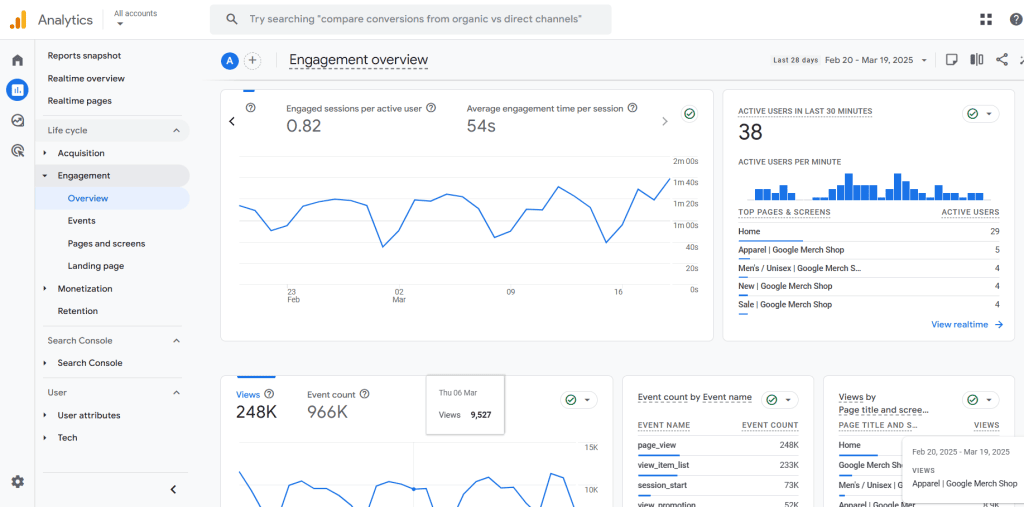
The gold standard for web engagement remains the Engaged Session. In Google Analytics 4 (GA4), a session is defined as "engaged" if the user spends at least 10 seconds on the page, completes a conversion event, or views at least two pages.
- Pages per Session: This is a vital indicator of curiosity. A benchmark of two to three pages per session suggests that the user is actively exploring the content rather than stumbling upon it by accident.
- Engagement Time: Moving beyond "time on page," modern tools track active engagement time—the duration the website is in the user’s active browser window. This filters out "background noise" from tabs that are left open but ignored.
2. Social Media and Email
Engagement in social media and email is often measured through the lens of active participation.
- Click-Through Rate (CTR): This remains the primary metric for gauging the relevance of a call-to-action (CTA).
- Open Rates: In email marketing, this is the first gate. A high open rate combined with a low CTR indicates a disconnect between the email subject line and the actual content provided.
3. Product-Centric Engagement
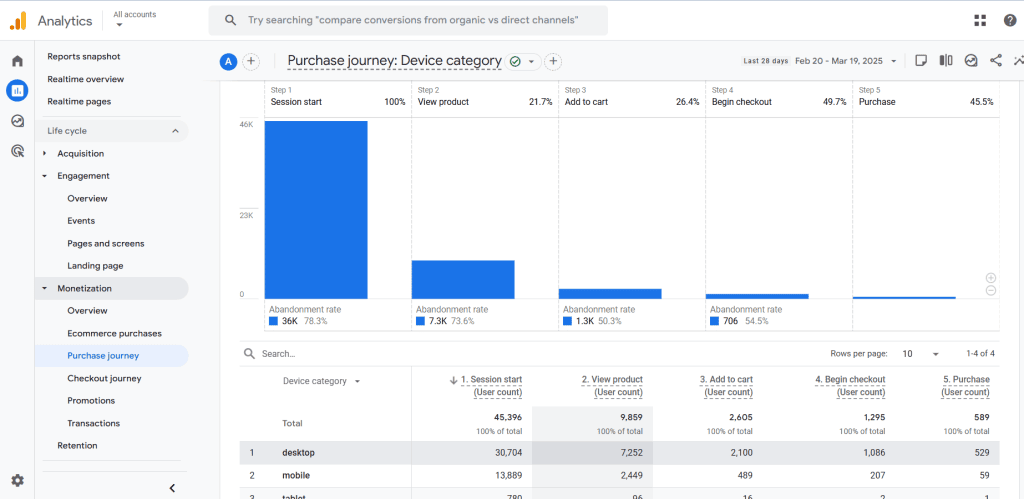
For e-commerce, the engagement focus shifts toward the shopping experience. Metrics such as "Add to Cart" frequency, product detail view-to-cart ratios, and search utility usage provide a roadmap of how effectively the product catalog is being navigated. If users are searching for products but not clicking on the results, it signals an issue with search relevance or visual presentation.
Implications for Modern Business
The reliance on engagement analytics carries profound implications for organizational strategy. In an era where third-party cookies are disappearing and privacy regulations are tightening, first-party engagement data has become the most valuable asset in a company’s possession.
The Shift Toward Predictive Modeling
Companies that have mastered engagement analytics are now moving toward predictive modeling. By analyzing historical engagement patterns, they can identify the "behavioral markers" that precede a purchase. For example, a software-as-a-service (SaaS) provider might find that users who interact with the "Help Center" or "Tutorial" section within their first 48 hours are 40% more likely to become long-term subscribers. By identifying these correlations, teams can trigger automated, personalized interventions that nudge users toward those specific activities.
Official Perspectives on Data Ethics
Industry leaders emphasize that while data collection is necessary, it must be balanced with transparency. The "customer-first" approach to analytics dictates that engagement tracking should not only serve the business but also improve the user’s experience. When analytics leads to faster page loads, more relevant recommendations, and a smoother checkout process, the user benefits as much as the organization.
Chronology of Engagement Maturity
- Phase One: Descriptive Analytics. The organization starts by tracking basic traffic volume and page views to understand "what happened."
- Phase Two: Diagnostic Analytics. The organization identifies "why" it happened by analyzing bounce rates, session duration, and user paths.
- Phase Three: Prescriptive Analytics. The organization uses the data to inform A/B testing, personalization, and content strategy to drive higher conversion rates.
- Phase Four: Predictive Analytics. The organization builds models to forecast future user behavior based on real-time engagement data.
Conclusion: The Path Forward
Customer engagement analytics is not merely a tool for measurement; it is a fundamental pillar of growth. By transitioning from vanity metrics to meaningful behavioral insights, companies can create a self-sustaining cycle of improvement. The data is already there, waiting in the logs of your website and the dashboards of your apps. The challenge for modern leaders is to curate, interpret, and act upon this data with the precision required to turn a casual visitor into a lifelong brand advocate.
As the digital ecosystem continues to evolve, the ability to read the "pulse" of your audience will remain the most significant competitive advantage. Organizations that prioritize these insights today will be the ones that define the market standards of tomorrow.
