
The Post-Quantum Horizon: Why Supply Chain Procurement Is the New Frontline in Cybersecurity
By Global Technology & Security Desk
Published: October 2023
Main Facts
As the horizon of "Q-Day"—the theoretical moment when quantum computers become powerful enough to break modern public-key cryptography—draws closer, the cybersecurity landscape is undergoing a fundamental shift. Last month, the Cybersecurity and Infrastructure Security Agency (CISA), in tandem with the G7 Cyber Security Working Group, issued a definitive call to action regarding post-quantum readiness. This strategic directive outlined five core priorities designed to guide global enterprises and government bodies through the impending cryptographic transition.
Among these mandates, one recommendation has taken center stage: the necessity of integrating Post-Quantum Cryptography (PQC) directly into overarching cybersecurity requirements and enterprise procurement processes.
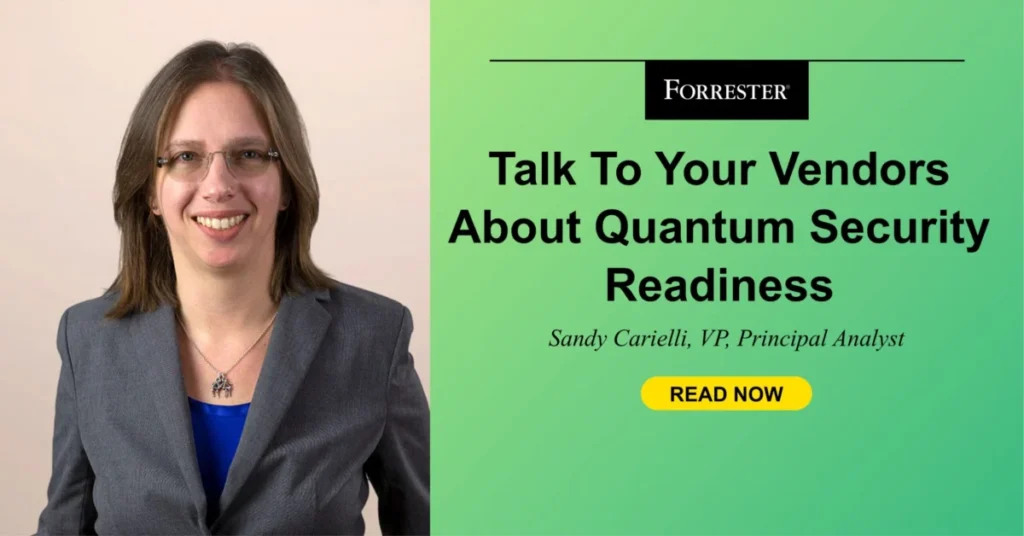
Recognizing this imperative, major research and advisory firms, including Forrester, have amplified these warnings. Enterprises can no longer treat quantum security as an internal IT issue alone. Because modern business ecosystems rely heavily on third-party integrations—spanning cloud infrastructure providers, Software-as-a-Service (SaaS) vendors, niche software developers, and hardware manufacturers—an organization’s quantum readiness is only as strong as its weakest vendor link. To address this, security leaders are now being urged to embed procurement teams into their PQC task forces, fundamentally altering how Requests for Proposals (RFPs) and vendor contracts are drafted.
Chronology: The Road to PQC Procurement and Vendor Accountability
To understand how enterprise technology acquisition arrived at the intersection of cryptography and supply chain management, it is necessary to trace the chronology of recent quantum security milestones:
- Late 2022 to Early 2023: Awareness of the cryptographic threat posed by quantum computing transitioned from theoretical academic circles to boardroom discussions. Cryptographers warned that "Harvest Now, Decrypt Later" attacks were already underway, with malicious actors hoarding encrypted data today to unlock it once quantum hardware matures.
- January 2023: Forrester published its foundational report, Technology Leaders Must Work Together To Prepare For Q-Day. This document underscored the vital need for cross-departmental collaboration, specifically advocating for the inclusion of procurement professionals in quantum security strategies to aggressively engage third-party vendors.
- September 2023: CISA and the G7 Cyber Security Working Group released their joint call to action for post-quantum readiness. By formalizing five key priorities—with a heavy emphasis on procurement and regulatory integration—international policymakers signaled that voluntary, ad-hoc migration plans were no longer sufficient.
- October 2023: Building directly upon the CISA and G7 guidelines, industry analysts released targeted frameworks—such as the Assess Your Technology Vendors’ Quantum Security Readiness report—giving enterprises the exact diagnostic tools and questioning matrices needed to audit their supply chains.
- November 2023: Industry forums, such as Forrester’s Security & Risk Forum in Washington, D.C., dedicated specialized deep-dive sessions to operationalizing these frameworks, focusing heavily on overcoming internal organizational resistance and assessing vendor accountability.
Supporting Data: The Scale of the Supply Chain Challenge
The push for vendor-centric quantum readiness is not born out of hypothetical fears; it is driven by the stark reality of modern enterprise architectures.
Modern organizations rarely build everything in-house. A typical enterprise software stack is an intricate matrix of third-party dependencies:
- Cloud & Infrastructure Providers: Form the foundation of data storage and processing, meaning their underlying hypervisors and encryption protocols must support PQC algorithms.
- SaaS Vendors: Deliver daily productivity, customer relationship management (CRM), and enterprise resource planning (ERP) tools that process sensitive corporate and consumer data.
- Software and Hardware Vendors: Provide operating systems, firmware, and embedded security modules that must eventually phase out legacy algorithms like RSA and ECC in favor of NIST-standardized post-quantum algorithms (such as CRYSTALS-Kyber and CRYSTALS-Dilithium).
When an enterprise evaluates its migration timeline, third-party dependencies can either accelerate the transition or act as an insurmountable bottleneck. If a core cloud provider delays its PQC rollout by three years, any downstream enterprise utilizing that cloud service is effectively paralyzed, regardless of how quickly its internal engineering teams move.
Furthermore, operational complexity remains a significant hurdle. Historical cybersecurity transitions (such as the migration from SHA-1 to SHA-256) demonstrated that poorly implemented cryptographic changes can introduce massive operational friction, unexpected infrastructure strain, and systemic downtime. Enterprises must ensure that vendor-supplied PQC solutions do not compromise system performance or introduce vulnerabilities through inadequate testing and validation support.
Official Responses and Strategic Frameworks
The international regulatory community has responded decisively to the quantum threat. By aligning CISA, the G7, and private sector advisory bodies, governments are attempting to standardize the global migration path.
The integration of PQC into procurement processes means that vetting a vendor’s security posture is no longer limited to checking if they comply with SOC 2 or ISO 27001 standards. Future-proof procurement requires direct interrogation of a vendor’s quantum roadmap.
Security leaders and procurement officers are now advised to pose rigorous, targeted questions to their technology suppliers across three critical domains:
- PQC Roadmaps: What is the vendor’s explicit timeline for deprecating legacy asymmetric cryptography and adopting post-quantum standards? Do they have a transparent, verifiable migration schedule that aligns with national and international regulatory expectations?
- Architectural Readiness: How are the vendor’s systems designed to handle cryptographic agility? Can their current infrastructure support hybrid modes—running classical and post-quantum algorithms simultaneously—during the transition phase without breaking legacy interoperability?
- Operational Impact & Support: What level of infrastructure modification will be required for customers to adopt the vendor’s PQC-ready products? What kind of testing, validation, and documentation support does the vendor provide to ensure smooth deployment without excessive operational overhead?
Implications for Enterprise Security Leaders
The mandate to assess vendor quantum readiness carries profound implications for Chief Information Security Officers (CISOs), Chief Information Officers (CIOs), and procurement directors.
1. The Redefinition of the Security Team
Traditionally, the CISO’s office operated in a silo relative to the procurement department, stepping in only for final security reviews or compliance sign-offs. The post-quantum era shatters this division. Because third-party vendors represent the majority of an enterprise’s cryptographic exposure surface, procurement is now a frontline cybersecurity function. CISOs must train procurement professionals to recognize quantum-washing—where vendors make vague claims about "future readiness" without concrete architectural plans.
2. Rewriting Vendor Contracts and RFPs
Organizations must immediately begin updating their standard Request for Proposal (RFP) templates. Asking generic questions about encryption is no longer enough; RFPs must demand explicit disclosures regarding cryptographic inventories (crypto-agility), compliance with National Institute of Standards and Technology (NIST) post-quantum standards, and commitments to phased migration milestones. Vendor contracts must include SLAs that hold suppliers accountable for their quantum transition timelines.
3. Balancing Adoption with Operational Stability
As highlighted by industry frameworks, a quantum security initiative’s ultimate success depends as much on internal organizational adoption as it does on vendor capability. Even if a vendor delivers a flawlessly engineered PQC product, it will fail if it introduces excessive operational complexity or requires prohibitive infrastructure overhauls. Security leaders must carefully balance the urgency of Q-Day preparation with rigorous testing and validation to prevent self-inflicted operational outages.
Conclusion
The joint warnings issued by CISA and the G7 Cyber Security Working Group serve as a stark reminder that preparation for the post-quantum era cannot be postponed. As technology leaders map out their journeys to Q-Day, the message is clear: mastering internal cryptography is only half the battle. By weaponizing procurement processes, embedding security experts into vendor acquisition teams, and demanding absolute transparency from third-party suppliers, enterprises can transform their supply chains from their greatest vulnerability into a unified defense against tomorrow’s quantum threats.
