

The New Frontline: A Comprehensive Guide to Social Media Security in the Age of AI
In the digital era, social media is no longer just a marketing channel—it is a critical business asset, a customer service portal, and, increasingly, a high-value target for cybercriminals. As we move through 2026, the security landscape has undergone a seismic shift. No longer dominated by amateurish phishing attempts, the threat environment is now defined by organized, AI-powered automation and sophisticated social engineering.
For organizations, a single compromised account is not just an IT headache; it is a reputational catastrophe. With billions of dollars in annual losses attributed to social media-based fraud, security is no longer optional—it is a core component of enterprise risk management.

The Escalating Threat: A New Era of Cyber Risks
The threat landscape has matured from opportunistic “spray and pray” tactics to targeted, surgical operations. Understanding these risks is the first step toward building a resilient defense.
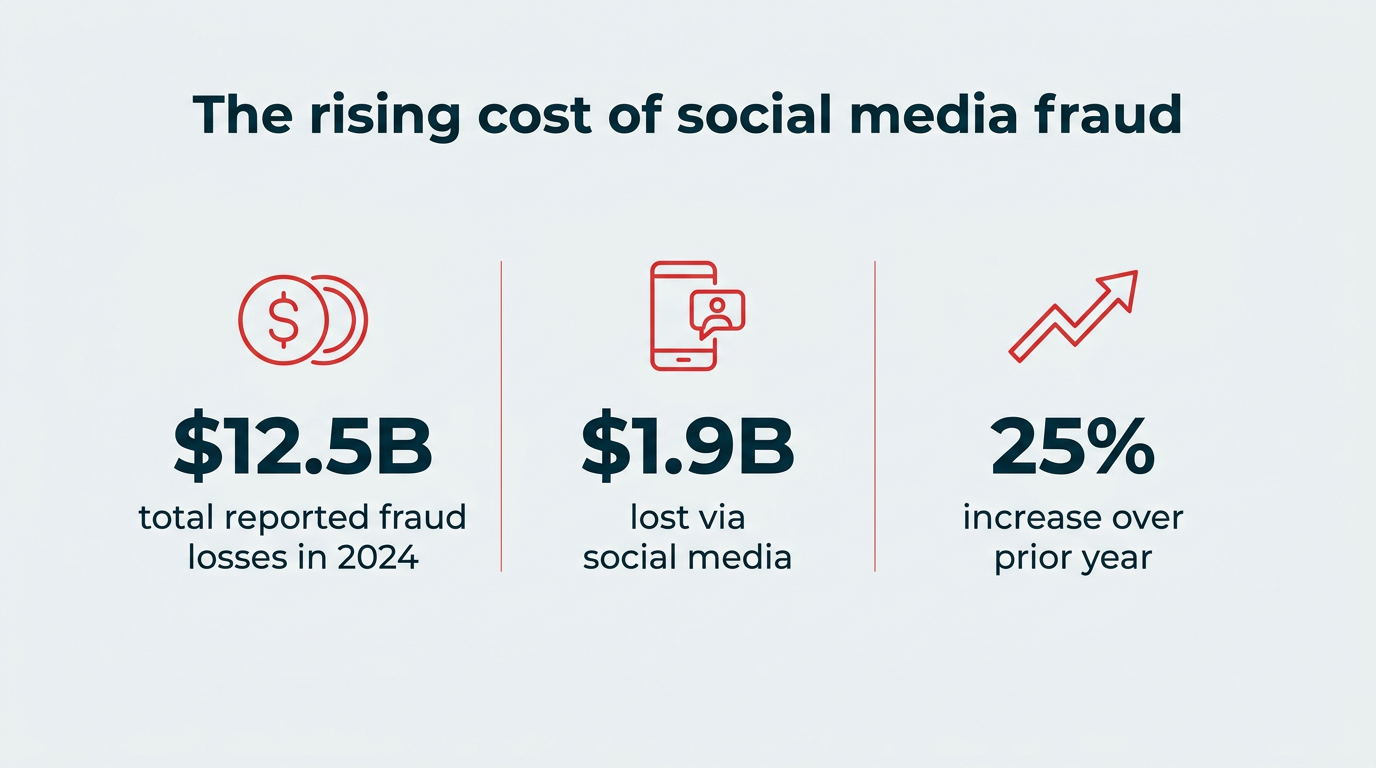
1. The Rise of AI-Powered Phishing and Deepfakes
Artificial Intelligence has transformed social engineering from a manual, time-consuming craft into a scalable, automated operation. Attackers now aggregate fragmented data points from multiple social profiles to create hyper-personalized phishing campaigns.

Perhaps most alarming is the rise of deepfakes. Gartner reports that 62% of organizations have encountered a deepfake attack in the past year. These incidents, which can involve AI-generated video or audio impersonating high-level executives, have already resulted in multimillion-dollar losses, proving that seeing is no longer believing.
2. Ad Account Hijacking and Malware
A sophisticated and growing threat to business accounts is the hijacking of social media ad accounts. By gaining access to an organization’s ad manager, attackers can bypass internal security to run fraudulent ads using the company’s own payment methods. This not only drains budgets but weaponizes the brand’s own reach to distribute malware and scams to unsuspecting customers.
3. The Imposter Epidemic
Imposter accounts remain a persistent, high-volume problem. Platforms like LinkedIn and Meta report taking action against hundreds of millions of fake accounts each quarter. While automated systems block the vast majority at registration, the "long tail" of fake accounts that slip through the cracks continues to target employees for credential theft and customers for financial fraud.
Supporting Data: The Financial Stakes
The numbers paint a stark picture of the current reality. According to the Federal Trade Commission (FTC), consumers reported losing $12.5 billion to fraud in 2024—a 25% increase over the previous year. Social media remains the primary hunting ground for these scammers, accounting for $1.9 billion in reported losses.
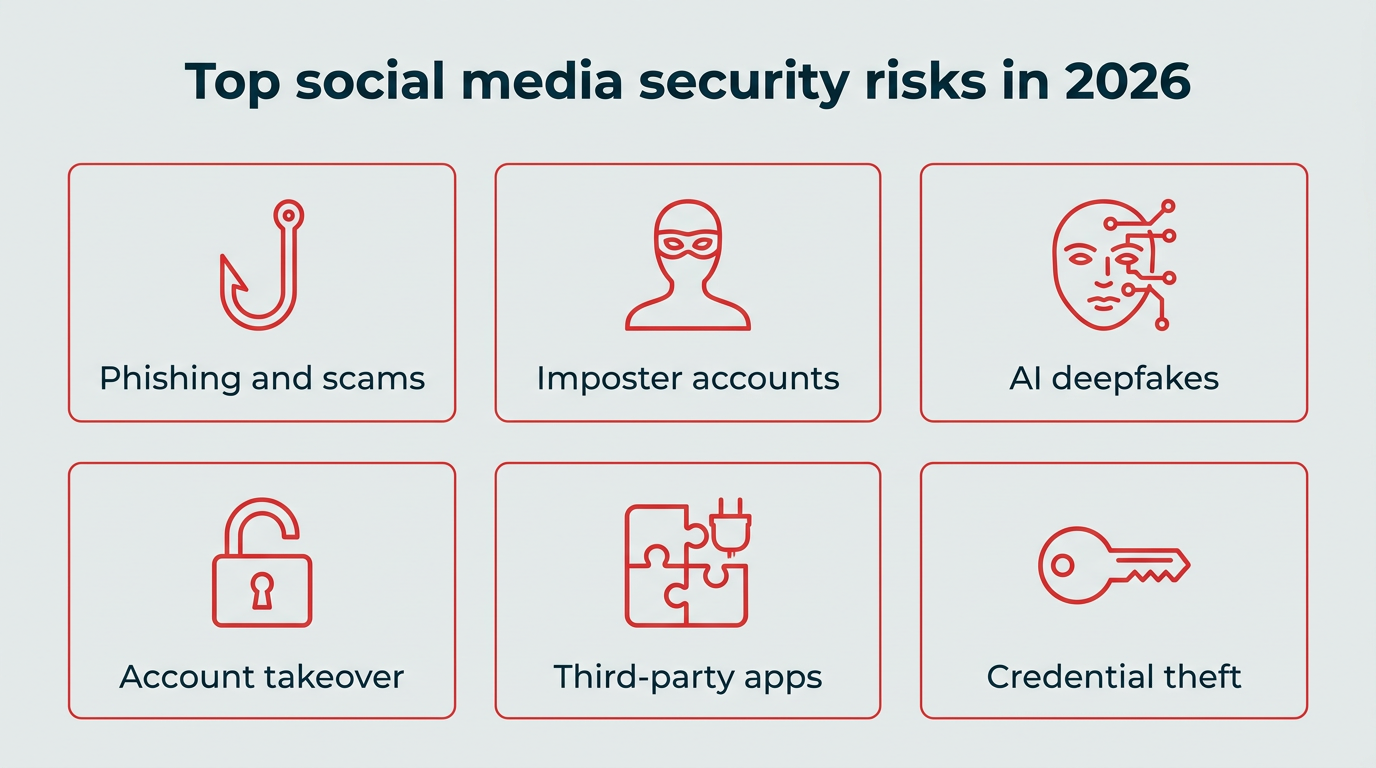
This data highlights a critical intersection: brand impersonation is no longer just a marketing issue; it is a direct financial liability for the customer base and a regulatory burden for the enterprise. When a company’s social presence is used to facilitate fraud, the legal and reputational consequences can be severe.
Chronology of Vulnerability: How Attacks Unfold
To effectively defend your organization, one must understand the lifecycle of a typical social media breach:

- Phase 1: Reconnaissance. Attackers gather intelligence from public employee profiles, analyzing job titles, team structures, and personal interests.
- Phase 2: Weaponization. AI tools are used to craft convincing messages or synthetic media (deepfakes) tailored to specific targets within the organization.
- Phase 3: Initial Access. Through spear-phishing or malicious third-party integrations, the attacker gains the first set of credentials or session cookies.
- Phase 4: Escalation. Once inside, the attacker often seeks administrative access to the primary business dashboard, ad accounts, and connected internal tools.
- Phase 5: Exploitation. The attacker launches the primary objective: deploying fraudulent ads, publishing misinformation, or exfiltrating customer data.
Defensive Strategies: The 2026 Security Checklist
Mitigating these risks requires a proactive, multi-layered approach. Organizations should implement the following eight pillars of social media security:
1. Robust Password and Credential Management
Password hygiene remains the most cost-effective defense. Every social account must utilize a long, randomly generated password stored in an enterprise-grade password manager. Reusing passwords across internal and external systems is a primary vulnerability that must be strictly prohibited by policy.

2. Multi-Factor Authentication (MFA) and Passkeys
If a platform supports them, passkeys are the gold standard. By replacing passwords with device-tied cryptographic credentials, they render traditional phishing pages useless. Where passkeys are unavailable, authenticator apps should be mandatory; SMS-based two-factor authentication should be a last resort due to the risk of SIM-swapping.
3. Principle of Least Privilege (PoLP)
Not every marketing team member needs full administrative access to social accounts. Use centralized publishing platforms that offer role-based access control (RBAC). This ensures that permissions are granted based on the specific requirements of the role and can be instantly revoked when an employee leaves the company.

4. Continuous Security Awareness Training
Human error is the weakest link. Security training should not be a one-time onboarding event; it should be a biannual requirement. Employees must be trained to recognize the signs of AI-driven social engineering and the dangers of seemingly harmless "personality quizzes" that often serve as data-harvesting tools for security questions.
5. Real-Time Monitoring and Alerting
Passive observation is not enough. Organizations must employ social listening tools to monitor for brand mentions, spikes in sentiment, and imposter account activity. Real-time alerts allow security teams to initiate takedown requests while the impact is still contained.

6. Quarterly Security Audits
Technology and platform settings change rapidly. A quarterly audit should review:
- Connected Apps: Revoke access for any third-party tools no longer in use.
- Permissions: Verify that current staff members still require their existing access levels.
- Privacy Settings: Ensure all profiles are configured for the highest level of security permitted by the platform.
7. Device and Connection Hardening
Corporate-managed devices should require screen locks and have automatic updates enabled. Furthermore, employees should be mandated to use a VPN when accessing brand accounts from public Wi-Fi networks in airports or cafes.
8. Incident Response Planning
What happens if an account is compromised? An incident response plan must be documented, tested annually, and include pre-drafted communications for stakeholders, regulators, and customers.
Implications for the Enterprise
For modern organizations, social media is a double-edged sword. It offers unparalleled access to customers but serves as a constant, high-visibility attack surface. The implication is clear: Social media security is a boardroom issue.

Regulators are increasingly looking at how companies govern their digital presence. In regulated industries like finance and healthcare, the lack of an audit trail for social media activity can result in significant fines. By treating social accounts as part of a formal risk management program, companies move from a state of vulnerability to one of resilience.
Governance and Compliance
Enterprise governance requires moving beyond manual, spreadsheet-based management. Centralized systems—such as those offered by Hootsuite or ZeroFOX—allow organizations to maintain a unified audit trail, enforce approval workflows, and automatically flag policy-violating content.

Ultimately, the goal of a robust social media security policy is not to stifle creativity or engagement, but to create a safe environment where your brand can thrive. By implementing rigorous access controls, fostering a culture of security awareness, and utilizing modern monitoring technology, organizations can effectively turn the tide against the rising wave of digital threats.
Quick Reference: Security Responsibilities
| Security Action | Frequency | Responsible Team |
|---|---|---|
| MFA/Passkey Verification | Monthly | Social Media Team |
| Access/Permissions Review | Quarterly | Social Lead & IT |
| Third-Party App Audit | Quarterly | IT Security |
| Imposter/Mention Monitoring | Daily | Social Media Team |
| Phishing/Social Training | Twice Yearly | IT Security & HR |
| Incident Response Test | Annually | Social, IT, & Comms |
As the digital landscape continues to evolve, your security posture must remain dynamic. By staying informed and disciplined, your organization can continue to leverage the power of social media while keeping the doors firmly locked against the threats of 2026 and beyond.
