
Google Search Console Introduces Multimodal Filter for Performance Reports: A New Era for Visual Search Analytics
SAN FRANCISCO — In a significant upgrade for digital marketers, SEO professionals, and site owners worldwide, Google has officially announced the rollout of a dedicated multimodal filter within the Search Console Performance report. This update marks a major milestone in how search engine optimization experts track, measure, and analyze user behavior. By separating traditional text-based queries from visual and multimodal searches, Google is providing unprecedented visibility into how web content is discovered through camera lenses, screenshots, and image-based queries.
The global rollout, which began today, captures a broad spectrum of modern search behaviors, including queries executed via Google Lens, Circle to Search on Android devices, direct image uploads to Google Search, and the widely used Chrome right-click "Search this image" feature. As visual search continues to capture a substantial share of consumer discovery journeys—particularly in e-commerce, fashion, and local business sectors—this new capability promises to bridge a long-standing data gap for webmasters.
Main Facts: Understanding the Multimodal Search Update
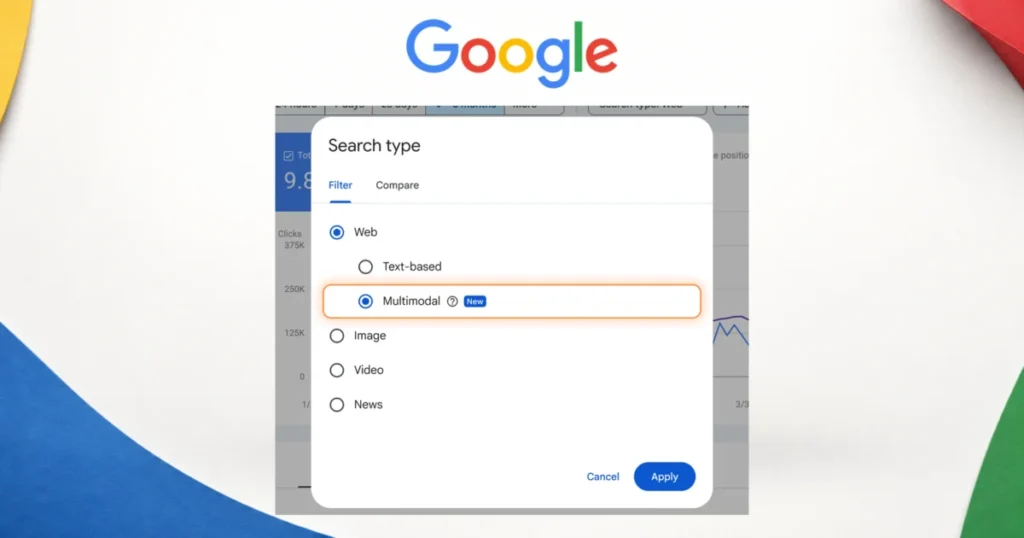
The core of this update rests on a structural division within the standard Web search type inside Google Search Console. Historically, the "Web" filter aggregated all standard search engine results page (SERP) traffic, blending traditional text inputs with any visual elements that happened to trigger a click or impression. Moving forward, Google Search Console’s Performance report will allow users to cleanly segment this data.
According to Google’s updated documentation and announcements on the Search Central blog—co-authored by Harsh Kharbanda, Product Manager Lead for Google Lens, and Moshe Samet, Product Manager Lead for Search Console—the Performance report now distinctly categorizes Web traffic into two precise streams:
- Text-Based Traffic: Encompassing queries typed directly into the standard Google search bar.
- Multimodal Traffic: Describing web search results where an image served as a primary or partial component of the user’s search query.
Crucially, the metrics associated with this new filter will only appear for websites that actively receive traffic originating from these visual and multimodal channels. Furthermore, Google has confirmed that multimodal reporting is simultaneously being integrated into its generative AI performance reports, expanding how site owners track visibility across advanced, AI-driven search paradigms (though these specific AI reports continue to measure impressions rather than clicks).
The Missing Piece: Understanding Query Limitations
While the introduction of the multimodal filter is a welcome addition, SEO practitioners must navigate a notable data limitation: the absence of specific text query data for multimodal traffic.
Because multimodal searches fundamentally rely on images rather than typed keywords, Google cannot supply traditional text query metrics for this segment. When a user selects the multimodal search type within the Performance report, the queries tab becomes unavailable. Consequently, site administrators will not be able to see the exact visual assets, photographs, or screenshots uploaded by users that triggered their pages to rank.
Instead, analysis must be conducted at the page level. If a specific product or landing page registers multimodal clicks or impressions, site owners will know that the content was surfaced via visual search, but the exact visual catalyst remains hidden behind Google’s privacy and technical constraints. Nevertheless, marketers can still cross-reference this page-level multimodal data with standard dimensions such as country and device breakdowns, as well as leverage the export functionality to pull data via external tools.
Chronology: The Evolution of Search Console and Visual Search
To fully appreciate the weight of this announcement, it is helpful to look back at the rapid evolution of Google Search Console and the underlying visual search ecosystem over recent years.
- The Rise of Google Lens and Visual Discovery (2017–2023): Google steadily introduced and refined visual search technologies, transforming Google Lens from a niche smartphone application into a dominant multimodal entry point. Features like "Circle to Search" on Android and browser-based image searches trained millions of users to query the web using photos of shoes, landmarks, plants, and consumer goods instead of keywords.
- The Integration Dilemma: Despite the explosion of visual search usage, webmasters faced a frustrating blind spot. Traffic driven by Google Lens or image-to-web queries was lumped into generic organic traffic pools, making it nearly impossible to measure the tangible ROI of visual-friendly content strategies, high-resolution product photography, and visual SEO (vSEO).
- August 31, 2026: Google completed its worldwide rollout of generative AI performance reports within Search Console, establishing a precedent for reporting specialized, non-traditional search metrics (focusing heavily on impression tracking).
- September 2026: Google officially announces and begins the global rollout of the multimodal filter for Search Console’s Performance report, formally acknowledging the convergence of text, image, and AI-driven queries within web analytics.
Supporting Data and Technical Implementation
Implementing and analyzing the new multimodal filter requires a clear understanding of how Search Console structures its data architecture.
Under the hood, the feature integrates directly into the existing Web search type selector. When navigating to Performance > Search type, webmasters will find the updated taxonomy distinguishing between text and multimodal dimensions.
Data Extraction and API Constraints
For data-driven enterprises looking to build custom dashboards, understanding how this data flows through Google’s application programming interfaces (APIs) is vital. As of the Search Analytics API reference updates, standard report types continue to include web, image, video, news, Discover, and Google News. Developers should monitor upcoming API releases for explicit parameter expansions to programmatically pull multimodal splits without relying solely on the Search Console user interface.
In the interim, teams can utilize the manual Export button located within the Performance report interface to download CSV or Google Sheets data. Because the rollout is happening globally in phases, not all Search Console properties will display the option simultaneously. Site owners are advised to check their properties daily and compare initial multimodal splits against historical aggregate Web totals to establish a clean baseline.
Official Responses and Expert Insights
The release of the multimodal filter underscores Google’s ongoing commitment to transparency, even as search technology grows increasingly complex and non-textual.
In their joint statement published on the Search Central blog, Harsh Kharbanda (Product Manager Lead for Google Lens) and Moshe Samet (Product Manager Lead for Search Console) emphasized the practical utility of the update:
"This update is designed to give you insights into how your content is surfaced when users search using images (such as with a smartphone camera)."
This sentiment highlights the shift from desktop-bound, keyboard-heavy typing to ambient, mobile-first, and camera-driven discovery. As consumers increasingly pull out their smartphones to snap a picture of a neighbor’s couch, a restaurant dish, or a storefront sign, Google’s search engine processes these visual inputs to serve relevant web pages. Until now, that traffic was a black box for SEOs. Now, product managers and site owners have a clear window into how well their visual assets perform in the wild.
Industry analysts have also pointed out that while the lack of query data is a hurdle, it aligns with privacy standards and the technical reality of image recognition algorithms, which map pixels to semantic entities rather than explicit alphanumeric search strings.
Implications for SEO Professionals, E-Commerce, and Content Creators
The introduction of the multimodal filter has profound implications across multiple digital sectors, fundamentally changing how digital strategies are planned and measured.
1. A Paradigm Shift for E-Commerce and Visual SEO
For online retailers, fashion brands, home decor sites, and publishers heavily reliant on product photography, this update transforms visual SEO from a guessing game into a measurable discipline.
- Page-Level Optimization: Because query data is absent, SEOs must pivot their optimization strategies toward page-level excellence. Ensuring that product images feature robust alt text, structured data (such as Product schema), high-resolution imagery, and clean contextual surrounding text becomes critical for signaling relevance to Google’s multimodal algorithms.
- Tracking Visual ROI: Brands can now directly measure whether investments in professional product photography, 3D renders, and visual optimization are successfully driving traffic from tools like Google Lens and Circle to Search.
2. Refining Content Audits and Performance Baselines
Digital marketers must update their reporting frameworks. When analyzing organic traffic dips or spikes, distinguishing between a drop in traditional keyword rankings and a shift in visual search behavior is now possible. Content strategists should examine which pages naturally attract multimodal traffic and analyze what structural elements make those pages attractive to visual searchers.
3. Adapting to the Future of Ambient Search
As search engines evolve into multimodal, generative assistants that seamlessly blend text, voice, and vision, tools like Search Console must adapt. This update represents a vital stepping stone toward total visibility in an AI-dominated search landscape. By providing a clear metric for image-driven web discovery, Google is equipping webmasters with the data necessary to thrive in a world where a picture is truly worth a thousand search queries.
Looking Ahead
As the global rollout continues to propagate across Google’s massive infrastructure, site administrators should exercise patience if the filter does not immediately appear in every property. Once active, taking a granular look at the data—comparing historical benchmarks against the newly segregated multimodal streams—will be essential for establishing accurate Key Performance Indicators (KPIs) for the remainder of the year and beyond.
In summary, Google Search Console’s new multimodal filter is more than just a minor interface tweak; it is a necessary acknowledgment of how modern consumers interact with the web. By shedding light on image-based searches, Google is empowering creators and businesses to better understand, optimize, and capitalize on the visual future of search.
