
The AI Paradox: Why Your Organization Is Falling Behind Its Own Employees
For years, the corporate narrative surrounding Artificial Intelligence was defined by a single fear: resistance. Executives worried that employees would push back against automation, fearing for their job security or struggling to adapt to a machine-augmented workplace. Today, that narrative has been flipped on its head.
In the modern enterprise, the workforce is often sprinting ahead of the boardroom. Employees are actively integrating AI into their daily routines, experimenting with chatbots, generative tools, and automated workflows to reclaim time and enhance their output. Yet, despite this surge in bottom-up adoption, many organizational initiatives remain stuck in a perpetual state of "pilot purgatory."
According to the 2026 State of AI Report by SmarterX, more than half of professionals have moved well beyond the experimentation phase. However, a staggering 71% of organizations still lack a formalized AI roadmap. This disconnect—between an enthusiastic, tool-wielding workforce and a strategy-less leadership—is the primary reason AI initiatives fail to deliver meaningful business results.
The State of the Industry: A Chronology of Adoption
The journey toward AI maturity has been rapid, yet uneven. To understand why organizations are currently stalling, we must look at the progression of AI integration over the last three years:
- 2023: The Year of Discovery. Organizations rushed to provide access to generative AI tools. The focus was on "what can this do?" rather than "how does this align with our goals?"
- 2024: The Year of Experimentation. Teams began deploying AI for isolated tasks, such as content drafting or basic data analysis. Siloed projects became the norm, often operating outside of IT or compliance oversight.
- 2025: The Reality Check. As the novelty faded, leaders began to ask for ROI. Many discovered that their isolated experiments were not scalable, and that they lacked the data hygiene or governance to turn these projects into business-wide assets.
- 2026: The Strategic Pivot. We are currently in the era of "Organizational Readiness." The realization has set in that AI is not a plug-and-play software update; it is a fundamental shift in how business is conducted.
The Six Pillars of AI Readiness
To bridge the gap between employee enthusiasm and corporate performance, leaders must pivot from tactical adoption to structural readiness. The challenge is no longer about finding the right tool; it is about auditing the foundation upon which those tools sit.
1. Strategic Alignment: Beyond the Hype
AI initiatives often fail because they lack a clear connection to business objectives. An organization must identify specific pain points—not just "doing more with AI"—and prioritize them based on measurable impact.
- The Challenge: Distinguishing between "shiny object" syndrome and genuine value creation.
- The Fix: Leaders must define a shared vision of success. What are we trying to solve? Is it customer acquisition, cost reduction, or operational efficiency? If a use case doesn’t map back to a core business goal, it should not be a priority.
2. The Human Element: Building AI-Native Teams
Technology is the easy part; the people side of the equation is complex. Employees need more than just login credentials for ChatGPT or Claude. They require a baseline understanding of how AI augments their expertise, clarity on what is permitted, and a safe space to fail during the learning process.
- The Shift: We are moving from a world of "AI users" to "AI builders." As non-technical teams begin to develop their own workflows and lightweight solutions, leadership must provide the guardrails and resources to ensure this creativity remains productive and secure.
3. Data Infrastructure: The Fuel for the Machine
An AI model is only as intelligent as the data it is fed. Many organizations are finding that their "Big Data" is actually "Dark Data"—unstructured, siloed, and unreliable.
- The Audit: Before scaling, teams must determine where their data lives, assess its accuracy, and define clear protocols for handling proprietary or sensitive information. Without reliable data, AI optimization is merely a way to automate errors at scale.
4. Governance and Guardrails
There is a common misconception that governance is an "innovation killer." In reality, effective governance is an innovation enabler. By establishing clear policies on data usage, copyright, and ethical deployment, leaders provide the psychological safety their teams need to experiment without fear of violating compliance standards.
5. Technical Stack Optimization
"AI-ready" does not necessarily mean "AI-heavy." It means auditing the existing technology stack to identify where AI capabilities are already embedded and where gaps exist. The goal is to build an ecosystem where tools like Gemini, Claude, and NotebookLM can interact seamlessly, rather than creating a fragmented landscape of disconnected subscriptions.
6. Workflow Reinvention
The final, and perhaps most difficult, hurdle is moving beyond simple automation. Automating a broken process only gives you a faster, broken process. AI-ready organizations are taking the time to redesign workflows from the ground up, identifying tasks that were previously impossible and creating entirely new avenues for efficiency and innovation.
The Implications: Why Waiting is Not an Option
The cost of inaction is growing. As competitors move toward "agentic workflows"—where autonomous AI agents handle complex, multi-step processes—organizations that remain tethered to legacy, manual workflows will face an insurmountable productivity gap.
The implication for leadership is clear: the era of top-down command and control is ending. The future belongs to organizations that can foster a culture of "responsible agility." This requires leaders to act as architects of an AI-native ecosystem rather than just purchasers of software licenses.
Preparing for the Future: MAICON 2026
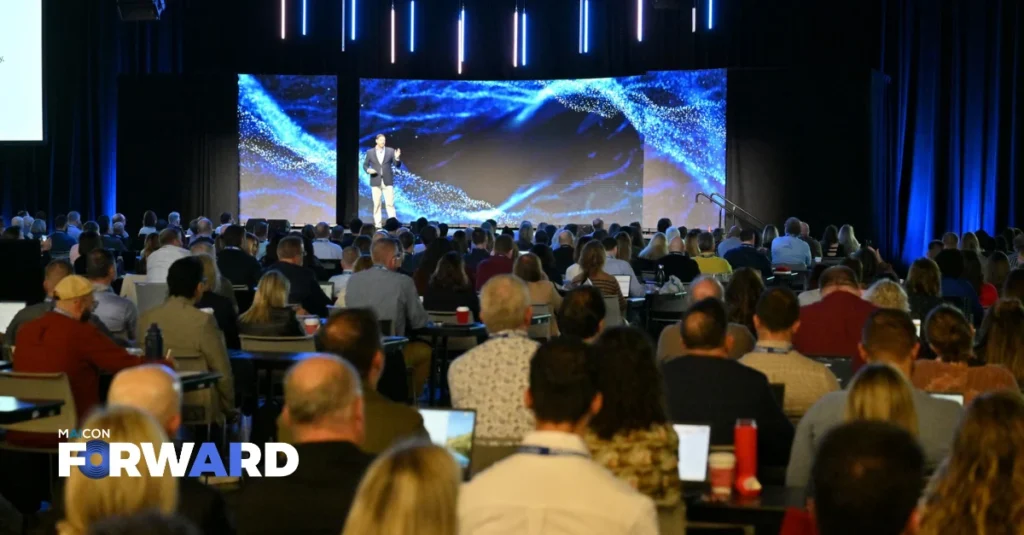
For leaders looking to move from scattered experimentation to a cohesive, scalable strategy, the upcoming Marketing AI Conference (MAICON) in Cleveland, Ohio (October 13–15, 2026), provides a critical roadmap.
MAICON is designed specifically for professionals tasked with navigating the complexity of this transition. The agenda is built to address the six pillars mentioned above:
- For Strategy: Sessions like The AGI Chronicles: The Final Frontier and Marketing Forward provide frameworks for making investment decisions that survive the hype cycle.
- For Talent: AI Adaptation: The People Side of Scale and From AI Users to AI Builders offer practical advice on managing the cultural shift within your workforce.
- For Data and ROI: Sessions like Redefining ROI and What’s Actually Working provide real-world case studies from global leaders at companies like General Motors, AT&T, and The Home Depot.
- For Governance: The Playbook for Marketing Transformation tackles the difficult task of scaling enablement while maintaining strict policy compliance.
- For Workflow: Building a Content Marketing Agentic Workflow and How to Reimagine and Build Workflows That Weren’t Possible Before offer the technical blueprint for the next generation of operations.
Conclusion: The Path Forward
The "AI gap" in your organization is not a sign of failure; it is a sign of a workforce that is ready and willing to innovate. Your role as a leader is to provide the infrastructure, the strategy, and the governance to channel that energy into results that move the needle.
As we look toward the remainder of 2026 and beyond, the winners will not necessarily be the companies with the most expensive tools. They will be the companies with the most robust, AI-ready foundations. By auditing your strategy, empowering your people, and cleaning your data, you can stop the stalling and start the scaling.
Join us at MAICON 2026 to turn these concepts into your organization’s roadmap for the future.
