

The Growth Playbook: Lessons from the Disruptors Who Rewrote the Rules
In the modern digital economy, the difference between a stagnant startup and a global juggernaut often comes down to one fundamental philosophy: the relentless pursuit of growth through scientific rigor. Companies like Uber, Spotify, and Airbnb did not achieve market dominance through luck or happenstance. Instead, they pioneered a systematic approach to business development that combined high-velocity experimentation, data-driven decision-making, and an uncompromising focus on the user experience.
By dissecting the early strategies of these industry titans, we can uncover a replicable playbook for modern businesses seeking to scale in an era of rapid technological and behavioral change.
The Core Pillars of Disruption: An Analytical Overview
To understand the success of these companies, one must first recognize their shared DNA. They were not merely offering a better product; they were creating entirely new market ecosystems. Uber redefined transportation, Airbnb transformed hospitality, and Spotify revolutionized the consumption of intellectual property.
The main facts are clear: these organizations view their business models not as static products, but as living, breathing experiments. By prioritizing the "fail-fast" mentality and cross-functional synergy, they successfully mitigated the risks inherent in radical innovation.

A Chronology of Scaling: From Garage Experiments to Global Giants
The trajectories of these companies followed a distinct pattern of "crawl, walk, run."
The Early Days: Finding Product-Market Fit
In the beginning, these giants were focused on solving a single, painful friction point.
- Uber started as a high-end "Black Car" service for the elite, serving as a controlled experiment to see if the demand for on-demand transport existed.
- Airbnb famously started by renting out air mattresses in a living room, focusing intensely on the "superhost" experience to ensure the supply side of their marketplace was robust before scaling demand.
- Spotify focused on the technical hurdle of latency—ensuring music streamed instantly, effectively killing the need for illegal piracy and setting the stage for a legitimate streaming future.
The Scale-Up Phase: Diversification
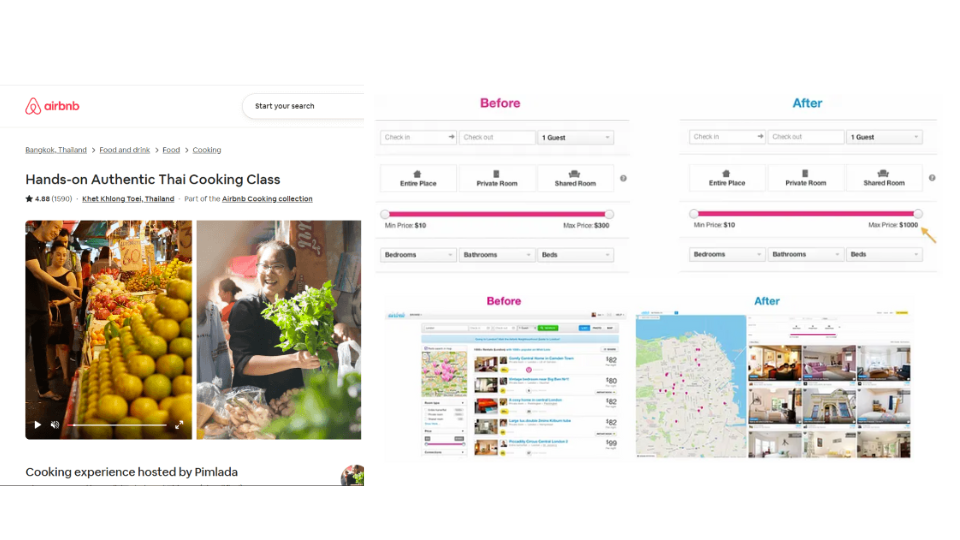
Once the core product was validated, each company moved into expansion. Uber launched UberPOOL and UberEATS; Airbnb introduced "Experiences"; Spotify transitioned from a music library to a multi-format audio powerhouse, integrating podcasts and exclusive content. This phase was defined by the transition from a single-feature tool to a comprehensive platform ecosystem.
Data-Driven Decisions: The Science of Growth
Data is the lifeblood of the modern growth engine. For Spotify, Airbnb, and Uber, intuition is secondary to empirical evidence.

The A/B Testing Engine
Spotify’s growth is deeply rooted in continuous A/B testing of their user interface. By measuring engagement, retention, and churn metrics, they determine which features—like "Discover Weekly" or personalized algorithmic playlists—actually drive long-term habit formation.
Predictive Algorithms
Airbnb’s "Smart Pricing" algorithm is a masterclass in data utilization. By synthesizing variables such as seasonal demand, local events, and property history, they empower hosts to maximize occupancy without sacrificing revenue. This creates a balanced marketplace where both the guest and the host feel they are receiving optimal value.
Dynamic Optimization
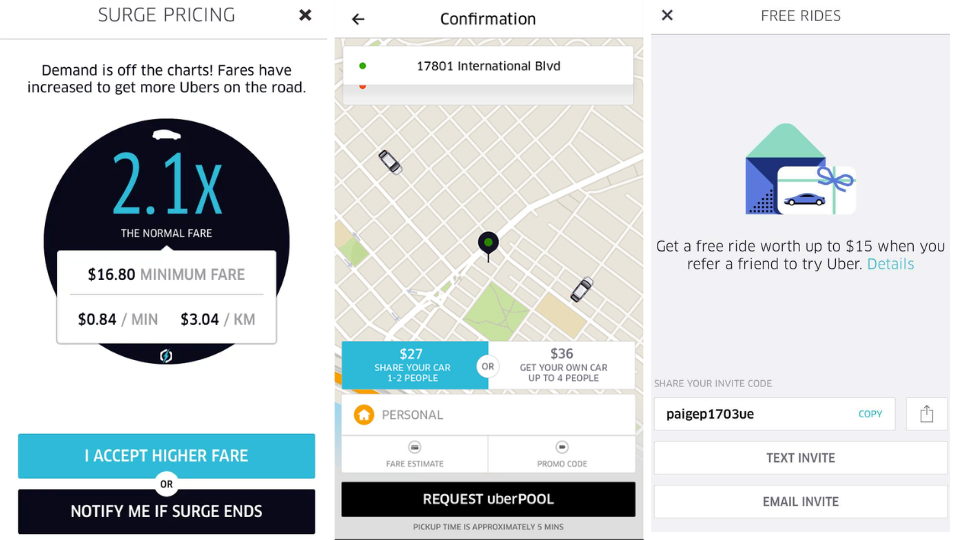
Uber’s surge pricing is perhaps the most famous example of data-driven market equilibrium. By dynamically adjusting prices based on real-time supply and demand, Uber ensures that transportation is available even during peak hours, effectively managing the "marketplace tension" that plagues traditional logistics companies.
Fostering a Culture of Risk and Rapid Iteration
"Fail fast" is a common corporate cliché, but for these companies, it is an operational reality. They have cultivated environments where employees are incentivized to test hypotheses without the fear of punitive measures following a failed experiment.
The Philosophy of "Fail Fast"
When an experiment fails—as many do—these companies treat the failure as a data point rather than a setback. For instance, when Uber experimented with various delivery models, they quickly identified what worked and what didn’t, allowing them to pivot capital toward the most promising segments. This agility allows them to stay ahead of competitors who are often bogged down by bureaucratic decision-making.
Cross-Functional Collaboration: Breaking Silos
Innovation does not happen in a vacuum. At Airbnb, engineering, marketing, design, and customer support are not treated as separate entities. Instead, they form cross-functional teams that tackle specific user-journey pain points. This ensures that a new feature is not just technically sound, but also marketing-friendly and customer-centric from its inception.
The User Experience (UX) as the Ultimate Competitive Advantage
In a crowded marketplace, the most intuitive interface wins. These companies realized early on that if the user experience was cumbersome, growth would inevitably stall.
- Uber’s Simplicity: By eliminating the need for cash, phone calls, and manual navigation, Uber turned a high-stress activity (hailing a cab) into a seamless, "magic" experience.
- Airbnb’s Trust Infrastructure: Airbnb understood that their biggest obstacle was the inherent fear of staying in a stranger’s home. By investing in verified profiles, secure payment gateways, and transparent review systems, they engineered trust into the platform.
- Spotify’s Personalization: By curating the user’s music journey, Spotify reduced "choice paralysis." When a user feels that an app "knows" them, the switching cost becomes significantly higher, leading to massive long-term retention.
Implications for Today’s Businesses
The implications of these growth strategies are profound for any business operating in the 21st century.
- Stop Guessing, Start Testing: Every major strategic decision should be backed by an experiment. If you don’t have the data to support a change, you don’t have enough information.
- Centralize the User: Every feature launch must answer the question: "How does this make the user’s life easier?" If the answer is complex, the feature likely needs refinement.
- Encourage Intellectual Honesty: A company that hides its failures is a company that cannot learn. Encourage your teams to report on failed experiments with the same enthusiasm as successful ones.
- Break Silos: Growth is a company-wide responsibility, not just a marketing function. Ensure your engineers and product designers are constantly collaborating with the teams that interact directly with customers.
Conclusion: The Path Forward
The success of Uber, Spotify, and Airbnb is not a mystery; it is a blueprint. By embracing a culture of constant experimentation, leveraging data to inform every strategic pivot, and maintaining an unwavering focus on the user, these companies have rewritten the rules of growth.
As the digital landscape continues to evolve, the businesses that thrive will be those that remain agile, data-literate, and deeply empathetic to the needs of their users. The "Growth Hacking" era has taught us that growth is not an accident—it is a systematic discipline that, when executed with precision, can turn a simple idea into a global phenomenon.
Whether you are a startup founder or a leader in a legacy industry, the lesson is clear: test, learn, optimize, and repeat. The next industry giant is waiting to be built—will it be yours?
