
The Age of the Vibe: How AI is Redefining Development and Marketing
In the landscape of modern technology, terminology often shifts as rapidly as the underlying code. Yet, rarely has a term emerged as simultaneously nebulous and pervasive as "vibe." Having eclipsed the industry-standard buzzword "agentic," the concept of "vibe" has moved from the lexicon of social media subcultures into the boardrooms of Silicon Valley and the workflows of global marketing departments. But what does it mean to "vibe" in the context of professional output, and why is this peculiar, almost countercultural nomenclature gaining such significant traction?
Main Facts: The Genesis of "Vibe Coding"
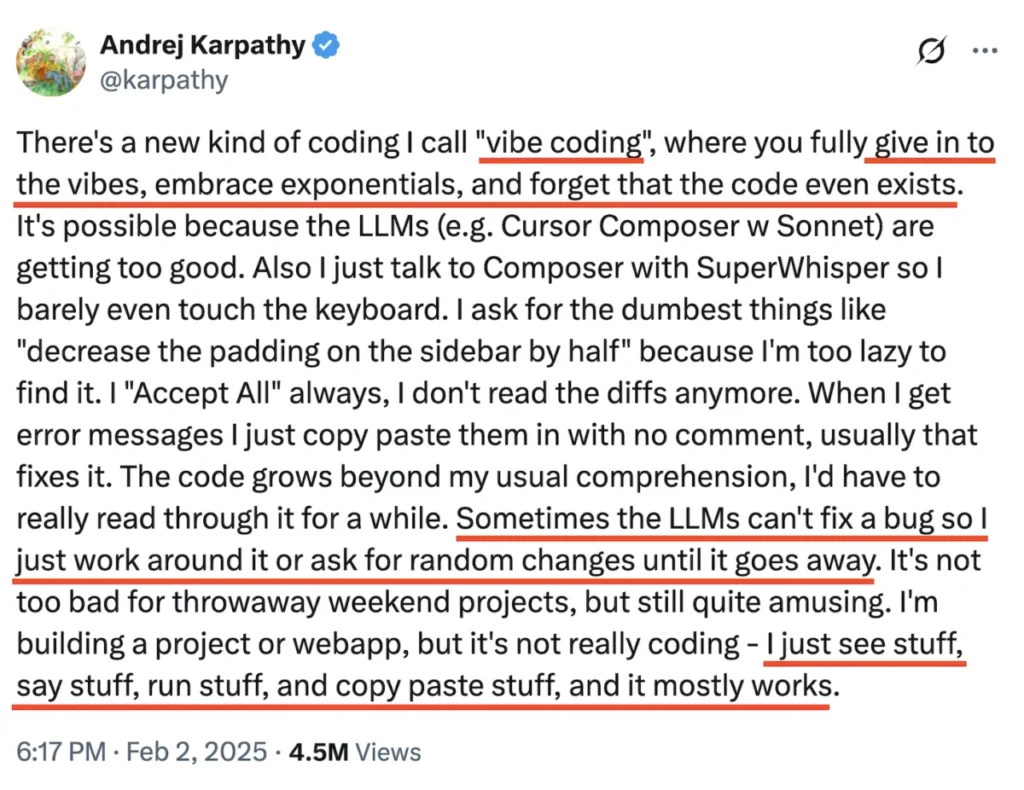
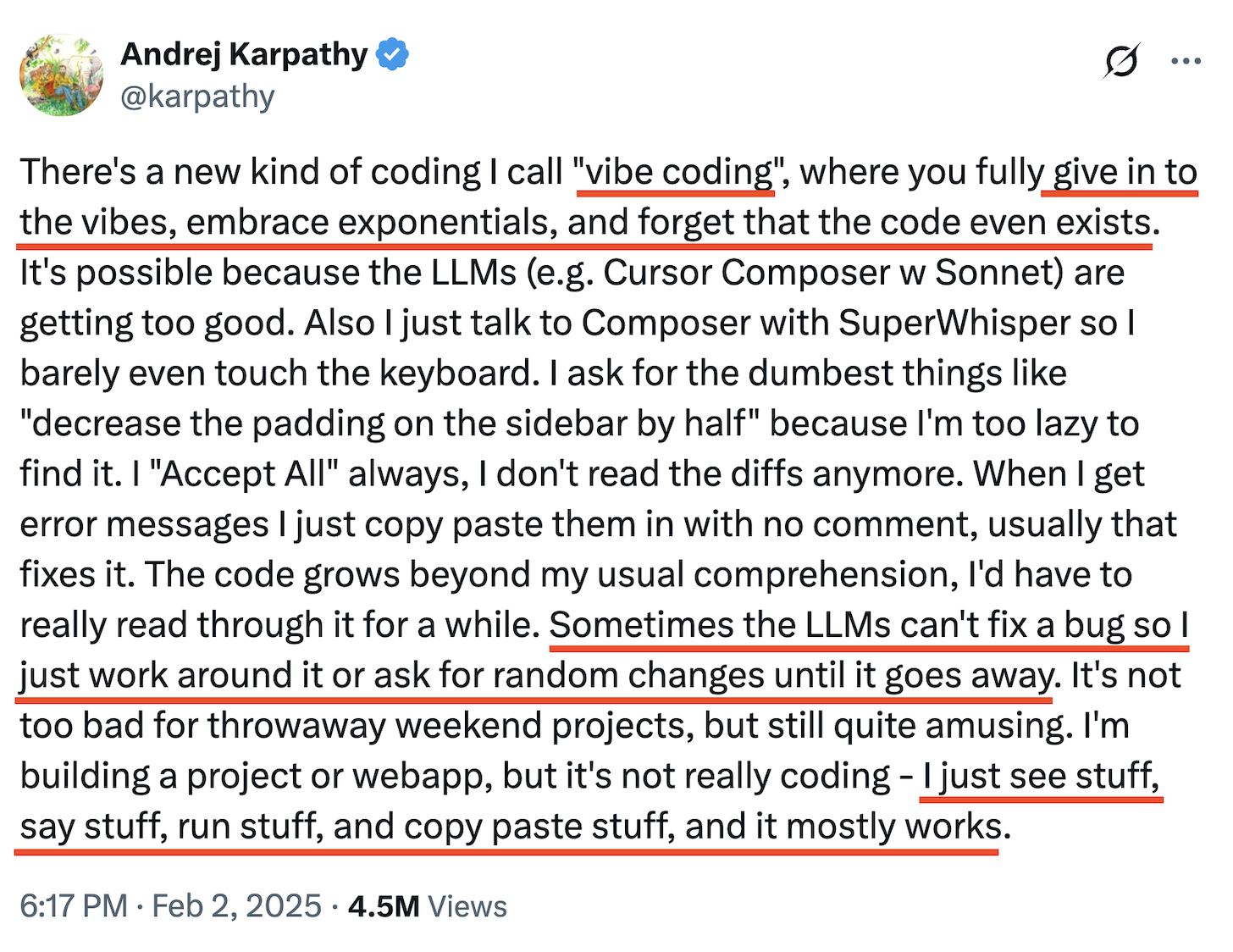
The term "vibe coding" finds its origin in a seminal post by Andrej Karpathy, a founding member of OpenAI and a luminary in the field of artificial intelligence. Karpathy described a paradigm shift in software engineering: the ability to build sophisticated applications by simply conversing with an LLM-powered assistant.
As Karpathy famously summarized: "I just see stuff, say stuff, run stuff, and copy-paste stuff, and it mostly works."
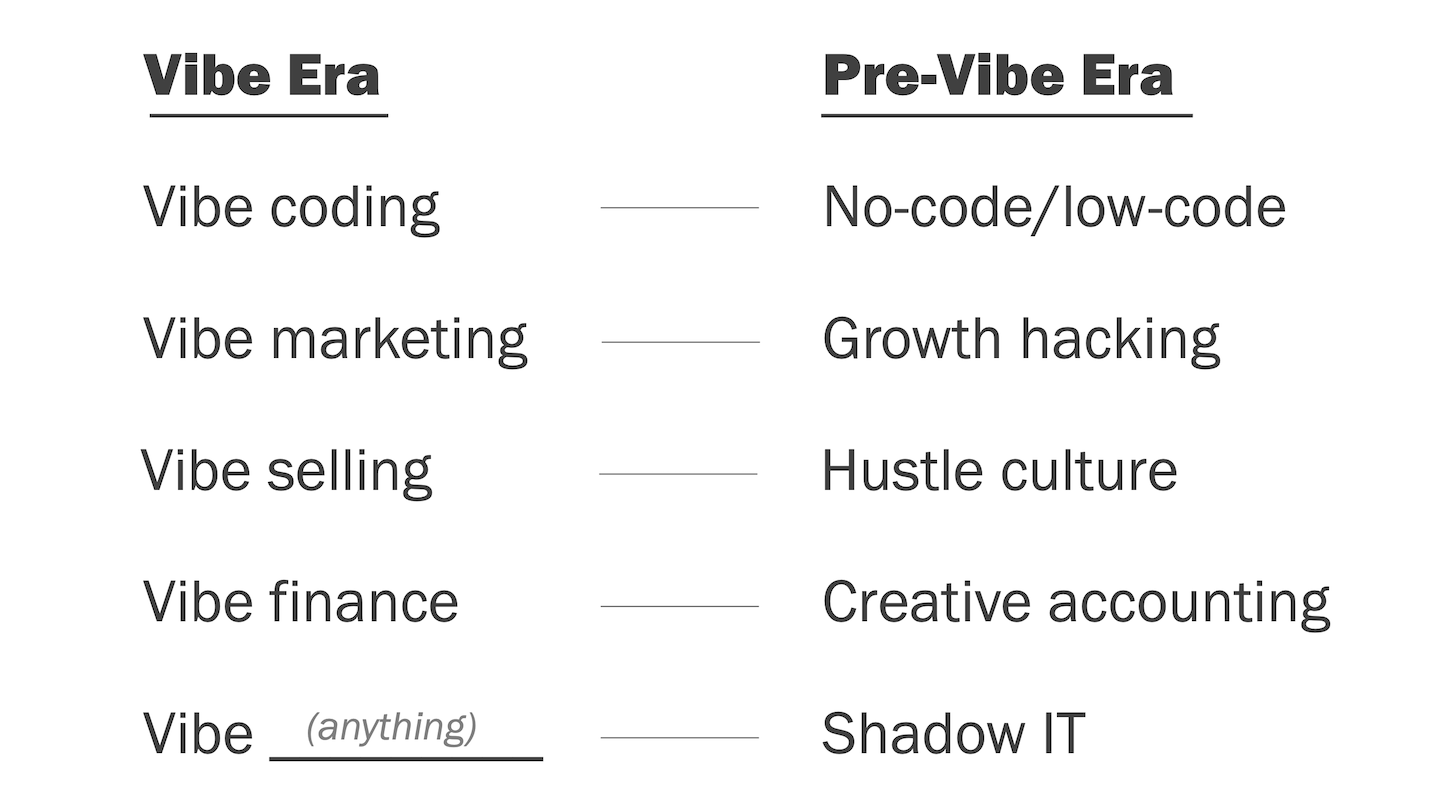
This represents the next evolutionary step of the no-code/low-code movement. While traditional no-code platforms provided visual interfaces to build logic, vibe coding utilizes the generative capabilities of AI to bypass the syntax-heavy burden of traditional programming. It is the democratization of software creation, empowering individuals to manifest digital tools without needing a deep understanding of C++, Python, or complex architectural frameworks. However, this "it mostly works" ethos remains a point of contention among traditional software engineers, who view the lack of rigorous debugging and structural integrity as a dangerous departure from professional standards.
Chronology: From Karpathy to the $100M ARR Sprint
The trajectory of the "vibe" movement has been meteoric.
- Early 2025: The term gains mainstream visibility following Karpathy’s viral social media discourse. The industry begins to experiment with LLM-based coding agents like Replit and Bolt.
- Mid-2025: The concept crosses the chasm from engineering to business operations. High-profile figures like Jason Lemkin of SaaStr document their own journeys in "vibe coding," sharing the highs of rapid iteration and the lows of debugging black-box AI logic.
- Late 2025: The market sees the emergence of dedicated platforms like Lovable, which achieved a $100 million Annual Recurring Revenue (ARR) in just eight months—a testament to the massive appetite for AI-assisted development tools.
- Present Day: "Vibe" has officially been co-opted by the marketing sector, evolving into "vibe marketing," a framework aimed at accelerating GTM (Go-to-Market) strategies through similar generative methodologies.
Supporting Data: The Lemkin Scale of Vibe Coding
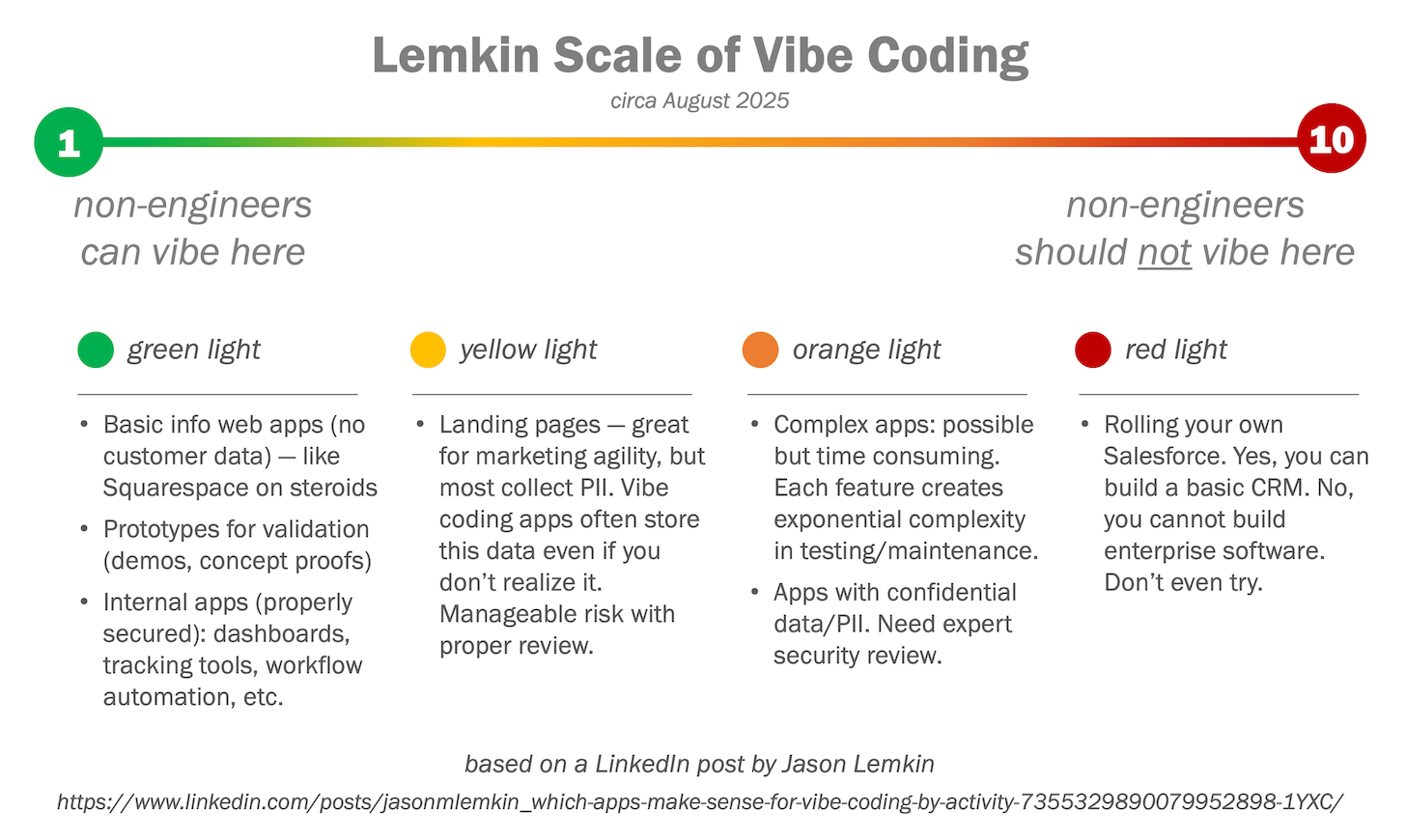
To understand the feasibility of this new development style, industry analysts have begun creating frameworks for assessment. The "Lemkin Scale of Vibe Coding," inspired by Jason Lemkin’s documented experiences, serves as a heuristic for non-engineers attempting to build applications.
The scale acts as a gauge for technical difficulty:
- 1-3 (The Green Light): These are projects ideal for vibe coding. Internal dashboards, simple personal workflows, and data-entry automation tools fall into this category. They are low-risk, high-visibility, and easily corrected by the AI.
- 4-7 (The Yellow Light): These involve more complex, multi-layered applications that require integration with existing APIs or databases. They are achievable but require a "human-in-the-loop" approach to troubleshoot the inevitable hallucinations of the model.
- 8-10 (The Red Light): Here, we find the "Here Be Dragons" territory. Attempting to build a bespoke CRM or a mission-critical financial system from the ground up via prompts is currently considered unviable. The lack of modularity and the complexity of the domain logic often result in technical debt that the AI cannot manage.
Importantly, this scale is dynamic. As LLMs become more context-aware and capable of managing complex state machines, the tasks currently sitting at an "8" will inevitably slide toward a "3" over the next 18 to 24 months.
Official Perspectives and Industry Skepticism
The response to the vibe movement has been polarized. On one hand, proponents argue it is the ultimate expression of "power to the people," echoing the 1960s counterculture ethos but applied to the silicon age. It turns every employee into a potential software engineer, effectively collapsing the distance between a business idea and a functional prototype.
On the other hand, traditionalists argue that "vibe coding" encourages a "hack-until-it-works" mentality that ignores fundamental software engineering principles like security, scalability, and technical debt. Critics warn that a company built on a foundation of "vibes" rather than rigorous architecture is inherently fragile.
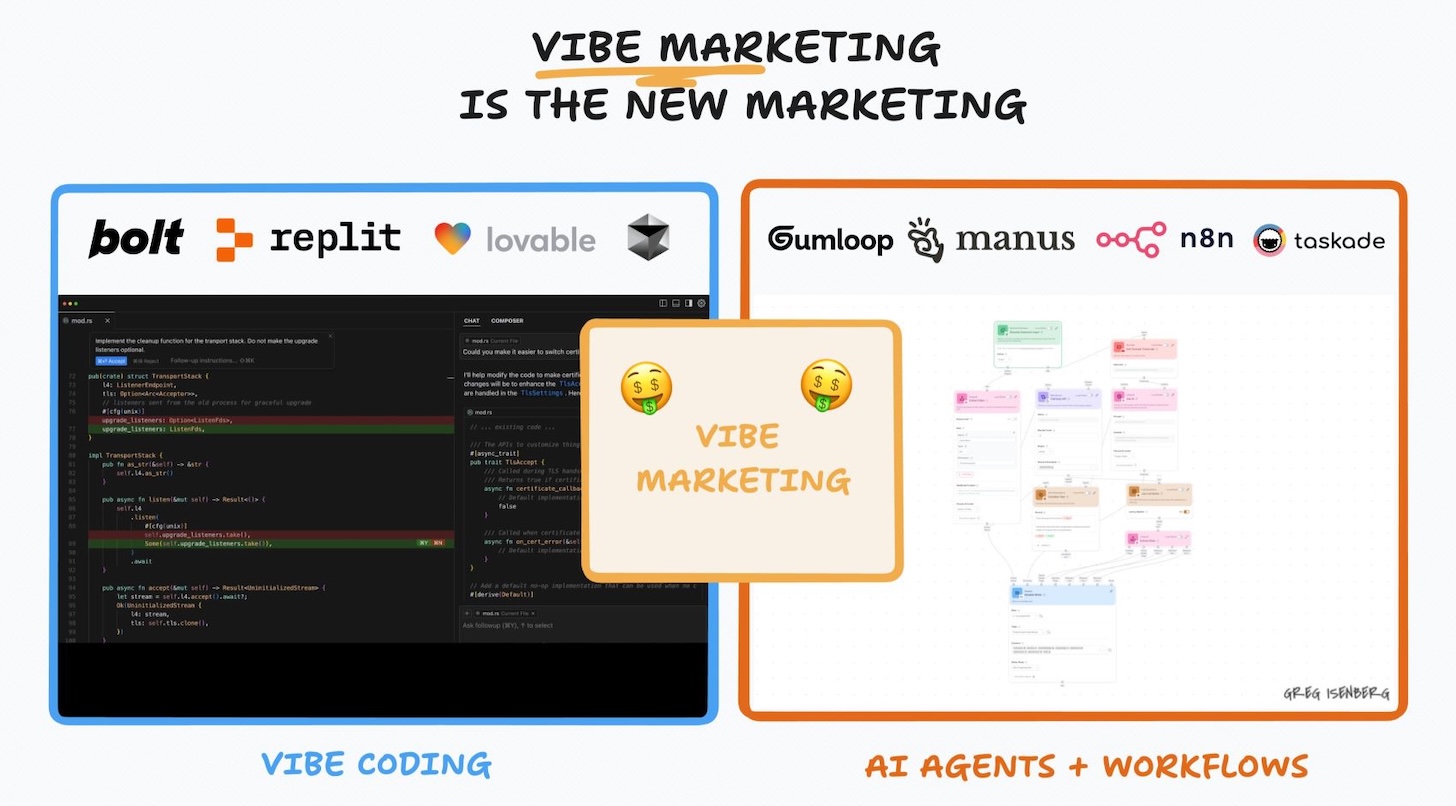
Marketing leaders, however, are largely ignoring these warnings. Greg Isenberg, a prominent voice in digital strategy, has framed "vibe marketing" as the ultimate leverage for the individual contributor. By utilizing AI agents to handle the heavy lifting of campaign management, data scraping, and content generation, a single marketer can now perform the work of a five-person team. This shift is being heralded as the birth of the "GTM Engineer"—a hybrid role that merges technical execution with creative strategy.
Implications: The Shift Toward "Big Experimentation"
If the era of Big Data was defined by the capture and storage of massive datasets, the "Vibe Era" is defined by Big Experimentation.
The true implication of this trend is not just faster production; it is the radical reduction in the cost of failure. When an idea can be turned into an application in a matter of hours, the barrier to testing a hypothesis vanishes.
1. From Content Generation to Customer Resonance
While many marketers are currently using "vibe" tools to flood the internet with automated content, the more sophisticated application lies in customer empathy. If developers use vibe coding to build tools, marketers should use vibe marketing to "whisper" to their customers. This means using AI to mine data for genuine patterns of interest, rather than just using it to generate spam. The question is no longer "How much can we produce?" but "Does this experiment resonate with the human on the other side of the screen?"
2. The Role of Marketing Operations
The most successful organizations will be those that provide the "scaffolding" for this experimentation. Marketing operations teams must shift their focus from being gatekeepers to being enablers. By establishing clear guardrails—compliance, privacy, and brand integrity—these teams allow the rest of the organization to "vibe" ideas to life without the risk of operational catastrophe.
3. The Lifecycle of the "Vibe"
While the terminology itself may be transient—as "vibe" feels like a mid-2025 trend destined to eventually fade into the background of more serious enterprise language—the underlying capability is permanent. We are witnessing a fundamental decoupling of execution from expertise.
Conclusion: Embracing the Future of Work
The rise of the "vibe" era represents a pivotal moment in the history of human-computer interaction. Whether we label it "vibe coding," "agentic workflows," or "Big Experimentation," the reality remains the same: the friction between an idea and its manifestation has been stripped away.
For the professional, the path forward is clear: lean into the tools, but maintain the discipline. The "vibe" is, at its heart, an exercise in human creativity unleashed. As long as the machines are used to facilitate that creativity—rather than replace the human judgment required to govern it—the "Good Vibrations" of this technological summer may well last a long time.
The successful marketer or developer of tomorrow will not be the one who knows the most syntax or the one with the largest team; they will be the one who best understands how to curate the chaos, manage the risks, and lean into the experimentation that these AI superpowers have finally made possible.
