

The Definitive Guide to Facebook Ad Specs: Maximizing Performance in 2025 and Beyond
In the fast-paced world of digital advertising, the technical requirements for Meta’s platforms—specifically Facebook—undergo constant refinement. For marketing professionals and business owners, failing to adhere to these specifications is more than a minor technical oversight; it is a direct hit to campaign performance. An ad that is improperly cropped or compressed will inevitably suffer from lower engagement rates and higher costs per click (CPC).
As of 2025, mastering Facebook ad sizes is no longer just about fitting an image into a box. It is about understanding the user experience across a fragmented landscape that includes mobile feeds, high-definition Reels, and immersive collection ads.

Main Facts: The Core Logic of Meta Advertising
The most critical realization for any advertiser is that Facebook is a component of the Meta ecosystem. Whether you are running ads on Facebook, Instagram, or the Audience Network, the technical standards are unified.
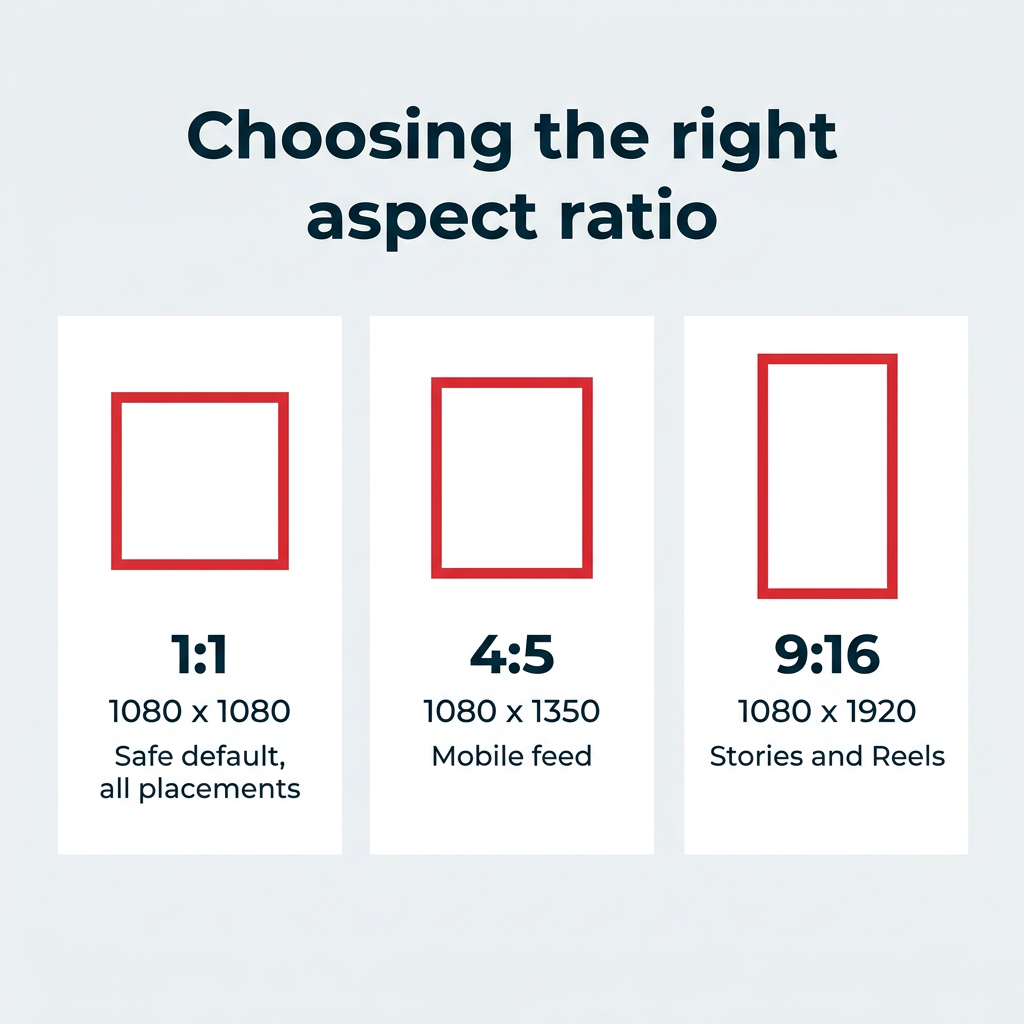
The universal truth of Meta advertising today is the dominance of vertical and square formats. Because over 80% of Facebook users access the platform via mobile devices, horizontal (landscape) imagery is becoming a relic. Advertisers are now prioritizing the 1:1 (square) and 9:16 (vertical) aspect ratios to ensure their content occupies the maximum amount of "thumb real estate" on a smartphone screen.

When you ignore these standards, you risk the "cropping effect," where critical text or call-to-action (CTA) buttons are cut off, rendering the advertisement ineffective.
Chronology of Evolution: From Desktop to Immersive Mobile
The history of Facebook advertising mirrors the shift in consumer behavior. A decade ago, the "Right Column" ad was the gold standard—a small, static image on the side of a desktop browser. As users migrated to mobile, those desktop-centric ads became secondary.
- The Desktop Era (2010–2014): Ads were designed for wide monitors, focusing on static imagery with heavy text overlays.
- The Feed Era (2015–2019): The focus shifted to the "Infinite Scroll." Advertisers learned that disrupting the user’s feed required high-quality, square (1:1) imagery that felt native to the user experience.
- The Immersive Era (2020–Present): With the rise of Stories and Reels, the industry moved toward 9:16 vertical video. This era prioritizes full-screen, high-definition content that eliminates all distractions, pushing the viewer into a "walled garden" of content.
Supporting Data: Why Dimensions Matter
Data consistently shows that campaigns utilizing platform-specific creative outperform those that use a "one-size-fits-all" approach.
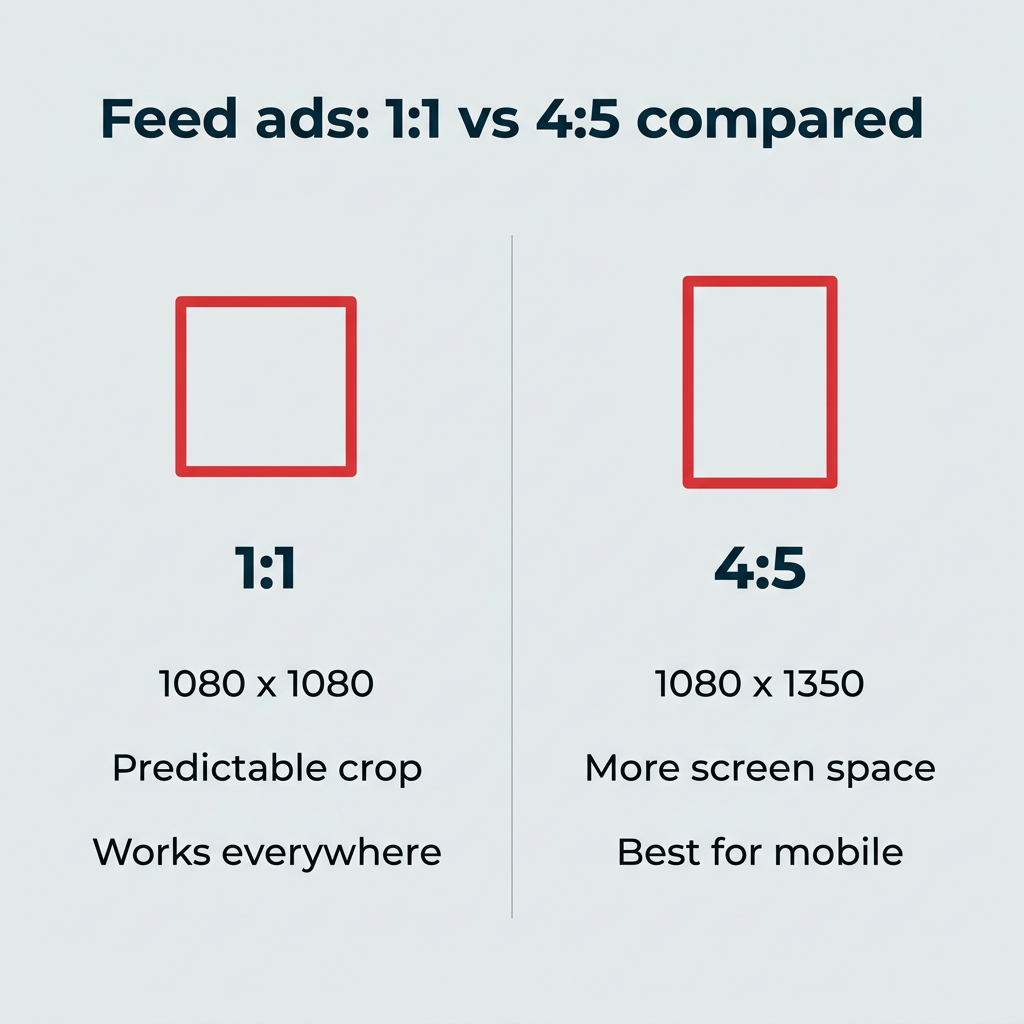
- The 4:5 Advantage: In the mobile feed, using a 4:5 aspect ratio (1080 x 1350 px) increases the "visual footprint" of the ad by approximately 20% compared to a 1:1 square. This extra space often translates to a higher Click-Through Rate (CTR).
- The 9:16 Necessity: For Reels and Stories, 9:16 is non-negotiable. Using a 1:1 image in a 9:16 space results in "letterboxing," where the ad appears tiny and surrounded by blurred filler content, leading to a significant drop in engagement.
- File Limits: Meta allows up to 30MB for static images and 4GB for video. While these are generous, compression is the silent killer of ad performance. High-resolution files (minimum 1080 x 1080) should always be used, as Meta’s internal algorithms will compress the file further during delivery.
Official Guidelines and Best Practices
While the technical specifications are rigid, the creative application of them should be fluid. Meta’s official documentation suggests that for most advertisers, the 1:1 (1080 x 1080 px) square remains the "gold standard" for cross-platform efficiency. It is the only format that translates reasonably well across Feed, Marketplace, Search Results, and Right Column placements.
Safe Zones and UI Overlays
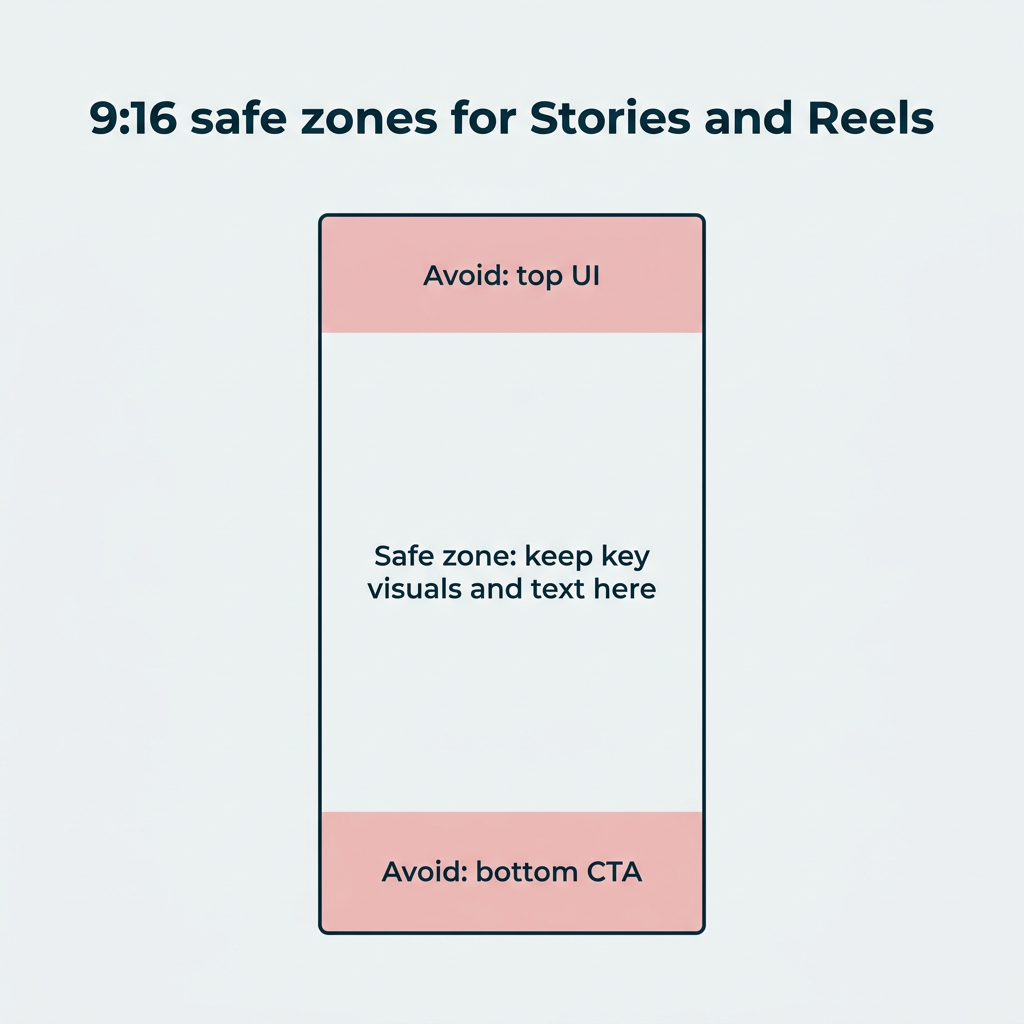
Perhaps the most crucial "unofficial" rule is the concept of the Safe Zone. In Stories and Reels, the top and bottom of the screen are frequently obscured by the platform’s own interface (the "Follow" button, the caption, the music icon, and the swipe-up area). Advertisers must keep their primary CTA and focal point in the center of the 9:16 frame to avoid these UI "dead zones."
Implications for Your Marketing Strategy
If your team is struggling to scale, the issue may not be your targeting or your budget—it may be your creative specs. Here are the strategic implications of getting your ad sizes right:

1. Increased ROAS (Return on Ad Spend)
By optimizing your creative for the specific placement, you reduce "ad fatigue." Users are less likely to scroll past an ad that looks like a native, high-quality video or image.
2. Algorithmic Favorability
Meta’s AI-driven ad delivery system, particularly the "Advantage+" algorithm, favors creative that is well-formatted. When you upload assets that meet the platform’s recommended specs, the algorithm can distribute your ad across more placements without needing to force-crop your visuals.
3. Future-Proofing
As screen sizes continue to evolve and foldable devices enter the mainstream, the ability to adapt creative dynamically is essential. Creating "master" assets in high resolution allows you to crop down for future placements without losing quality.
Strategic Checklist: The 2025 Cheat Sheet
To ensure your team is aligned, keep this abbreviated technical reference handy:

- Feed Ads: 1:1 (Square) or 4:5 (Vertical). Use 4:5 to dominate the mobile screen.
- Reels/Stories: 9:16 (Vertical). Ensure all text is centered in the middle 1080 x 1420 px area.
- Carousel Ads: 1:1 (Square) is the only reliable format for multi-card success.
- Right Column: 1:1 (Square). Avoid all text on the image, as the visual is too small for readability.
- Marketplace: 1:1 (Square). These ads rely on product-focused imagery.
Final Thoughts: The Creative-First Approach
The technical specifications provided by Meta are the floor, not the ceiling. While you must meet these dimensions to be compliant, the success of your campaign will ultimately depend on your ability to tell a story within those constraints.
Stop viewing ad specs as a burdensome checklist. Instead, view them as the boundaries of a canvas. By mastering the 1:1 and 9:16 formats, you are not just checking boxes—you are ensuring your brand’s message is delivered clearly, professionally, and effectively to the audience that matters most. Whether you are launching a massive product collection or a single brand-awareness video, precision in your pixel dimensions is the simplest way to gain an edge over the competition in a crowded digital marketplace.

Remember: In the world of social advertising, if your creative isn’t sized for the screen, it isn’t sized for the sale.
