
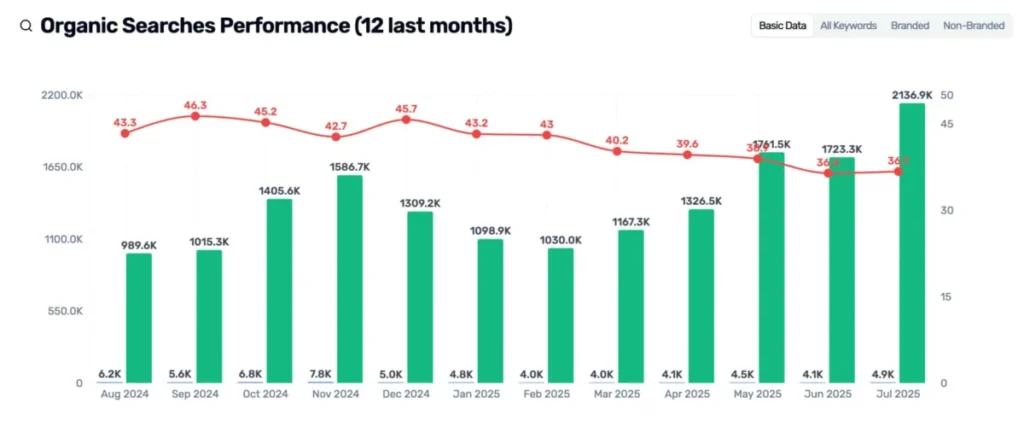
The Brand Gravity Shift: Why SEO is No Longer Just About Keywords
This article was originally published on the Growthrocks blog by our Chief Strategist. It explores the evolving intersection of brand equity, search intent, and the rise of Artificial Intelligence in discovery.
In the digital marketing landscape, the adage "content is king" has long reigned supreme. However, as search algorithms evolve into sophisticated, AI-driven engines, a more nuanced truth has emerged: Context is the new currency.
For years, SEO professionals have obsessively categorized search queries to optimize for rankings. Yet, the most critical distinction in modern search strategy remains the divide between branded and non-branded keywords. Understanding this binary is no longer just a technical exercise; it is the fundamental requirement for surviving and thriving in the post-AI era.
The Core Distinction: Branded vs. Non-Branded
At its simplest level, not all search terms are created equal. When analyzing performance, you must bifurcate your data into two distinct buckets:
Branded Keywords
Branded keywords are those that include your company name, product names, or unique service identifiers. These queries represent high-intent users—individuals who already recognize your brand, have been influenced by your offline marketing, or are acting on direct referrals. These users are rarely "browsing"; they are searching for a specific solution they already trust.
Non-Branded Keywords
These are generic, category-level search terms. They represent the "battleground" of SEO. When a user searches for "best CRM software for small business," they are in the discovery phase. This is where SEO teams fight for visibility, capturing demand at the early stages of the buyer journey. Success here is the mark of a robust content and authority-building strategy.
The Google Curiosity Index: Bridging the Gap
Before diving deeper, we must revisit a concept we introduced in our SEO performance framework: the Google Curiosity Index. While not an official Google metric, it is our definitive lens for measuring brand awareness.
The Curiosity Index tracks how often your brand name is queried over time. It serves as the "missing link" between SEO performance and overall brand impact. It is one of the few metrics capable of revealing how offline activities—such as PR pushes, high-profile events, and strategic partnerships—actually bleed into your digital presence. When your Curiosity Index rises, your organic search performance often follows, even if your specific SEO tactics remain static.
Attribution: The Accountability Crisis
In many organizations, the lines of accountability are dangerously blurred. Attribution defines accountability, yet far too many SEO teams fold branded keyword traffic into their success reports.
When SEO teams claim "wins" from branded search traffic, they distort the reality of their performance. Branded search is primarily the responsibility of Brand, PR, and Communications teams. These departments drive the awareness that compels users to type your name into the search bar. Conversely, the SEO team’s primary mandate is to drive net-new traffic from non-branded, intent-based keywords.
Failing to separate these metrics leads to a false sense of security. If your total traffic is rising solely because of branded searches, your SEO strategy may be stagnating, even if the executive dashboard looks green.
The Post-AI Era: Why Brand Signals Now Trump SEO Signals
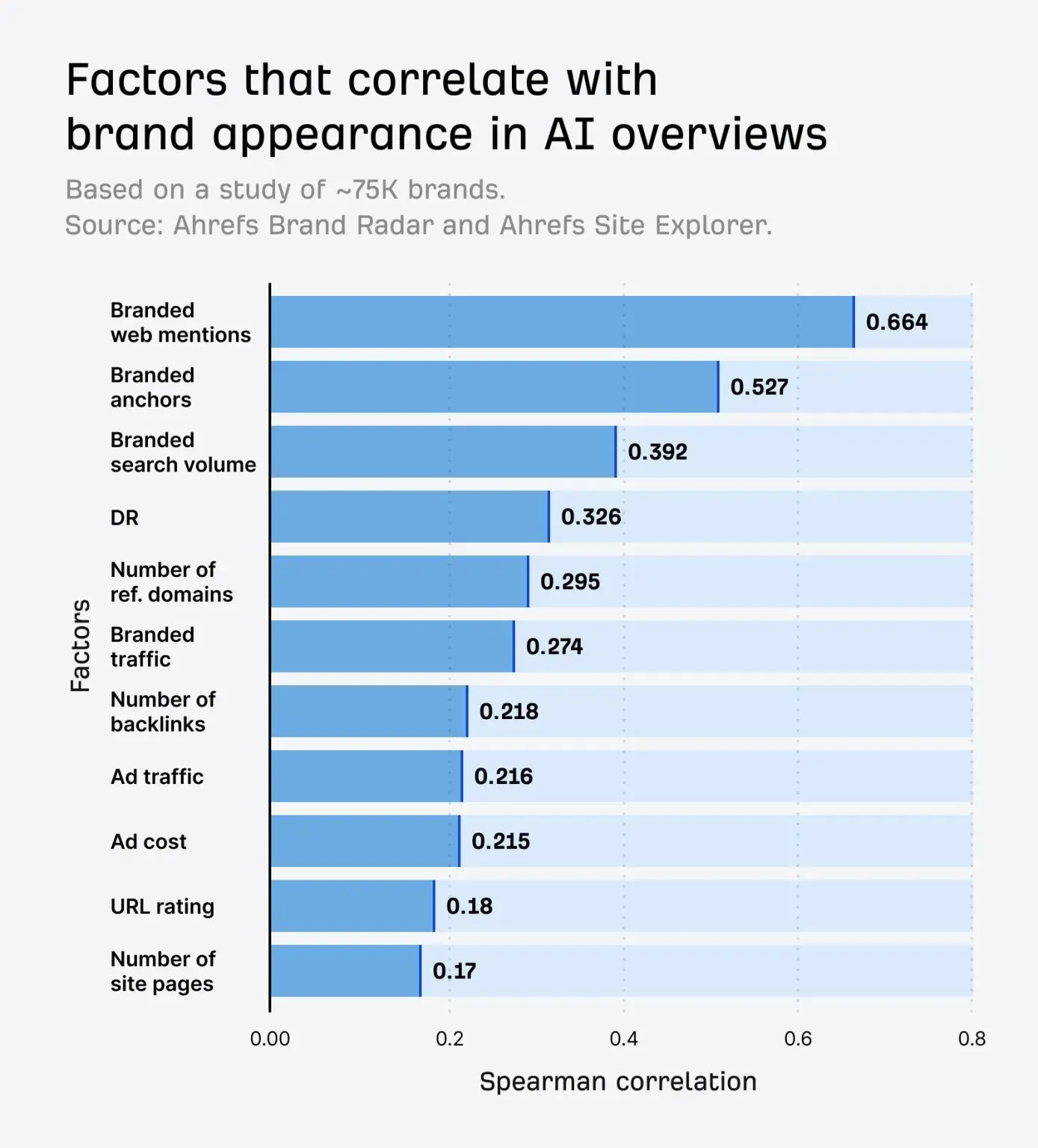
The arrival of Large Language Models (LLMs) and AI Overviews has fundamentally changed the search landscape. A recent study by Ahrefs highlighted a pivotal shift: the top factors correlating with a brand’s appearance in AI Overviews are no longer traditional "SEO checkboxes."
The New Ranking Hierarchy
Traditional SEO metrics—like backlink volume, keyword density, and site speed—are taking a backseat to Brand Signals. The three primary drivers of AI inclusion are:
- Brand Authority: The model’s assessment of your brand’s reputation.
- Brand Mentions: How often your brand is cited in trusted, third-party contexts.
- Consistency: The stability and predictability of your brand identity across the web.
Compared to traditional metrics like keyword placement or internal link structure, brand signals now carry significantly more weight. Why? Because LLMs are trained to behave like humans browsing the internet. They gravitate toward "familiar names" and entities with consistent context surrounding them.
AI is essentially a popularity contest. If you are a known entity with a track record of authority, the algorithm is trained to trust you. Branded keywords are the language of that familiarity; they are your shortcut to becoming an "AI-cited" authority. You aren’t "gaming" the system; you are simply providing the data structure that the AI has been trained to prioritize.
Chronology of Search Evolution
- The Early Days (2000s): Keyword stuffing and basic meta-tagging. The goal was to trick the machine.
- The Content Era (2010s): The shift toward high-quality, long-form content. SEO became about answering user questions.
- The Authority Era (2020-2023): E-E-A-T (Experience, Expertise, Authoritativeness, and Trustworthiness) became the standard.
- The AI/LLM Era (2024-Present): Search is no longer just about pages; it is about entities. The algorithm prioritizes brands that have high "Brand Gravity"—a consistent footprint across the digital ecosystem.
Strategic Implications: How to Act
If you want to maintain relevance in an AI-dominated search environment, your strategy must pivot.
- Stop Reporting Blended Metrics: Separate your branded and non-branded performance immediately. If you don’t track them separately, you are blind to your actual growth.
- Invest in "Brand Gravity": Your PR, social media, and offline events are now your most powerful SEO tools. Every mention of your brand in a reputable source strengthens your position in AI-generated summaries.
- Leverage Semantic Ties: Your domain name and branded keywords should have a tight, logical connection. Ensure that your brand name is synonymous with the category you want to dominate.
- Audit Your GSC Data: Use Google Search Console to see if users are typing your domain name into the search bar rather than the URL bar. This "brand interest masquerading as SEO" is the strongest signal of brand health.
The Tooling Gap
One of the most persistent challenges for marketing teams is that Google Search Console (GSC) does not provide a native way to segment branded and non-branded traffic. It requires manual exporting, filtering, and classification.
To solve this, we have developed custom frameworks within our Monthly SEO Monitoring Handbook, allowing teams to visualize this data effectively. Furthermore, our platform, os.growthrocks.com, automates this segmentation, providing real-time insights into how your brand is evolving in search. By removing the guesswork, we allow teams to focus on what matters: the strategy behind the search.
Final Thoughts: The Concept of Brand Gravity
As we look to the future, it is clear that SEO is evolving into something far more holistic. It is no longer just about ranking higher on a list of blue links. It is about being remembered.
When a user skips the search result and types your name directly into the search engine, that is not an SEO victory—that is Brand Gravity. It is the force that pulls the user toward you regardless of the algorithm. By focusing on building your brand equity, you aren’t just playing the search game; you are becoming the answer that the search engine is programmed to provide.
The battle for the top spot is over. The battle for the "top of mind" has just begun.
