
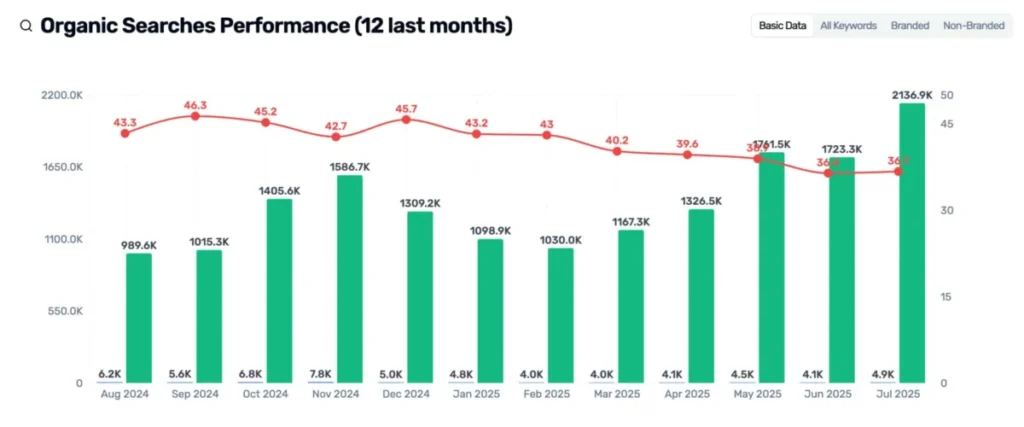
The Brand Gravity Shift: Why Branded vs. Non-Branded Search Is the New SEO North Star
This article was originally published on the Growthrocks.com blog by their Chief Strategist.
In the rapidly evolving digital landscape, not all search terms are created equal. For years, the SEO industry has been obsessed with "ranking for keywords," often blurring the lines between capturing intent and building a legacy. To truly understand the health of a business, one must dissect search data into two distinct buckets: branded and non-branded keywords. Failing to do so doesn’t just skew your data—it blinds you to the fundamental shifts in how modern AI-driven search engines perceive authority.
Main Facts: Defining the Two Pillars of Search
At its core, search volume is the pulse of your market presence. However, that pulse has two different rhythms.
Branded Keywords are the "trust signals." These include your company name, product names, executive names, or specific branded taglines. When a user enters these into a search engine, they are not looking for discovery; they are looking for you. They represent high-intent users—people who have been influenced by your PR, social media, word-of-mouth, or offline events.
Non-Branded Keywords, conversely, are the "battleground." These are generic, category-level terms (e.g., "best CRM software," "affordable cloud hosting"). These terms capture demand at the early stages of the buyer journey. This is where SEO teams traditionally fight for visibility, attempting to educate prospects who may not yet know that your brand exists.
The Google Curiosity Index: Measuring Brand Impact
Before dissecting the metrics, we must revisit the Google Curiosity Index. While not an official Google metric, it is a proprietary concept developed by Growthrocks to bridge the gap between SEO performance and brand impact.
The Curiosity Index measures how often people search for your brand name over time. It is the missing link that quantifies the ROI of your non-SEO activities. If you run a major PR campaign, launch a podcast, or sponsor an industry conference, the Curiosity Index reveals whether those offline efforts successfully moved the needle on your digital presence. It is the ultimate barometer for brand awareness.
Chronology: From Keyword Stuffing to AI Dominance
The history of SEO has been a transition from manipulation to reputation.
- The Early Era: SEO was dominated by keyword density and technical manipulation. Branded search was treated as a secondary byproduct of "good traffic."
- The Authority Era: Google’s algorithms began prioritizing E-E-A-T (Experience, Expertise, Authoritativeness, and Trust). Branded search became a proxy for "real-world" authority.
- The AI Era (Current): We have moved into an era where Large Language Models (LLMs) like Google’s AI Overviews, Perplexity, and ChatGPT prioritize "familiarity." Today, the most successful brands are those that have built enough "brand gravity" to be cited as the default answer by an AI.
Supporting Data: Why AI Favors the Famous
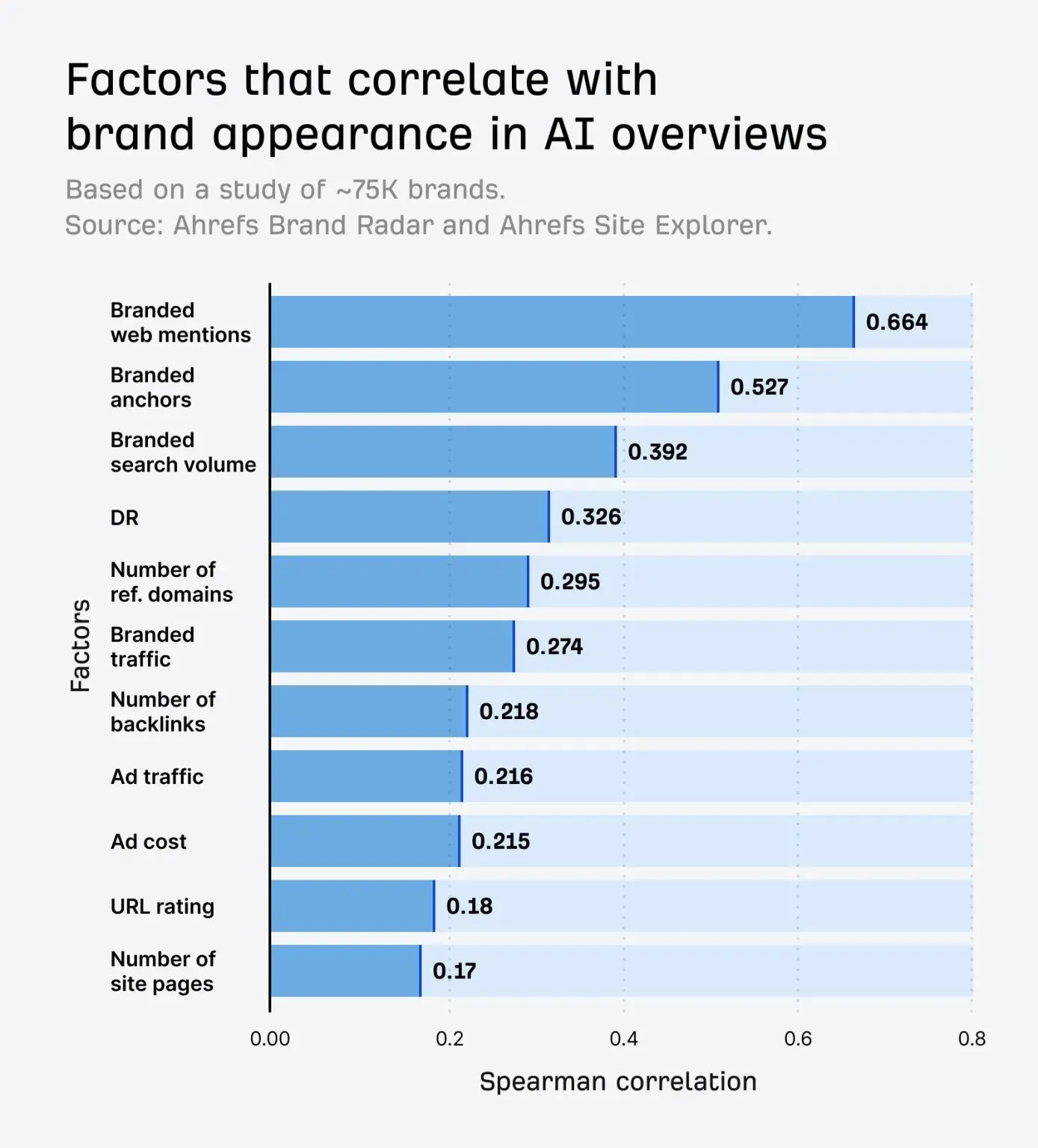
Recent research from Ahrefs has shed light on what actually influences AI Overviews. The findings are a wake-up call for traditional SEOs. When analyzing which brands appear in AI-generated summaries, the top three correlating factors are:
- Brand mentions and search volume: The sheer popularity of the brand.
- Domain authority and site-wide quality: The overall "trustworthiness" of the domain.
- Entity presence in the knowledge graph: How well the AI understands the brand as a distinct, verified entity.
Notably, traditional metrics like "backlink count to a specific URL" or "keyword density on the page" hold significantly less weight in the AI landscape. The implication is clear: AI is a popularity contest. If LLMs behave like humans consuming information, they gravitate toward familiar names with consistent, widespread context. Branded keywords are the language of that familiarity.
Attribution: Who "Owns" the Data?
A common point of contention within marketing departments is the attribution of search traffic. When an SEO team reports "record traffic," but that traffic is 60% branded, are they succeeding?
Attribution defines accountability. The breakdown should be as follows:
- Brand, PR, and Communications Teams: These teams are responsible for driving branded searches. Their KPI is the growth of the Curiosity Index.
- SEO Teams: These teams are responsible for driving net-new traffic from non-branded, intent-based keywords.
Too often, SEO teams conflate these two, reporting branded traffic as an "SEO win." This creates a distorted picture of performance, masking the fact that the SEO strategy may actually be stagnant while the brand team is doing the heavy lifting.
Implications: The Shift Toward Brand Gravity
The shift toward AI-assisted search has profound implications for digital strategy:
- Stop Gaming, Start Building: You cannot "SEO" your way into an AI Overview if your brand has no recognition. You must focus on brand building to earn the AI’s trust.
- Domain Semantic Ties: Your domain name should act as your primary branded keyword. Often, we see users typing a company’s domain into the search bar rather than the URL bar—this is "brand interest" masquerading as organic traffic.
- The "Shortcut" to Authority: Branded keywords are, in essence, a shortcut to becoming an "AI-cited" authority. By giving the algorithm what it is trained to trust—consistent mentions and high search volume—you cement your place in the AI-generated future.
Official Guidance: Practical Implementation
How do you manage this in practice? The primary hurdle is that Google Search Console (GSC) does not natively segment branded versus non-branded traffic. You must perform the heavy lifting: export the data, filter by regex, and re-visualize the segments.
Pro-Tips for Implementation:
- Segment Monthly: Create a dedicated dashboard that tracks the ratio of branded to non-branded traffic. If non-branded traffic is dropping, your SEO content strategy is failing. If branded traffic is dropping, your brand awareness campaigns are losing steam.
- Use Intelligence Tools: Because manual filtering is error-prone, advanced platforms like os.growthrocks.com now offer automated segmentation, allowing teams to visualize this data in real-time without the risk of human error.
- Monitor Search Console Closely: Watch for instances where users search for your brand name + "login" or "pricing." This indicates that your navigation or UX may be suboptimal, forcing users to "Google" their way to your internal pages.
Conclusion: The Era of Brand Gravity
Your SEO strategy is no longer just about ranking higher on a SERP; it is about being remembered. When someone types your brand name into a search bar, that is not SEO—that is Brand Gravity.
In an era where AI can synthesize information in seconds, the winners will not be those with the most keywords on a page. The winners will be the brands that are the most "familiar" to the algorithm. By focusing on your Curiosity Index and strictly separating your branded and non-branded metrics, you can stop guessing where your growth is coming from and start engineering it with precision.
Remember: You are not just optimizing for a search engine anymore. You are optimizing for the collective digital memory of your industry.
