
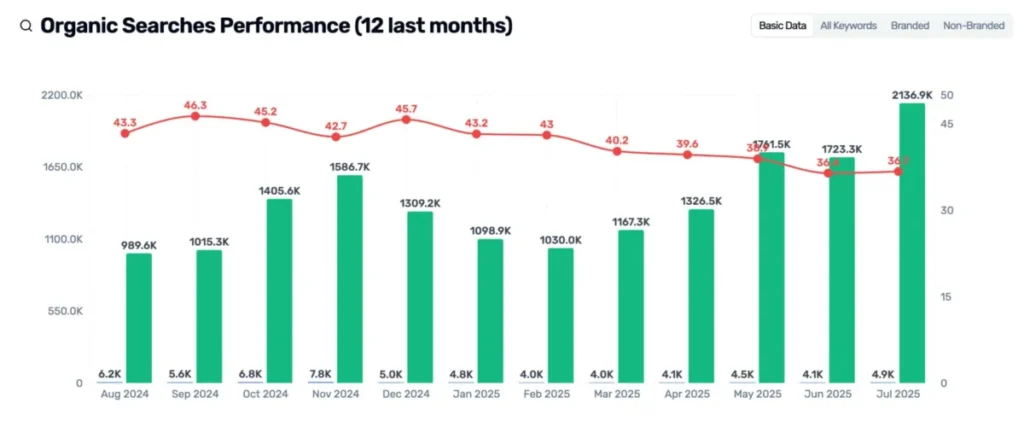
The Brand Gravity Shift: Why Branded vs. Non-Branded Search Is the New SEO North Star
In the high-stakes arena of digital marketing, the line between "ranking" and "being known" has never been thinner. For years, search engine optimization (SEO) has been dominated by the pursuit of non-branded keywords—those high-volume, category-level search terms that promise to funnel new users into a brand’s ecosystem. However, as the digital landscape shifts under the influence of generative AI and Large Language Models (LLMs), a fundamental truth is resurfacing: not all search terms are created equal.
To truly understand the health of a modern digital business, one must decouple performance into two distinct buckets: branded and non-branded keywords. By isolating these, companies can finally distinguish between the "SEO grind" and the "brand gravity" that sustains long-term market dominance.
The Google Curiosity Index: Measuring Brand Impact
Before dissecting the dichotomy of search terms, it is essential to revisit a concept known as the Google Curiosity Index. While not an official Google metric, this framework serves as the missing link between SEO performance and overall brand impact.
The Curiosity Index tracks the frequency with which users search for a brand name over time. It is a powerful barometer for measuring how offline or non-SEO activities—such as PR campaigns, viral social media moments, industry partnerships, and word-of-mouth referrals—actually translate into digital intent. When your brand awareness increases through traditional marketing channels, the Curiosity Index spikes, signaling that your digital presence is being bolstered by real-world authority.
Decoding the Search Landscape: Branded vs. Non-Branded
Understanding the difference between these two categories is not merely an academic exercise; it is a prerequisite for effective attribution.
Branded Keywords: The High-Intent Audience
Branded keywords are search queries that contain your company name, product name, or variations thereof. These users are typically "warm" or "hot"—they already know who you are, have engaged with your marketing, or have been referred by a trusted source. They are high-intent individuals who are moving through the lower stages of the sales funnel, looking to convert or deepen their relationship with your brand.
Non-Branded Keywords: The SEO Battlefield
Conversely, non-branded keywords are generic, category-level terms. These are the broad inquiries where users are still in the discovery or "research" phase. This is where the traditional SEO battle is fought. Capturing these keywords requires a sophisticated content strategy, technical optimization, and consistent backlink acquisition. Success here represents your ability to capture market demand before a user has even decided on a specific provider.
Attribution: Who Owns the Growth?
A primary source of friction in modern marketing departments is the blurred line of attribution. When SEO teams include branded traffic in their monthly reports, they often inflate their perceived success, masking the reality of how much "net new" demand they are actually generating.
- The Brand & PR Teams: Their success is measured by the growth of branded search volume. Their primary responsibility is to drive awareness, ensuring that when a user reaches the point of purchase, your name is the one they recall.
- The SEO Team: Their KPIs should be tethered to non-branded, intent-based traffic. Their goal is to win the battle for category dominance, capturing users who are searching for solutions rather than specific companies.
By segmenting these, organizations gain a clear picture of performance. If non-branded traffic is stagnant while branded traffic is rising, the company has a strong brand but a weak SEO acquisition engine. If the inverse is true, the company is capturing market interest but failing to cultivate lasting brand loyalty.
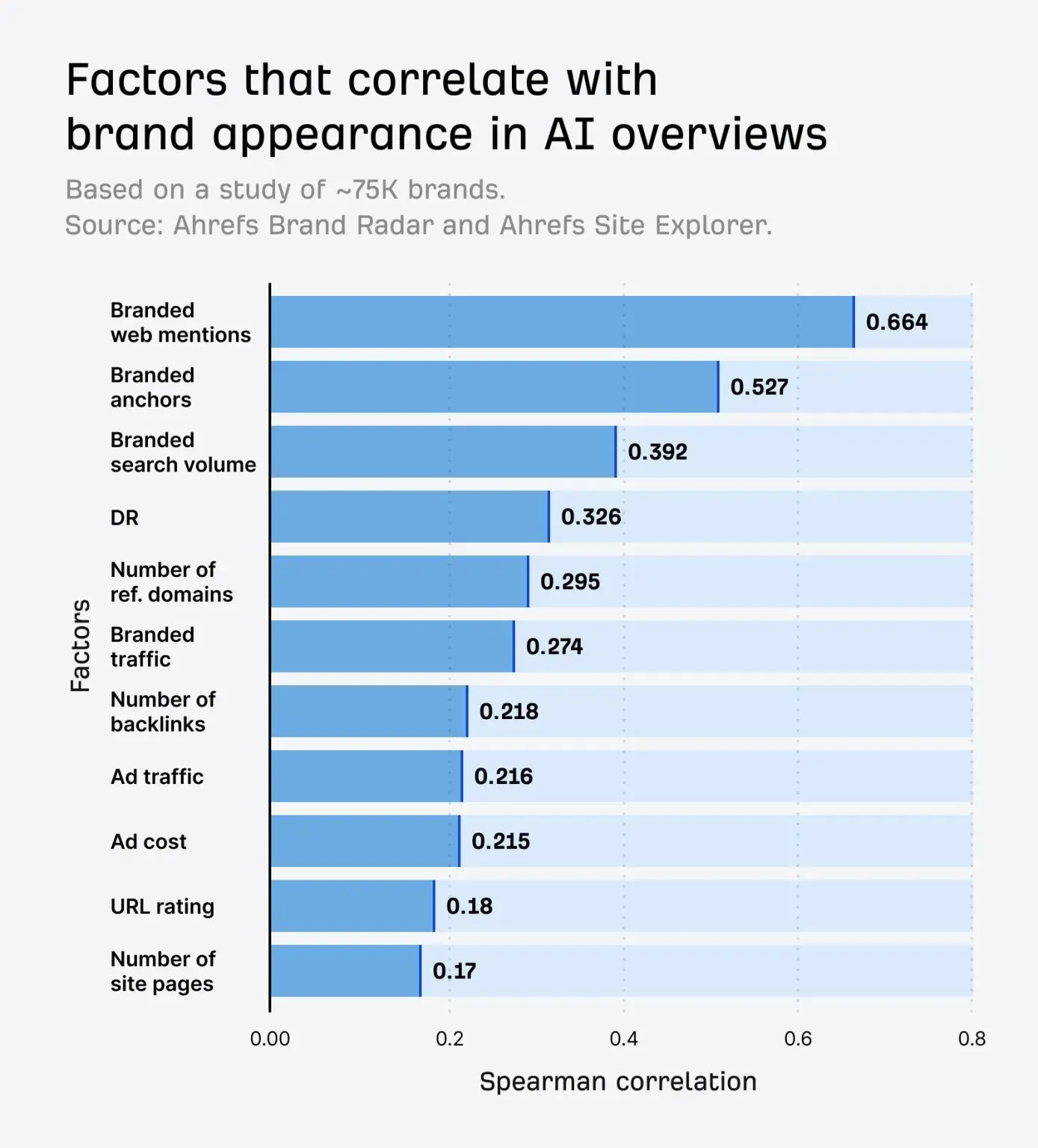
The Post-AI Era: Why Brand Signals Are the New Ranking Factor
The rise of AI Overviews, Perplexity, and ChatGPT has fundamentally altered the SEO landscape. A recent analysis by Ahrefs highlights a shift that many practitioners have suspected: brand signals are now outperforming traditional SEO metrics.
In the world of LLMs, the top factors correlating with appearance in AI-generated summaries include:
- Brand Strength: The frequency and consistency of your brand name across the web.
- Topical Authority: A deep, consistent body of content that establishes the brand as a leader in a specific niche.
- User Preference: The "popularity" signal—how often people search for the brand specifically when inquiring about a topic.
Compared to these, traditional metrics like raw backlink counts or keyword density are losing their weight. Why? Because LLMs are designed to mimic human discernment. When a model like ChatGPT or Google’s Gemini answers a user, it gravitates toward "familiar names"—entities that have consistent, high-quality context built around them.
The Popularity Contest
AI is effectively a popularity contest. If a brand is frequently mentioned in reliable, high-context discussions, the AI "trusts" that entity as a reliable source. Branded keywords act as a shortcut to becoming an "AI-cited" authority. By focusing on brand-building, companies are not "gaming" the algorithm; they are providing the raw data that LLMs are trained to prioritize.
Practical Implementation: From Data to Strategy
The technical challenge for most marketers is that Google Search Console (GSC) does not provide a native, one-click visualization to separate branded from non-branded traffic. Consequently, teams must manually export data, filter by brand queries, and re-visualize the results.
The Workflow for Success:
- Define Your Brand Taxonomy: Create an exhaustive list of all branded variants, including misspellings and product-specific terms.
- Regular Segmentation: Implement a monthly routine to isolate these terms in GSC.
- Monitor the "Domain Search" Phenomenon: Use your console data to identify users who type your domain name into the search bar instead of the browser URL bar. This is a vital, often-overlooked metric of brand strength.
- Adopt Intelligence Tools: Platforms like
os.growthrocks.comhave begun to automate this process, providing real-time dashboards that segment performance without the manual heavy lifting.
Implications for Future Growth
The shift toward brand-centric SEO has significant implications for how businesses allocate their budgets. In an era where AI summarizes the web for the user, the goal is no longer just to "rank" on page one; the goal is to be the entity that the AI reaches for first.
Strategic takeaways for the modern CMO:
- Invest in Brand Gravity: Recognize that offline PR, events, and social media presence now have a direct, quantifiable impact on your AI search visibility.
- Demand Granular Reporting: Stop accepting "total traffic" reports from your SEO team. Demand a breakdown of branded vs. non-branded to ensure that your SEO resources are being spent on net-new growth.
- Focus on Trust, Not Just Keywords: Because LLMs prioritize authoritative, familiar entities, your content strategy should focus on building a cohesive narrative rather than optimizing for long-tail, low-value keywords.
Conclusion: The Era of Being Remembered
The future of SEO is not just about technical hacks or keyword stuffing; it is about cultivating "brand gravity." As search engines transition from search portals to answer engines, the entities that win will be those that have spent years building a reputation that precedes the search.
When a user types your name into a search bar, that is not SEO—that is the culmination of your entire marketing strategy. By mastering the distinction between branded and non-branded search, you stop chasing the algorithm and start building an asset that is, quite literally, designed to be remembered.
