
The AI Renaissance: Navigating the Explosion of Marketing Technology
In the contemporary digital ecosystem, the adage "there’s an app for that" has been rapidly superseded by a new reality: "there’s an AI for that." From the generative capabilities of large language models to the predictive precision of machine learning algorithms, the marketing landscape is currently undergoing its most significant structural shift since the inception of the internet.
As the MarTech stack continues to swell, marketers find themselves at a critical crossroads. The challenge is no longer about finding tools; it is about discerning which platforms offer genuine utility and which are merely "shiny objects" that distract from core business objectives. As we look toward the future of the industry, the focus must shift from mere adoption to strategic integration.
The State of the AI Marketing Landscape
The current AI marketing ecosystem is characterized by an unprecedented density of innovation. Every day, new platforms emerge, each promising to solve specific pain points ranging from hyper-personalized customer journeys and intent-based search optimization to real-time account intelligence and autonomous campaign management.
However, this proliferation of choice has created a "paradox of abundance." Marketers are increasingly overwhelmed by the sheer velocity of change. To thrive in this environment, leadership must move beyond the hype cycle. The true opportunity lies not in adopting every available tool, but in cultivating an AI-literate culture that identifies technologies capable of fundamentally disrupting—and improving—daily operational workflows.
A New Paradigm: Augmentation Over Automation
A common misconception in the marketing world is that AI’s primary value proposition is the acceleration of existing tasks. While it is true that AI can draft copy, analyze data, and schedule social media posts in a fraction of the time it takes a human, this view is dangerously narrow.
The most profound impact of AI is its ability to augment human capabilities. By handling the rote, repetitive, and data-heavy aspects of the marketing function, AI frees human professionals to focus on high-level strategy, creative direction, and emotional resonance—areas where human intuition remains superior. We are seeing a transition from "marketer as technician" to "marketer as curator and strategist." This shift requires a new skill set, one that emphasizes prompt engineering, data literacy, and ethical oversight.
Key Players: Innovation at the Forefront
While the landscape is vast, certain platforms have distinguished themselves by moving beyond basic automation and into the realm of true cognitive assistance. The following categories represent the current frontier of AI-driven marketing:
1. Generative Intelligence for Content Strategy
These platforms move beyond simple text generation, offering brand-aligned, multi-modal content creation that understands brand voice and audience intent. They serve as the "creative engine" for teams that need to scale content production without sacrificing quality.
2. Predictive Analytics and Account Intelligence
In B2B marketing, the "spray and pray" method is officially obsolete. AI tools are now capable of analyzing intent data to predict which accounts are ready to buy, allowing sales and marketing teams to align their outreach with the customer’s actual buying cycle.
3. Personalization at Scale
Personalization has long been the "Holy Grail" of marketing. With AI, it is finally achievable. These platforms process millions of data points to deliver individual customer experiences that feel human, relevant, and timely, moving away from static segmentation to dynamic 1:1 interactions.
4. Campaign Optimization and AdTech
AI-driven ad platforms are now capable of autonomous bidding and creative testing, effectively managing millions of dollars in spend with an efficiency that no human team could match. They identify performance patterns in real-time, pivoting strategies faster than market trends can shift.
The MAICON Perspective: Why Context Matters
With hundreds of tools vying for attention, how does a marketing leader separate the signal from the noise? Context is the deciding factor. This is precisely why industry-specific gatherings like the Marketing AI Conference (MAICON) have become essential.
MAICON, now in its seventh year, has positioned itself as the primary venue for cutting-edge AI discourse. By hosting a curated selection of sponsors—platforms that have been vetted for their innovation and practical application—the conference offers a controlled environment for practitioners to move from theoretical interest to applied strategy.
Chronology of the AI Marketing Revolution
- 2017–2019: The Foundation Phase. AI began to creep into marketing through "smart" email subject lines and basic chatbot functionality. The focus was on incremental efficiency.
- 2020–2022: The Data-Driven Phase. Predictive modeling became the standard for enterprise-level marketing. Machine learning helped marketers move from descriptive analytics (what happened) to predictive analytics (what will happen).
- 2023–Present: The Generative Era. The public release of LLMs shattered the barriers to entry for AI. Every marketer, regardless of their technical background, now has access to powerful generative tools. We are currently in a period of intense experimentation and integration.
Supporting Data: The Impact on ROI
The business case for AI in marketing is supported by increasing evidence. According to various industry reports from the Marketing AI Institute and other research bodies, organizations that have successfully integrated AI into their marketing workflows report:
- Significant reduction in operational costs: By automating routine content tasks, teams have reduced production time by an average of 30–50%.
- Enhanced revenue growth: Companies utilizing AI for predictive lead scoring see higher conversion rates, as marketing spend is allocated toward high-intent prospects.
- Improved employee satisfaction: Counter to the "AI will replace jobs" narrative, marketers report higher job satisfaction when they are freed from mundane, repetitive tasks to focus on creative strategy.
Official Perspectives: Expert Insights
Cathy McPhillips, Chief Marketing Officer at the Marketing AI Institute and SmarterX, emphasizes that we are only at the beginning of the journey. "The most intriguing AI tools aren’t just helping us do existing jobs faster," she notes. "They are augmenting our capabilities and expanding what’s possible, allowing marketers to view their roles in a new light."
The sentiment across the industry is one of cautious optimism. While there are legitimate concerns regarding data privacy, bias in AI models, and the need for new regulatory frameworks, the prevailing view is that AI represents a net positive for the profession. It forces the industry to mature, moving away from intuition-based decision-making toward a model that is firmly grounded in data and technological leverage.
Implications for the Future of Marketing
What does this mean for the professional marketer in 2026 and beyond?
First, Adaptability is the new currency. The tools we use today may be obsolete in 18 months. Professionals must develop a "learning mindset," where the ability to pivot and integrate new technology is considered a core competency.
Second, The "Human Element" is premium. As AI-generated content floods the web, the market will naturally place a higher premium on original thought, brand storytelling, and genuine human connection. AI can write the draft, but it cannot develop the brand philosophy or the deep empathy required to build long-term customer loyalty.
Third, Ethical AI is a business imperative. Brands will be judged not just on the results they achieve with AI, but on how they achieve them. Transparency regarding the use of AI in content and customer interactions will become a standard expectation from consumers.
Join the Conversation: The Path Forward
Reading about AI is the first step, but it is insufficient for those who want to lead. To truly understand how these technologies function in a live environment, there is no substitute for experiential learning.
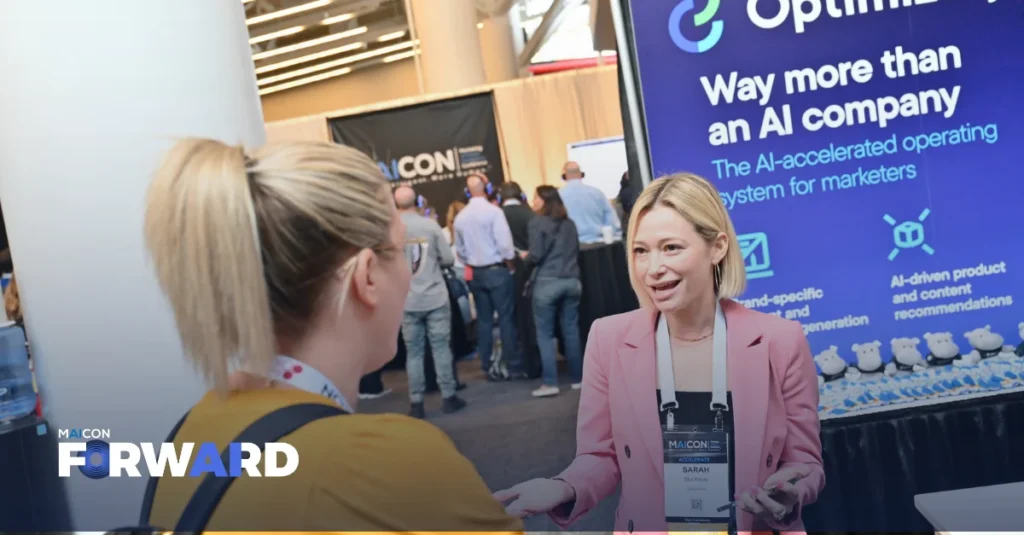
Marketers are invited to join peers, practitioners, and innovators at the 7th annual Marketing AI Conference (MAICON), taking place October 13–15, 2026, in Cleveland, Ohio. This is not merely a conference; it is a laboratory for the future of marketing. Attendees will have the opportunity to participate in live demos, engage with the founders of the platforms shaping the industry, and learn from case studies that show how organizations are effectively operationalizing AI across the entire marketing stack.
In the rapidly shifting landscape of AI, the distance between those who adopt and those who ignore is widening. The future of marketing is not about choosing between human or machine; it is about the power of the two working in concert. The tools exist, the data is available, and the path forward is clear. The question remains: how will you use them?
