
The Art of the Pivot: Mastering Corporate Change Announcements to Maintain Trust
Whether a business is undergoing a complete rebrand, merging with a powerhouse competitor, or simply updating its digital infrastructure, the way it communicates these shifts is a litmus test for organizational maturity. A company name or identity change is not merely a design exercise; it is a critical juncture that can either solidify customer loyalty or trigger a wave of confusion and attrition.
For businesses, the stakes could not be higher. A poorly managed transition—characterized by surprise emails, broken brand continuity, or confusing messaging—risks damaging the hard-earned trust that keeps a company afloat. Conversely, a well-executed announcement serves as a powerful engagement tool, reaffirming the company’s mission and demonstrating its evolution to a sophisticated audience.
The Anatomy of a Corporate Change Announcement
At its core, a company change announcement is a strategic disclosure intended to inform stakeholders of significant shifts in the business. These shifts typically include rebrands, name changes, mergers, acquisitions, or even operational pivots like changes to email domains or physical headquarters.

The primary objective is to maintain continuity. When a customer receives an email from a brand they recognize, they have a set of expectations regarding service and value. When those external markers shift—the logo is different, the name has changed, or the sender address is unfamiliar—that trust is momentarily suspended. A professional announcement functions as a bridge, anchoring the new identity in the legacy of the old.
Chronology: A Strategic Timeline for Success
A transition is not a singular event; it is a campaign. Success depends on the careful management of communication over time.
The Pre-Launch Phase (4–6 Weeks Out)
This is the period of internal alignment and asset preparation. Organizations must ensure that every touchpoint—from the footer of their invoices to their social media handles—is synchronized. During this time, legal, marketing, and customer support teams should align on a unified narrative: Why is this happening, and why is it a positive development for the customer?

The Announcement Phase (2–4 Weeks Out)
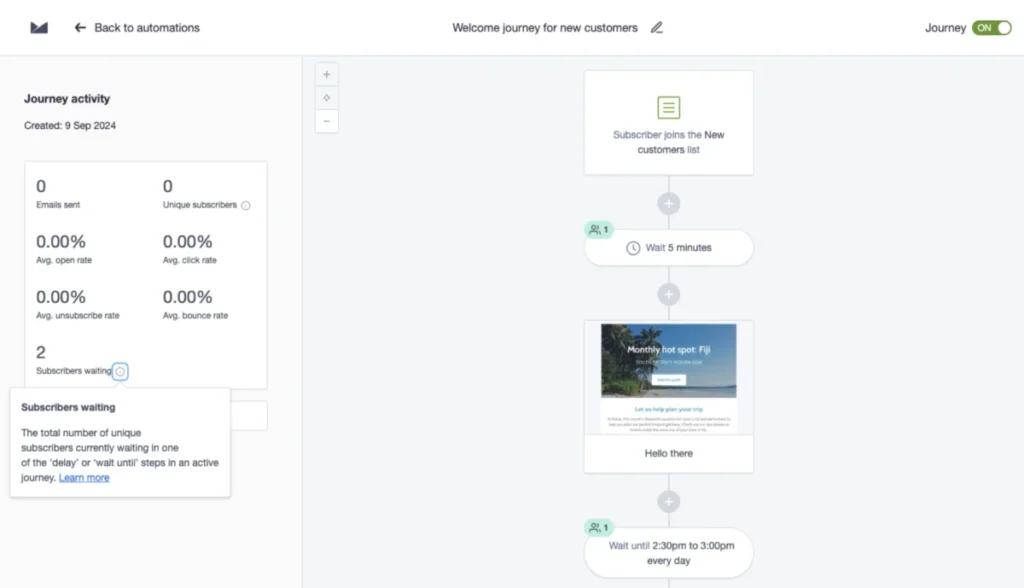
This is when the initial "Heads Up" email is deployed. The goal is to provide enough lead time for the information to permeate the customer base without causing "announcement fatigue." The messaging should be transparent, emphasizing that the underlying quality of service remains unchanged.
The Go-Live Phase (The Big Day)
On the day of the transition, a "Live Now" notification is critical. This is the moment to officially unveil the new brand identity or contact details. This should be a coordinated multi-channel effort, appearing simultaneously in the inbox, on the website, and across social media platforms.
The Post-Transition Phase (1–4 Weeks After)
The work does not stop at launch. Many customers will miss the initial emails. Follow-up communications, specifically targeting those who did not open the first message, are essential. Monitoring for support tickets, social media mentions, and negative feedback during this period is vital for course correction.

The Data-Driven Case for Thoughtful Communication
Research into email marketing benchmarks reveals that abrupt, unexplained changes are among the leading causes of sudden unsubscribe spikes and spam complaints.
When a company changes its email domain, for instance, spam filters are highly sensitive to sudden shifts in "sender reputation." If subscribers do not immediately recognize the new sender name, they are likely to mark the email as junk. This can permanently damage deliverability, effectively silencing the brand in the future.
Data indicates that companies that provide clear, proactive context regarding their evolution see higher engagement rates. By using a recognized "From" address during the initial transition period, companies can successfully "warm up" their new domain, ensuring that subscribers learn to associate the new identity with the trusted service they already know.
Case Studies: The Gold Standard in Transitions
Several global brands have provided a blueprint for how to manage these shifts with transparency and poise.
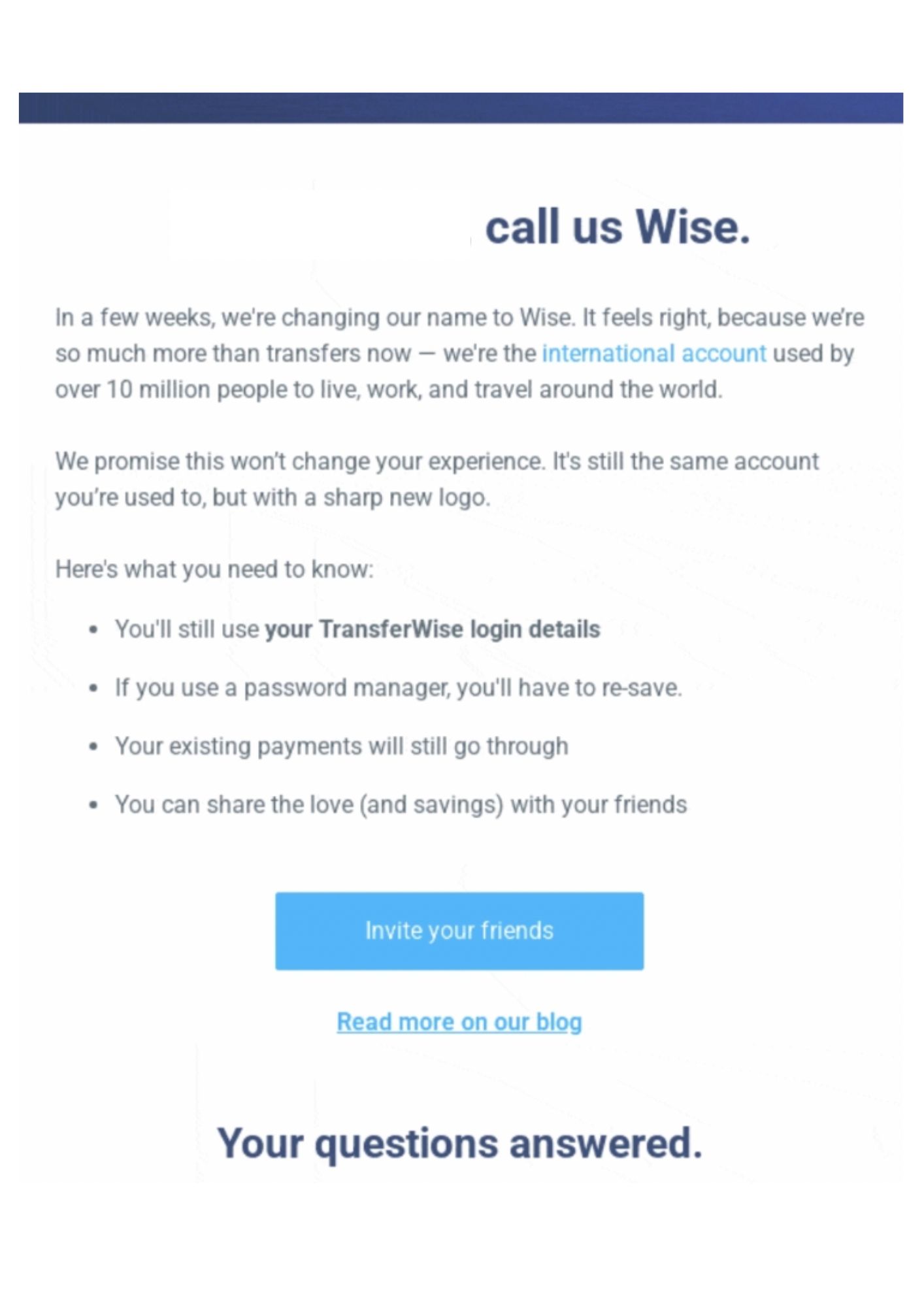
TransferWise to Wise: Simplification
When TransferWise rebranded to simply "Wise," they faced the challenge of renaming a service that was synonymous with the action of transferring money. Their strategy was centered on simplicity. By focusing the narrative on the fact that the company was doing more than just "transfers," they justified the shorter name as an evolution of their capability.
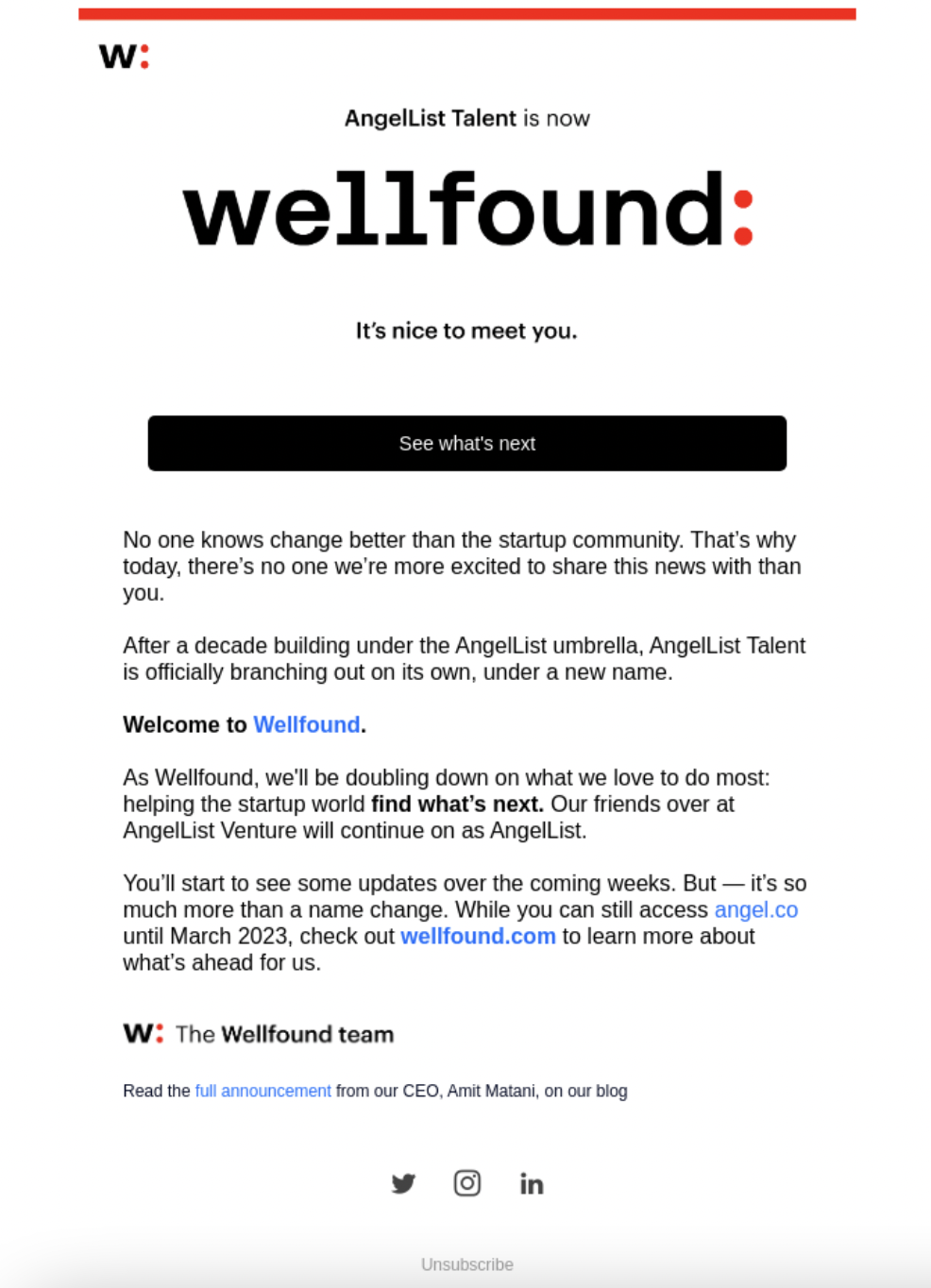
AngelList Talent to Wellfound: The Strategic Pivot
When the recruitment platform Wellfound separated from the AngelList umbrella, they faced a complex branding challenge. Their announcement succeeded by doubling down on their core mission: helping the startup community find "what’s next." By linking their new name to a reinforced commitment to their primary service, they mitigated the anxiety that often accompanies a high-profile corporate split.

Strategic Implications: Building the "Bridge"
To maintain customer retention during a transition, organizations must adopt a "Bridge Strategy." This involves consistently referencing the "formerly known as" status for several months.
Managing Customer Concerns
A proactive FAQ section within the announcement is not just a support feature; it is a psychological safety net. Customers will naturally ask:
- "Is the company being sold?"
- "Do I need to change my password or payment method?"
- "Will my service level drop?"
By addressing these questions before they are asked, a business reduces the strain on its customer support team and prevents the spread of misinformation.
Conclusion: Turning Change into Competitive Advantage
Ultimately, a corporate change is an opportunity to re-engage an audience. It forces a company to articulate its value proposition in a fresh, compelling way. Whether through a new logo, a consolidated brand name, or a fresh corporate structure, the announcement should remind the customer why they chose the company in the first place.
When executed with precision, a change announcement moves from being a risky administrative hurdle to a strategic marketing win. By respecting the customer’s time, maintaining transparency, and planning the transition across multiple channels, a business can emerge from a period of change with a stronger, more resilient connection to its community.
In the final analysis, the goal of any such transition is to ensure that while the name on the door may change, the promise made to the customer remains stronger than ever. Companies that treat their announcement as a narrative of growth—rather than a mere clerical update—will find that their customers are not just willing to follow them into the new chapter, but are eager to participate in the journey.
