
Chasing the Gold: How Social Video Data Predicts the Breakout Stars of Milano-Cortina 2026
As the world turns its gaze toward the snow-dusted peaks of Northern Italy for the 2026 Olympic Winter Games in Milano-Cortina, the digital landscape is already pulsating with anticipation. Olympic years historically trigger a massive surge in global sports interest, often elevating niche, less-heralded disciplines into the mainstream spotlight. However, the path to becoming an "Olympic sensation" is no longer solely paved by traditional broadcast television. Today, it is built on the foundation of year-round social video engagement.
By analyzing viewership data from 2025, we can begin to decode the shifting preferences of the modern sports fan. This intelligence offers a clear roadmap for publishers, brands, and creators looking to capitalize on the "ice-cold" heat of the upcoming Winter Games.
The Dominance of the Ice: Figure Skating’s Unrivaled Reach
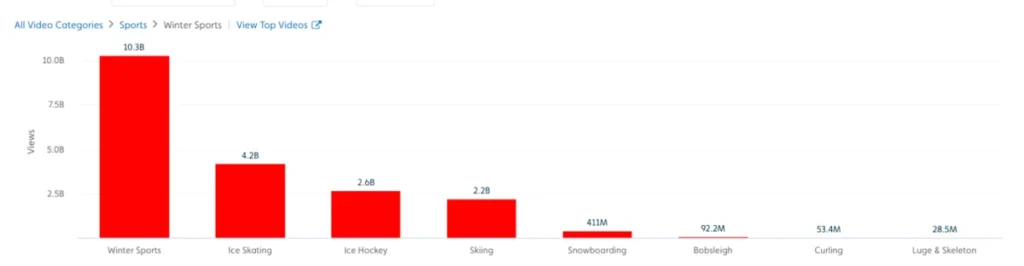
Even in a non-Olympic year, ice skating remains the undisputed heavyweight champion of winter sports content. According to data provided by Tubular Labs, ice skating videos generated a staggering 4.2 billion views across social platforms in 2025. This figure underscores a cultural obsession that transcends the Games themselves.
Figure Skating by the Numbers
Figure skating accounted for the lion’s share of that viewership, driving 2.2 billion views and an impressive 36.8 million total engagements. The data confirms that figure skating is not just a sport; it is a visual spectacle that thrives on social media’s emphasis on aesthetics, technical prowess, and emotional storytelling.
While NBC holds the exclusive broadcast rights to the Olympic events themselves, the massive volume of social traffic suggests a massive opportunity for non-rights-holding publishers. The key lies in diversification. Because figure skating is deeply intertwined with high-fashion, intricate costume design, and complex hair and beauty routines, it serves as a unique bridge between the sports world and the lifestyle creator economy.
Beauty influencers and fashion commentators are increasingly tapping into this niche, providing analyses of "Olympic-grade" aesthetics. Furthermore, educational content—such as "how-to" videos for beginners—is seeing a rise in popularity. These videos democratize a sport that typically requires expensive equipment and access to specialized ice rinks, allowing fans from warmer climates to engage with the mechanics of the sport from their living rooms.
Gravity-Defying Engagement: The Rise of Skiing Content
With over 20 distinct disciplines represented in the upcoming Games, skiing serves as the backbone of the Milano-Cortina program. It is perhaps the most accessible "high-adrenaline" sport to capture, and social media audiences are proving they cannot get enough of it.
The 2025 YouTube Landscape
In 2025, skiing videos on YouTube amassed 2.2 billion views. The content ecosystem is dominated by two major sub-disciplines: freestyle and alpine skiing, which combined to capture roughly one-third of the total viewing volume.
The engagement metrics are particularly revealing when analyzed by volume vs. virality. While there were over 6,000 individual uploads of skiing content in 2025, the average viewership per video sat at 128,000. However, niche segments like ski jumping achieved an average of 426,000 views per video. This indicates that while the total volume of freestyle content is high, specialized, high-intensity segments generate deeper, more concentrated audience interest.
A prime example of this success is French creator Anthony Robert, who has turned the sport into a year-round content engine. Interestingly, Robert’s viewership data showed a peak in the summer months, proving that winter sports content can sustain high engagement even when the mercury rises. For brands looking to sponsor athletes or events, this year-round visibility provides a distinct advantage over seasonal marketing strategies.
The "Cool Runnings" Effect: Storytelling in Niche Sports
One of the most fascinating phenomena in Olympic media is the endurance of sports that lack daily visibility. Bobsleigh is the definitive case study in this category. Since the 1993 release of Cool Runnings, the sport has maintained a consistent place in the public imagination, bolstered by the "sprinter-to-bobsledder" narrative arc that plays perfectly on social platforms.
Humanizing the Competition
In 2025, bobsleigh saw significant traction through both entertainment-focused accounts and, more importantly, official team channels. The Great Britain bobsled team, for instance, has utilized social video to offer an unfiltered, behind-the-scenes look at the grueling training and logistical preparation required for the Games.
This transparency is a massive driver of engagement. By humanizing the athletes and demystifying the technology behind the sleds, these teams earned an average of 317,000 views per video last year. This proves that for niche sports, the "behind the curtain" content is often more valuable than the competition footage itself.
Chronology of Trends: From Pre-Games Buzz to Podium Glory
To understand how these sports move from niche to household names, we must look at the typical lifecycle of Olympic content:
- The "Off-Year" Build (2025): Focus on technical tutorials, athlete profiles, and lifestyle integrations. During this phase, creators like Anthony Robert establish the authority of their channels.
- The Qualification Window (Late 2025): Viewership begins to skew toward performance metrics and competitive rivalries. Brands start to align with rising stars.
- The Pre-Game Hype (Jan 2026): Broadcasters and publishers flood the feed with "History of the Games" content and human-interest stories.
- The Olympic Window (Feb 2026): Real-time highlights, reaction videos, and "viral moment" compilations dominate. This is where the 2025 data points—such as the high engagement of figure skating—predict the highest traffic volume.
- The Post-Games Legacy (March 2026): Athletes leverage their newfound social following to secure long-term sponsorships and media partnerships.
Implications for Brands and Creators
The shift toward social-first consumption has significant implications for the sports industry:
- Move Beyond the Broadcast: Rights holders have the live events, but independent creators hold the context. Brands that partner with creators to produce "explainer" or "lifestyle" content around the Olympics can capture audiences that might find the live broadcast too formal or inaccessible.
- The "Niche is the New Mass": As seen with ski jumping and bobsleigh, the most engaged audiences are often found in specific, high-intensity niches. Rather than aiming for the widest possible net, sponsors should look for the high-engagement, high-loyalty communities within these specific categories.
- Leverage Year-Round Narratives: The 2025 data proves that the Olympic season is no longer just a two-week event. Content strategies that operate on a 12-month calendar are significantly more effective at retaining audience attention than those that only "turn on" during the Games.
Conclusion: Preparing for Milano-Cortina
As we look toward 2026, the intersection of social video data and traditional sporting excellence has never been more critical. The success of ice skating, skiing, and bobsleigh in the digital space provides a blueprint for what to expect during the upcoming Games.
The most successful campaigns will be those that recognize the dual nature of modern sports consumption: the need for high-octane competitive footage paired with the intimacy of creator-led storytelling. Whether it is an aspiring figure skater learning the basics via a one-minute tutorial or a die-hard fan following the British bobsled team’s daily routine, the digital arena is where the true Olympic spirit is being forged.
For those looking to get ahead of the competition, the data is clear: the road to the gold medal starts long before the opening ceremony in Italy. It starts with a single video, a dedicated audience, and a deep understanding of what moves the modern viewer.
For more in-depth analysis on how to leverage these insights, consult the Tubular Labs "Sports Snapshot" report, which details the evolving trends in sports content and fan engagement as we head into the 2026 Olympic cycle.
