
Navigating Change: The Strategic Guide to Communicating Corporate Transitions
Whether a business is undergoing a complete rebrand, merging with a competitor, or simply updating its digital infrastructure, the way a company communicates these shifts is a critical determinant of long-term success. In an era where customer loyalty is built on trust and predictability, an abrupt or poorly managed announcement can lead to mass unsubscribes, brand confusion, and even a tarnished reputation in the eyes of long-term clients.
Effective communication during a transition is not merely a formality—it is a strategic imperative. It serves as a bridge, ensuring that the company’s evolution is understood as an improvement rather than a threat to the established relationship.
The Anatomy of a Corporate Announcement
A company change announcement is a formal, multi-touchpoint communication strategy designed to inform stakeholders of a significant shift in business operations. These announcements typically address changes to brand identity, organizational structure, or contact protocols.
The primary goal is twofold: to mitigate the inevitable friction caused by change and to seize the opportunity to re-engage the audience. When executed with precision, a transition announcement can actually strengthen brand equity by demonstrating transparency and a forward-looking vision.

The Risks of Poor Communication: Why It Matters
The cost of a botched transition is quantifiable. From a technical standpoint, changing brand names or email domains without proper communication can severely damage a company’s sender reputation. If subscribers fail to recognize the "From" name or domain, they are likely to mark the communication as spam. This triggers negative signals to Internet Service Providers (ISPs), which can cripple email deliverability for future marketing efforts.
Beyond the technical fallout, there is the psychological impact on the customer. Sudden changes without context breed distrust. Data consistently shows that announcement campaigns providing clear, empathetic context see significantly higher engagement rates compared to those that drop changes on users without warning. By keeping the customer informed, businesses can convert a moment of uncertainty into a moment of strengthened loyalty.
Chronology of an Effective Transition
A successful transition is rarely the result of a single email. It is a multi-stage process that requires careful planning and execution over several weeks.
Phase 1: The Preparatory Stage (4–6 Weeks Out)
During this period, the focus should be on internal alignment and asset preparation. Marketing, legal, and support teams must ensure all collateral—from logos to FAQs—reflects the new identity.

Phase 2: The Announcement Stage (2–4 Weeks Out)
This is when the initial "Heads Up" communication is sent. The objective is to familiarize the audience with the upcoming change. By providing ample notice, you allow customers to process the shift and ask questions.
Phase 3: The Transition (Day of Change)
On the day of the switch, a "Go-Live" communication should be sent. This email confirms the change is complete and provides clear instructions on any action the customer needs to take, such as updating their contact list or bookmarks.
Phase 4: Post-Transition Support (1–4 Weeks After)
Following the switch, the focus shifts to monitoring and re-engagement. This includes sending follow-up communications to non-openers and providing dedicated support to address common concerns.
Data-Driven Best Practices
To ensure a smooth transition, organizations must adhere to a set of proven communication standards.

| Category | Recommended Strategy | Common Pitfall |
|---|---|---|
| Timing | Provide at least 2–4 weeks of notice. | Making an overnight, unexplained switch. |
| Transparency | Explain the "why" behind the change. | Burying the news in a footer or ignoring it. |
| Consistency | Use a series of emails to ensure reach. | Treating the announcement as a "one-and-done." |
| Technical | Maintain the old "From" address initially. | Changing the "From" name immediately. |
Mastering the Seven Steps of the Announcement
1. Clarity in Subject Lines
Your subject line is your first—and often only—chance to capture attention. It must be direct and unambiguous. Whether it is a name change or a merger, the value proposition of the email must be evident before the message is even opened.
2. Leveraging Established Sender Identities
Even if you are rebranding, do not abandon your recognized "From" address immediately. By sending the initial announcement from your old, trusted address, you bridge the gap between the old brand and the new, ensuring that spam filters do not flag your emails as malicious.
3. Defining the Scope of Change
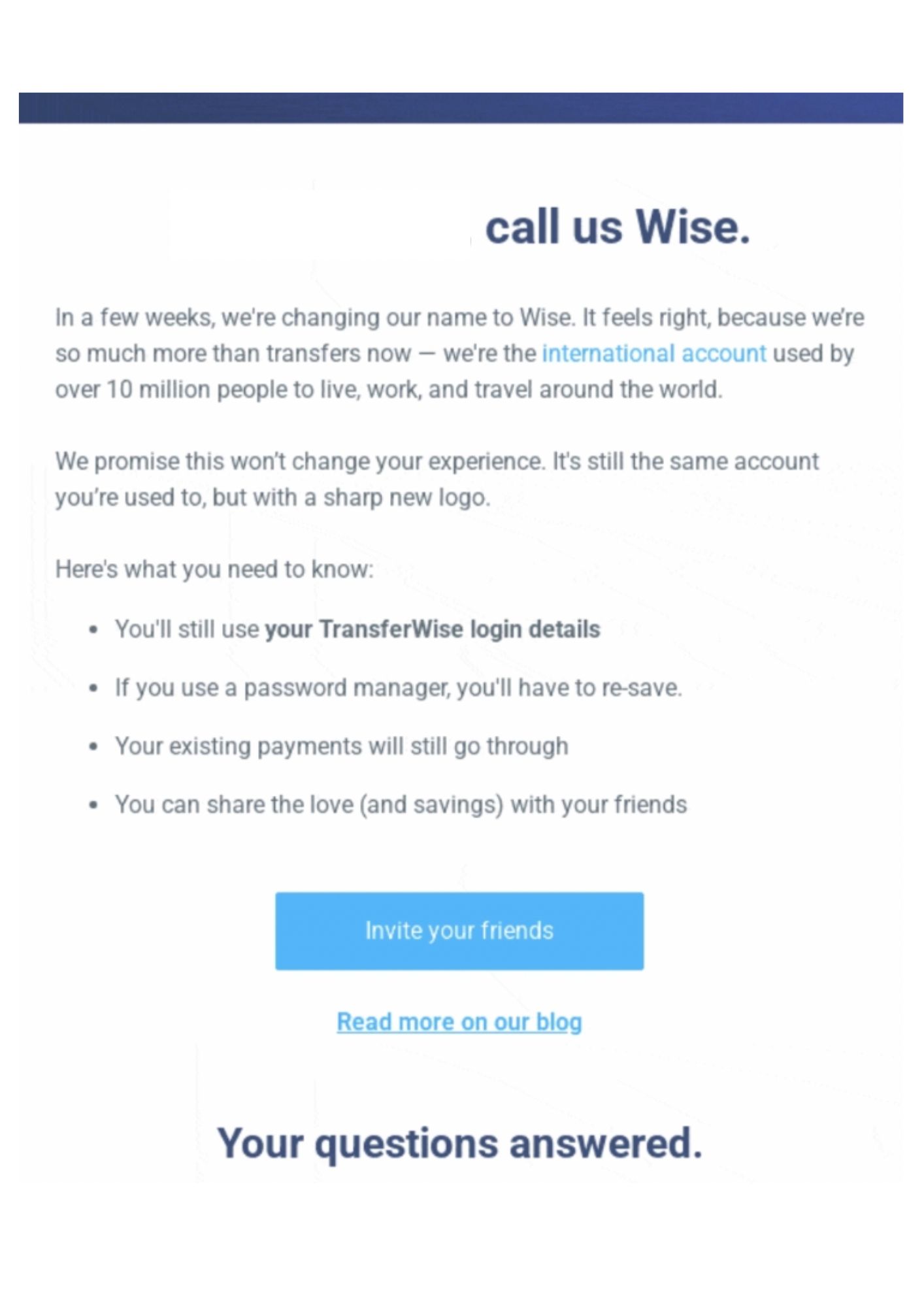
Customers need to know exactly what is changing and what is remaining the same. If the service quality, pricing, and account history remain intact, state that clearly. This prevents unnecessary anxiety and reduces the influx of support tickets.
4. Proactive Concern Management
Anticipate the questions your customers will ask. Will their login change? Do they need to re-verify payment methods? A brief FAQ section within the email is an effective way to address these concerns before they become problems.
5. Visual Continuity
When unveiling a new visual identity, include both the old and new branding. This visual bridge helps the customer mentally associate the two identities, confirming that the new brand is the natural evolution of the one they already trust.
6. The Call-to-Action (CTA)
Every announcement needs a clear direction. Whether you want them to read a blog post, explore the new website, or simply acknowledge the change, your CTA should be prominent and singular.
7. Segmented Follow-ups
Not every customer reads every email. Utilize list segmentation to target those who did not open the initial announcement with a follow-up email. This ensures that the message reaches your entire audience, regardless of their initial engagement.
Implications for Corporate Identity
A company change announcement is often the first time a customer engages with a new corporate identity. This makes it a high-stakes marketing event. When handled correctly, the transition serves as a "re-introduction." It allows the company to restate its mission, highlight its growth, and remind the audience why they chose the company in the first place.

For instance, when a company like TransferWise rebranded to Wise, they utilized the moment to emphasize the simplification of their services. They did not just change a name; they reinforced their core value proposition. Similarly, when AngelList Talent became Wellfound, the announcement was framed as a maturation of their service, doubling down on their mission to help the startup community.
Handling Customer Feedback and Resistance
Change often brings a degree of friction. Customers may express concerns about account security, potential buyouts, or simply a preference for the "old way."
The most effective response is empathy combined with clarity. Always acknowledge the customer’s perspective: "We understand that change can take some getting used to." Follow this by re-stating your core commitment to service quality. By maintaining a human tone in your support responses, you turn potential detractors into long-term brand advocates.
Conclusion: Turning Transition into Opportunity
Ultimately, a company change is an opportunity to deepen relationships. It forces a company to communicate clearly, show transparency, and prove its value to the customer. By following a structured communication plan, utilizing data-backed best practices, and maintaining a consistent, honest tone, businesses can ensure that their evolution is not just accepted, but celebrated by their audience.

The goal is not merely to survive the transition but to emerge on the other side with a more defined brand identity and a more loyal customer base. When you treat your customers with respect during a period of change, they are far more likely to stay with you for the next chapter of your journey.
Disclaimer: This article provides general information regarding corporate communication strategies and should not be construed as professional legal or financial advice. Businesses are encouraged to consult with experts when navigating complex mergers or structural rebrands.
