
Breaking Down Silos: How Crazy Egg’s New Data Warehouse Connector Is Reshaping Behavioral Analytics
By Editorial Staff | September 24, 2026
In the modern digital landscape, data is the lifeblood of enterprise strategy. However, for many organizations, the most valuable behavioral insights remain trapped within the silos of individual SaaS platforms. Today, Crazy Egg—the long-standing leader in website optimization and heatmapping—announced a significant architectural shift with the launch of its "Data Warehouse Connector." This new functionality promises to bridge the gap between frontend user behavior and backend business intelligence by allowing organizations to sync raw website event data directly into their own managed cloud storage environments.
The Core Transformation: Bridging Frontend and Backend
For over a decade, Crazy Egg has been synonymous with visual analytics—providing companies with heatmaps, scroll maps, and session recordings to understand how users interact with their digital assets. While these tools are invaluable for UX designers and conversion rate optimization (CRO) specialists, they have historically operated as a "walled garden."
The new Data Warehouse Connector fundamentally alters this dynamic. By enabling the export of raw behavioral events into a company’s own data warehouse, Crazy Egg is positioning itself not just as a visualization tool, but as a foundational data source for enterprise-level business intelligence.
"You can now sync every event Crazy Egg records into your own data warehouse," the company stated in its release. This move acknowledges a growing trend in data engineering: the "Modern Data Stack," where companies prefer to govern, clean, and store their own data in cloud-native warehouses like Snowflake, BigQuery, or Amazon Redshift, rather than relying on the proprietary dashboards of individual vendors.
Chronology of a Data Shift
The rollout of the Data Warehouse Connector follows a multi-year trend of Crazy Egg pivoting toward deeper integration capabilities.
- Early Years: The platform focused exclusively on the "visual" layer, emphasizing simplicity and ease of use for SMBs and marketers who lacked data science resources.
- 2023–2025: As enterprise adoption grew, the demand for "raw data access" surged. Clients began requesting the ability to correlate qualitative session data with quantitative revenue data stored in internal SQL databases.
- September 2026: The official launch of the Data Warehouse Connector marks the culmination of this development. The feature supports daily automated syncs, utilizing industry-standard open formats such as Apache Parquet and Apache Iceberg. This ensures that the data is not only accessible but also optimized for high-performance query engines.
Supporting Data and Technical Architecture
The technical design of this connector is built with the modern data engineer in mind. Rather than forcing users into a proprietary export format, Crazy Egg has opted for open standards that allow for seamless integration with existing data pipelines.
Why Parquet and Iceberg?
The choice of Parquet and Iceberg is highly strategic.
- Apache Parquet: As a columnar storage format, Parquet is highly efficient for analytical queries. It allows data warehouses to read only the columns required for a specific report, drastically reducing query costs and execution time.
- Apache Iceberg: This table format allows for "time-travel" queries and schema evolution. By using Iceberg, Crazy Egg ensures that if a company’s website structure changes, the historical data remains queryable and stable.
The Scope of the Sync
The connector includes comprehensive historical backfills, ensuring that companies don’t just start collecting data from today onward—they can migrate their existing treasure troves of user behavior into their internal storage. This allows for long-term trend analysis, such as comparing user engagement patterns across multiple years of product development.
The Strategic Implications for Analytics Teams
The integration of Crazy Egg data into a private data warehouse opens a new frontier for data-driven decision-making.
1. Unified Attribution Modeling
One of the most persistent challenges in marketing is connecting top-of-funnel engagement with bottom-of-funnel revenue. By syncing session and click events, analytics teams can now join this data with subscription and purchase logs. This enables the creation of sophisticated attribution models that account for the "pre-purchase journey"—something that standard CRM data often misses.
2. Powering AI and Agentic Workflows
Perhaps the most forward-looking aspect of this update is the potential for AI integration. As companies build internal "agentic" workflows—AI systems that automate customer support, personalized outreach, or feature recommendation—they require high-fidelity, first-party data. By feeding Crazy Egg’s behavioral logs into these AI models, companies can train their agents to understand how a specific customer navigated the site before they reached out for support, leading to hyper-personalized, context-aware AI interactions.
3. BI Dashboard Integration
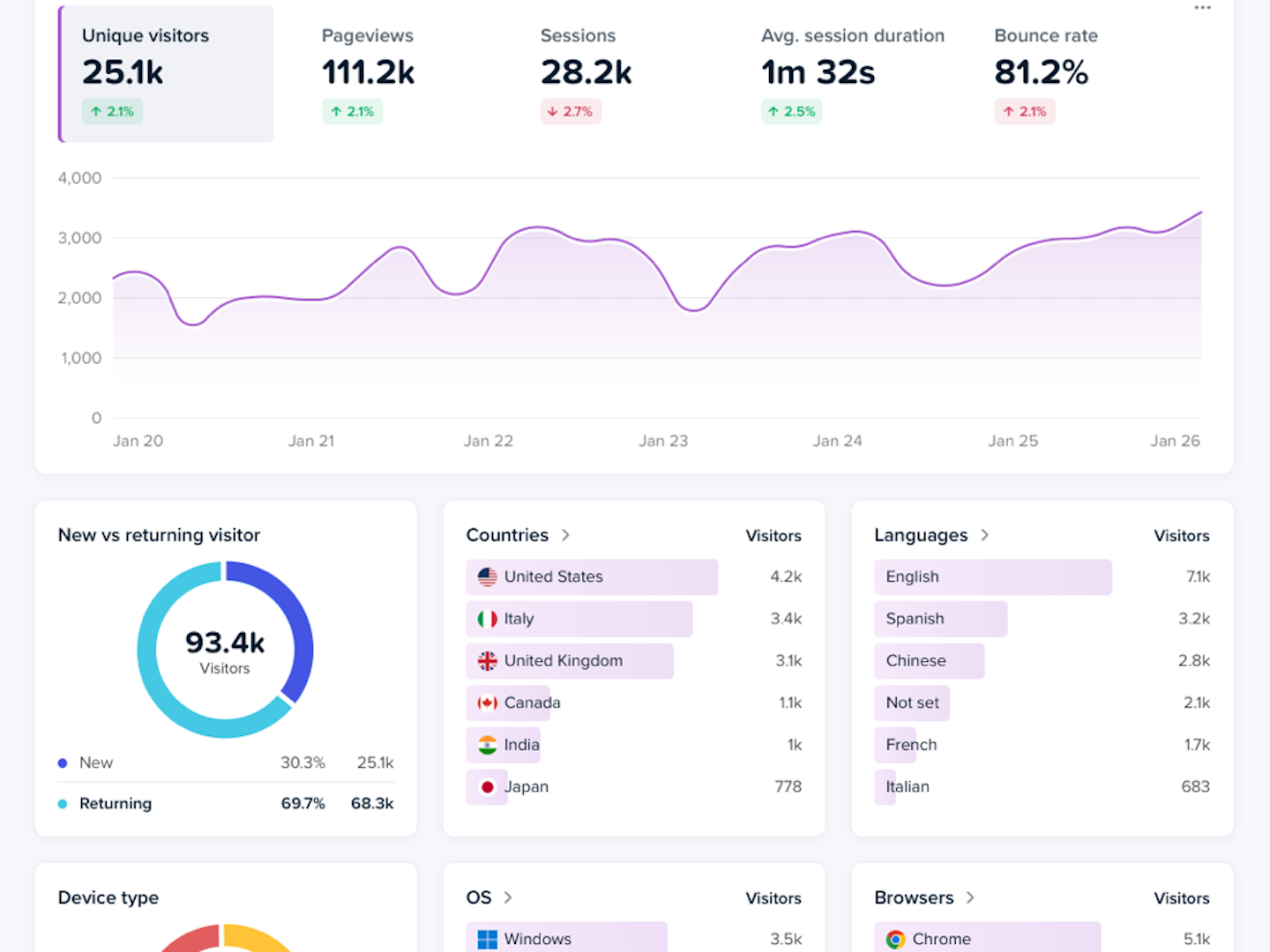
Most enterprises rely on BI tools like Tableau, Looker, or Power BI to present data to stakeholders. By moving Crazy Egg data into a warehouse, teams can finally pull "time-on-page" or "conversion-by-element" metrics into the same dashboards that track monthly recurring revenue (MRR) and customer acquisition cost (CAC). This creates a single source of truth that aligns the marketing department with the finance and product teams.
Official Stance and Customization
Crazy Egg has emphasized that this feature is built for flexibility. While the standard connector handles the core event stream, the company is also offering support for custom configurations.
"Need custom configuration around your data model?" the company asked in its release. This suggests that for larger enterprises with complex data schemas, Crazy Egg is providing a white-glove approach to integration. By allowing teams to define how events map to their internal models, the company is signaling that it is ready to serve as a mission-critical component of the enterprise tech stack.
Challenges and Considerations
While the benefits are significant, the shift toward owning behavioral data comes with responsibilities. Organizations adopting the Data Warehouse Connector must now manage the data lifecycle, including:
- Governance and Compliance: Since the data is moved to a storage bucket owned by the customer, the onus of compliance with GDPR, CCPA, and other privacy regulations shifts toward the customer’s data engineering team.
- Storage Costs: While Parquet files are efficient, massive scale in event tracking can lead to increased cloud storage costs. Teams will need to implement lifecycle policies to manage data retention effectively.
Conclusion: A New Chapter for Crazy Egg
The release of the Data Warehouse Connector is more than just a new feature; it represents a fundamental maturation of the Crazy Egg platform. By handing the keys to the raw data back to the user, Crazy Egg is acknowledging that the future of analytics isn’t found in a single dashboard, but in the ability to harmonize data across an entire enterprise.
For data teams, the message is clear: the wall between "what users did" and "what the business earned" is coming down. As businesses increasingly turn to AI and complex BI to gain a competitive edge, having the ability to own, query, and integrate first-party behavioral data is no longer a "nice-to-have"—it is a necessity.
For organizations interested in implementing the Data Warehouse Connector, Crazy Egg recommends contacting your account manager or reaching out to their support team directly to discuss the specific requirements of your data architecture.
Frequently Asked Questions (FAQ)
Q: Is the Data Warehouse Connector available for all Crazy Egg plans?
A: The connector is primarily positioned for enterprise-level workflows. Interested parties are encouraged to contact their account representative to discuss compatibility with their current plan.
Q: Does this include session recordings?
A: The connector focuses on raw behavioral events (clicks, session joins, conversion events). Users should consult with their account manager to confirm the specific granularity of the data streams available for their unique setup.
Q: Can I use this with any data warehouse?
A: Because the data is delivered to a storage bucket you own (such as Amazon S3, Google Cloud Storage, or Azure Blob Storage), it is compatible with virtually any data warehouse that can ingest from those providers.
Q: What is the benefit of using Iceberg over standard CSV exports?
A: Iceberg is a table format designed for massive analytical datasets. It supports ACID transactions, schema evolution, and significantly faster query performance compared to flat files like CSV or JSON.
