

Beyond the Noise: Mastering Competitive Intelligence in the Modern Business Era
In today’s hyper-connected marketplace, data is not a scarce resource—it is an overwhelming deluge. For business leaders, the challenge is no longer about finding information; it is about distilling scattered signals into a coherent strategy. This is the core function of Competitive Intelligence (CI): the disciplined, ethical process of collecting and analyzing data regarding competitors, customers, and industry trends to transform raw information into actionable business decisions.
As organizations navigate an era of rapid technological shifts and global market instability, the ability to anticipate a rival’s next move or identify a latent customer need is the primary determinant of sustainable growth.

The Foundations of Competitive Intelligence
At its most fundamental level, competitive intelligence is a strategic bridge. While market research focuses on customer preferences and business intelligence analyzes internal performance metrics, CI functions as the connective tissue that interprets the external world through the lens of internal strategy.
The Four Pillars of CI
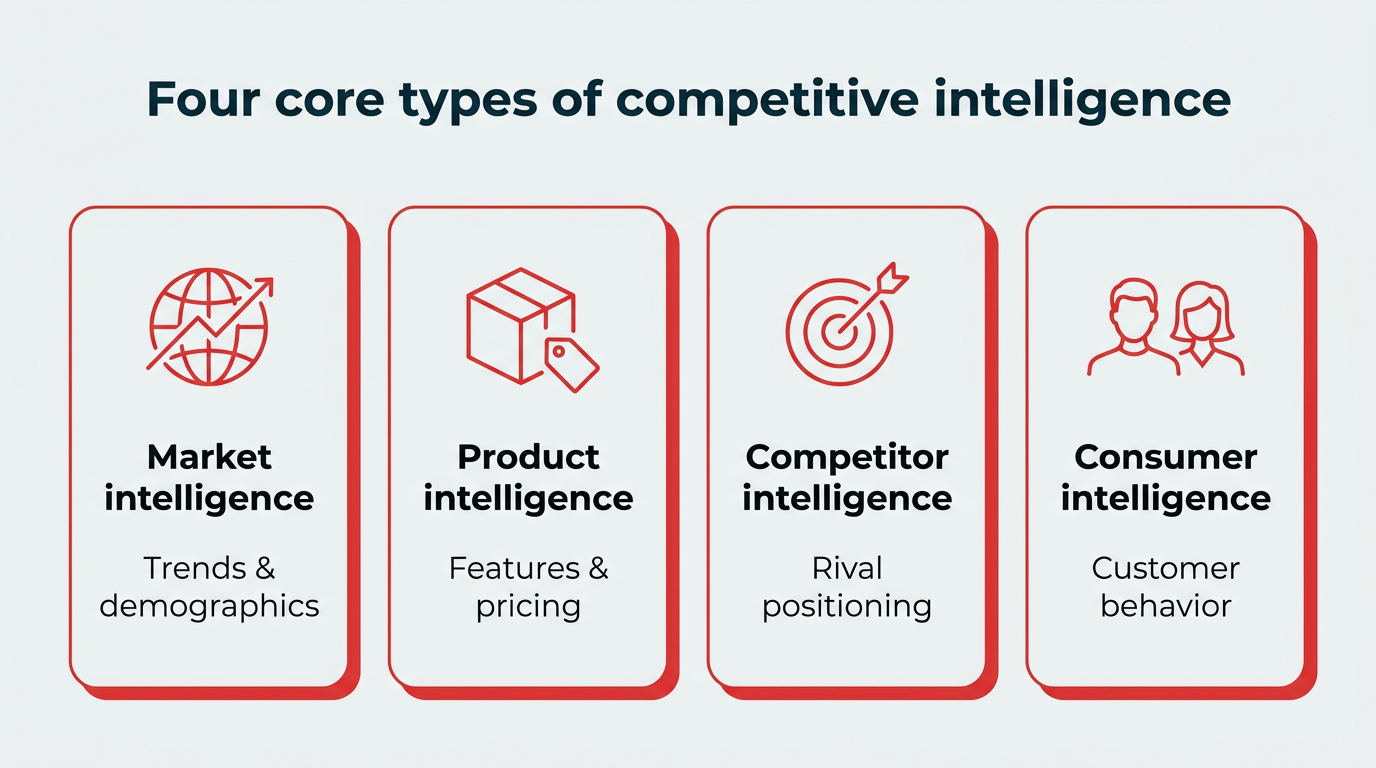
To build a robust intelligence program, organizations typically rely on four core categories of data:

- Market Intelligence: This encompasses the macro-environmental factors—economic shifts, regulatory changes, and broader industry trends—that affect the entire playing field.
- Product Intelligence: A granular comparison of feature sets, performance metrics, and pricing structures. This is essential for defining your unique value proposition.
- Competitor Intelligence: An analysis of rival positioning, leadership changes, and strategic pivots. This allows organizations to move from reactive defense to proactive positioning.
- Consumer Intelligence: A deep dive into the "why" behind customer behavior. By understanding the pain points and motivations of the target audience, brands can tailor their messaging to resonate more effectively.
Strategic vs. Tactical Intelligence
A common mistake in the development of CI programs is failing to distinguish between time horizons. Strategic CI is the domain of the C-suite, focused on long-term bets such as market expansion, mergers, or multi-year product roadmaps. In contrast, Tactical CI is the engine room of marketing, sales, and product teams, providing the daily updates needed to refine ad campaigns, handle sales objections, and adjust content briefs.
The Competitive Intelligence Chronology: A Continuous Loop
Competitive intelligence is not a static report; it is a living, breathing cycle. To maintain its efficacy, organizations must treat CI as an ongoing process rather than a one-off project.
1. Defining Intelligence Priorities
The process begins by identifying the questions that actually matter. If a piece of data does not directly influence a potential business decision, it is merely noise. Leadership should establish "Key Intelligence Topics" (KITs) to focus the collection efforts on high-impact areas.
2. Multi-Source Collection
Data must be gathered from a diverse array of sources to avoid confirmation bias. This includes social media conversations, public financial filings, patent applications, SEO trends, and internal feedback from sales and customer support teams.
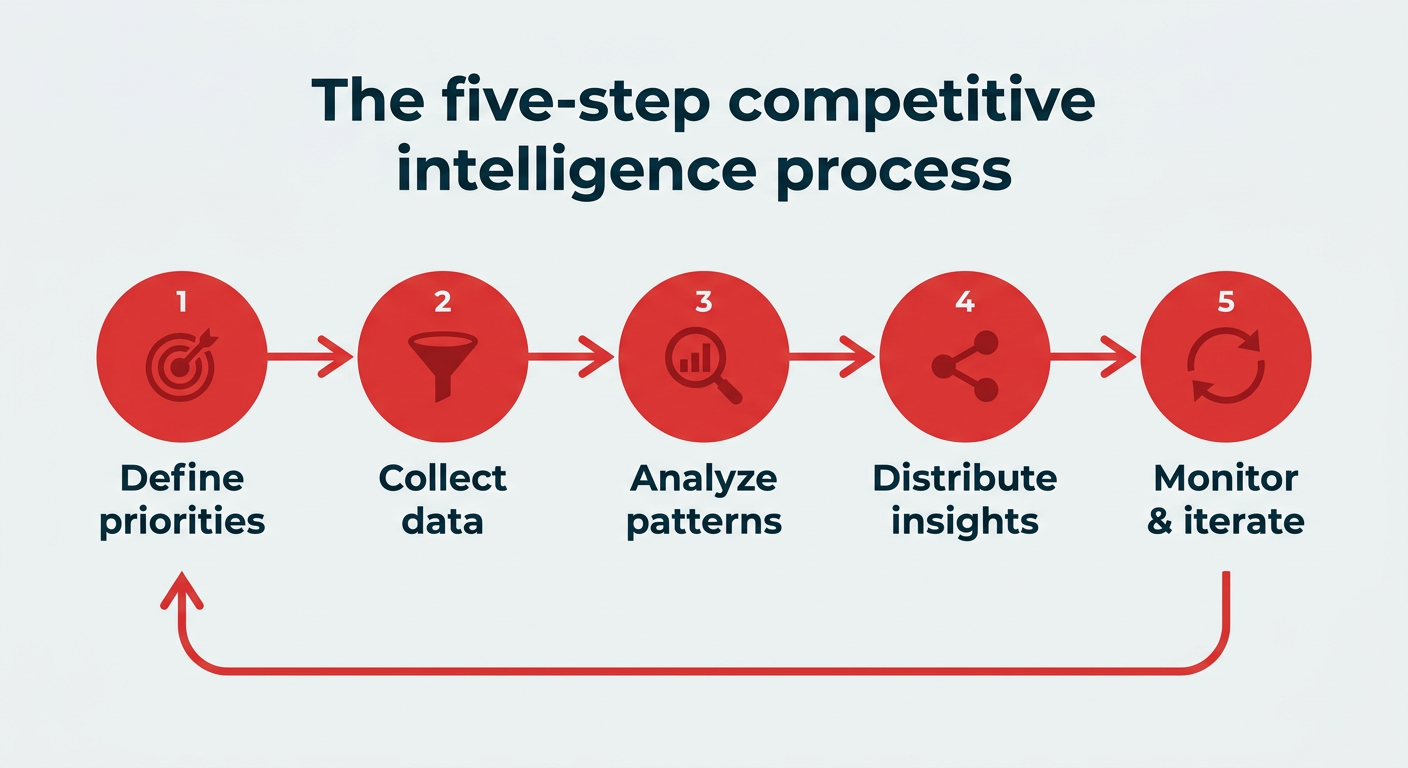
3. Pattern Recognition and Synthesis
Collection is useless without synthesis. Analysts must look for shifts in mention volumes, engagement spikes, and pricing adjustments. For instance, a sudden surge in mentions for a competitor may not be a marketing success for them; it could be a PR crisis, providing a window of opportunity for your brand to step in.
4. Distribution and Action
Insights must be packaged for the specific audience. A CEO requires a high-level summary with a recommended course of action, while a sales representative needs a "battlecard" they can reference mid-call.
5. Monitoring and Iteration
Finally, a program must be pruned. If the questions being asked are the same ones from two years ago, the intelligence program has become obsolete. Regular reviews ensure that the CI engine remains aligned with the company’s current strategic goals.
Supporting Data: Why Speed Matters
The primary value of competitive intelligence is its ability to reduce the "latency of response." When a competitor launches a new feature or a market sentiment shifts, the time taken to identify and react to that change is the difference between capturing market share and losing it.

According to industry trends, organizations that integrate social listening into their CI workflows report significantly higher confidence in proving marketing ROI to stakeholders. The social listening market itself is projected to reach over $22 billion by 2030, underscoring the shift toward real-time, digital-first intelligence gathering.
Furthermore, AI-powered CI platforms have been shown to reduce manual data-gathering efforts by over 60%, allowing human analysts to spend more time on interpretation and strategy rather than data entry.

Ethical Boundaries and Legal Compliance
A critical aspect of any professional CI program is the strict adherence to ethical and legal standards. There is a profound distinction between "intelligence" and "espionage."
- Accepted Practices: Analyzing public filings (10-Ks, etc.), monitoring public social media sentiment, tracking public job postings, and attending industry conferences are all standard, ethical practices.
- Prohibited Practices: Misrepresenting one’s identity to gain access to private competitor meetings, stealing trade secrets, or inducing a competitor’s employee to break a non-disclosure agreement are not only unethical but expose the organization to severe legal liability.
The industry gold standard is the code of ethics provided by the Strategic and Competitive Intelligence Professionals (SCIP) association, which emphasizes transparency, confidentiality, and legality.

Implications for Business Strategy
The implementation of a mature CI program has far-reaching implications across the organization:
- Audience Segmentation: By analyzing the language competitors use in their marketing, firms can identify "whitespace"—customer segments that are currently being ignored by the market leaders.
- Risk Mitigation: Early warning systems allow organizations to pivot before a crisis escalates. Whether it is a shift in consumer sentiment or a looming regulatory hurdle, CI provides the lead time necessary to prepare a defensive strategy.
- Product Roadmapping: The most accurate product roadmap is one written by your customers. By monitoring what customers are complaining about on forums like Reddit or within competitor review sections, product teams can prioritize features that have a high probability of market adoption.
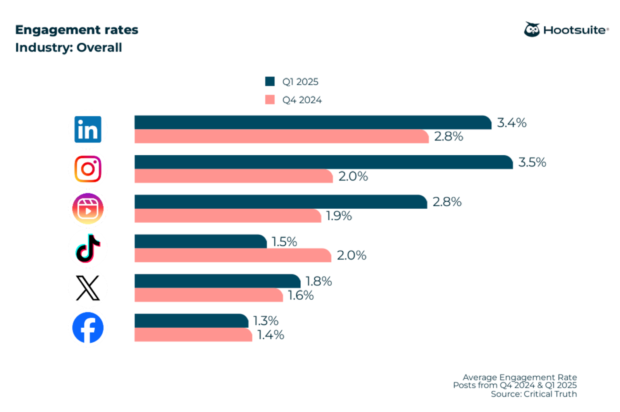
- Benchmarking for Success: Benchmarking provides the context needed to define "success." By comparing engagement rates, website traffic, and share of voice against industry peers, companies can set realistic KPIs that drive actual growth rather than chasing vanity metrics.
Challenges and Future Outlook
Even the most sophisticated CI programs face hurdles. The primary risk is "analysis paralysis"—the tendency to hoard data without ever making a decision. Another common pitfall is the failure to socialize insights. If the insights generated by the CI team are siloed in a spreadsheet that no one reads, the investment is wasted.
As we move toward 2026, the integration of AI agents into CI workflows will become the standard. Tools like Hootsuite’s Social OS, with its integrated "Wisdom" AI, allow team members to ask complex, plain-language questions of their data and receive cited, evidence-based answers. This democratization of data means that insights are no longer gated by a dedicated analyst; they are available to any decision-maker at the moment of need.
Conclusion
Competitive intelligence is no longer a luxury for Fortune 500 companies; it is a necessity for any business operating in a digital landscape. By transforming raw, scattered signals into a disciplined, continuous, and ethical loop of insight, organizations can navigate the complexities of the modern market with confidence. The winners of the next decade will be those who can listen, interpret, and act faster than their competition—not through guesswork, but through the power of informed, strategic intelligence.
