NEW YORK — In the high-stakes world of media ad sales, the fundamental currency has shifted. Today’s media sellers are no longer merely pitching digital real estate or basic impressions; they are selling verified, high-value audiences. Yet, in an increasingly crowded media ecosystem, proving the tangible value of that audience to skeptical brand buyers demands a rigorous, data-driven approach.
As publishers navigate tightening marketing budgets and fierce competition from tech giants, relying on surface-level reach and generic vanity metrics is no longer enough. To secure premium sponsorships and accelerate deal closures, modern ad sales teams are turning to sophisticated combinations of first-party publisher data and comprehensive third-party social video intelligence.
Main Facts: The Evolution of Audience Monetization
At its core, contemporary ad sales rests on a simple truth: buyers want proof, not promises. Publishers traditionally possess a distinct advantage through reliable first-party data—information collected directly from their owned-and-operated (O&O) sites and applications. Real-time analytics tools, such as Chartbeat, track this data to offer deep insights into onsite user behavior and editorial performance.
However, O&O data only tells part of the story. To truly stand out, forward-thinking publishers are enriching their first-party insights with third-party social video data harvested from platforms like YouTube, TikTok, Instagram, and Facebook. By leveraging global social intelligence platforms like Tubular Labs, ad sales teams can contextualize their reach, demonstrate authentic audience affinities, and translate basic view counts into concrete proofs of value.
The primary components driving this transformation include:
Comprehensive Data Integration: Blending internal site telemetry with cross-platform social video consumption habits.
Granular Demographic Segmentation: Isolating target audiences by specific age brackets, genders, and geographic regions.
Behavioral Overlap Metrics: Identifying what else a publication’s audience watches, creating unique entry points for non-endemic advertisers.
Momentum Tracking: Highlighting year-over-year or platform-specific growth trends to prove active audience expansion.
Chronology: The Shift from Impressions to Intelligence
The transition toward deep data enrichment in ad sales did not happen overnight. It represents a steady maturation of the digital media marketplace over the past decade.
Phase 1: The Era of Impressions (Early 2010s)
For years, digital ad sales relied heavily on sheer volume. Publishers sold banner space and video pre-rolls based almost entirely on pageviews and broad monthly unique visitor counts. Advertisers accepted these top-funnel metrics because digital advertising was still scaling, but the lack of contextual depth often resulted in misaligned brand placements and low return on investment (ROI).
Phase 2: The Rise of First-Party Data (Late 2010s)
As programmatic advertising matured and privacy regulations began to shift, publishers prioritized building robust direct-to-consumer relationships. First-party data took center stage. Publishers learned to lean on their own digital footprints, utilizing real-time analytics tools to understand user journeys on their proprietary apps and websites. While this improved targeting, it created a fragmented view, as publishers could only see behavior occurring strictly within their own digital walls.
Phase 3: The Cross-Platform Social Boom (2020s–Present)
As audiences increasingly fragmented across social video ecosystems—spending hours daily on YouTube, TikTok, and Instagram—publishers expanded their footprints onto these networks. Recognizing that a massive portion of their brand equity lived off-site, media companies needed a way to capture and monetize that external engagement. This realization birthed the modern era of third-party data enrichment, where platforms like Tubular Labs emerged to bridge the gap between social video consumption and commercial ad sales pitches.
Supporting Data: How Social Intelligence Shapes the Pitch
Gathering data is only half the battle; the true skill lies in weaponizing that data to craft a winning narrative. Ad sales teams utilizing global social video scales can dissect audience behavior across multiple dimensions to differentiate themselves from competing media properties.
1. Demographic Segmentation at Scale
Advertisers rarely buy generic audiences anymore; they hunt for specific micro-segments. Tubular Labs enables sales teams to slice data by location, age, and gender, proving how a specific media property over-indexes with a brand’s precise target demographic.
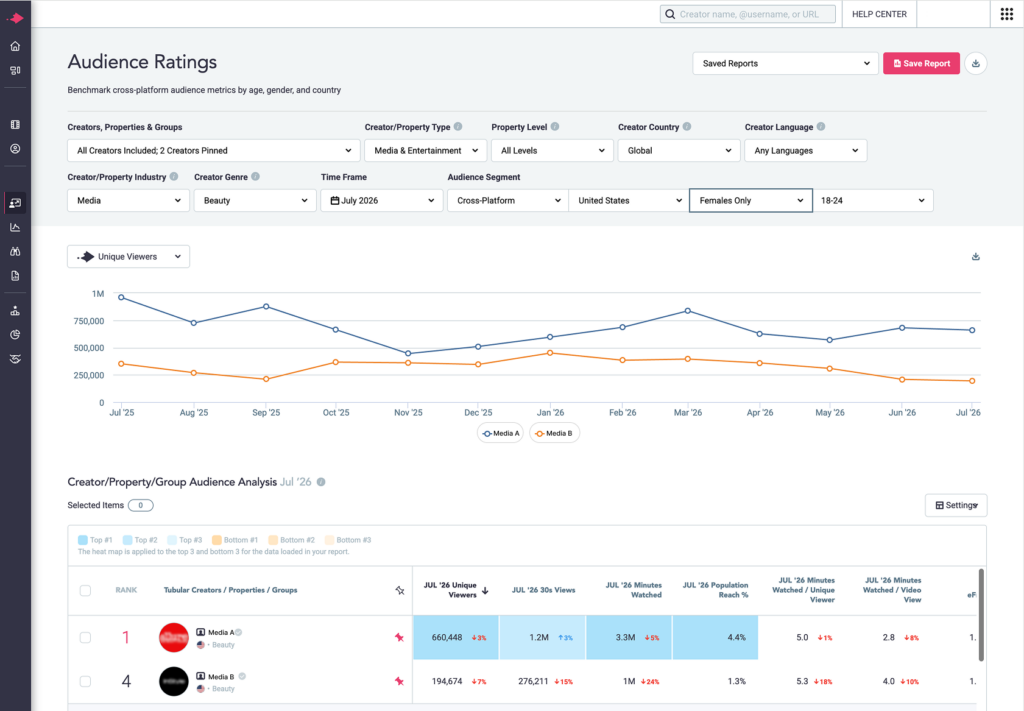
Industry Example: Imagine two media companies competing for a lucrative ad spend from a major beauty brand targeting women aged 18 to 24. On the surface, both publishers’ direct sites might look comparable. However, by deploying advanced demographic segmentation tools, Media Company A can pull cross-platform analytics proving that its content resonates far more deeply with the exact age and gender brackets the brand desires. This segment-level performance advantage breaks the tie and wins the deal.
2. Audience Overlap and Affinity Mapping
One of the most innovative ways to expand inventory value is by identifying audience affinities outside a publication’s core vertical. Audience overlap data examines what else a publication’s viewers watch across the broader social video landscape.
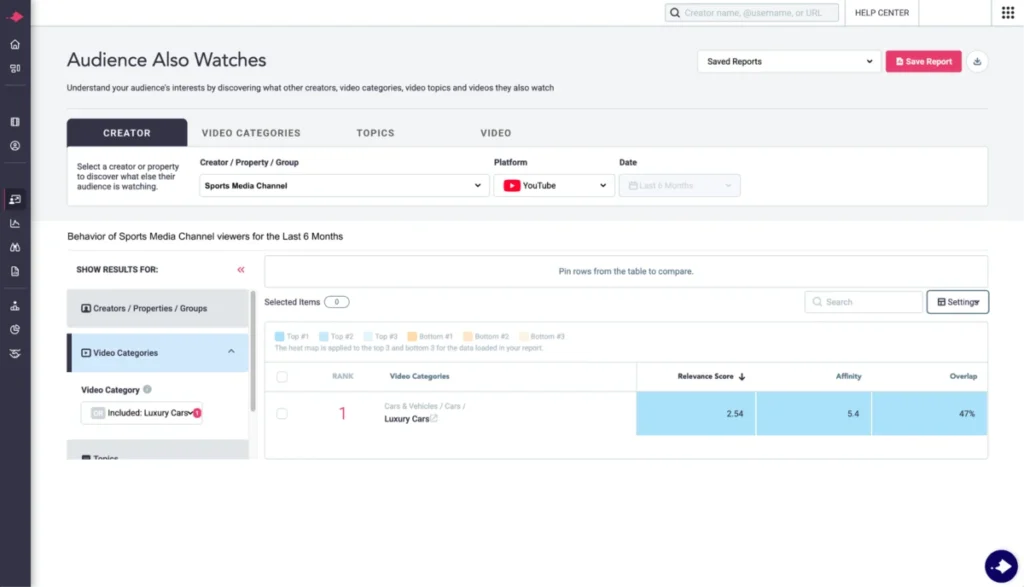
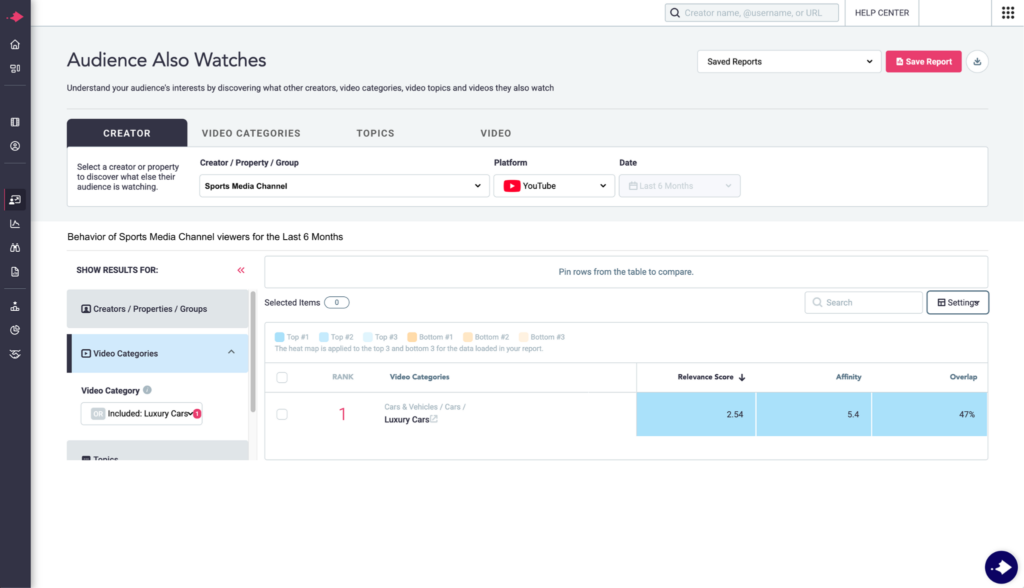
Industry Example: A prominent sports media company might pitch a luxury automotive brand by revealing that its core sports enthusiasts share a 47% viewer overlap with high-end automotive content on YouTube. Rather than relying on the assumption that sports fans drive cars, the sales team provides concrete proof that their audience already possesses a behavioral affinity for luxury vehicles, opening the door for non-endemic sponsorship opportunities.
3. Content Performance and Growth Momentum
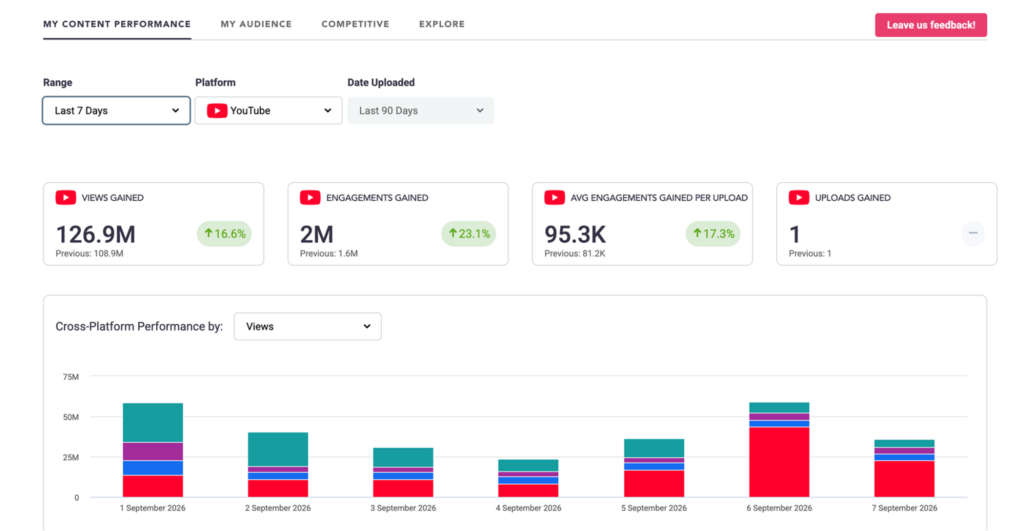
Advertisers want to partner with media properties that are growing, not stagnating. Content performance insights allow sellers to demonstrate momentum by coupling raw view counts and engagement metrics with longitudinal growth trends.
Industry Example: Instead of presenting a vague statement like "Our channel is growing fast," a media seller can point to specific, verifiable metrics: "We have achieved 55% year-over-year growth among viewers aged 25–34 on YouTube." This level of granular momentum reassures the advertiser that they are investing in an expanding, highly sought-after consumer cohort.
Official Responses and Industry Perspectives
Media executives and monetization strategists have increasingly emphasized the necessity of moving away from archaic sales strategies.
"The days of walking into a pitch meeting armed with nothing more than a media kit and a dream of high pageviews are long gone," notes a senior digital monetization consultant. "Modern brand partners are sophisticated. They ask tough questions about attention, engagement, and behavioral alignment. If you cannot back up your claims with multi-platform data, you won’t even make it past the first round of agency reviews."
Data analytics leaders echo this sentiment, stressing that the integration of first- and third-party data is no longer a luxury feature for enterprise publishers—it is an operational baseline.
"Publishers often sit on goldmines of social engagement without realizing how to operationalize it for revenue," explains a digital media analyst. "Tools that aggregate social video data allow legacy publishers and digital-first creators alike to speak the language of modern media buyers. It turns anecdotal success stories into quantifiable, undeniable business cases."
Implications: What This Means for the Future of Media Sales
The widespread adoption of data-driven social video insights in ad sales carries profound implications for publishers, brands, and the broader media ecosystem.
For Publishers and Media Sellers
Higher Margins on Direct Deals: By proving deep audience affinity and contextual relevance, publishers can command premium pricing for branded content, resisting the race-to-the-bottom pressures of programmatic commoditization.
Shorter Sales Cycles: Pitches anchored in verifiable data points reduce skepticism, answer brand safety and alignment questions proactively, and accelerate negotiations from initial outreach to signed contracts.
Unlocking Non-Endemic Sponsors: Audience overlap insights allow publishers to pitch outside their traditional verticals, vastly expanding their potential pool of advertisers.
For Brands and Advertisers
Reduced Campaign Waste: Brands gain deeper visibility into real consumer behavior, ensuring their media spend targets audiences with proven affinities rather than theoretical demographics.
Creative Customization: Armed with data regarding niche subcultures—such as minimalist travel packing or specialized culinary content—brands can co-create bespoke, high-performing campaigns that resonate naturally with viewers.
Real-World Application: A Case Study in Action
Consider a global news publisher attempting to secure a major branded content partnership with a leading travel booking platform. The platform’s primary goal is to drive unaided brand awareness among UK millennials aged 25–34.
Instead of pitching generic banner inventory, the ad sales team uses social intelligence data to construct a compelling narrative:
"Our content consistently outperforms competing publications on views, comments, and shares, proving active audience engagement. Furthermore, our audience overlap data shows a strong crossover between travel intent and our digital ‘foodie’ subculture—specifically around aesthetic café content and neighborhood guides. Rather than running generic travel ads, we can help you build creative campaigns tailored to these specific niches, reaching an audience that is already primed to pay attention."
This approach transforms the ad sale from a transactional media buy into a strategic, insight-driven partnership.
Key Takeaways
As the digital advertising landscape continues to evolve, the common thread uniting successful media sales teams is proof. Pitches built on specific, verifiable, multi-platform data points consistently outperform those relying on broad reach numbers and historical assumptions.
For media organizations looking to thrive in the years ahead, the mandate is clear: embrace a holistic data strategy that marries internal site analytics with comprehensive social video intelligence. By turning vanity metrics into undeniable proof of value, publishers can secure premium sponsors, build lasting brand partnerships, andfuture-proof their revenue operations.