
Beyond the Medal Count: Predicting the Digital Breakout Stars of the Milano-Cortina 2026 Winter Olympics
As the global sporting community sets its sights on the Italian Alps for the 2026 Olympic Winter Games in Milano-Cortina, the traditional excitement surrounding the event is being amplified by an unprecedented shift in media consumption. In an era where the "second screen" experience is now the primary screen for millions, the path to Olympic stardom is no longer solely paved by podium finishes, but by the virality of digital storytelling.
New viewership data from 2025 provides a high-definition preview of what the digital landscape will look like when the opening ceremonies commence. For publishers, content creators, and global brands, these metrics serve as a vital roadmap for navigating the "ice-cold" but digitally red-hot environment of the upcoming Games.
The Metrics of Anticipation: 2025 as a Bellwether
Olympic years historically catalyze a surge in interest for niche sports, transforming obscure disciplines into household names overnight. However, the lead-up to the 2026 Games has been distinct. By analyzing social video trends from 2025—a non-Olympic year—we can identify which sports have successfully built sustainable, year-round audiences.
Data provided by Tubular Labs reveals that winter sports are no longer seasonal anomalies. They have become consistent pillars of digital engagement. As the world prepares for the spectacle in Italy, the data suggests that the "breakout winners" of the 2026 Games will be the sports that have successfully transitioned from periodic curiosities to evergreen content categories.
Ice Skating: The Unrivaled Titan of Winter Content
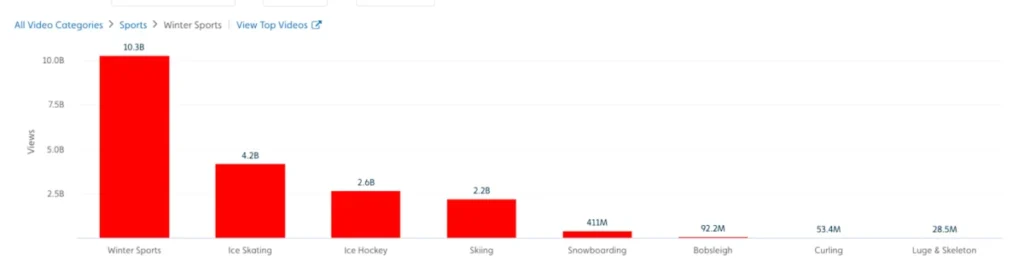
If social media engagement is a proxy for Olympic popularity, ice skating is the undisputed heavyweight champion. Despite 2025 being a non-Olympic year, ice skating content generated a staggering 4.2 billion views across major social platforms.
The Figure Skating Phenomenon
Within that massive ecosystem, figure skating remains the crown jewel, accounting for 2.2 billion of those views and boasting an impressive 36.8 million total engagements. The data indicates that figure skating’s appeal is multi-dimensional. It is not merely a sport; it is an aesthetic experience.
The high volume of engagement is driven by a unique confluence of athletic prowess and cultural commentary. Beyond the traditional sports fan, the sport attracts massive audiences interested in:
- Fashion and Aesthetics: The intricate costumes and styling have opened doors for beauty, hair, and fashion creators to participate in the conversation.
- Educational Content: "How-to" videos, ranging from basic blade techniques to complex rotational drills, have gained traction among audiences who may never have access to an ice rink but are captivated by the mechanics of the sport.
For content creators, this represents a massive opportunity. By pivoting from traditional sports commentary to lifestyle-centric content, publishers are effectively widening the funnel, ensuring that even those who don’t follow the winter sports circuit remain engaged with the brand of the Olympics.
The Slope of Success: Why Skiing Dominates the YouTube Algorithm
With more than 20 distinct skiing events scheduled for the Milano-Cortina Games, skiing stands as the most represented discipline in the upcoming Olympic program. The sheer variety—from the high-speed intensity of downhill alpine events to the creative, gravity-defying maneuvers of freestyle skiing—ensures that there is a niche for every type of viewer.
Data-Driven Performance
In 2025, skiing videos on YouTube amassed 2.2 billion views. The segmentation of this data offers a fascinating look at viewer behavior:
- The Power of Niche: Freestyle and alpine skiing, which combined for one-third of total views, saw an average of 128,000 views per video across 6,000 uploads.
- The "Ski Jumping" Anomaly: While the volume of content is lower, ski jumping emerged as a high-value category, averaging a massive 426,000 views per video. This indicates a high "stickiness" factor; viewers who click on ski jumping content are significantly more likely to watch the entire video.
The success of creators like Anthony Robert—who managed to maintain high viewership even during the summer months—demonstrates that skiing is no longer tethered to the winter season. By framing skiing as a lifestyle, adventure, or technical challenge, creators can sustain audience interest throughout the calendar year, creating a "year-round" Olympic momentum.
Behind the Scenes: Niche Sports and the Power of Personal Narrative
While skiing and skating drive mass volume, the most compelling growth is occurring in niche categories like bobsledding. The sport has successfully leaned into the "sprinter-turned-bobsledder" narrative, a trope that has evolved from the 1990s Cool Runnings nostalgia into a sophisticated, modern storytelling engine.
The Rise of Authentic Content
The most successful accounts are those that peel back the curtain. The Great Britain bobsled team, for instance, has effectively used social video to document the grueling reality of training, the technical complexities of sled mechanics, and the psychological preparation required for Olympic competition.
This transparency is rewarded by the algorithm. Bobsleigh content earned 317,000 views per video in 2025, proving that audiences are hungry for the human element behind the high-speed, high-stakes competition. For brands, this represents a paradigm shift: partnering with athletes who are already expert content creators offers a more authentic route to the audience than traditional, high-budget broadcast commercials.
Implications for Stakeholders: A New Olympic Playbook
The transition toward digital-first engagement has profound implications for the sports industry, publishers, and global advertisers.
1. The Death of the "Off-Season"
The 2025 data confirms that the traditional "off-season" is a relic of the past. Success in 2026 will belong to those who treat the Olympics as a continuous narrative. Whether it is a ski equipment brand creating tutorials or a figure skater vlogging their training regimen, the goal is to maintain a constant digital presence that builds anticipation long before the first torch is lit.
2. Diversifying the Audience
The convergence of sports, beauty, and tech-focused "how-to" content is the key to broadening the Olympic demographic. Advertisers should look beyond traditional sports media buys. The data shows that the "Olympic viewer" is just as likely to be watching a hair tutorial inspired by a figure skater’s performance as they are to be watching a race replay.
3. The Shift from Broadcast to Community
While NBC retains the exclusive broadcast rights for the Games, the "Olympic experience" is increasingly fragmented and social. Publishers must lean into community-driven content. The engagement metrics show that audiences are gravitating toward creators who foster community through behind-the-scenes access, technical breakdowns, and personal storytelling.
Conclusion: Preparing for Milano-Cortina 2026
As the 2026 Milano-Cortina Olympic Winter Games approach, the data is clear: the winners of the digital space will not be those who simply broadcast the events, but those who provide context, community, and creative engagement.
The 2025 data serves as both a warning and an invitation. For those who view the Olympics as a two-week event, the window of opportunity is narrow. For those who view the Games as the climax of a multi-year digital narrative, the potential for growth is nearly limitless.
Whether it is through the aesthetic elegance of figure skating, the technical mastery of skiing, or the behind-the-scenes grit of bobsledding, the path to the 2026 podium is paved with digital engagement. As the world turns its eyes to Italy, the real competition—the battle for attention, loyalty, and virality—has already begun.
For those looking to stay ahead of the curve, industry leaders are increasingly turning to data-driven insights to measure the next breakout content trend. By understanding the intersection of sports, social video, and fan engagement, publishers can ensure they are not just spectators, but central participants in the Olympic conversation.
