
Beyond the Blueprint: How Global Giants Gamify Innovation to Fuel Sustainable Growth
In the modern corporate ecosystem, a "growth operation" is often reduced to a series of technical levers: A/B testing, funnel optimization, and data analytics. However, the most successful organizations have realized that true, scalable growth is not merely a technical output—it is a cultural byproduct. When implemented effectively, a growth operation democratizes innovation, allowing ideas to bubble up from the base of the pyramid while providing leadership with the data-driven clarity required to make high-stakes decisions.
Yet, there remains a chasm between companies that attempt to implement growth methodologies and those that possess growth in their DNA. Bridging this gap requires more than strategy; it requires a company-wide commitment to behavioral change. To secure this engagement, industry titans are increasingly turning to gamification—transforming the daunting task of experimentation into a celebrated organizational sport.
The Anatomy of a Growth-First Culture
Successful growth implementations rarely succeed as grassroots efforts alone. They are typically top-down initiatives where high-level executives are educated on the methodology, middle-management builds the strategic infrastructure, and growth teams execute the experiments.
The danger lies in the "middle," where bureaucracy often stifles the rapid iteration required for growth. To combat this, companies like Amazon, Pfizer, 3M, and Google have moved beyond KPIs to create symbolic rewards systems that incentivize the "courage to fail." By gamifying the innovation process, these companies have managed to institutionalize the "bias for action," ensuring that the entire workforce feels ownership over the company’s evolution.

Chronology of Institutionalized Innovation
1998: Amazon’s "Just Do It" Award
The story of Amazon’s cultural foundation dates back to a high-pressure customer service scenario in 1998. Faced with a backlog of 250 unresolved inquiries, a frontline associate proposed an audacious goal: clear the entire queue in 24 hours in exchange for a $200 bonus. The team succeeded, and Jeff Bezos immediately recognized the power of the event. He saw three core pillars: an audacious goal, a high-stakes environment, and an immediate, tangible reward for efficiency.
The "Just Do It" Award was born from this success. It is not a quarterly performance bonus; it is a prestigious, biannual honor that recognizes individuals for extraordinary innovation and a bias for action. With the final recipient selected by Bezos himself, the award has become a coveted status symbol among Amazon’s 600,000+ employees, effectively turning the mundane task of problem-solving into a celebrated achievement.
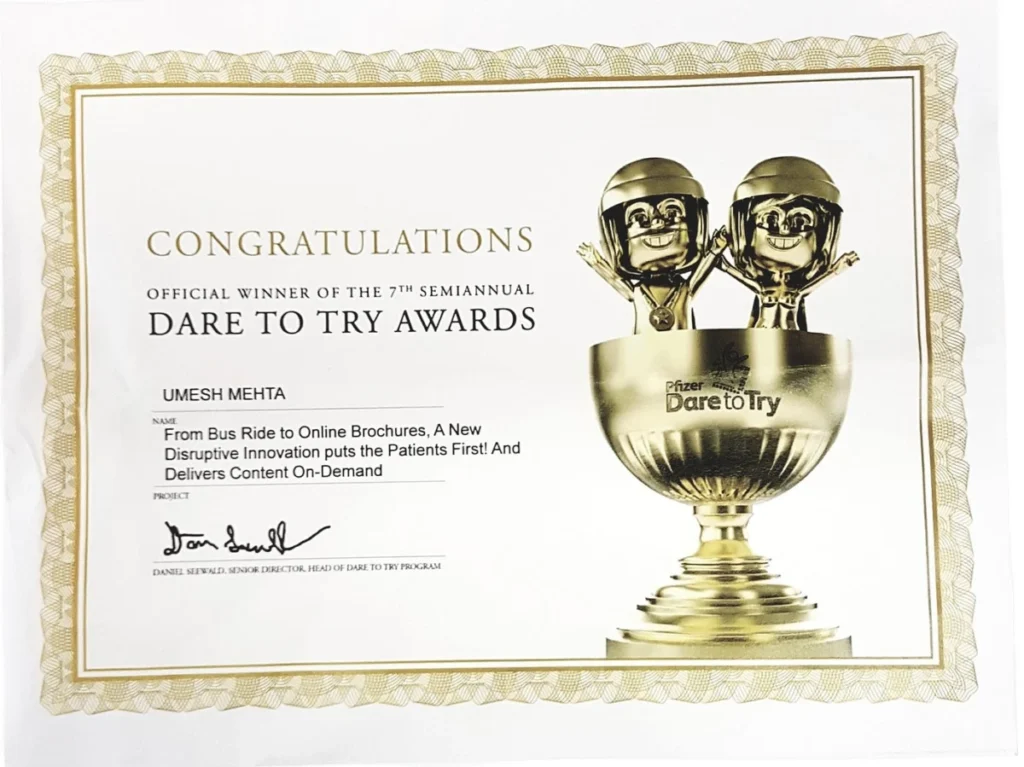
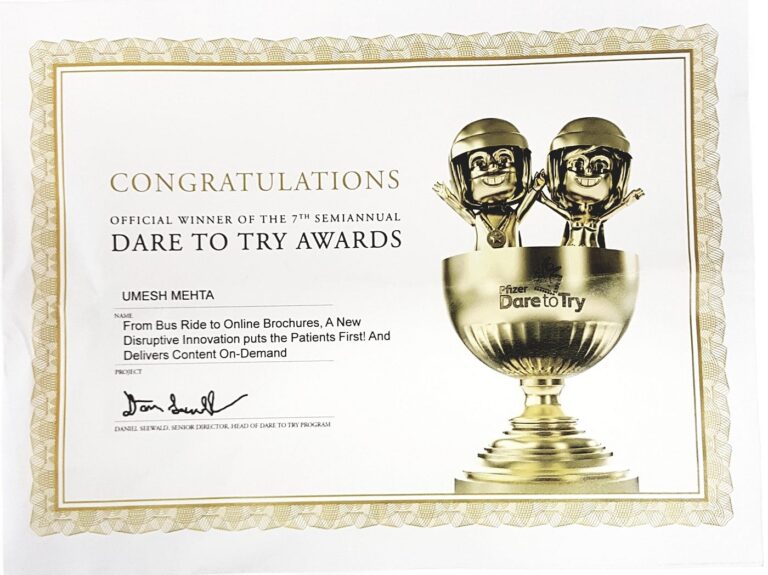
2013: Pfizer’s "Dare to Try"
Ten years ago, Pfizer, a multinational giant in the highly regulated pharmaceutical sector, faced a paradox: they needed the agility of a startup to survive, but were burdened by the risk-averse nature of a legacy corporation. They launched "Dare to Try," a program designed to normalize failure. By creating a network of self-nominated "champions," the company encouraged employees to fail "freely but inexpensively."
This program evolved from a simple training initiative into an internal brand. The "Champions" serve as evangelists, providing the legwork for cultural change and ensuring that the organization views every failed experiment not as a loss, but as a data point that accelerates the next success.
20th Century to Present: 3M’s "Innovate or Die"
3M has long held the gold standard for innovation, maintaining its status as a market leader through a disciplined approach to R&D. Central to their philosophy is a rule that mirrors modern growth hacking: 30% of each division’s revenue must come from products introduced in the last four years. This "Innovate or Die" mandate ensures that no division can rest on the laurels of legacy products. By rewarding innovators with internal recognition and resources, 3M ensures that its workforce is constantly incentivized to cannibalize their own old products in favor of new, more relevant solutions.
The 2000s: Google’s 20% Project
Google famously iterated on the 3M model, institutionalizing the "20% Project." By allowing employees to dedicate one-fifth of their paid time to projects outside their primary job descriptions, Google fostered a culture of "creative action." This wasn’t just a perk; it was a strategic investment. The results speak for themselves, as some of the company’s most successful products—including Gmail, Google News, and AdSense—originated from these "side" experiments.
Supporting Data: Why Gamification Works
The efficacy of these programs is supported by a consistent trend: human behavior is heavily influenced by extrinsic and intrinsic motivators.
- Psychological Safety: Programs like Pfizer’s "Dare to Try" reduce the fear of failure, which is the single greatest inhibitor to innovation.
- Resource Allocation: By setting mandates (like 3M’s 30% revenue rule), leadership forces the organization to dedicate resources toward future-proofing, preventing the "stagnation trap" that kills many large enterprises.
- The Power of Recognition: Amazon’s "Just Do It" award proves that even in companies with hundreds of thousands of employees, a single symbolic gesture from top leadership can galvanize a workforce more effectively than monetary bonuses alone.
Official Responses and Strategic Implications
Industry leaders consistently emphasize that these programs are not "side projects"—they are the core of the business. During a recent internal forum, a Pfizer executive noted, "We do not view ‘Dare to Try’ as an HR initiative; we view it as a survival mechanism."

The implications for smaller companies looking to scale are clear: you do not need to be a multinational giant to start gamifying your growth.
- Define the "Win": Clearly articulate what successful experimentation looks like.
- Lower the Stakes of Failure: Create a "fail fast" environment where the cost of a failed test is minimal, but the learning is maximized.
- Reward the Behavior, Not Just the Result: Innovation is a process. Rewarding the attempt to solve a problem—even if the experiment fails—is the most effective way to encourage future risk-taking.
Implications: The Road Ahead
As the global economy becomes increasingly commoditized, the ability to innovate at speed will be the only sustainable competitive advantage. Companies that fail to implement a structured, gamified growth operation will find themselves unable to compete with the "agile giants."
The transition from a traditional company to a growth-oriented organization requires a fundamental shift in perception. It requires leadership to stop acting as the sole source of "the big idea" and start acting as the curators of a culture where every employee is a researcher.
Key Takeaways for Leaders
- Culture is Weight: Your growth methodology will fail if your culture treats failure as a career-ending event.
- Democratize Innovation: Ensure the frontline—those closest to the customer—have a mechanism to propose hypotheses.
- Symbolism Matters: Monetary rewards are fine, but public recognition from top leadership for acts of innovation is a more powerful driver of engagement.
- Measure the Process: Don’t just measure the outcome of a test; measure the volume of experiments, the speed of learning, and the frequency of employee participation in your innovation programs.
In the final analysis, the most successful growth programs are those that transform the "hard work" of business into a collective game of discovery. When the entire company is playing to learn, growth becomes not just a target, but an inevitability.
