
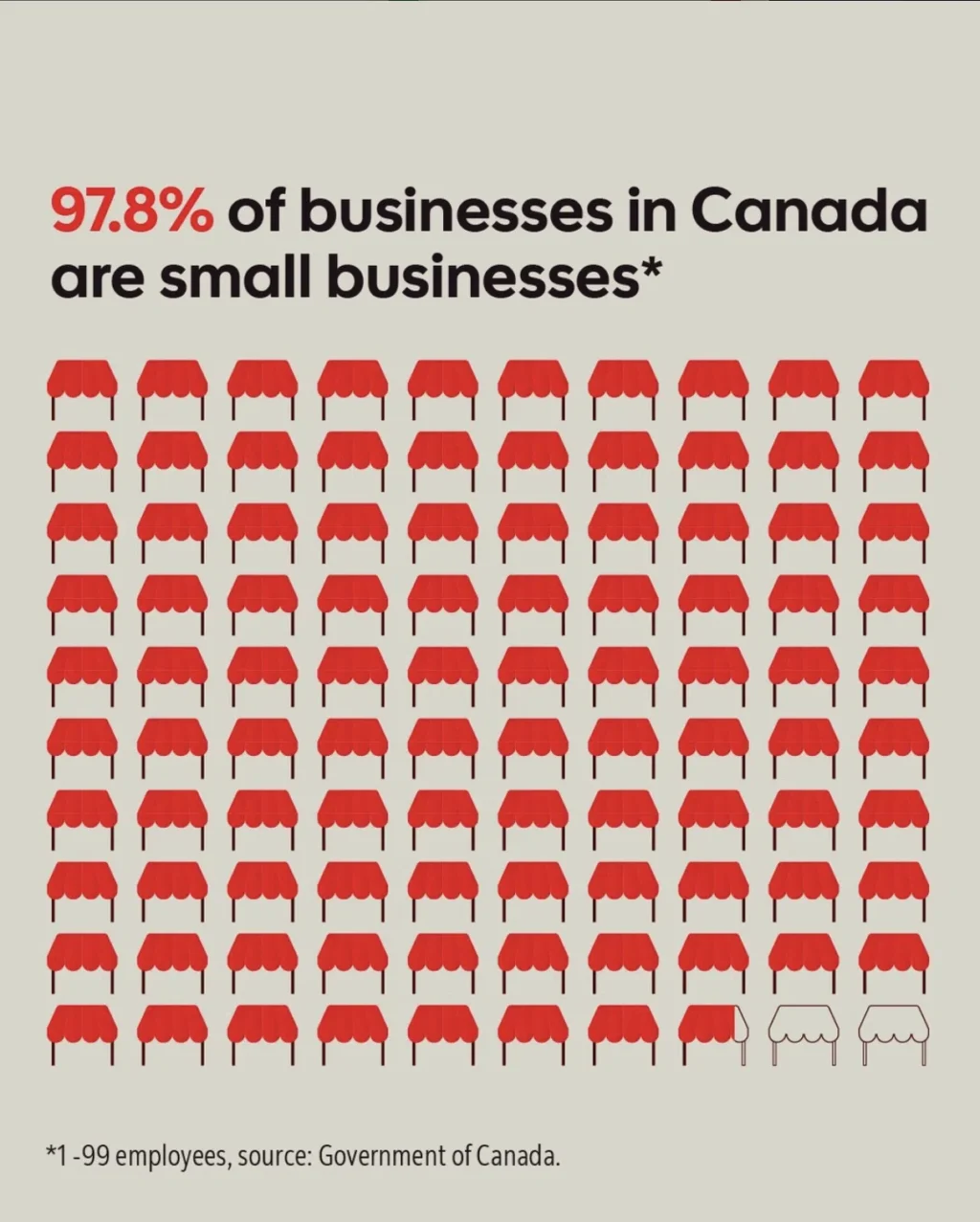
Beyond the Spreadsheet: Mastering the Art of Data Storytelling in Social Media Marketing
In an era defined by information saturation, the difference between a brand that captures attention and one that is scrolled past lies in its ability to translate raw numbers into human experiences. Data storytelling has emerged as the essential bridge between cold, hard logic and the emotional resonance required to build lasting trust on social media.
While many marketers treat data as a simple metric to be reported, the most successful brands are now using it as the backbone of their creative strategy. By weaving facts, statistics, and quantitative insights into compelling narratives, brands can bypass the noise and deliver messages that are not only understood but acted upon.

The Architecture of Insight: What is Data Storytelling?
At its core, data storytelling is the practice of using quantitative information to authenticate a narrative. It is the synthesis of logic—the facts—and emotion—the human element that gives those facts weight.
"Using data to tell stories from a brand’s point of view can be very effective, as it bridges that place between logic and emotion and lets a brand connect with a reader on a deeper level," explains Leeann Froese, Digital Marketing Manager at Town Hall Brands.

When a brand claims their product is effective, it is a subjective opinion. When they provide verifiable research—such as "four out of five dentists recommend this product"—that claim becomes an objective reality. However, the data must be unadulterated and sourced from credible third parties. In the age of misinformation, where 79% of adults globally report that social media has made it easier to manipulate public opinion, the ethical use of verified data is not just a best practice; it is a prerequisite for brand survival.
The Three Pillars: Data, Narrative, and Visualization
A data story is fragile. If any of the three fundamental pillars—data, narrative, or visualization—are removed, the entire structure collapses.
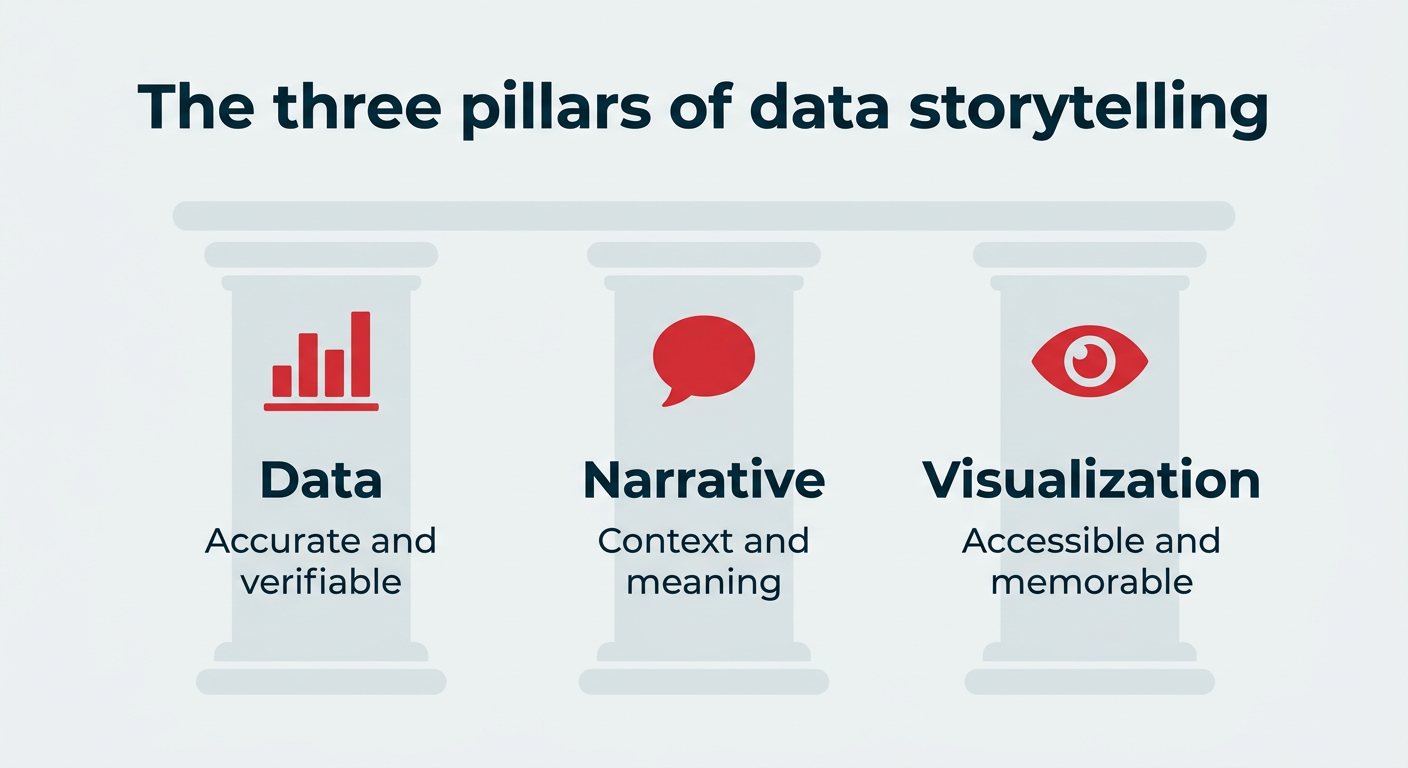
- Data (The Foundation): Without accurate, verifiable information, a story is merely fiction. Whether utilizing platform analytics, sales figures, or third-party research, the data must be unimpeachable. If you cannot cite the source, the data does not belong in the story.
- Narrative (The Meaning): Data is an abstraction until given context. A 12% growth in engagement is just a number; a 12% growth representing a successful pivot in community strategy is a success story. Narrative provides the "why," the "who," and the "what now."
- Visualization (The Accessibility): In a social media feed, speed is everything. The human brain processes visuals significantly faster than text. Whether using a simple bar chart or a sophisticated carousel, the visual must match the message to ensure immediate comprehension.
The 5 C’s Framework: Structuring the Data Arc
To prevent data-driven posts from becoming monotonous lists of statistics, marketers should adopt the "5 C’s" framework. This classic narrative arc helps transform dry figures into a compelling journey for the audience:
- Context: Set the scene. Why does this number matter right now? Frame the trend or the business problem.
- Characters: Who is affected? Position your customers, community, or team as the protagonists of the data.
- Conflict: Introduce the tension. What is the gap, the risk, or the missed opportunity that the data reveals?
- Climax: The "Aha!" moment. Present the headline statistic that shifts the perspective of the audience.
- Closure: The resolution. Provide a clear, actionable takeaway or call to action that resolves the tension presented by the data.
Chronology of a Successful Data-Driven Campaign
To understand how these concepts move from theory to execution, it is helpful to look at the lifecycle of a high-performing social media campaign.
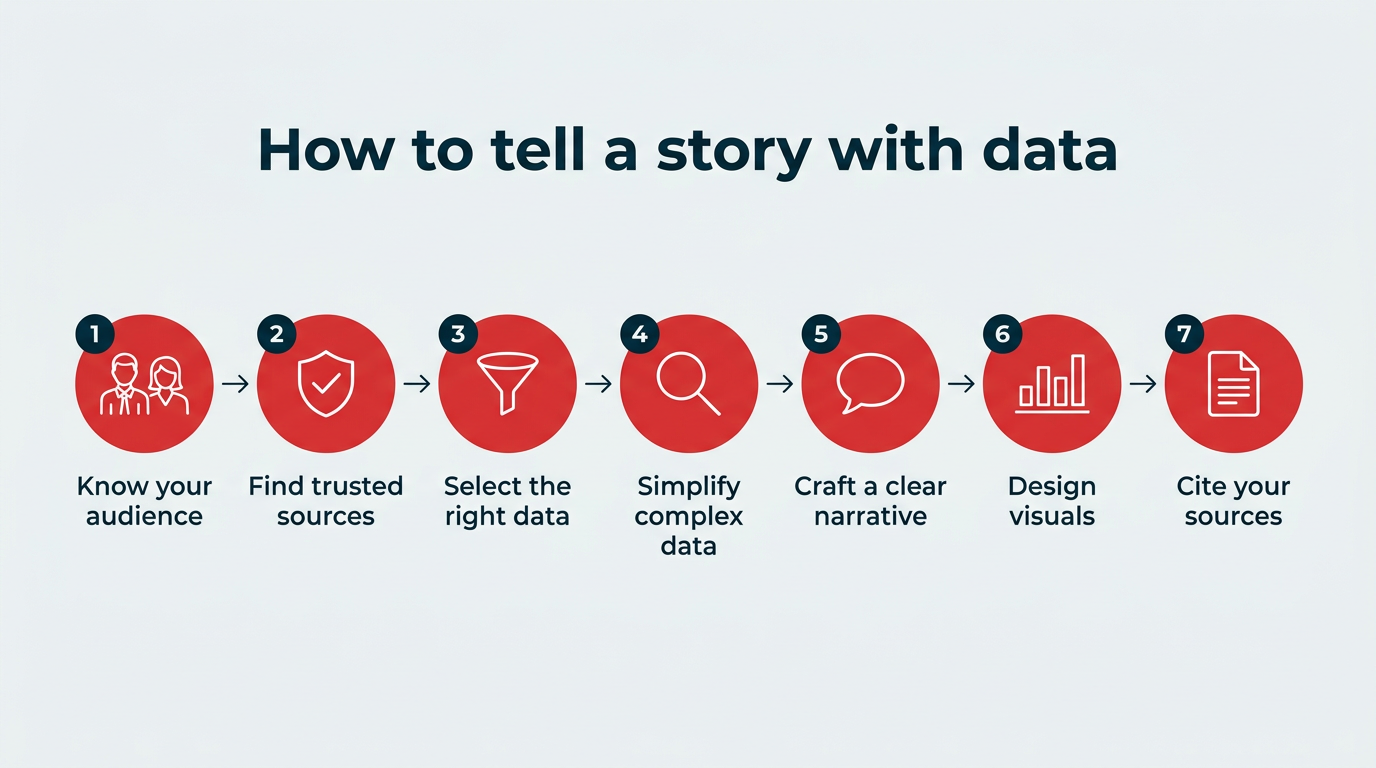
- Discovery (The Insight): Identifying the core problem. For example, a brand notices a drop in user retention.
- Validation (The Research): Gathering first-party data to confirm the trend and searching for external, peer-reviewed research to provide authority.
- Refinement (The Simplification): Translating complex technical jargon into a relatable analogy. (e.g., instead of saying "we reduced carbon output by 5,000kg," saying "we reduced carbon output by the equivalent of 100 passenger flights.")
- Creation (The Visuals): Designing assets that fit the specific platform format—be it a TikTok hook, an Instagram carousel, or a LinkedIn infographic.
- Distribution (The Launch): Posting at the height of the trend cycle to ensure maximum relevance.
- Engagement (The Dialogue): Monitoring comments to see how the audience reacts and using that feedback for the next iteration.
- Reporting (The ROI): Analyzing performance to prove that the data-led approach drove higher engagement and sentiment than traditional content.
Official Industry Perspectives
Industry experts emphasize that data is not merely a tool for reporting but a strategic asset for differentiation. As median engagement rates on platforms like Instagram hover near 9.7%, content that provides genuine insight stands out.
"Data is not just numbers—it’s an opportunity to connect, inspire, and differentiate a brand in a crowded market," says Froese. "When paired with a compelling narrative, data can turn abstract figures into relatable, emotionally resonant stories that build trust."

Furthermore, the reporting benefit is significant. When marketers focus on storytelling with data, they move beyond vanity metrics like "reach" and start showing leadership tangible evidence of brand authority. This shift in reporting demonstrates a deeper understanding of the customer journey and the business impact of social media.
Implications for Future Social Strategy
The trend toward "data-led" social media is accelerating. As consumers grow more skeptical of traditional advertising, they are increasingly seeking out brands that offer transparency and substance.
The Rise of Transparent Branding
Brands that share their numbers—whether it’s sustainability data, production volumes, or customer satisfaction scores—are inherently more transparent. This openness fosters a "human" connection, signaling that the brand is not just selling, but contributing to the broader conversation.
Combating Information Overload
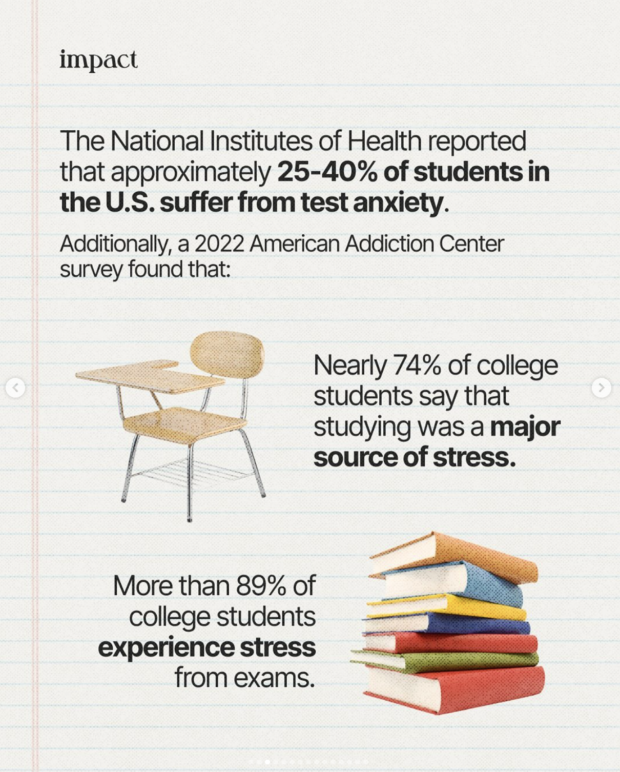
The most effective marketers will be those who can act as "filters." By simplifying complex data into digestible, visual insights, brands save their audience time. This utility-driven content creates long-term loyalty; if a user knows your brand will consistently provide clear, valuable information, they are more likely to return to your feed.
The Technical Evolution
The tools available to marketers are also evolving. Systems like Hootsuite Social OS now integrate real-time insights with publishing workflows, allowing brands to capitalize on trends in hours rather than weeks. This agility is crucial, as data-heavy stories often have a short "shelf life."
Strategic Mistakes to Avoid
Even with the best intentions, marketers often fall into common traps:

- The "Data Dump": Providing too many statistics in one post, which overwhelms the reader.
- Lack of Context: Sharing a number without explaining why it matters.
- Unverified Sources: Using "hearsay" data found on social media, which risks the brand’s reputation.
- Ignoring the Call to Action (CTA): Providing an insight but failing to tell the audience what to do next.
Conclusion: Turning Numbers into Advocacy
The evolution of social media marketing is moving toward higher stakes and higher quality. As the platform landscape consolidates, the brands that win will be those that view their audience as intelligent participants in a data-driven narrative.
By applying the 5 C’s, adhering to the three pillars of data storytelling, and prioritizing accuracy above all else, marketers can transform their social media channels from simple broadcast outlets into hubs of authority and trust. Data, when treated as the foundation of a story rather than a dry reporting requirement, becomes the most powerful tool in the modern marketer’s kit. It is no longer enough to just "post"; the future belongs to those who can prove their value, one story at a time.
