

Decoding the Global Newsroom: How Regional Audiences, Platform Mechanics, and Data Are Reshaping Digital Journalism
GLOBAL — In the modern digital news ecosystem, the old adage that "content is king" no longer tells the whole story. Across platforms, borders, and demographics, audience behavior has evolved into a complex matrix dictated by algorithm architectures, regional habits, and precise timing.
Recent cross-platform data spanning April through July 2026, compiled via Tubular Intelligence, offers a rare, empirical look at the modern digital newsroom. By analyzing video length, posting windows, trending hashtags, and top-performing stories across the Asia-Pacific (APAC), Latin America (LATAM), Europe, Middle East, and Africa (EMEA), and North America, industry analysts have uncovered a stark reality: media publishers are frequently missing engagement goldmines simply by prioritizing volume over strategic execution.
Main Facts: The Anatomy of Modern News Engagement
The comprehensive cross-regional data reveals distinct inefficiencies in how major media organizations deploy content. Rather than optimizing for how users actually consume video, many newsrooms fall into legacy publishing habits that conflict with algorithmic preferences and user attention spans.
Key findings from the April–July 2026 dataset include:

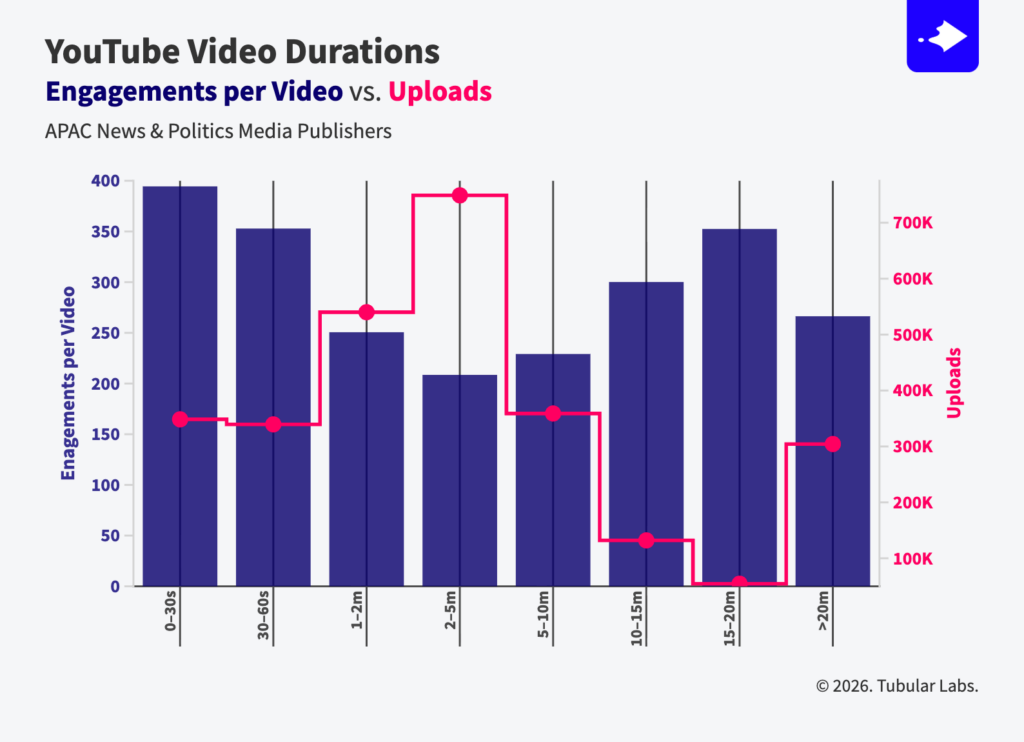
- The Mid-Length Trap in APAC: YouTube news publishers in the Asia-Pacific region heavily favor 2-to-5-minute videos, despite this duration receiving the lowest per-video engagement. Audiences overwhelmingly prefer the extremes: ultra-short clips (0–30 seconds) and deep-dive explainers (15–20 minutes).
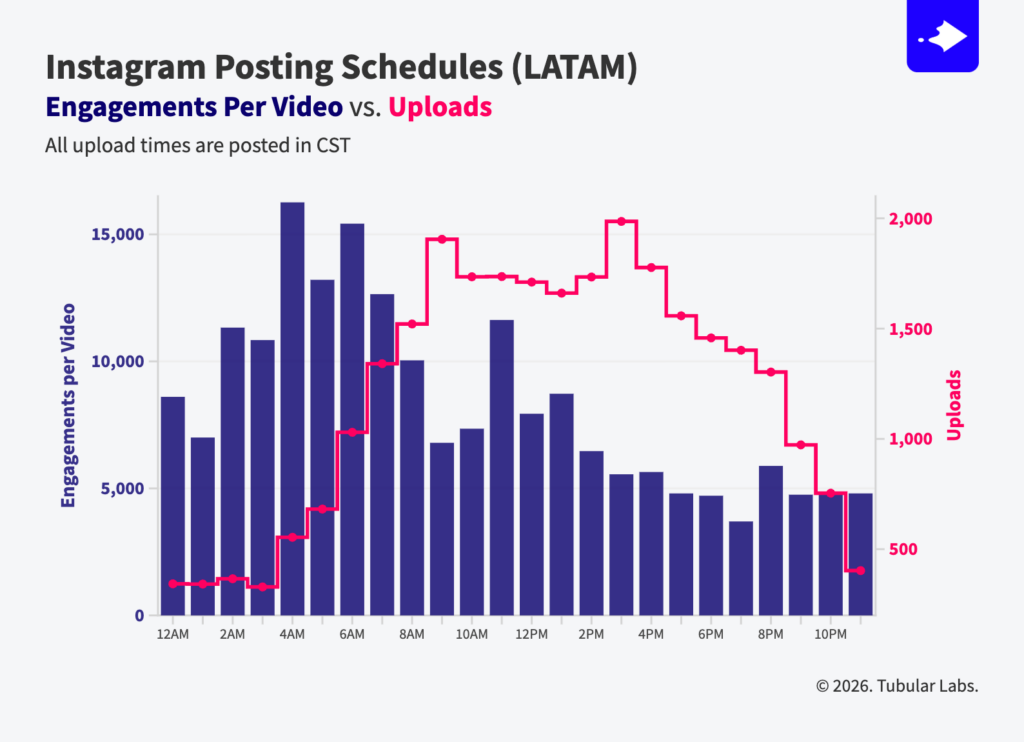
- The LATAM Timing Mismatch: Latin American Instagram publishers flood the feed during the mid-afternoon, completely missing the early-morning engagement peak when competition is lowest and per-video metrics are highest.
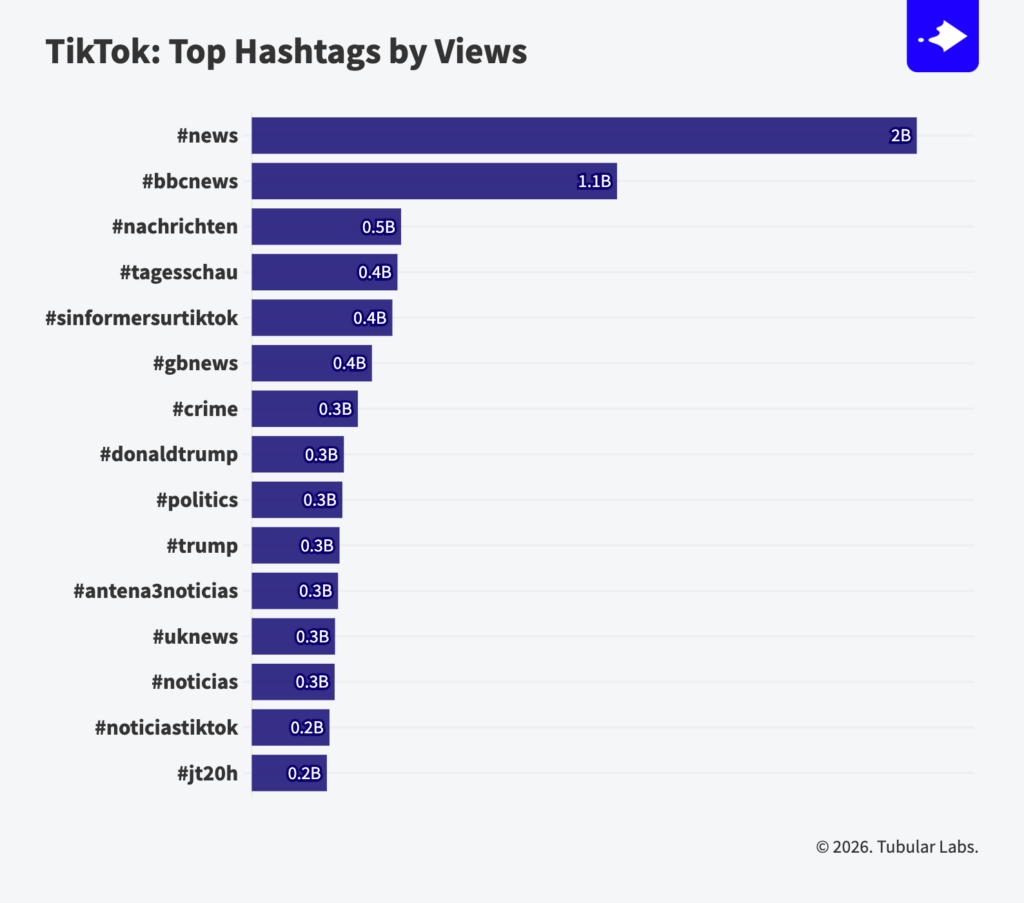
- EMEA’s Multilingual, Brand-Led Discovery: TikTok ecosystems in Europe, the Middle East, and Africa prove that global politics (specifically U.S. elections) transcend borders, while proprietary broadcaster hashtags and multilingual tags dominate search and discovery.
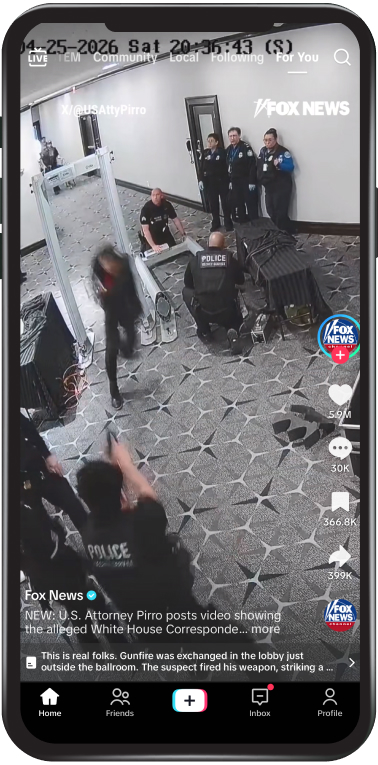
- The Reach vs. Engagement Dichotomy in the U.S.: North American data highlights a widening gap between sheer viewership and active audience engagement, best exemplified by contrasting high-view violent footage with high-interaction uplifting human-interest narratives.
Chronology: A Quarter of Shifts in Global Video Strategy
To understand how these trends materialized, it is necessary to examine the operational timeline of digital newsrooms leading up to mid-2026.
Early April 2026: Setting the Baseline
As newsrooms entered the second quarter of 2026, global events—ranging from geopolitical friction in EMEA to economic shifts in the Americas—drained newsroom bandwidth. Publishers initially leaned heavily on traditional output models: churning out mid-length YouTube recaps and standardized afternoon social posts. However, preliminary analytics from Tubular Intelligence indicated a growing disconnect between publisher output volume and actual viewer retention.
May 2026: Identifying Regional Discrepancies
By mid-spring, regional anomalies came into sharp focus. Data analysts tracking APAC YouTube uploads noticed that more than a quarter of all News & Politics content was trapped in the underperforming 2-to-5-minute window. Simultaneously, LATAM Instagram audits revealed that publisher posting schedules were completely inverted relative to audience activity curves, with feeds peaking in activity hours after morning engagement highs had already passed.
June 2026: Platform-Specific Breakthroughs on TikTok
Entering the early summer, attention shifted to short-form video behavior across EMEA and North America. TikTok became a masterclass in algorithmic navigation. In EMEA, hashtags fractured across multiple languages—such as English (#news), German (#nachrichten), Spanish (#noticias), and French (#sinformersurtiktok)—proving that European audiences rely on platform search engines rather than localized content silos. Meanwhile, U.S. publishers generated massive viral waves, setting up a definitive clash between raw reach and active community engagement.
July 2026: Consolidating the Data
By the close of the tracking period on July 21, 2026, the aggregate data solidified into an undeniable trend: the most successful publishers were those aligning their operational workflows with empirical audience behavior rather than historical newsroom routines.
Supporting Data: Regional Breakdowns and Platform Metrics
A closer examination of the metrics across the four major global sectors illuminates the mechanics driving these shifts.
1. APAC YouTube: The Danger of the Mid-Length Dead Zone
On YouTube, APAC News & Politics publishers concentrate their efforts on a duration trap. Tubular Intelligence figures demonstrate that user engagement peaks intensely at two poles:
- 0–30 Seconds: Captures immediate, bite-sized attention suited for mobile feeds.
- 15–20 Minutes: Generates deep, loyal watch-time for comprehensive context.
Despite this clear bifurcation, regional publishers pour over 25% of their total uploads into the 2-to-5-minute mid-length band. This suggests that newsrooms are optimizing for rapid content production quotas rather than maximizing structural impact per video.
2. LATAM Instagram: The Uncrowded Morning Window
In Latin America, a glaring operational misalignment persists. Media publishers post the vast majority of their content during mid-afternoon blocks. However, audience engagement curves peak during the morning hours.
- Because very few publishers utilize the morning slot, those who do capture significantly higher per-video engagement.
- Early-morning posters benefit from a double advantage: higher baseline user attention and drastically reduced market competition.
3. EMEA TikTok: The Anatomy of Global Hashtag Discovery
An analysis of the most-viewed News & Politics hashtags on TikTok in EMEA reveals three dominant pillars of modern content discovery:
- The Global Superpower of U.S. Politics: Tags such as
#donaldtrumpand#trumpconsistently rank within the region’s top 12 most-viewed topics, demonstrating that American political discourse functions as a borderless interest category. - The Punch-Above-Weight Power of Branding: Proprietary broadcaster hashtags like
#bbcnewsand#tagesschaugenerate massive visibility despite being utilized by only a handful of creators (frequently just the official brand accounts). This highlights the intrinsic value of established trust and brand authority in search algorithms. - Multilingual Fragmentation: Discovery across Europe is intentionally fragmented. Publishers utilize search-optimized tags across multiple languages simultaneously to maximize visibility, performance tracking, and cross-border reach.
4. North America: Views vs. Engagements
In the U.S. market, a direct cross-platform comparison of top-performing content from April to July 2026 underscores a strategic fork in the road for publishers:
- Fox News (Most Viewed): Leveraging footage of a high-intensity violent event, Fox News amassed a staggering 247 million views paired with 5.9 million engagements. The strategy prioritizes shock value, breaking-news urgency, and massive top-of-funnel reach.
- ABC News (Most Engaging): Showcasing a heartwarming, happy-ending spectacle, ABC News secured 65.7 million views while driving over 9.8 million engagements. This strategy prioritizes community interaction, shares, and emotional resonance that keeps a video alive long after its initial broadcast.
Official Perspectives and Industry Insights
As digital media landscapes grow increasingly competitive, executives, data scientists, and editorial directors are reassessing how stories are packaged and distributed.
Industry analysts emphasize that the data is not meant to restrict creative journalism, but rather to remove the guesswork from distribution. "Great journalism can happen at any length, and breaking news can strike at any hour," note data strategists at Tubular Labs. "However, when publishers rely heavily on mid-length content or mistimed posting windows, they are essentially fighting their own distribution channels. They are optimizing for output at the expense of impact."
Furthermore, editorial strategists point out that the division between reach and engagement requires a conscious corporate choice.
- Newsrooms must ask themselves whether their primary Key Performance Indicator (KPI) for a given quarter is raw impressions (ideal for top-of-funnel brand awareness and advertising impressions) or active interactions (crucial for community loyalty, algorithmic favor, and subscriber conversion).
"Reach and engagement do not always pull in the same direction," media consultants observe. "Publishers need to intentionally select their distribution tactic before they even assign or edit the story."
Implications: Moving Toward Smarter, Behavior-Driven Publishing
The collective findings from the April–July 2026 data set paint a clear picture for the future of digital newsrooms across the globe. The era of "post and pray"—the practice of pushing identical content across multiple channels at uniform times—is officially over.
Strategic Takeaways for Media Publishers and Brands:
- Ditch the Middle Ground (When Appropriate): APAC data proves that audiences want either immediate, high-impact summaries or deep, immersive explainers. Newsrooms must evaluate if their mid-length video output is truly serving viewer demand or simply fulfilling internal production metrics.
- Reclaim Off-Peak Windows: LATAM insights confirm that timing matters more than volume. By shifting publication schedules to morning slots, publishers can bypass congested afternoon feeds and capture high-intent audiences when competition is lowest.
- Master Platform-Specific Metadata: EMEA TikTok performance highlights the necessity of localized, multilingual, and branded tagging. Hashtags should no longer be viewed as mere post-categorization tools, but as active search-engine optimization (SEO) levers that drive international discovery.
- Define the Engagement Metric: North American case studies remind editorial teams that a million views do not equal a million interactions. Aligning story selection with the desired outcome—whether it is viral reach or active community sharing—ensures more efficient use of editorial resources.
Ultimately, the overarching lesson for media organizations is that digital success is no longer just about what news is covered, but how, when, and how fast it is delivered. By aligning content strategies with empirical audience behavior, platform mechanics, and regional nuances, publishers can stop exhausting resources on high-volume output and start driving targeted, measurable impact.
