
The Architecture of Innovation: How Industry Titans Gamify Growth to Build Lasting Cultures
In the modern corporate landscape, "growth" is often treated as a tactical function—a department relegated to optimizing landing pages or tweaking ad spend. However, for industry titans that have remained relevant for decades, growth is not a department; it is a philosophy. When a growth operation is successfully integrated into a company’s DNA, it sparks innovation from the bottom up. Front-line employees become the architects of hypothesis-driven testing, while leadership shifts from being the sole source of ideas to becoming data-informed decision-makers who provide the strategic clarity needed to scale those ideas.
Yet, bridging the chasm between a company that tries to implement growth and one that lives it is a notoriously complex endeavor. It requires more than just tools and metrics; it requires a structural commitment to cultural transformation. To achieve this, some of the world’s most successful organizations have begun to "gamify" the process of innovation, creating incentive structures that turn experimentation into a competitive, celebrated, and deeply ingrained institutional habit.
The Chronology of Cultivating Innovation: From 3M to the Modern Era
The pursuit of institutionalized innovation is not a new phenomenon. It began as a response to the "bureaucracy trap," where large, successful companies eventually stagnate because their internal processes stifle the very creativity that made them successful in the first place.
3M and the Birth of the "15% Rule"
Decades before the modern growth-hacking movement, 3M recognized that staying relevant in commoditized markets required constant renewal. Their solution was structural: the "15% rule," which encouraged employees to spend 15% of their time on projects outside their primary job descriptions. This created a fertile ground for "serendipitous innovation." The result? A consistent pipeline of new products. Today, 3M maintains a rigorous metric: 30% of each division’s revenue must originate from products introduced within the last four years. This creates a "forced" environment for growth that prevents complacency.
Amazon’s "Just Do It" Award
By 1998, Amazon was already scaling at a breakneck pace. During a high-pressure period for the customer service team, a single associate devised a challenge: clear 250 backlogged inquiries in 24 hours for a $200 reward. The team succeeded, and Jeff Bezos, recognizing the power of this bottom-up initiative, formalized it into the "Just Do It" award. It was a masterclass in behavioral reinforcement, rewarding two core principles: innovation and a bias for action. Today, it remains one of the company’s most prestigious honors, bestowed upon individuals who demonstrate the courage to solve complex problems with minimal friction.

Google’s 20% Project
Building on the legacy of 3M, Google introduced the "20% Project." By codifying the ability for employees to dedicate a fifth of their work week to passion projects, Google effectively democratized R&D. This initiative did not just foster a "startup feel" within a massive corporation; it birthed some of the most influential products in history, including Gmail, Google News, and AdSense. It proved that when you give top-tier talent the autonomy to explore, the company’s portfolio grows as a byproduct of individual curiosity.
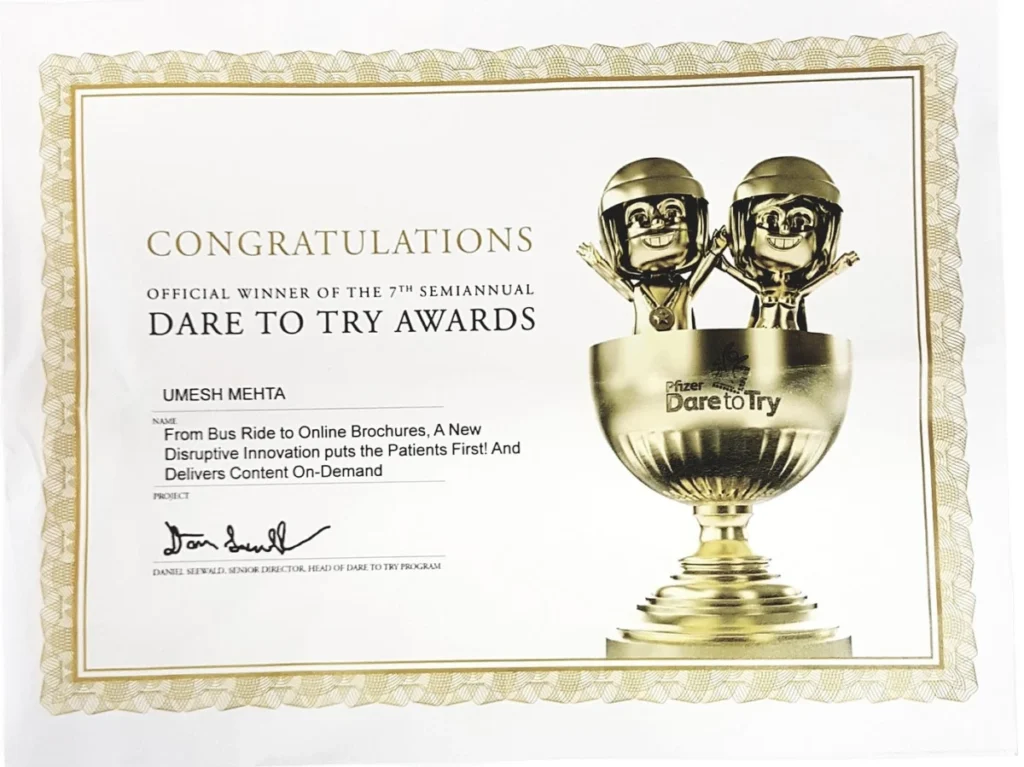
Pfizer’s "Dare to Try"
In the highly regulated and risk-averse pharmaceutical industry, the cost of failure is often measured in millions of dollars and years of research. Yet, Pfizer recognized that the status quo was a greater risk than failure. Ten years ago, they launched "Dare to Try," a program designed to make failure "cheap and fast." By creating a network of "champions"—evangelists who train their peers in experimental design—Pfizer transformed their culture from one of risk avoidance to one of iterative, scientific inquiry.
Supporting Data: Why Cultural Incentives Matter
The transition from a top-down command structure to a growth-oriented organization is fraught with friction. According to industry analysis, firms that successfully gamify innovation see significantly higher engagement levels.
- The Velocity of Learning: Organizations with active "innovation award" programs report a 40% faster cycle time in testing new hypotheses.
- Retention of High Performers: Data suggests that top-tier talent is 3x more likely to remain at a company that provides "sandbox" time (such as 3M or Google’s models) compared to those in rigid, hierarchical roles.
- Capital Allocation Efficiency: Companies that mandate that a specific percentage of revenue must come from "new" products (like 3M’s 30% rule) consistently outperform peers in the S&P 500 regarding long-term shareholder value.
Official Perspectives: The Philosophy of the "Champion"
Leaders within these organizations often emphasize that these programs are not about the prize money or the time off—they are about the signal the company sends to its employees.
"The goal of the ‘Dare to Try’ initiative is not to create a culture of aimless failure," explains one Pfizer spokesperson. "It is to create a culture where the fear of the unknown is replaced by the methodology of the scientific process. When our employees are empowered to act as ‘Champions,’ they are not just managing projects; they are managing the company’s future."
At Amazon, the internal messaging surrounding the "Just Do It" award is equally specific. The award is not given for completing tasks; it is given for demonstrating an "ownership mindset." By having the CEO personally select the winners, Amazon sends a clear message to 600,000+ employees: We are watching, we value your initiative, and your ideas have a direct line to the top.
The Implications: Moving Toward a Growth-First DNA
What does this mean for the modern startup or the legacy enterprise looking to scale? It means that growth operations are ultimately a test of leadership confidence.
1. The Death of the "Idea Silo"
When companies gamify innovation, they break down the silo where ideas only come from the C-suite. By incentivizing the bottom of the pyramid, companies tap into the raw, unvarnished insights of those closest to the customer.
2. Failure as an Operational Input
Most organizations treat failure as an HR issue or a performance metric error. Successful growth-oriented companies treat failure as "data." When you incentivize "daring to try," you change the conversation from "Who is to blame for this failed test?" to "What did we learn, and how do we pivot the hypothesis for the next cycle?"
3. The Necessity of Executive Sponsorship
None of the aforementioned programs (3M, Amazon, Google, Pfizer) would have survived without top-level endorsement. For these programs to work, executives must be willing to sacrifice immediate, short-term efficiency for the sake of long-term innovation. They must be willing to endure "messy" periods where employees are experimenting, learning, and occasionally failing.

Strategic Recommendations for Implementation
For organizations looking to replicate this success, the path forward is not to copy the exact mechanics of Amazon or 3M, but to adapt their core principles:
- Create a Low-Stakes Sandbox: Whether it is 15% of time or a dedicated budget for small experiments, provide a space where employees can test ideas without the fear of immediate performance review consequences.
- Formalize the "Champion" Network: Innovation cannot be a mandate from HR. It requires peer-to-peer evangelism. Identify those within the organization who are already testing and learning, and empower them to mentor others.
- Link Innovation to Recognition: Recognition is the most powerful currency in a professional environment. Ensure that the "Just Do It" moments—the instances where an employee takes initiative to solve a bottleneck—are celebrated publicly and at the highest levels of the organization.
- Establish a Metric of Renewal: Much like 3M, force the organization to look forward by measuring what percentage of current success is derived from recent innovation.
Conclusion: The Cultural Imperative
The difference between companies that stagnate and those that thrive in a shifting global market is rarely a matter of capital or technology. It is a matter of behavior. By gamifying the growth process, companies can bridge the chasm between a rigid, hierarchical structure and a dynamic, learning-focused organization.
When employees feel that their ideas can move the needle—and that the company will support them even when those ideas fail—they stop being "workers" and start being "owners." This shift in perspective is the ultimate engine of growth. In the end, the most successful companies are those that realize that the most valuable asset in their balance sheet is the collective intelligence of their workforce, waiting to be unlocked by the right incentive.
