
Beyond the Vanity Metric: Why Audience Intelligence is the New Currency of Influencer Marketing
The era of “spray and pray” influencer marketing is officially over. For years, the industry operated on a simple, often flawed equation: higher follower counts and massive view tallies equaled brand success. However, a significant shift is underway. Today’s most successful organizations are moving away from surface-level metrics, opting instead for a granular, data-driven approach that prioritizes audience intelligence over raw reach.
As detailed in the latest report from Tubular Labs, Redefining Influencer Value: How Audience Intelligence Transforms Reach into Revenue, the brands winning the modern attention economy are those asking smarter questions. They aren’t just looking for influencers who can rack up views; they are identifying creators who actively drive business outcomes by understanding the nuance of their audience’s search affinities, shopping behaviors, and cultural alignments.
The Paradigm Shift: From Reach to Revenue
The central thesis of the new report is clear: the creators generating the highest view counts are rarely the ones providing the most long-term strategic value. This decoupling of reach and impact is evident across diverse sectors, from the highly regulated healthcare space to the volatile, high-growth gaming and CPG markets.
In the past, marketing budgets were often allocated based on "influence" measured in aggregate numbers. However, when we look at the data from 2025, it becomes apparent that the most effective influencers are those who foster a specific, intent-driven connection with their followers. For marketers, this means the traditional playbook—prioritizing massive reach above all else—is becoming a liability rather than an asset.
Healthcare on Instagram: The Convergence of Clinical and Cultural Narratives
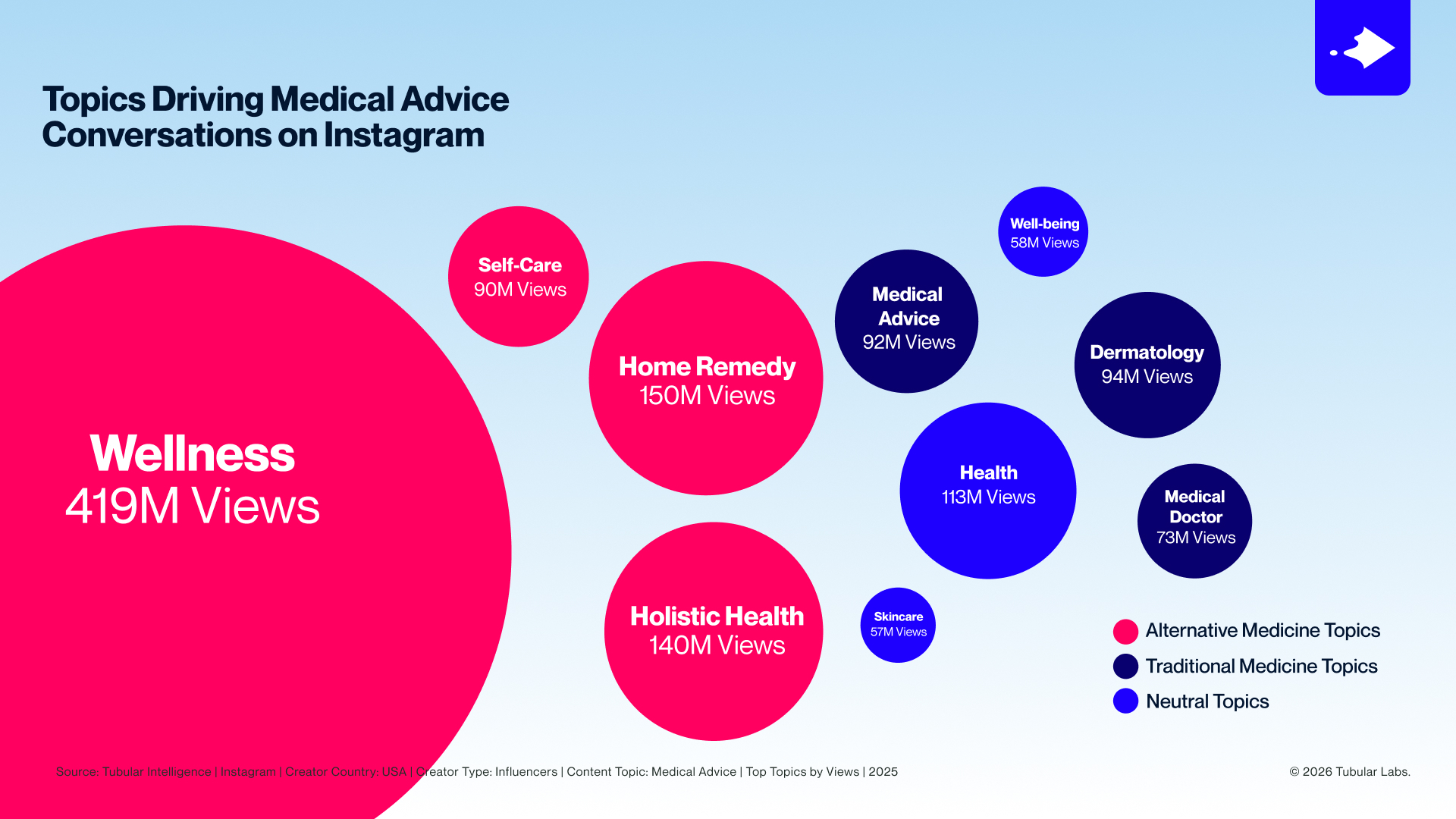
Perhaps nowhere is the necessity of audience intelligence more pronounced than in healthcare. By analyzing leading medical topics among U.S. influencers on Instagram throughout 2025, a fascinating duality emerges: consumers are no longer choosing between clinical authority and alternative wellness narratives. They are consuming both simultaneously.
The Myth of the "Clinical Only" Strategy
Brands in pharmaceuticals, skincare, and supplements often make the mistake of siloed marketing. They assume that if they target "clinical" content, they are capturing the entire relevant audience. The data, however, tells a different story. The healthcare conversation on Instagram is an ecosystem where scientific, evidence-based content exists in a constant feedback loop with lifestyle-oriented health trends.
If a brand ignores the "alternative" or lifestyle side of the conversation, they aren’t just missing a segment of the audience; they are missing the moment where curiosity transforms into purchasing intent. The strategic opportunity lies in positioning a brand precisely where these two worlds intersect. By utilizing audience intelligence, marketers can get ahead of these narratives, inserting their products into the conversation before a consumer has even settled on a specific clinical pathway.
Case Study: The Science of Influencer Selection
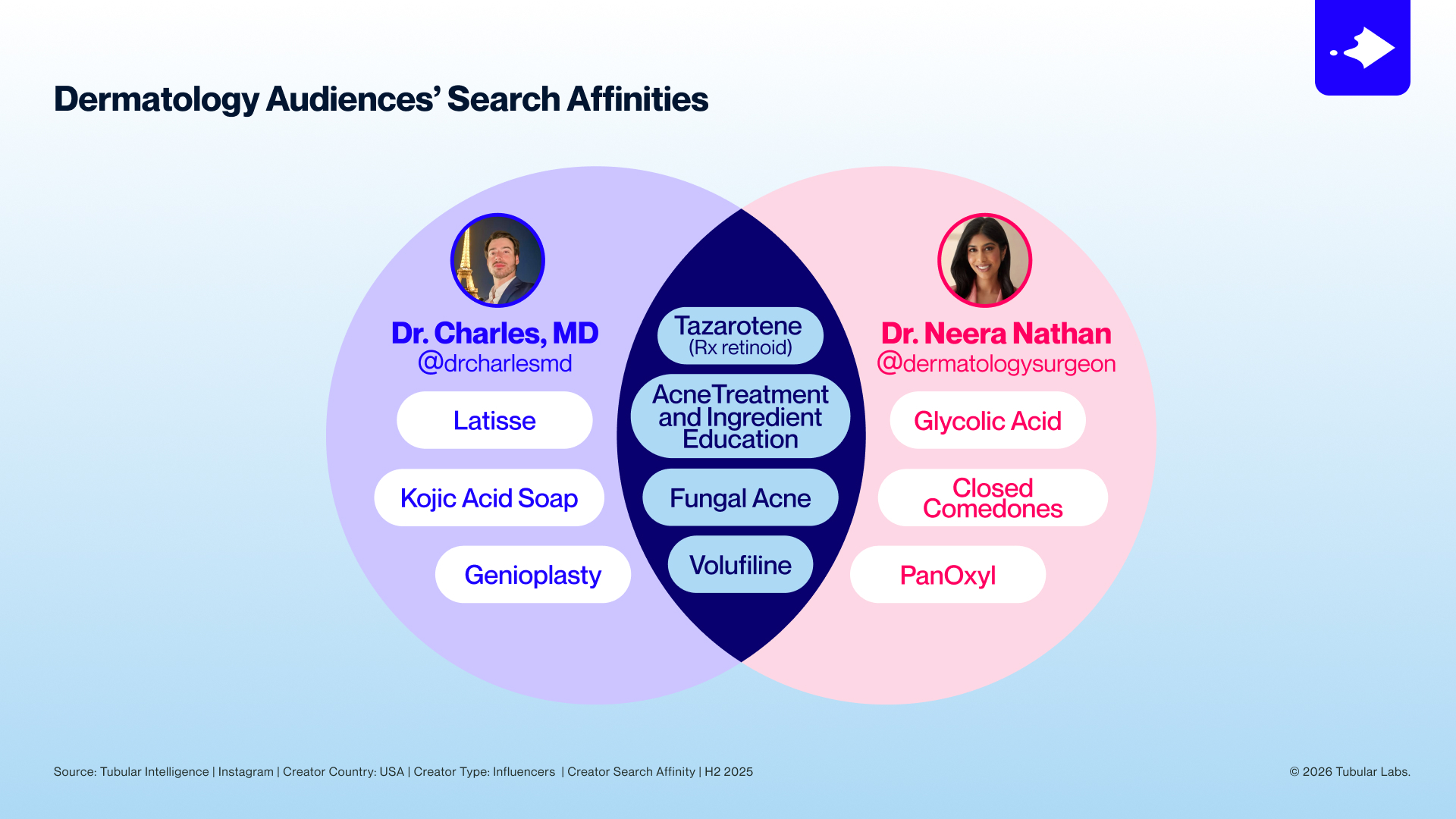
To illustrate the limitations of follower counts, we can look at a direct comparison of two prominent voices in dermatology: Dr. Charles, MD, and Dr. Neera Nathan.
If a marketing team were tasked with promoting a product like Latisse, a surface-level analysis would immediately point toward Dr. Neera Nathan, who commands an impressive audience of 1.8 million followers. Her content is medically sound, broad, and highly relevant. However, when you layer in audience intelligence data, the picture becomes more complex.
The Asymmetry of Influence
The data reveals a striking asymmetry in how their audiences overlap:
- 17% of Dr. Charles, MD’s audience also follows Dr. Neera Nathan.
- Only 2% of Dr. Neera Nathan’s audience follows Dr. Charles, MD.
This 15-point gap is not a mere statistical quirk; it is a strategic goldmine. Dr. Charles, MD, serves as a high-intent, clinically rigorous voice who challenges trends and dissects ingredient science. Dr. Nathan acts as a bridge to mainstream understanding. By partnering with Dr. Charles, a brand gains access to a highly engaged, "early adopter" audience while simultaneously leveraging his bridge into the broader, mainstream reach of Dr. Nathan’s followers.
This is the essence of modern influencer identification: understanding the flow of an audience rather than just counting heads.
Beyond Healthcare: Lessons from Gaming and CPG
The principles of audience-first marketing are universal. Whether it is an anime influencer in Tokyo or a beverage brand in Brazil, the data consistently suggests that cultural fit is a more reliable predictor of ROI than category fit.
The Gaming Landscape: Quantity vs. Quality
In East and Southeast Asia, YouTube anime influencers collectively generated an staggering 18 billion views in 2025. Yet, raw volume is a poor proxy for potential sales. When the data is parsed, it becomes clear that the creators actually driving purchase intent represent a small, specialized segment of that 18-billion-view landscape. Brands that invest in these "intent-drivers" see significantly higher conversion rates than those that simply buy space on the highest-trafficked channels.
Cultural Fit in Brazil’s CPG Sector
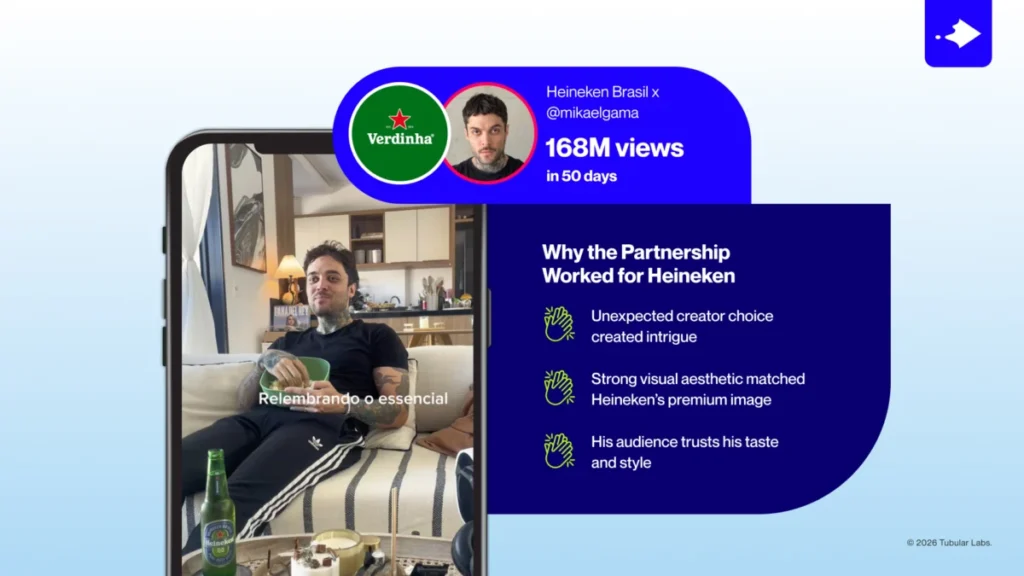
Brazil, which ranked second globally in influencer engagement in 2025, offers a masterclass in the power of cultural alignment. Consider the success of Heineken, which bucked conventional wisdom by partnering with a men’s fashion influencer who possessed a relatively modest 136,000 followers.
Despite the lower reach compared to mega-celebrities, the partnership generated 168 million views and 1 million engagements in just 50 days. Why did it work? The brand ignored the "category" constraint—choosing not to partner with a sports or beverage influencer—and instead prioritized cultural alignment. By tapping into a fashion-forward audience that mirrored the brand’s desired lifestyle aesthetic, they achieved a level of resonance that standard product-category influencers could not touch.
Implications for Future Marketing Strategies
For the CMO and the digital strategist, these findings necessitate a formal transition in how campaigns are planned and executed. The "Reach as Strategy" model must be replaced by an "Intelligence-First" framework.
A New Framework for Success
- Map the Audience Before the Influencer: Instead of starting with a list of "top influencers," start by analyzing your target audience’s search habits and content consumption patterns. Where do they go to answer their questions?
- Quantify the Overlap: Use audience intelligence tools to understand how your target demographics move between creators. Look for the asymmetric overlaps—the creators who act as "gateway influencers" to your desired customer base.
- Value the "Bridge" Creator: Identify creators who provide credibility (clinical/technical) and those who provide reach (mainstream/lifestyle). A balanced campaign will often require both, layered strategically to guide the consumer through the funnel.
- Prioritize Intent over Sentiment: Engagement metrics like "likes" are vanity. Look for search-based intent, save rates, and audience movement between specific topics as the primary indicators of potential ROI.
Official Stance and Future Outlook
Industry analysts note that as AI-driven content and automated influencer identification become standard, the competitive advantage will no longer be the ability to find influencers, but the ability to interpret the data behind them. The brands that continue to rely on manual, intuition-based selection or basic demographic data will find themselves paying a premium for reach that fails to convert.
As the industry moves toward 2026 and beyond, the democratization of audience intelligence tools means that smaller, more agile brands can now outmaneuver legacy giants. By focusing on the "who" and the "why" rather than the "how many," companies can ensure that every marketing dollar is tied to a specific, measurable behavioral outcome.
Conclusion
The evolution of influencer marketing is not a story of the death of the influencer, but the death of the superficial partnership. Reach is, and will always be, a necessary starting point—but it is no longer the destination.
In a world of fragmented attention, the winners will be those who treat influencer marketing as a science. By leveraging audience intelligence, brands can move from being observers of trends to architects of them, turning the chaotic stream of social content into a precision-engineered revenue engine.
For those ready to move beyond the vanity of views, the roadmap is clear: audit your current partnerships, interrogate your audience data, and prioritize the creators who actually shape the behavior of your most valuable customers.
For more in-depth data, benchmarking, and strategic frameworks for your 2026 influencer campaigns, download the full report: Redefining Influencer Value: How Audience Intelligence Transforms Reach into Revenue.
