

Elevating Business Growth: The Indispensable Role of Customer Engagement Analytics in the Digital Age
Main Facts: Unveiling the Power of Customer Engagement Analytics
In the cacophony of the modern digital landscape, businesses face a perennial challenge: discerning genuine audience interest from fleeting attention. It is not always clear whether customers are truly captivated by a brand’s offerings or merely passing through the digital storefront. This uncertainty presents a significant hurdle for sustained growth and effective resource allocation.
Enter Customer Engagement Analytics (CEA), a sophisticated methodology designed to cut through the noise and reveal the true pulse of customer interaction. CEA involves the systematic collection, tracking, and interpretation of data concerning how customers interact with a brand, its products, or services. These interactions span a multitude of touchpoints, from initial encounters on websites and mobile applications to social media dialogues, email communications, and even product usage within digital platforms. Critically, engagement analytics focuses on activities that occur before a final conversion, such as viewing a page, watching a video, clicking a button, or exploring product features. These mid-funnel activities are pivotal indicators of interest, intent, and affinity.
The importance of CEA cannot be overstated in today’s highly competitive environment. It serves as the vital link between initial brand exposure and ultimate customer loyalty and conversion. Businesses that diligently leverage these insights gain a profound understanding of their audience’s journey, enabling them to refine strategies, cultivate deeper connections, and, in the long run, transform casual interactions into committed actions. Without a robust understanding of engagement, sustainable growth remains an elusive target. Most users do not convert on their first visit; they may explore, leave, and return multiple times. Engagement analytics ensures that these intermittent interactions build familiarity, trust, and affinity, thereby significantly improving retention and conversion rates.
Chronology: The Evolution and Application of Engagement Tracking
The journey of digital analytics has evolved dramatically, mirroring the increasing complexity of online user behaviour. What began as rudimentary tracking of website visits has matured into a multi-faceted discipline capable of dissecting intricate customer journeys across diverse digital ecosystems.
From Basic Tracking to Holistic Understanding: An Analytical Evolution
In the early days of the internet, metrics like "page views" and "unique visitors" were the primary barometers of online success. While these provided a quantitative measure of reach, they offered little insight into the quality or depth of interaction. A high page view count might suggest popularity, but it failed to distinguish between a user genuinely engrossed in content and one who accidentally landed on a page and quickly bounced.
The advent of more sophisticated analytics tools brought about metrics like "time on site" and "bounce rate," which started to hint at engagement. However, the true leap occurred with the development of event-based tracking and cross-channel attribution models. This allowed businesses to move beyond simple "how many" to understand "how deep" and "why." Modern CEA encompasses a holistic view, integrating data from various sources to paint a comprehensive picture of a customer’s relationship with a brand, recognizing that engagement is rarely confined to a single touchpoint.
The Customer Journey: Engagement at Every Stage
Engagement analytics is not a singular event but an ongoing process that illuminates user behaviour throughout the entire customer lifecycle.
- Awareness Stage: Here, engagement manifests as initial interactions with advertisements, social media posts, or search results. Metrics like impressions, clicks, video views on social platforms, and basic website visits signal initial interest.
- Consideration Stage: As prospects move deeper into the funnel, engagement involves more active exploration. This includes prolonged website visits, viewing multiple pages, downloading resources, watching explainer videos, or interacting with interactive content. Product page views, feature comparisons, and time spent reviewing specifications are crucial here.
- Decision Stage: While conversions mark the end of this stage, critical engagement metrics precede it. These include adding items to a cart or wishlist, initiating a checkout process (even if abandoned), signing up for a demo, or interacting with live chat support. These are high-intent engagement signals that indicate a customer is on the cusp of commitment.
- Retention and Advocacy Stages: For existing customers, engagement shifts to product usage frequency, interaction with new features, participation in loyalty programs, engagement with customer support channels, and sharing positive experiences on social media. These metrics are vital for fostering long-term loyalty and turning customers into brand advocates.
Implementing an Engagement Analytics Strategy: A Phased Approach

To effectively harness the power of CEA, businesses must adopt a structured and thoughtful implementation process.
Phase 1: Defining Objectives and Analysis Needs
The initial and most critical step is to engage various stakeholders—including clients, marketing teams, product developers, and sales—to clearly define what constitutes "engagement" for their specific business objectives. Engagement is a flexible concept; what is meaningful for a content publisher (e.g., long article read time) differs from an e-commerce platform (e.g., product page interactions). Stakeholders may also be unaware of the full spectrum of tracking options available. Educating them on potential engagement metrics ensures a more comprehensive and relevant analysis. Before customising, it is prudent to start with default engagement metrics offered by most analytics tools, using them as a baseline for understanding.
Phase 2: Leveraging In-Built Analytics Tools
Most modern analytics platforms, such as Google Analytics 4 (GA4), Adobe Analytics, or social media insights dashboards, come equipped with a suite of standard engagement metrics out-of-the-box. These provide a foundational understanding of user interaction. However, these default metrics may not always capture every critical interaction relevant to a specific business model. For instance, unique button clicks, custom form submissions, or specific video playback milestones often require additional, tailored tracking configurations to be implemented within the analytics tool.
Phase 3: Crafting a Comprehensive Implementation Guide
Once key engagement metrics are identified and the necessary tracking configurations are determined, best practice dictates the creation of a detailed Implementation Guide. This document serves as a blueprint, providing clear, step-by-step instructions for the technical teams responsible for data collection (e.g., web analysts, digital marketers, developers). A well-defined guide ensures consistency, accuracy, and scalability in tracking and measuring engagement across all relevant touchpoints, preventing data discrepancies and ensuring that insights are reliable.
Supporting Data: Key Metrics Across Digital Ecosystems
It is important to note that while conversions represent the deepest level of engagement, signifying a decisive action at the bottom of the funnel (e.g., purchase, sign-up), they are generally distinguished from engagement metrics, which typically reflect mid-funnel activities indicating interest and intent.
Website & App Engagement Metrics: The Digital Hub
These metrics provide critical insights into how users interact with a brand’s owned digital properties.
- Page Views: A foundational metric tracking the number of times a webpage or app screen is accessed. While it confirms content reach, it must be contextualized with other metrics to gauge engagement depth.
- Sessions: Represents a period of active engagement. While definitions vary across tools, Google Analytics 4 (GA4) typically defines a session as 30 minutes of continuous user activity.
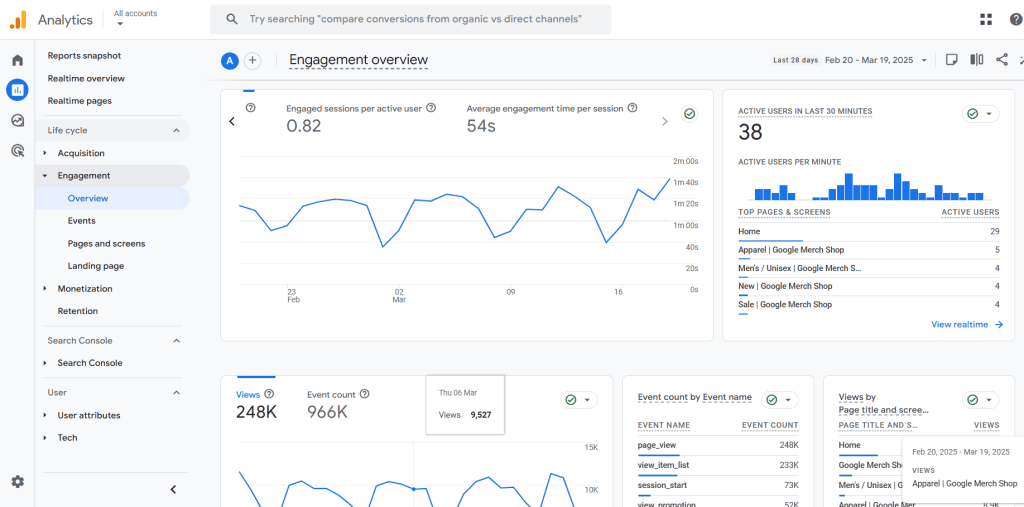
- Engagement Time: A more nuanced metric than simple "time on page," especially in GA4. It measures how long users actively interact with content, excluding idle time. In GA4, this includes:
- Average Engagement Time: The average duration a user actively engages.
- Average Engagement Time per Session: The average engagement duration per active session.
- User Engagement: The total time users spend actively engaged.
These metrics are found in GA4 underReports > Engagement > Overviewand can be drilled down into specificPages and Screensreports for granular content performance comparison.
- Pages per Session: This metric indicates how many different pages a user visits within a single session. It offers insight into user exploration and content stickiness. A benchmark of at least two pages per session is generally considered good, with three or more indicating strong engagement.
- Engaged Sessions*: A powerful GA4-specific metric that provides a clearer picture of meaningful user activity. An engaged session meets at least one of the following criteria:
- Lasts longer than 10 seconds.
- Includes two or more page/screen views.
- Triggers a conversion event.
Social Media Engagement Metrics: The Community Pulse
Social media platforms are vital for community building and brand interaction.
- Likes/Reactions: The most basic form of engagement, indicating initial approval or emotional response.
- Comments: A deeper level of interaction, signifying that users are willing to share their thoughts, ask questions, or provide feedback.
- Shares: Represents amplification and advocacy, as users deem content valuable enough to share with their network.
- Mentions: Organic mentions of a brand or product, indicating brand salience and public discussion.
- Video Views: Measures the consumption of video content, often with thresholds (e.g., 3-second views, 10-second views, completion rates) to gauge actual interest.
It is crucial to distinguish these from macro actions like subscriber or follower counts, which represent a commitment to follow but not necessarily ongoing active engagement.
Paid Ads & Email Engagement Metrics: Direct Response Channels
These channels are designed for direct interaction and often serve as gateways to deeper engagement.
- Click-Through Rate (CTR): Measures the percentage of users who click a link after seeing an ad, search result, email, or social media post. Higher CTR directly indicates the effectiveness of the creative, copy, and call-to-action. Benchmarks vary significantly by industry and channel:
- Search Ads: Often 3-5% (or higher for niche terms).
- Display Ads: Typically lower, 0.5-1%.
- Social Media Ads: Varies widely, 1-3% often considered good.
- Email Marketing: Can range from 2-5% for marketing emails, higher for transactional.
(Note: Platform-specific nuances exist, e.g., Facebook/Meta’s "CTR (All)" can include various click types beyond just link clicks).
- Open Rate: Specific to email and SMS marketing, this is the percentage of recipients who open a message. While it doesn’t guarantee a conversion, a strong open rate indicates that the subject line and preview text successfully captured attention and piqued interest.
Product Engagement Metrics: The User Experience Frontier
For e-commerce and digital products, tracking pre-purchase interactions is essential for optimizing the user journey.
- Product Views: Measures how many times a specific product page is viewed, indicating initial interest in an item.
- Clicks on Product Details/Images: Deeper exploration of a product’s features, visual assets, or specifications.
- Time Spent on Product Pages: Longer durations often correlate with higher interest and consideration.
- Interaction with Features: Tracking clicks on zoom functions, video demos, customer reviews, size guides, or configuration options reveals engagement with specific product attributes.
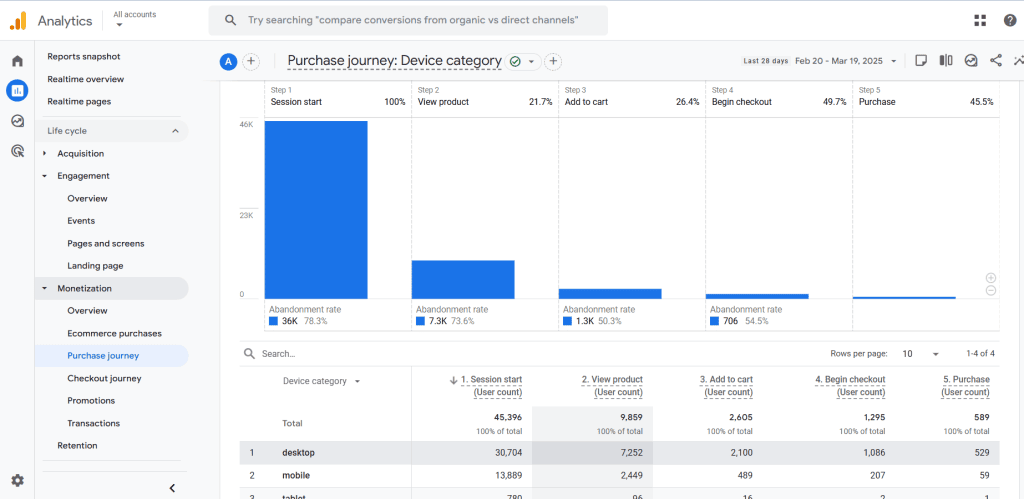
- Items Added to Wishlist/Cart (Pre-Purchase): These are strong signals of high intent, indicating that a user has moved past mere browsing and is actively considering a purchase, even if the final transaction has not yet occurred.
Analyzing these metrics within a product promotion funnel allows businesses to pinpoint where users drop off before conversion, enabling targeted optimization efforts.
Official Responses & Industry Consensus
The analytics community largely agrees that while powerful, customer engagement is not a monolithic concept. Its definition and measurement must be intrinsically linked to specific business objectives.
The Analyst’s Mandate: Defining Engagement with Purpose
Industry experts and analytics platforms acknowledge that "engagement" is inherently flexible. Decision-makers must define what constitutes meaningful engagement based on their unique goals. For instance, while an analytics tool might provide a default metric like "Average Engagement Time," a business needs to determine if 10 seconds, 30 seconds, or even several minutes represents genuine value for their particular content or product. This bespoke definition is crucial for deriving actionable insights. Moreover, unique interaction types, such as points earned in a gamified experience or specific feature toggles within an application, often require custom configurations within analytics tools, as they are not available "out-of-the-box."
The Role of Standardized Frameworks and Tools
Major analytics providers like Google Analytics 4, Adobe Analytics, and Amplitude continue to evolve, offering increasingly sophisticated ways to track and interpret engagement. These platforms provide foundational metrics and flexible frameworks for customization, enabling businesses to tailor their tracking to specific needs. The ongoing development of these tools reflects an industry-wide consensus on the critical nature of understanding deep user interaction.
Expert Recommendations: From Data Collection to Actionable Insights
Leading digital strategists consistently emphasize the importance of moving beyond mere data collection to active interpretation and optimization. The creation of an "Implementation Guide" is not just a suggestion but a widely recognized best practice for ensuring data integrity and consistency across teams. Furthermore, there is a strong consensus on linking engagement analytics directly to Conversion Rate Optimization (CRO). By understanding the interactions that precede successful conversions, businesses can pinpoint bottlenecks in the user journey and strategically optimize elements that hinder progress towards desired actions. This continuous cycle of measurement, analysis, and refinement is fundamental to long-term digital success.
Implications: Shaping the Future of Business and Customer Relationships
The strategic deployment of customer engagement analytics carries profound implications for business sustainability, competitive positioning, and the very nature of customer relationships.
Strategic Decision-Making: Beyond Surface-Level Data
Effective CEA empowers businesses to make data-driven decisions that transcend superficial metrics. Insights gleaned from engagement data directly inform critical strategic areas:
- Content Strategy: Understanding what content drives engagement allows for the creation of more relevant, valuable, and sticky material.
- UX/UI Design: Identifying friction points in user journeys through engagement metrics leads to more intuitive and satisfying user experiences.
- Marketing Campaigns: Optimizing ad creatives, targeting, and messaging based on engagement signals maximizes ROI and reach effectiveness.
- Product Development: Analyzing feature interaction and product usage patterns provides invaluable feedback for iterative product improvement and innovation.
By understanding where and how customers truly engage, businesses can allocate resources more efficiently, focusing efforts on channels and initiatives that yield the highest impact.
Enhanced Customer Loyalty and Lifetime Value
Consistent, positive engagement is the bedrock of customer loyalty. When brands actively listen to and respond to engagement data, they foster a sense of familiarity, trust, and affinity. This reduces customer churn, encourages repeat business, and significantly increases customer lifetime value (CLTV). Engaged customers are more likely to become brand advocates, further amplifying marketing efforts through word-of-mouth referrals.
Competitive Advantage in a Crowded Marketplace
In an era where product differentiation can be fleeting, superior customer experience driven by deep engagement understanding provides a sustainable competitive advantage. Businesses that consistently analyse and optimize their engagement touchpoints will inevitably outperform competitors who rely on outdated or superficial metrics. This allows for proactive identification of market shifts and agile adaptation to evolving customer expectations.
Anticipating Future Trends: AI and Predictive Engagement
The future of customer engagement analytics is intrinsically linked with advancements in artificial intelligence and machine learning. AI can process vast datasets of engagement interactions to identify subtle patterns and predict future behaviours. This opens doors to:
- Proactive Interventions: Predicting which customers are at risk of churn based on declining engagement scores.
- Hyper-Personalization: Delivering highly relevant content and offers based on individual engagement histories.
- Automated Optimization: AI-driven systems could autonomously adjust website layouts or campaign parameters to maximize engagement.
Predictive engagement analytics will enable businesses to move from reactive analysis to proactive strategy, anticipating customer needs before they are even articulated.
Conclusion: The Enduring Value of Deep Connection
Customer engagement analytics is far more than a technical exercise; it is a strategic imperative for any business aiming for sustainable growth in the digital age. By moving beyond surface-level metrics and delving into the nuanced interactions that define true customer interest, organizations can build stronger connections, optimize every stage of the customer journey, and cultivate lasting loyalty. The investment in robust engagement analytics strategies is not merely about tracking data; it is about understanding the human element behind the clicks and views, fostering trust, and ultimately, shaping the future of meaningful customer relationships. It is a commitment to truly knowing your audience, ensuring that every interaction contributes to a more engaged, satisfied, and loyal customer base.
