
The Erosion of the Mosaic: Why Paul Graham’s Google Critique Marks a Turning Point for Search
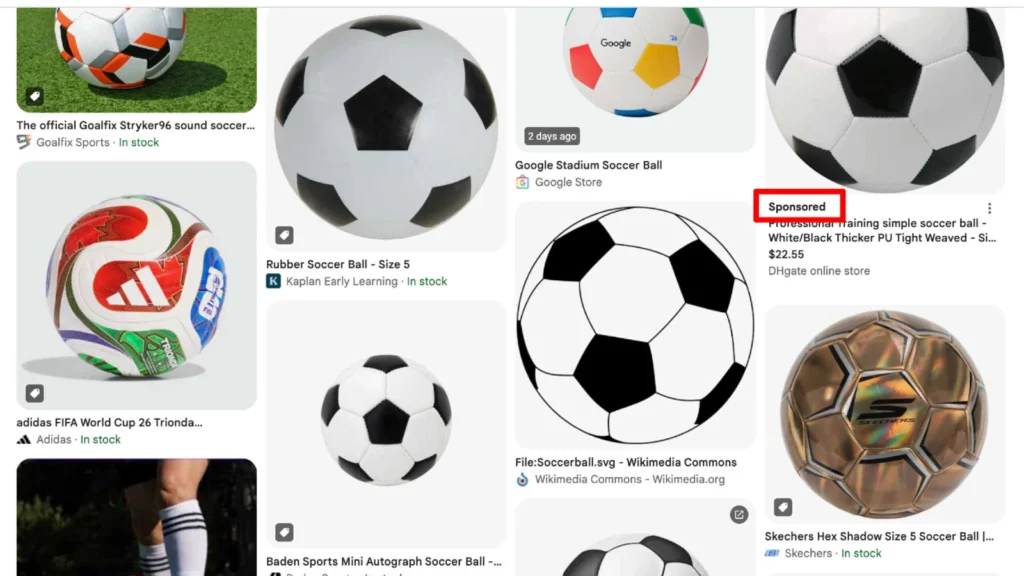
On June 15, 2026, a singular post on X by Y Combinator co-founder Paul Graham sent a ripple through the technology sector, crystallizing a frustration that has been brewing within the search marketing industry for years. Graham, a figure whose influence often dictates the focus of the Silicon Valley elite, took aim at a practice that has quietly redefined the user experience of Google Image Search: the insertion of sponsored, commercially-driven product listings directly into organic, visually-curated search results.
"Google has started mixing ads right into the middle of image search results," Graham wrote at 10:00 AM. "It decreases search quality dramatically. Now when you search for images of a watch, you get watches that aren’t even from the same manufacturer. I’ve actually switched to Bing for some searches."
The post, which quickly garnered over 122,000 views, was accompanied by a screenshot that served as a microcosm of the modern search experience. Searching for a specific vintage timepiece—the Patek Philippe Calatrava reference 2573—Graham was met not with a pure gallery of the horological icon, but with a fragmented grid. Interspersed between genuine historical images of the watch were "Sponsored" tiles pointing to eBay listings for Vacheron Constantin and IWC Schaffhausen models.
For the average user, the distinction between a search result and a digital billboard has effectively vanished. This critique, however, is not merely about an misplaced ad; it is a manifestation of a broader, years-long shift in Google’s search philosophy.
The Anatomy of the Screenshot: A Case Study in Disruption
The query "Patek 2573" is a high-intent search. A user conducting such a query is typically looking for specific visual data: details on the dial, the lug shape, the crown, or the case back of a rare vintage watch. They are looking for visual truth and historical accuracy.
Instead, the results grid presented a commercial mosaic. The sponsored tiles, facilitated by third-party resellers like Priclist.com and BrilliantSave, offered Vacheron Constantin Ref 33060s and IWC vintage manuals. While these are objectively high-quality luxury items, they are entirely irrelevant to the user’s specific research intent. By prioritizing dynamic ad placement over visual relevance, Google effectively traded the utility of its search tool for the short-term revenue of a click-through.
This is the core of what the search marketing industry calls "dynamic ad placement." While it appears to be a recent grievance, industry data confirms it is the result of a calculated, multi-year rollout.
A Chronology of Commercial Creep
To understand how we arrived at the current state of search, one must look back at the steady erosion of the "organic-only" barrier.
2023: The Birth of Dynamic Placement
In October 2023, Google began experimenting with the integration of sponsored ads into organic search listings. This was the birth of the "dynamic ad placement" architecture, which allowed Google to treat the search results page (SERP) not as a static list of links, but as a fluid, modular grid where ads could be inserted based on auction-driven intent rather than editorial or visual relevance.
2025: Consolidation and Concealment
By July 2025, the strategy had shifted toward subtle design changes that prioritized the aesthetic integration of ads. Google removed the prominent "Sponsored" label from its "Find Related Products & Services" suggestions, replacing it with a vague, lengthy disclaimer. This effectively reduced the cognitive friction for users, making it harder to distinguish between a service suggestion and an advertisement.
By September 2025, Google had consolidated individual "Sponsored" labels on text ads into a single, grouped header. While this cleaned up the visual clutter, it meant that users scrolling past the header were no longer reminded that the results beneath were paid listings. In October 2025, this became the global standard, supplemented by a new "Hide sponsored results" control—a feature that arguably acknowledged the intrusive nature of the ads by providing a manual "off" switch.
2026: The AI Integration and the "Answer" Economy
The first half of 2026 saw the acceleration of ad saturation into AI-driven interfaces.
- March 2026: Sponsored store listings began appearing inside Google’s AI Mode product panels.
- April 2026: Sponsored ads migrated into the "related products" grid, a space previously reserved for organic discovery.
- May 2026: Ads appeared mid-conversation within AI-generated responses, effectively burying commercial messaging inside what the user perceives as an impartial answer.
Supporting Data: Why the User Base is Reaching a Breaking Point
The backlash to these changes is not merely anecdotal. Independent research firms and search analysts have tracked a clear correlation between the increase in commercial density and a decline in user satisfaction.
A study by Seer Interactive analyzing 3,119 search terms found that between June 2024 and September 2025, organic click-through rates (CTR) on informational queries featuring AI Overviews fell by 61%. Even more telling, paid CTRs on those same queries fell by 68%. The data suggests that as search results become more cluttered and less relevant, users are not just clicking ads—they are disengaging from the entire platform.
Evidence of this migration is found in the growth of competitors. Following Google I/O 2026 in May, DuckDuckGo reported an 18% spike in US app installs, with Apptopia, an independent analytics firm, confirming a 29% increase in daily downloads. Furthermore, traffic to DuckDuckGo’s "no-AI" search portal increased by 23% in the same period.
Microsoft’s Bing has also capitalized on this sentiment. On June 6, 2026, nine days before Graham’s viral post, Microsoft introduced an extension allowing users to toggle AI-generated search results off entirely. This clear, user-centric feature provides a level of control that Google—which currently offers no native, comprehensive opt-out for AI Overviews—has failed to match.
Official Responses and Corporate Silence
To date, Google has maintained a position of strategic silence regarding the specific criticisms leveled by Paul Graham. The company has not issued a formal statement explaining the logic behind inserting sponsored tiles into image-specific grids, nor has it indicated any intention to roll back the practice.
In previous discussions regarding search design, Google representatives have cited the goal of "helping users find information seamlessly." When Omkar Muralidharan, VP of Product Management and Data Science at Google, defended the October 2025 design changes, he framed the integration of sponsored content as a way to assist users in their purchasing journey. However, critics argue that "seamlessness" is often a euphemism for "unobtrusive monetization," where the commercial nature of the content is obscured to prevent users from bypassing it.
Implications for the Future of Search
The Graham incident highlights three critical implications for the search ecosystem:
1. The Erosion of Brand Trust
When a platform known for high-quality, relevant results consistently prioritizes commercial intent over user intent, it risks long-term brand equity. For the "technically literate" user—the developers, investors, and researchers that comprise a significant portion of the early-adopter demographic—the move to alternatives like Bing or DuckDuckGo is a rational response to a degraded product.
2. The Advertiser’s Dilemma
Advertisers are caught in a double-edged sword. While the ability to place products directly into image search results offers a new, high-visibility channel, the potential for brand misalignment is high. When a luxury watch manufacturer’s ad appears in a search for a different brand, the user may perceive the advertiser as an interloper rather than a helpful alternative, potentially damaging the brand’s reputation.
3. The Regulatory and Ethical Tension
The argument raised by critics—that these ads violate the spirit of "non-deceptive" advertising—touches on a larger regulatory question. As AI and dynamic placement continue to blur the line between organic and paid content, search engines may find themselves under increased scrutiny from antitrust and consumer protection agencies. If the primary utility of a search engine is to provide an objective index of the web, the conversion of that index into a curated commercial marketplace may necessitate new forms of disclosure.
Conclusion
Paul Graham’s post on June 15, 2026, was not a singular event; it was a flashpoint. It brought a years-old industry critique into the public consciousness. As Google continues to push the boundaries of how and where ads appear, it is simultaneously testing the limits of user loyalty.
In the short term, the company’s focus on maximizing revenue per search is clear. However, as the gap between user expectations and search results continues to widen, the "Google standard" is no longer the only option in town. Whether this leads to a permanent shift in market share or merely a temporary migration of power users remains to be seen. What is certain, however, is that the era of the "neutral" search result is effectively over, and the market is already beginning to vote with its feet.
