

The AI Conversion Revolution: How to Scale A/B Testing Without a Seven-Figure Budget
For years, the gold standard for landing page optimization was a prohibitively expensive, time-consuming endeavor. Scaling a high-performing growth team meant hiring a dedicated conversion rate optimization (CRO) manager, a specialist designer, and a pair of full-stack engineers. At an average burn rate of $150,000 per head, that’s a $600,000 annual payroll commitment—before factoring in the tools, infrastructure, and the inevitable six-month ramp-up period.
For the vast majority of marketing teams, this model has always been a fantasy. But the paradigm has shifted. By leveraging Large Language Models (LLMs) and AI-driven page builders, the barrier to entry for enterprise-grade A/B testing has effectively collapsed.
The Disruption: AI vs. The "Growth Team" Trap
The traditional approach to conversion optimization often traps teams in a cycle of stagnation. Either they spend months in a "paralysis by analysis" loop, debating design nuances, or they rush into high-stakes, expensive redesigns based on gut feeling rather than empirical data.
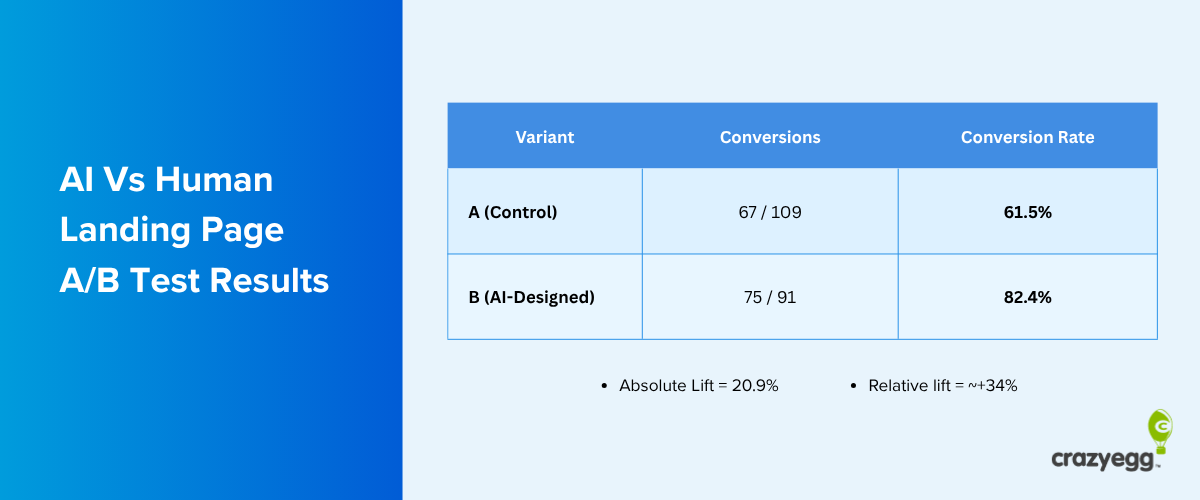
Crazy Egg recently sought to challenge this dynamic. A few months ago, the company allowed an AI to redesign a landing page with minimal human intervention. The result? The AI-generated variant outperformed the existing control by 44%. Skeptics dismissed it as a fluke. So, the team ran it again on a different page. The result was another decisive victory: a 34% lift.
These results suggest that the "growth team" bottleneck is no longer a technical limitation, but a strategic one. If a machine can generate a high-converting variant in hours, the question shifts from "Can AI win?" to "How do we make this a repeatable, scalable workflow for any team?"
A Chronology of the AI-Assisted Workflow
The workflow developed by the team at Crazy Egg proves that "fast-paced" does not have to mean "low quality." By integrating LLMs into the design brief process, marketers can move from a strategic hypothesis to a live, production-ready landing page in as little as one business day.
Step 1: Tool Selection and Model Orchestration
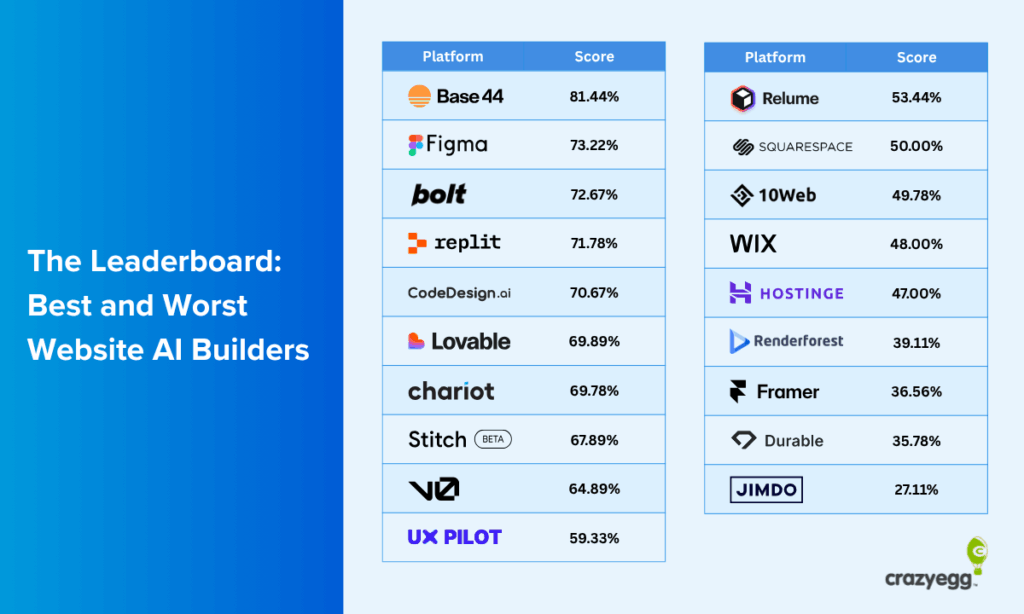
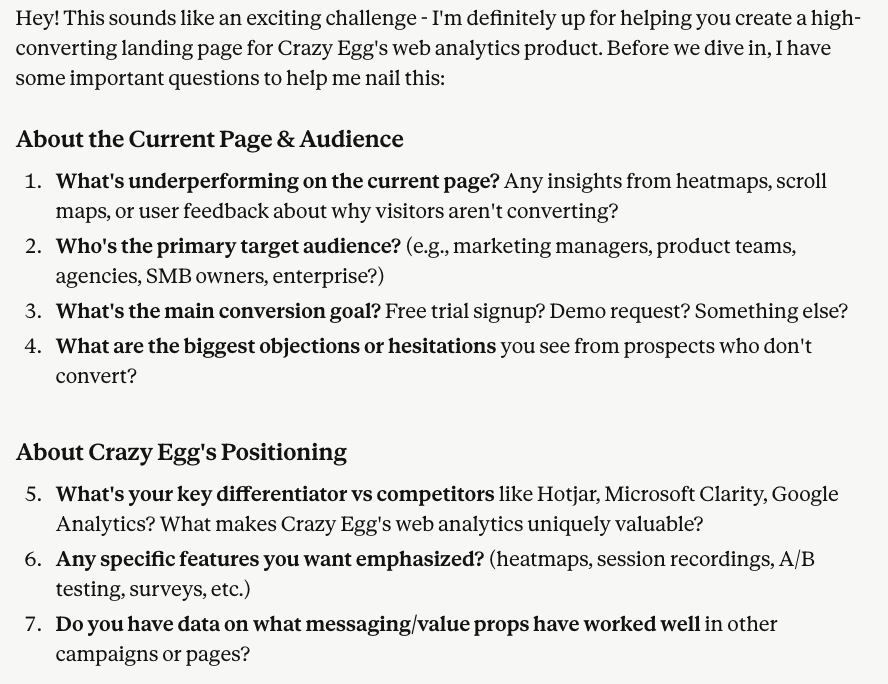
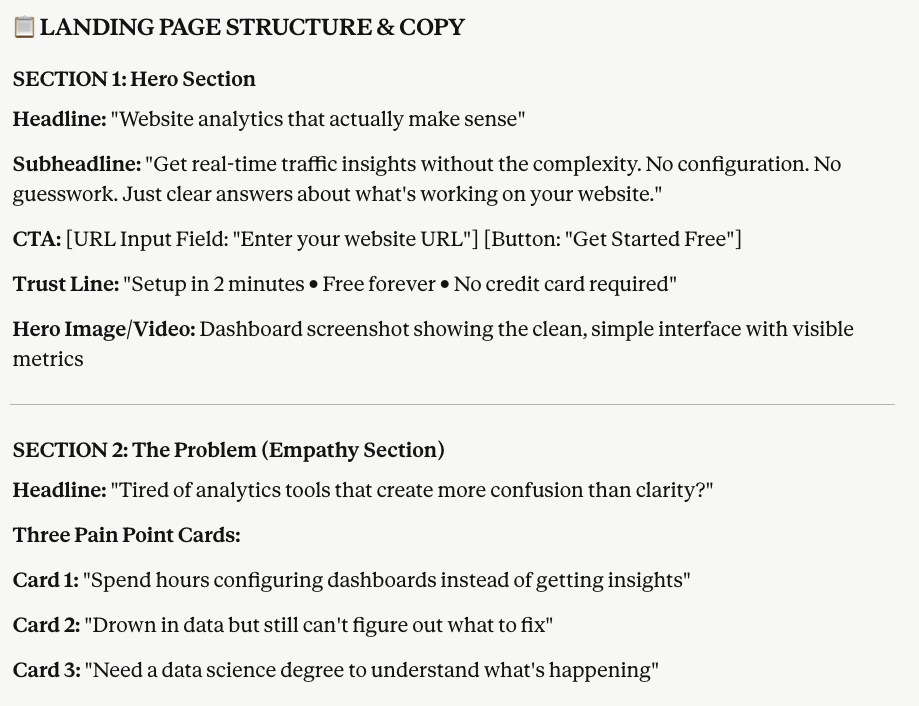
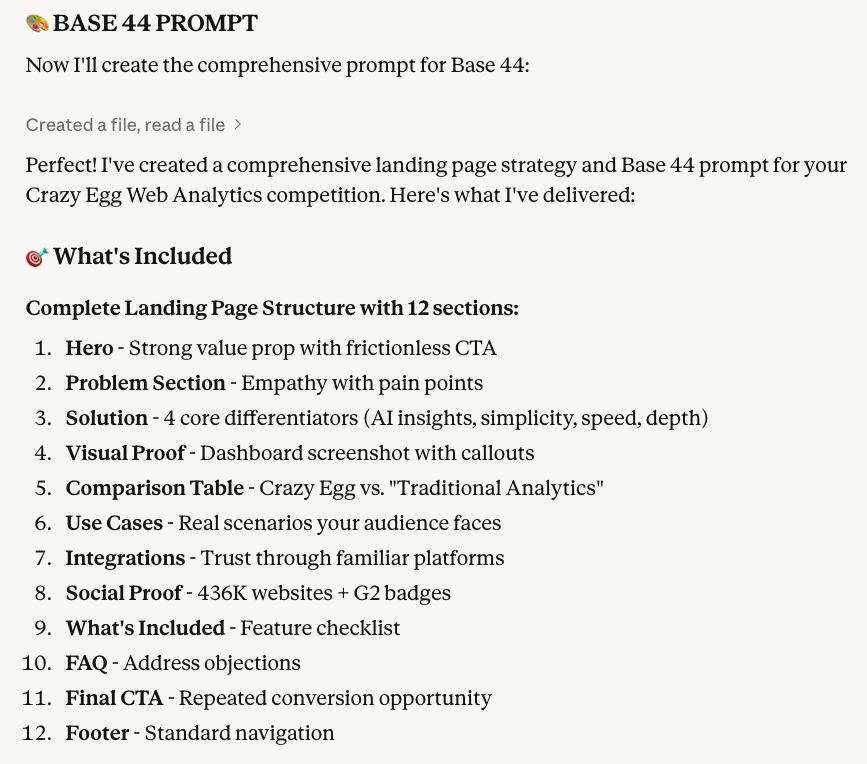
The foundation of this process is a two-pronged toolset: an LLM for strategy and copy (e.g., Claude), and an AI page builder for visual architecture (e.g., Base44). The intelligence of the output is strictly gated by the quality of the "briefing." During internal testing, it was found that Claude’s ability to handle long, structured outputs outperformed competitors like ChatGPT, allowing it to generate a full-page architecture, granular copy, and a technical prompt for the builder in one cohesive workflow.
Step 2: The Briefing and Prompt Engineering
The AI is only as good as the context it is fed. The most successful prompts include:
- Target Audience Personas: Who is this page for?
- The "One Thing" Value Proposition: What is the primary goal of the page?
- Brand Constraints: Tone, voice, and visual identity requirements.
- Current Performance Data: What does the existing page fail to do?
Step 3: The Design Loop
Once the brief is generated, it is passed to an AI website builder. The key to success here is the "critique loop." After the builder renders the first mockup, the team takes a screenshot and feeds it back to the LLM. The LLM then acts as a design consultant, identifying layout flaws, missing objection-handling, and copy that lacks punch. This recursive process ensures that the final design is not just "AI-made," but "AI-optimized."
Supporting Data: The Case for 99% Significance
One of the most controversial, yet necessary, adjustments in this new workflow is the move from 95% to 99% statistical significance.
In traditional testing, 95% is the industry standard. However, without rigorous upfront power calculations, this threshold frequently leads to false positives—test results that appear to be winners but turn out to be statistical noise once the test concludes. By raising the threshold to 99%, teams can effectively filter out the "noise" of minor design tweaks.
At 95% confidence, you are essentially betting on a 1-in-20 chance of being wrong. At 99%, that risk drops significantly. This isn’t just a statistical preference; it is a safeguard against the volatility of early-stage testing. Data gathered in the first 48 hours is notoriously unreliable, often flipping once the "weekend effect" is accounted for. The recommendation is to run tests for at least one full week, ideally up to a month, to ensure that the "big signals" are actually structural improvements and not just temporary aberrations.
Official Perspectives: The End of the "Growth Manager" Myth
Industry experts, including Lars Lofgren—a veteran who built growth teams at KISSmetrics and "I Will Teach You to Be Rich"—have long warned against the overhead of building massive, bloated growth teams.
Lofgren’s position is that the cost of hiring, training, and retaining a full-stack growth squad often exceeds the actual ROI of the tests they conduct. The current AI-assisted workflow validates his skepticism. By automating the "challenger" generation phase, teams can focus their human capital on what truly matters: strategic interpretation and brand alignment.
When the AI handles the heavy lifting of layout, copy generation, and mobile responsiveness, the human role transitions from "builder" to "editor and arbiter." This allows marketing teams to test significantly more hypotheses in a single quarter than they previously could in an entire year.
Implications for the Future of Marketing
The implications of this shift are profound.
1. The Democratization of Testing
Sophisticated A/B testing is no longer the exclusive playground of companies with venture-backed budgets. Small businesses and lean marketing teams can now compete on the same playing field, using AI to iterate rapidly on their funnels.
2. High-Value Real Estate
Because the cost of entry is lower, teams can finally afford to test high-traffic pages—like the homepage—which were previously considered "too risky" to touch. Using a safe, AI-generated variant as a challenger allows for a data-driven approach to major branding decisions.

3. The New Skill Set
The modern marketer’s job description is evolving. The ability to write a high-converting headline is being supplemented (or replaced) by the ability to write a "high-converting prompt." Understanding how to structure context, demand nuance, and manage an AI-critique loop is becoming the most valuable skill set in the digital marketing stack.
Final Verdict: When to Walk Away
Not every page needs a redesign, and not every test is a winner. The final step in this workflow is the most crucial: knowing when to fold.
- If the variant loses: The data provides invaluable insights into what your audience rejects.
- If the variant wins: You have a clear path to deployment.
- If the results are flat: You have learned that your previous assumptions about user intent were likely correct, and you can move on to testing a different variable.
The era of spending $600,000 to move the needle by a few percentage points is ending. The future belongs to teams that can leverage AI to test faster, smarter, and with greater statistical rigor. The tools are ready. The methodology is proven. The only thing left to do is to start.
