
Unmasking the Invisible Screen: Pixalate’s OpenEPG Index Challenges Legacy Measurement
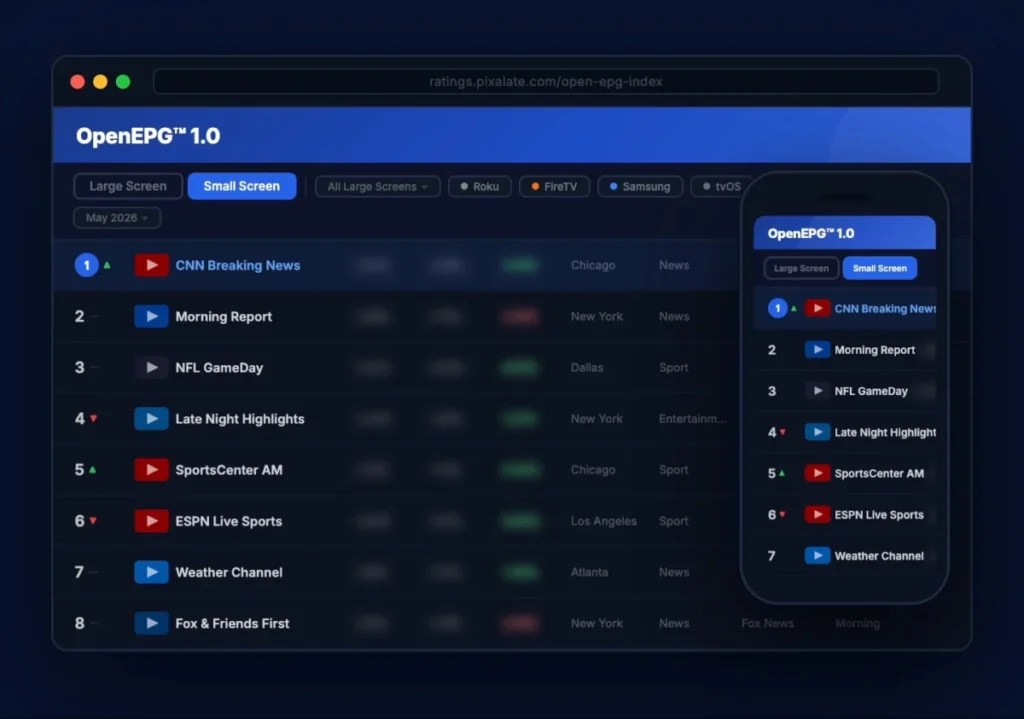
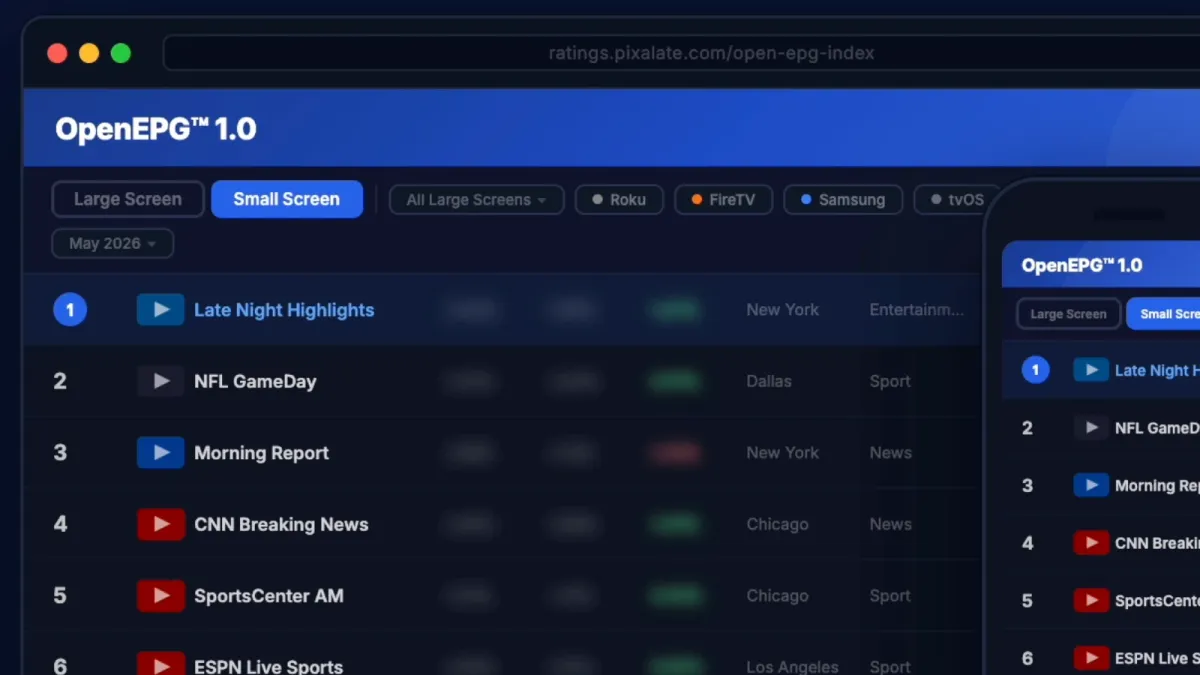
In an industry where billions of dollars in programmatic ad spend hinge on the accuracy of audience measurement, a massive portion of the streaming landscape has remained effectively invisible. Yesterday, Pixalate—the global ad fraud protection and privacy compliance leader—sought to rectify this by launching the OpenEPG Index 1.0. This industry-first initiative provides a public, transparent ranking of streaming content, derived not from closed-door publisher agreements, but from the raw, real-world data of the open programmatic bidstream.
By cataloging 5,108 unique shows across 224 streaming channels in the inaugural May 2026 dataset, Pixalate is exposing the "measurement gap" that has plagued advertisers for years. While traditional benchmarks have focused on a narrow slice of the television ecosystem, Pixalate’s approach captures the entirety of the programmatic streaming market, including mobile devices, FAST (Free Ad-Supported Streaming Television) channels, and live sports—segments that legacy frameworks have largely ignored.
The Measurement Gap: A Blind Spot in Modern Advertising
For years, the industry has relied on metrics that provide only a partial view of consumer behavior. Nielsen’s widely cited Streaming TV Top 10 serves as a primary benchmark for many, yet it operates with significant limitations. It primarily measures on-demand content through television sets, leaving out the burgeoning world of mobile streaming, live sports programming, and the long-tail of FAST channels.
According to Pixalate, this creates a distorted reality for advertisers. While broadcast and cable have traditionally held the spotlight, streaming viewership has now surpassed their combined reach. However, the tools used to measure this audience remain anchored to a 20th-century understanding of "TV." Pixalate’s inaugural data reveals that this isn’t just a minor oversight—it is a fundamental failure to account for how modern audiences consume content.
Chronology of an Industry Pivot
The development of the OpenEPG Index represents the culmination of years of technical infrastructure building.
- 2012–2025: Pixalate establishes its reputation in ad fraud detection, earning MRC accreditation for Sophisticated Invalid Traffic (SIVT) detection. During this period, the company observes the increasing fragmentation of the streaming ecosystem and the lack of standardized, independent measurement.
- Late 2025: As CTV and FAST channel growth accelerates, the industry faces mounting pressure to solve for attribution and brand safety.
- December 2025: Nielsen’s Gracenote launches Content Connect, an attempt to standardize program-level metadata, though it remains dependent on publisher participation.
- April 2026: Viant acquires TVision for $40 million, signaling a market-wide recognition that self-reported data from publishers is no longer sufficient to build buyer trust.
- June 17, 2026: Pixalate officially launches the OpenEPG Index 1.0, accompanied by the underlying OpenEPG 1.0 Analytics platform.
- June 2026 and Beyond: The company commits to a monthly update cadence, promising to expand the mapping of streaming channels and networks as the programmatic ecosystem evolves.
How the Index is Built: The Power of the Bidstream
The most significant differentiator of the OpenEPG Index is its methodology. Unlike legacy frameworks that require publishers to opt-in or sign data-sharing agreements, Pixalate’s infrastructure—OpenEPG 1.0 Analytics—operates entirely via standard bidstream Bundle ID signals.
This approach bypasses the "black box" of proprietary data. The technical process follows three precise steps:
- Normalization: Pixalate’s database normalizes over 37,000 open-market Bundle ID variations into canonical parent app identities across six major operating systems: Android, iOS, Roku, Amazon Fire TV, Samsung Tizen, and Apple tvOS.
- Timestamp Mapping: Once an app identity is resolved, the system maps the channel’s schedule at the exact millisecond of the impression, identifying the specific program—and often the specific episode—being viewed.
- Performance Layering: The final output layers impression volume, share of voice (SOV), U.S. market coverage, and MRC-accredited IVT (Invalid Traffic) scores onto the resolved program.
This structural independence allows the index to capture the "long tail" of content that opt-in measurement frameworks cannot see. Whether it is a niche sports league on a mobile app or a FAST channel on a smart TV, the data is captured as it happens in the open exchange.
Supporting Data: Mobile Dominance and Genre Asymmetry
Pixalate’s data for the period of January through May 2026 provides a stark contrast to traditional streaming narratives. Perhaps most striking is the dominance of the "small screen."
The Mobile-CTV Divide
Contrary to the belief that streaming is purely a living-room activity, Pixalate found that mobile platforms drive 69.5% of total audience reach, while large-screen Connected TV (CTV) accounts for the remaining 30.5%. Within the mobile ecosystem, Android and iOS are neck-and-neck in reach (37% vs 33%), though Android users encounter a significantly higher ad load per capita.
Genre Preferences by Screen Size
The data suggests that screen size dictates content preference:
- Small Screen (Mobile): Sports content is king, commanding 46% of unique reach. Programs like The Ariel Helwani Show and Indoor Football League dominate, proving that mobile devices are the primary vehicle for live, on-the-go viewing.
- Large Screen (CTV): Reality TV and News take center stage. Reality programming accounts for 38% of reach, with the Food Network’s catalog (e.g., Diners, Drive-Ins, and Dives) holding the top spots. News, led by CNN Newsroom, follows at 26%.
Official Responses: A Call for Transparency
Jalal Nasir, CEO of Pixalate, emphasized that the current industry standards are leaving buyers in the dark. "Most streaming today happens on the apps and devices legacy public rankings were never built to measure," Nasir stated. "That leaves the industry blind to both a massive invisible audience and a vast landscape of invisible content. The OpenEPG Index brings both to the surface by show, channel, device, and U.S. media market."
The initiative has been framed not as a competitor to existing measurement, but as a necessary evolution. While Nielsen’s panels offer value in household-level demographic modeling, Pixalate provides the granular, impression-level reality that programmatic buyers need to verify where their dollars are actually going.
Implications: The New Frontier of Pre-Bid Planning
The launch of the OpenEPG Index has immediate implications for the programmatic supply chain:
1. Fraud Prevention at the Show Level
For the first time, buyers can see IVT rates at the program level. If an app-level IVT rate appears acceptable, but a specific show within that app exhibits a 14% invalid traffic rate, buyers can now surgically exclude that content without blocking the entire publisher. This is a massive shift for brand safety, moving away from crude, app-level "blocklists" to sophisticated, content-aware exclusion.
2. Defending CPMs and Value
As CTV CPMs have faced volatility—falling 25.8% year-over-year in April 2026 according to DataBeat—publishers are struggling to justify inventory value. By utilizing show-level data, publishers can now prove the specific context and high-quality programming that drives demand, moving the conversation from "app-level volume" to "content-driven quality."
3. Closing the Transparency Gap
The industry has long struggled with "made-for-advertising" (MFA) content and device spoofing. With 52% of programmatic traffic previously attributed to Roku devices found to originate elsewhere in past research, the ability to independently verify content and device is a win for institutional trust.
Conclusion: A New Standard for the Programmatic Age
The launch of the OpenEPG Index 1.0 is more than a new dashboard; it is a declaration that the future of television measurement must be as dynamic as the content it tracks. By leveraging the bidstream to provide granular, objective, and MRC-accredited insights, Pixalate is forcing a conversation about accountability that the industry can no longer afford to ignore.
As programmatic spend continues to migrate toward streaming, the ability to see what is actually running—rather than relying on what a publisher claims is running—will be the defining factor between those who master the new TV landscape and those who continue to fall victim to its hidden inefficiencies. For agencies, DSPs, and SSPs, the "invisible" streaming market has officially been brought into the light.
