

Unlocking the Digital Pulse: Why Customer Engagement Analytics is the Cornerstone of Modern Business Growth
London, UK – In the bustling digital landscape, where attention spans are fleeting and competition is fierce, understanding your audience goes beyond mere website visits or social media likes. Businesses are increasingly grappling with a fundamental question: are their customers truly engaged, or merely passing through? The answer, according to leading industry analysts, lies in the sophisticated application of customer engagement analytics. This critical discipline is emerging as the indispensable tool for discerning genuine interest from casual interaction, charting a direct course from initial curiosity to sustained loyalty and lucrative conversions.
The Imperative of Connection: Main Facts
Customer engagement analytics involves the systematic collection, tracking, and interpretation of data revealing how users interact with a brand, product, or service across diverse touchpoints. These interactions span a vast digital ecosystem, from a company’s website and mobile applications to its social media presence, email campaigns, and paid advertisements. Unlike simple traffic metrics, engagement analytics delves into the quality and depth of these interactions, such as viewing a page, watching a video, clicking a button, or spending time within a specific product feature.
"It’s no longer enough to just get eyeballs on your content," explains Dr. Anya Sharma, a senior data scientist specializing in consumer behavior. "In today’s hyper-connected world, true value is generated when a user actively interacts, demonstrates interest, and builds a relationship with your brand. Engagement analytics provides the granular detail needed to foster those connections and move customers along their journey."
When businesses leverage these powerful insights, they gain the strategic advantage needed to cultivate repeat customers, enhance brand affinity, and, ultimately, transform a higher percentage of interactions into measurable conversions – whether that’s a purchase, a newsletter signup, or a demo request. The underlying principle is clear: engagement is the critical bridge between initial awareness and decisive action.
This article will comprehensively break down the mechanics of engagement analytics, explore its profound importance, outline best practices for implementation, and detail the key metrics essential for building stronger, more profitable customer relationships in the digital age.
The Customer Journey: A Chronological View of Engagement
The evolution of digital marketing has placed customer engagement analytics at a pivotal stage within the broader marketing and sales funnel. Historically, businesses focused heavily on top-of-funnel (awareness) and bottom-of-funnel (conversion) metrics. However, the modern customer journey is rarely linear. Users often visit, leave, and return multiple times, interacting with a brand across various channels before making a commitment.
Engagement analytics addresses this complexity by focusing on the "mid-funnel" activities – the series of interactions that occur before a conversion. This chronological sequence of touchpoints helps businesses understand the subtle shifts from initial interest to deeper involvement. Consider a user who first sees a social media ad (awareness), then clicks through to a landing page (initial engagement), watches a product video, navigates to a few related blog posts, signs up for a webinar, and eventually downloads a whitepaper. Each step represents a deepening level of engagement, building familiarity, trust, and affinity.
Without a robust understanding of these sequential engagements, businesses operate in the dark, unable to pinpoint where potential customers are disengaging or what content resonates most effectively. Engagement analytics thus provides a crucial chronological map of the customer’s interaction with the brand, enabling targeted interventions and optimizations at every stage. This iterative process of engagement, analysis, and refinement is fundamental to sustainable growth.

Illuminating the Path: Supporting Data and Industry Trends
The importance of customer engagement is not merely theoretical; it’s backed by substantial industry data and a growing body of research.
- Increased Customer Lifetime Value (CLTV): Industry reports consistently show that highly engaged customers exhibit significantly higher CLTV. They are more likely to make repeat purchases, try new products, and advocate for the brand. For instance, studies by Forrester and Gallup indicate that fully engaged customers deliver 23% more share of wallet, profitability, and revenue than the average customer.
- Reduced Churn: Proactive monitoring of engagement metrics allows businesses to identify at-risk customers before they churn. Declining engagement, such as reduced feature usage in an app or lower email open rates, can serve as early warning signals, prompting targeted re-engagement campaigns.
- Enhanced ROI on Marketing Spend: By understanding which content and channels drive the most meaningful engagement, companies can optimize their marketing budgets, allocating resources to campaigns that genuinely resonate and lead to conversions, rather than just superficial impressions. An analysis by Adobe found that companies with strong customer engagement strategies achieve a 10% higher customer retention rate and a 20% increase in sales conversions.
- Product Development Insights: Engagement analytics provides invaluable feedback for product teams, highlighting popular features, areas of friction, and unmet user needs. This data-driven approach ensures that product enhancements are aligned with actual user behavior and preferences.
The shift towards privacy-centric data collection, exemplified by the deprecation of third-party cookies, further elevates the importance of first-party engagement data. Businesses must build direct relationships and measure interactions within their own ecosystems, making robust engagement analytics a strategic imperative for future success.
Strategic Imperatives: Official Responses and Best Practices
Leading digital marketing experts and data strategists universally advocate for a structured, objective-driven approach to customer engagement analytics. The consensus emphasizes that while analytics tools offer a wealth of pre-built metrics, the definition of "meaningful engagement" must be intrinsically linked to specific business objectives.
"Engagement is not a one-size-fits-all metric," states Mark Johnson, CEO of a prominent analytics consultancy. "What constitutes engagement for an e-commerce site (e.g., viewing multiple product pages) will differ significantly from a content publisher (e.g., time spent reading an article) or a SaaS provider (e.g., daily active users of a specific feature). The first step is always to define what success looks like for your business."
Here are the key strategic imperatives and best practices for implementing customer engagement analytics:
1. Determine Analysis Needs Through Stakeholder Collaboration
Effective engagement analytics begins with a comprehensive understanding of what truly matters to various departments within an organization. This requires consulting with a diverse group of stakeholders, including sales, marketing, product development, customer service, and executive leadership.
- Marketing Teams: May prioritize metrics like click-through rates, time on page for campaign landing pages, or social media interaction rates to gauge campaign effectiveness.
- Product Teams: Will focus on feature adoption, frequency of use, and in-app session duration to understand product stickiness and user experience.
- Sales Teams: Might be interested in content downloads, webinar attendance, or demo requests as indicators of lead quality and readiness for sales outreach.
- Customer Service: Could track engagement with help articles, chatbot interactions, or forum participation to assess self-service effectiveness.
Critically, stakeholders may not always be aware of the full spectrum of tracking options available. Educating them on potential engagement metrics and their implications is crucial for developing a holistic and actionable analytics strategy. Before embarking on custom configurations, it’s advisable to leverage default engagement metrics offered by standard analytics platforms like Google Analytics 4 (GA4), Adobe Analytics, or CRM-integrated tools.
2. Leverage In-Built Customer Engagement Analytics Tools
Most modern analytics platforms provide a foundational layer of engagement metrics out-of-the-box. Google Analytics 4 (GA4), for example, has shifted its entire data model to an event-based system, inherently prioritizing user engagement. Metrics like "Engaged Sessions" and "Engagement Time" are central to its reporting.
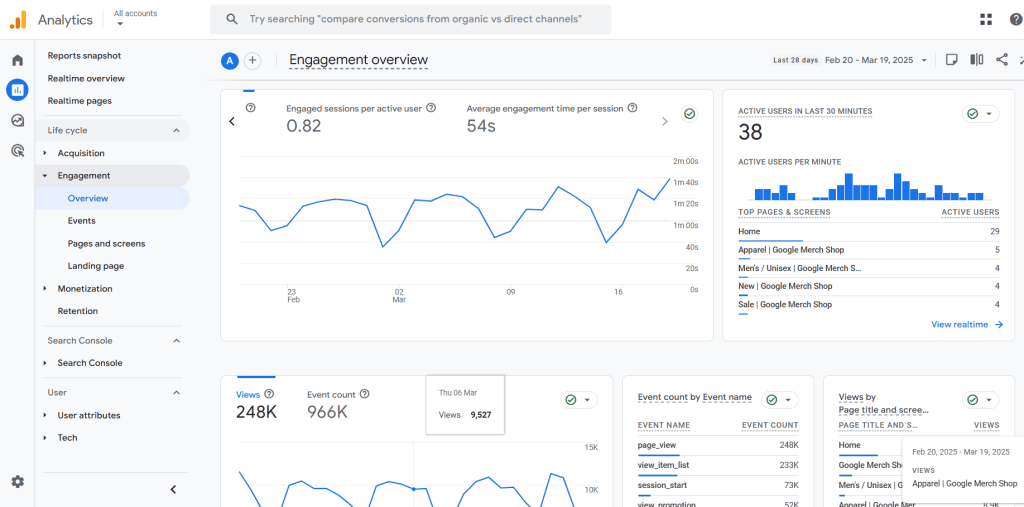
While these default metrics are a strong starting point, they are often insufficient for capturing the full complexity of user interactions. Crucial micro-interactions, such as specific button clicks, video plays to completion, form field interactions, or custom scrolling depths, frequently require additional, tailored tracking configurations. Analysts must be adept at configuring custom events to capture these nuanced engagement signals.
3. Create a Comprehensive Implementation Guide
Once key engagement metrics are identified and validated by stakeholders, the creation of a detailed Implementation Guide is paramount. This living document serves as the blueprint for analytics implementation, ensuring consistency, accuracy, and scalability.
An effective Implementation Guide should include:
- Defined Metrics: Clear definitions for each engagement metric, including what it measures and why it’s important.
- Tracking Specifications: Precise instructions for how each metric will be tracked (e.g., event names, parameters, triggers for custom events).
- Data Layer Requirements: Specifications for data elements that need to be pushed to the data layer for analytics tools to capture.
- Tool-Specific Configurations: Step-by-step guidance for configuring tracking within specific analytics platforms (e.g., GA4, GTM, Adobe Launch).
- Validation Procedures: Methods for testing and validating that tracking is working correctly.
- Ownership and Responsibilities: Clear assignment of roles for implementation, maintenance, and reporting.
This guide acts as a single source of truth for web analysts, digital marketers, and development teams, minimizing errors and ensuring that the data collected is reliable and actionable.
4. Segment Data for Deeper Insights
Beyond raw metrics, the power of engagement analytics truly shines when data is segmented. Analyzing engagement patterns across different user groups (e.g., new vs. returning users, users from different acquisition channels, specific demographics, or users who have previously converted) reveals critical insights into varying user behaviors and preferences. This allows for highly targeted optimization strategies.
5. Integrate and Cross-Reference Data
The most holistic view of customer engagement emerges when data from various platforms (website analytics, social media, CRM, email marketing, advertising platforms) is integrated and analyzed collectively. This provides a unified customer profile and helps identify cross-channel engagement pathways.
6. Conduct A/B Testing and Iterative Optimization
Engagement analytics provides the foundation for continuous improvement. By forming hypotheses based on engagement data (e.g., "Users aren’t engaging with our CTA button"), businesses can design A/B tests to validate changes and iteratively optimize their digital experiences for maximum engagement and conversion.
The Metrics That Matter: Key Customer Engagement Indicators
While conversions signify the ultimate desired action, engagement metrics serve as crucial precursors, reflecting mid-funnel activities that build momentum towards those decisive moments. These metrics are typically categorized by digital channel:
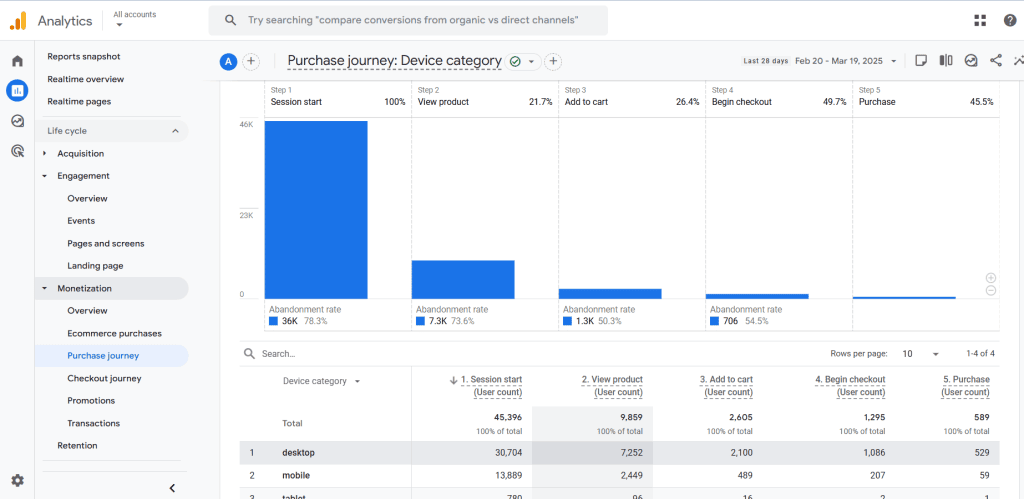
Note: Conversions are purposefully excluded from this list of engagement metrics. While they represent a profound level of engagement, they are primarily associated with bottom-of-funnel, decisive actions. Engagement metrics, conversely, illuminate the journey leading to those actions. Metrics marked with an asterisk (*) are specific to Google Analytics 4 (GA4) and may not be universally available on other platforms.
1. Website & App Engagement Metrics
These metrics provide a granular view of how users interact with your digital properties:
- Page Views: The total number of times a webpage, landing page, or screen within an app is accessed. While foundational, it needs context from other metrics to indicate true engagement depth.
- Sessions: A period of active engagement by a user on a website or app. GA4 typically defines a session as 30 minutes of continuous user activity, or activity that includes an engaged session event.
- Engagement Time: A robust GA4 metric that measures the duration a user’s app or browser tab is in the foreground. It excludes periods when the user is inactive or the tab is minimized, offering a more accurate reflection of active interaction. This can be viewed overall or per page/screen.
- Pages per Session: The average number of pages a user visits within a single session. A higher number generally indicates deeper exploration and interest in the content. A benchmark of at least two pages per session is good, with three or more indicating strong engagement.
- Engaged Sessions*: A core GA4 metric defined as a session that lasts longer than 10 seconds, has a conversion event, or has 2 or more page/screen views. This offers a much clearer picture of meaningful user activity compared to total sessions.
- Scroll Depth: Measures how far down a user scrolls on a page. This is particularly valuable for long-form content, indicating whether users are consuming the full article or merely scanning the top.
- Bounce Rate (Anti-Engagement Metric): The percentage of single-page sessions where the user leaves without interacting further. A high bounce rate often signals a disconnect between user expectations and content, or poor user experience.
2. Social Media Engagement Metrics
These metrics gauge the effectiveness of your social media presence in fostering interaction:
- Likes/Reactions: Basic indicators of approval or emotional response to content.
- Shares/Retweets: A powerful metric indicating that users find your content valuable enough to share with their own networks, significantly extending reach and amplifying advocacy.
- Comments: Suggests a deeper level of engagement, as users are taking the time to articulate their thoughts or ask questions, fostering community and direct interaction.
- Mentions: When users directly reference your brand or handle, indicating brand awareness and often positive or negative sentiment.
- Reach & Impressions: While not direct engagement, these metrics measure the potential audience size your content is exposed to, providing context for other engagement rates.
- Follower Growth Rate: Indicates the expanding reach of your brand’s community, suggesting ongoing interest.
- Sentiment Analysis: An advanced metric (often requiring specialized tools) that analyzes the emotional tone of comments and mentions, providing qualitative insights into how your brand is perceived.
3. Paid Ads & Email Engagement Metrics
These metrics are critical for evaluating the performance of direct marketing efforts:
- Click-Through Rate (CTR): The percentage of users who click a link after seeing an ad, search result, email, or social media post. Higher CTR indicates more compelling messaging and targeting. Benchmarks vary widely by industry and channel, but generally:
- Search Ads: 2-5%
- Display Ads: 0.1-0.5%
- Email Marketing: 2-4%
- Open Rate (Email): The percentage of recipients who open an email or SMS. While not a guarantee of deep engagement, it’s a primary indicator of whether the subject line and preview text successfully captured attention and whether the email reached the inbox.
- Conversion Rate (Post-Click/Open): While ultimately a conversion metric, tracking conversion rates after a click or open can be seen as the ultimate measure of engagement’s effectiveness from these channels.
- Bounce Rate (Email): The percentage of emails that could not be delivered to the recipient’s inbox. High bounce rates can indicate poor list hygiene or deliverability issues.
4. Product Engagement Metrics
For SaaS, e-commerce, and digital products, these metrics focus on interactions within the product experience, often preceding an add-to-cart action or purchase completion:
- Feature Usage: Tracks which features users interact with, how frequently, and for how long. This is vital for understanding product value and identifying underutilized features.
- Time Spent in App/Product: Similar to website engagement time, this measures active usage within a digital product.
- Retention Rate: The percentage of customers who continue to use a product or service over a given period. A strong indicator of sustained engagement and satisfaction.
- Churn Rate: The percentage of customers who stop using a product or service. High churn often correlates with low engagement.
- User Feedback/Surveys: Direct qualitative data on user experience, satisfaction, and perceived value.
- Net Promoter Score (NPS): A measure of customer loyalty and advocacy, often a result of strong, positive engagement.
The Broader Implications: Driving Sustainable Growth and Competitive Advantage
The meticulous application of customer engagement analytics transcends mere data collection; it is a strategic imperative that directly influences a business’s long-term viability and competitive standing. By moving beyond vanity metrics and focusing on the quality of user interactions, organizations can:
- Optimize the Customer Journey: Pinpoint friction points, identify successful pathways, and continuously refine the user experience to be more intuitive and rewarding.
- Increase Customer Loyalty and Retention: Engaged customers are loyal customers. By fostering deeper connections, businesses reduce churn and build a stable, recurring revenue base.
- Inform Product Development: Data on feature usage and user behavior provides invaluable insights for creating products and services that truly meet market needs and enhance user satisfaction.
- Enhance Personalization: Understanding individual and segment-level engagement allows for highly personalized marketing messages, content recommendations, and product experiences, increasing relevance and impact.
- Boost Marketing ROI: By allocating resources to channels and content that demonstrably drive engagement, marketing budgets become more efficient and effective.
- Cultivate Brand Advocacy: Highly engaged customers are more likely to become brand advocates, spreading positive word-of-mouth and contributing to organic growth.
The future of digital commerce and marketing belongs to those who can master the art and science of understanding and nurturing customer engagement. As the digital landscape continues to evolve, with emerging technologies like AI and machine learning further enhancing analytical capabilities, the ability to interpret and act on engagement data will become an even more profound differentiator.
In an era where every click, scroll, and interaction tells a story, customer engagement analytics provides the narrative framework. It allows businesses to move beyond guesswork, listen intently to their audience, and build digital experiences that not only capture attention but also forge lasting, valuable relationships. The question is no longer if businesses should measure engagement, but how comprehensively and how strategically they leverage these insights to secure their future.
