
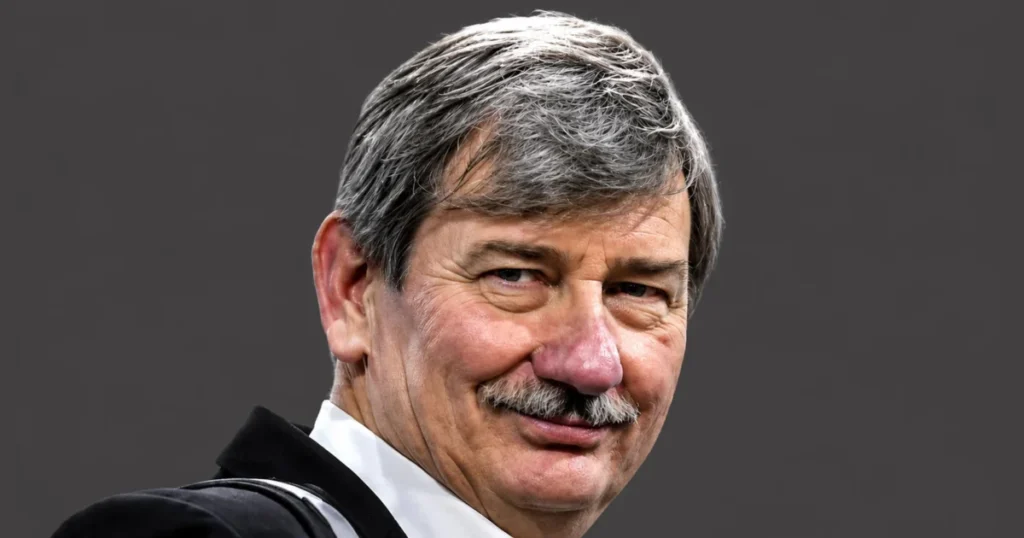
The Architect of Search: Honoring the Life and Legacy of SEO Pioneer Bruce Clay
The digital marketing world is in mourning following the announcement of the passing of Bruce Clay, a visionary often cited as the "Father of Search Engine Optimization." A titan of the industry whose career spanned the entire history of the commercial internet, Clay was instrumental in transforming search engine optimization from a misunderstood "dark art" into a foundational pillar of global business strategy.
His passing marks the end of an era for the first generation of digital marketers. Bruce Clay was not merely a practitioner; he was a philosopher of the web, a mentor to thousands, and the man credited with giving the industry its very name. As the founder of Bruce Clay, Inc., he steered his organization through three decades of tumultuous technological shifts, always maintaining a reputation for integrity, innovation, and a profound commitment to education.
Main Facts: The Man Who Named an Industry
Bruce Clay’s impact on the modern economy is difficult to overstate. While billions of users daily interact with search engines like Google, Bing, and DuckDuckGo, the mechanisms that allow businesses to be discovered by those users were largely codified by Clay and a small cohort of mid-90s pioneers.
The most significant fact of Clay’s legacy is his role in the nomenclature of the field. Industry veteran Danny Sullivan, founder of Search Engine Watch, has historically confirmed that Bruce Clay was the first person to use the term "Search Engine Optimization." Before Clay’s intervention, the practice of improving site visibility was a fragmented collection of tactics referred to as "search engine positioning" or "web promotion." By coining "SEO," Clay provided a professional identity to a burgeoning class of technicians and marketers.
Beyond the name, Clay is globally recognized for developing the "Siloing" methodology. This architectural approach to website structure—organizing content into distinct, hierarchical categories to build topical authority—remains a gold-standard practice in 2024. His firm, Bruce Clay, Inc., founded in 1996, grew from a home-based operation into a global powerhouse with offices spanning the United States, Europe, India, and the Pacific Rim.
Chronology: Thirty Years at the Vanguard of Search
To understand Bruce Clay’s contribution is to trace the timeline of the internet itself. His career trajectory mirrors the evolution of the web from a text-based curiosity to an AI-driven necessity.
The Foundation (1996–1999)
In 1996, the same year Google was being developed as a research project at Stanford named "BackRub," Bruce Clay launched his consulting firm. During this "Wild West" era of search, platforms like AltaVista, Lycos, and Excite relied on rudimentary algorithms. Clay recognized early on that search engines were not just directories, but complex systems that could be understood and influenced through structured data and content relevance.
The Rise of Professionalism (2000–2010)
As Google rose to dominance, the SEO industry faced a crisis of reputation due to "black hat" tactics like keyword stuffing and link farming. Clay became a vocal advocate for ethical SEO. He launched the "SEO Code of Ethics," a set of guidelines intended to protect clients and maintain the integrity of search results. During this decade, he became a fixture on the conference circuit, specifically at Search Engine Strategies (SES) and later Pubcon, where he transitioned from a consultant to a premiere educator.
The Era of Authority and Education (2011–2024)
As search engines evolved to prioritize user intent and "E-E-A-T" (Experience, Expertise, Authoritativeness, and Trustworthiness), Clay’s early teachings on content siloing became more relevant than ever. He authored the definitive Search Engine Optimization All-in-One For Dummies, a massive volume that served as the textbook for a generation of marketers. Up until his passing, Clay remained active, analyzing the impact of Artificial Intelligence and Search Generative Experience (SGE) on the future of digital discovery.
Supporting Data: The Methodologies That Defined a Discipline
Bruce Clay’s influence was cemented through his technical frameworks. He was never content with vague advice; he demanded data-driven precision.
The Concept of Content Siloing
Clay’s most enduring technical contribution is the "Silo." In his view, a website should function like a well-organized library. If a site sells "Shoes," it should not have a flat structure. Instead, it should have distinct silos for "Running Shoes," "Dress Shoes," and "Sandals." By grouping related content and using a disciplined internal linking structure, Clay proved that a site could signal "topical relevance" to search engine spiders more effectively. Today, this remains the primary strategy for competing in high-volume keyword markets.
The SEO Toolset
Clay was one of the first to develop proprietary software to analyze the web. His "SEO Toolset" provided marketers with the ability to perform deep-dive audits on keyword density, backlink profiles, and competitive gaps. This shifted the industry from guesswork to engineering, allowing SEOs to present quantifiable data to C-suite executives.

Global Education
Under Clay’s leadership, his firm became a premier training certification body. It is estimated that his training programs have educated over 5,000 SEO professionals worldwide. His classroom sessions were famous for their rigor, often lasting several days and covering everything from server-side headers to the psychology of the searcher.
Official Responses and Tributes: Remembering the "Yoda of Search"
The news of Clay’s passing has prompted a wave of tributes from the "Original Gangsters" (OGs) of the search world, painting a picture of a man who was as kind as he was brilliant.
Michael Bonfils, a long-time industry leader, reflected on the personal bond he shared with Clay. "There are three people who I learned SEO from back in the mid-90s: Danny Sullivan, Bruce Clay, and Stephen Mahaney," Bonfils stated. "Each offered me viewpoints that I’d consider valid or invalid. I wouldn’t have had a career without them. Although I personally know Danny, and indirectly corresponded with Stephen, Bruce was actually my friend."
Bonfils continued, highlighting Clay’s stature in the community: "From a career perspective, I can’t say enough about his solid determination, the care he put into his work, the sheer amount of people who he taught and those who went off to teach others. This guy was the Yoda of search. He was who us OGs relied on. From a personal perspective… he wasn’t a stranger to me, it was: ‘Hey Hey Michael!’ and a hug."
Bill Hartzer, another prominent SEO consultant and researcher, published a heartfelt tribute emphasizing Clay’s foundational role. "I lost a friend. I’ve been sitting with this news, trying to figure out how to put into words what Bruce meant to me, to the people who worked with him, and to an entire industry that many people don’t realize he helped build from the ground up." Hartzer reiterated the historical weight of Clay’s contributions: "The very phrase that defines what thousands of professionals do every day—Bruce Clay coined it."
Debra Mastaler, a pioneer in link building, recalled Clay’s welcoming nature in an industry that could often feel like an "old boys’ club." "I first met Bruce in 2003 at an SES conference in California. When he learned it was my first time speaking at a conference, he went out of his way to introduce me to people and say hello between sessions. It was a kindness I long remembered."
Implications: The Future of SEO Without a Founding Father
The passing of Bruce Clay comes at a pivotal moment for the search industry. As AI-generated content floods the web and search engines move toward "zero-click" results, the fundamentals Clay championed are being put to the ultimate test.
The Enduring Relevance of Structure
While the algorithms have changed, the core logic of Clay’s "Siloing" remains the antidote to AI-driven chaos. As search engines struggle to distinguish between authoritative human expertise and synthetic content, the structural integrity of a website—the clear, logical organization of knowledge—becomes the primary way a brand can prove its "Trustworthiness."
The Call for Ethical Marketing
Clay’s career-long crusade for "White Hat" SEO serves as a vital reminder to the current generation. In an era of deepfakes and algorithmic manipulation, Clay’s "SEO Code of Ethics" is more than a historical document; it is a roadmap for a sustainable digital future. He proved that you could reach the top of the search results without compromising your integrity.
A Legacy of Literature
Bruce Clay leaves behind a massive body of work that will continue to educate future marketers. His physical books, including Search Engine Optimization All-in-One For Dummies and Content Marketing Strategies for Professionals, remain in print, while his dozens of digital guides on "E-E-A-T" and site architecture continue to be downloaded by thousands.
Conclusion
Bruce Clay was a rare individual who possessed both the technical mind of a programmer and the heart of a teacher. He entered the digital landscape when it was a void and helped map its most important territories. To his peers, he was a giant; to his students, he was a mentor; and to the industry at large, he was the North Star.
As the search marketing community mourns his loss, his spirit lives on in every properly structured URL, every strategically placed internal link, and every ethical marketing campaign. Bruce Clay did more than just optimize websites; he optimized an industry, ensuring that as the world moved online, it did so with a sense of order, purpose, and professional pride. He will be deeply missed, but as long as there is a search bar and a results page, the name Bruce Clay will remain synonymous with the art and science of discovery.
