
Unlocking Conversion Precision: Crazy Egg Debuts New Audience Segment Analytics
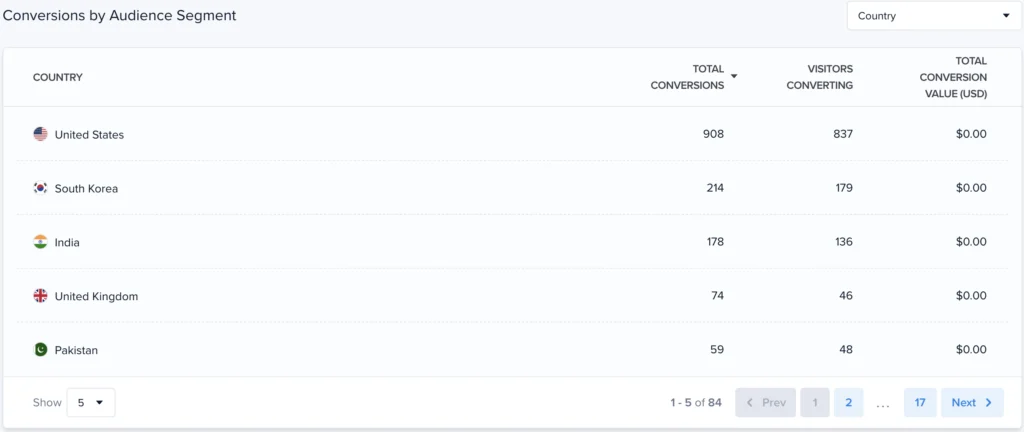
In the increasingly data-saturated world of digital marketing, the ability to discern not just that a conversion occurred, but who was responsible for it, has become the holy grail for growth marketers. Today, Crazy Egg, a leader in website optimization and user behavior analytics, announced a significant enhancement to its reporting suite: the ability to analyze conversion performance broken down by granular Audience Segments.
This update represents a fundamental shift in how Crazy Egg users can interpret their conversion data. By moving beyond aggregate numbers, the platform now empowers businesses to identify high-value cohorts, optimize ad spend, and tailor user experiences with surgical precision.
Main Facts: The New Frontier of Conversion Reporting
The core of this update lies in the integration of Audience Segment data directly into the Conversions dashboard. Previously, Crazy Egg users could track goal completions and conversion events, but they often lacked the necessary context to determine which specific visitor demographics or traffic sources were driving those results.
With this release, users can now view their existing conversion data through the lens of Audience Segments. The most critical takeaway is the "zero-friction" implementation: this feature requires no additional tracking code, no manual tagging, and no complex setup. Because Crazy Egg has been capturing this data in the background, the moment a user navigates to their dashboard, they can instantly view historical trends segmented by audience types.
By correlating conversion rates with specific audience characteristics, businesses can now answer the "who" behind the "what." This insight is instrumental in determining where to double down on traffic acquisition efforts and where to pivot messaging strategies to better engage underperforming segments.
Chronology: The Evolution of Behavior Analytics
The journey to this release was not overnight. To understand why this update is a watershed moment for the platform, one must look at the progression of Crazy Egg’s toolset over the last decade.
The Early Days: Heatmaps and Scroll Maps
In its infancy, Crazy Egg revolutionized the industry by democratizing website heatmaps. Before these tools became mainstream, understanding where users clicked was a technical hurdle. Crazy Egg simplified this, allowing non-technical marketers to see the "hot" and "cold" zones of their landing pages.
The Rise of Conversion Tracking
As the platform matured, the focus shifted from simple behavioral observation to results-oriented analytics. The introduction of the Conversions tool allowed users to define specific success metrics—such as form submissions, button clicks, or thank-you page views. While powerful, this tool functioned primarily as a ledger: it told users how many conversions occurred, but not necessarily why or by whom.
The Integration Phase
Over the past two years, Crazy Egg has been quietly building out its Audience Segment infrastructure. By categorizing visitors based on traffic source, device type, geographic location, and returning visitor status, the platform began creating a robust profile of the typical site visitor.
The Current Milestone: Data Unification
Today’s announcement marks the convergence of these two pillars. By unifying the Conversions engine with the Audience Segment framework, Crazy Egg has effectively created a "conversion-focused filter." This is the culmination of years of iterative development aimed at removing the "black box" nature of digital conversion paths.
Supporting Data: Why Segmentation Matters
The efficacy of segmented data is supported by a wealth of industry research. According to recent digital marketing benchmarks, segmented campaigns see a 760% increase in revenue compared to non-segmented, "one-size-fits-all" approaches.
When a marketer looks at a total conversion rate of 2%, they are seeing an average that masks the reality of the site’s performance. Within that 2%, there may be a specific segment—for instance, "Organic Search users from mobile devices"—that is converting at 5%, while another segment—"Referral traffic from social media"—might be converting at less than 0.5%.
By identifying these discrepancies, Crazy Egg users can utilize the new reporting to:
- Allocate Budget: Shift paid search spend toward the segments that demonstrate the highest propensity to convert.
- A/B Test Strategically: Run personalized landing page experiments for low-converting, high-traffic segments to see if specific friction points can be removed.
- Optimize ROI: Stop "leaking" money on traffic sources that result in high bounce rates and zero conversions.
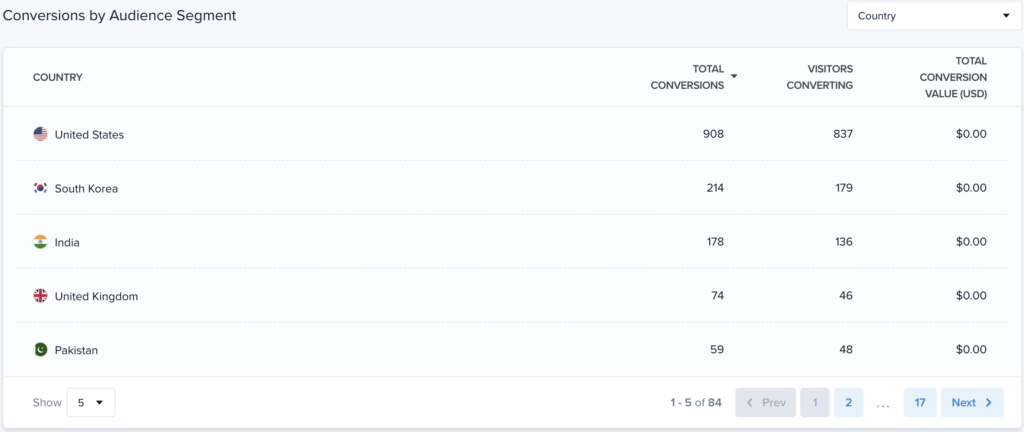
The visual interface provided by the new reporting, as seen in the latest product updates, uses clear, intuitive charts to illustrate these gaps. By scrolling to the bottom of any Conversion report, users are now presented with a breakdown that highlights the delta between different visitor types, providing an immediate visual cue for where action is required.
Official Responses and Implementation
In a briefing regarding the update, product leads at Crazy Egg emphasized the importance of accessibility. "Our goal has always been to make high-level data actionable for everyone, not just data scientists," a spokesperson noted. "By retroactively applying this segmentation to historical data, we are giving our users an instant ‘Aha!’ moment without asking them to wait weeks for new data to accumulate."
How to Access the Data
For current users, the process is streamlined:
- Navigate to the ‘Conversions’ tab within the Crazy Egg dashboard.
- Select a specific Conversion Name from your list of tracked events.
- Scroll to the bottom of the report page.
- Analyze the ‘Conversions by Audience Segment’ section.
The system automatically populates this with existing data, meaning that if you have been tracking conversions for months, you already have a library of insights waiting to be explored.
Implications: The Future of Conversion Rate Optimization (CRO)
The implications of this update extend far beyond a simple dashboard tweak. It represents a shift toward "contextual marketing."
1. The Death of the "Average" User
The era of optimizing for the "average visitor" is effectively over. In an age where personalization is the baseline expectation, treating every visitor as a monolith is a recipe for stagnation. This new reporting forces marketers to confront the reality of their diverse audience base.
2. Bridging the Gap Between Traffic and Conversion
Often, the team responsible for traffic acquisition (SEO/SEM) is siloed from the team responsible for site experience (CRO). This data creates a common language between those two departments. When the SEO team can see exactly which keywords are driving high-converting segments, they can refine their strategy, and when the CRO team sees which segments are failing to convert, they can adjust the landing page copy to bridge that gap.
3. Efficiency as a Competitive Advantage
In an economic climate where every marketing dollar is scrutinized, efficiency is the ultimate competitive advantage. By using these insights to prune underperforming traffic sources and double down on high-intent segments, businesses can achieve higher conversion volumes without necessarily increasing their overall budget.
4. Long-term Strategic Planning
This data is not just for daily optimization; it is a goldmine for long-term strategy. Understanding which segments—perhaps specific regions or returning customer cohorts—form the backbone of a business’s revenue allows for better product development and market expansion planning.
Conclusion: Turning Insights into Action
The introduction of Audience Segment analysis for Conversions is a testament to Crazy Egg’s commitment to providing "actionable clarity." By integrating this feature, they have provided a powerful tool that transforms raw numbers into a roadmap for growth.
For the modern marketer, the challenge is no longer a lack of data; it is the inability to find the right data amidst the noise. With this release, Crazy Egg has made it significantly easier to cut through that noise. As businesses begin to analyze their segments, the winners will be those who use this newfound visibility to build more relevant, efficient, and profitable user journeys.
Whether you are a startup looking to find your first profitable cohort or an enterprise seeking to optimize conversion funnels at scale, the message is clear: the data is there—you simply need to know where to look. With this latest update, the answer to your most pressing conversion questions is just a scroll away.
