
The Great Search Paradigm Shift: How AI is Rewriting the Rules of Marketing
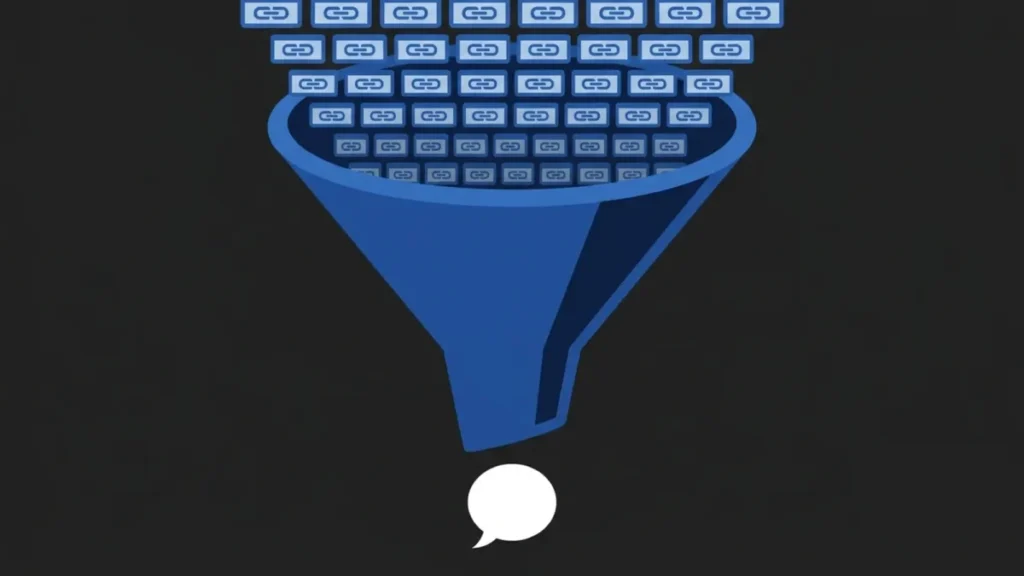
The digital landscape has reached a definitive inflection point. For over two decades, the "blue link"—a ranked list of search results—served as the bedrock of the internet economy. That era is now receding, replaced by a new reality of direct, synthesized answers.
On June 24, 2026, the Dutch advertising trade body, VIA Nederland, published a landmark report from its Search Taskforce. The paper outlines six structural shifts that are not merely tweaking search marketing but fundamentally rewriting the profession’s core practice. From the way users consume information to how marketers must measure success, the industry is transitioning from a world of volume-based traffic to one of authority-based synthesis.
The Six Structural Shifts: A New Anatomy of Search
The VIA Nederland report, authored by the trade association based at Wibautstraat 224 in Amsterdam, synthesizes deep-dive discussions among industry leaders to map a volatile landscape. The taskforce identified six primary pillars of change:
1. From Ranked Results to Synthesized Answers
The most immediate change is the move toward AI-generated summaries. Platforms like Google’s AI Overviews and AI Mode, alongside conversational assistants like Microsoft Copilot, ChatGPT, and Gemini, now prioritize a direct answer over a list of ten blue links. The consequence is a structural decline in click-through rates (CTR) to external websites.
2. From SEO to GEO (Generative Engine Optimization)
With the interface shifting toward AI-composed responses, the goal of optimization has evolved. Industry professionals are now adopting Generative Engine Optimization (GEO). The objective is no longer just to rank high in a list but to be cited as an authoritative source within the AI’s synthesized output.
3. The Rise of AI Agents and the "Winner-Takes-All" Dynamic
As personal AI agents begin to handle research and transactions on behalf of users, brands are no longer just communicating with humans; they are competing for the "preferred source" status within an agent’s logic. This creates a binary, winner-takes-all environment where default recommendations become the primary driver of market share.
4. Automation as the Default Operating System
Manual campaign management is increasingly being superseded by automated frameworks like Performance Max and AI Max. Search engines are absorbing more targeting and bidding decisions, shifting the marketer’s role from active lever-pulling to strategic input and oversight.
5. New KPIs and Outcome-Based Billing
As traditional click-based metrics lose their predictive power, the industry is pivoting toward value-based measurement. KPIs are shifting from Cost-Per-Click (CPC) to metrics reflecting true business value, such as margin, Customer Lifetime Value (CLV), and cost-per-sale (CPS).
6. The Evolution of the "T-Shaped" Search Marketer
The final shift is professional. The specialist who focuses solely on one technical niche is being replaced by the "T-shaped" marketer—a generalist who bridges the gap between technology, data, content strategy, and business objectives.
Chronology: The Road to the AI-First Web
The transition to an AI-augmented search ecosystem has been rapid and iterative. Below are the key milestones that led to the current state of the industry:
- November 2025: Amazon’s Ads Agent introduces natural language campaign management, allowing for ROAS-based instructions.
- February 2026: Microsoft launches the AI Performance dashboard in Bing Webmaster Tools, providing the first window into how AI cites publisher content.
- March 2026: Microsoft expands its dashboard to map "grounding queries" directly to specific cited pages.
- April 2026: The Trade Desk launches "Koa Agents," its first in-platform AI agent for media buying.
- April 15, 2026: Google announces that Dynamic Search Ads (DSA) will be upgraded to AI Max, signaling the end of traditional manual search ad structures.
- May 13, 2026: Microsoft Clarity’s "Citations" feature goes generally available, offering competitive authority mapping.
- May 20, 2026: At Google Marketing Live, executives confirm that appearing in Conversational Discovery ads requires AI Max-driven infrastructure.
- June 2026: Google introduces branded search toggles in AI Max, providing a critical control mechanism for advertisers.
- June 24, 2026: VIA Nederland publishes its Search Taskforce report, codifying the new industry framework.
Supporting Data: The Impact on Traffic and Visibility
The decline in organic traffic is no longer theoretical; it is measurable. Research from Ahrefs in February 2026 revealed that the presence of AI Overviews correlates with a 58% reduction in click-through rates for top-ranked pages, a stark increase from the 34.5% hit observed in April 2025.
The impact is highly sector-specific. Health and nutrition publishers have reported ad-opportunity declines between 40% and 50%, while news and political verticals have remained relatively stable.
Furthermore, the "authority" of content has become the primary predictor of success. Research by NP Digital in May 2026 found that original research is cited in 82% of AI answers, while comparison content is cited in 76%. This confirms that AI systems are prioritizing high-effort, unique content over generic, SEO-optimized text that the AI can easily replicate itself.
Official Responses and Strategic Guidance
Industry leaders are divided between embracing total automation and maintaining strategic guardrails.
Google’s VP of Search, Brendon Kraham, has argued that "good SEO is still good GEO," suggesting that AI search systems are merely extensions of core ranking systems. However, experts like Lily Ray, VP of SEO Strategy at Amsive, have cautioned that aggressive "GEO hacking" is increasingly being flagged as spam by search engines.
The consensus from the VIA Nederland Taskforce is one of pragmatic adaptation. They emphasize that while one cannot "stop" the rise of automation, one can "steer" it. By providing high-quality first-party data and clearly defined campaign goals, marketers can influence the system’s output.
As noted by IAB Europe’s Chief Economist, Daniel Knapp, during Cannes Lions 2026: "AI systems are reducing the number of options shown to consumers, which makes it structurally more consequential which brands appear in any given answer."
Implications: The Future of the Search Professional
The role of the search marketer is undergoing a fundamental transformation. As execution becomes automated, the value of the human practitioner shifts toward direction.
The Shift from Levers to Strategy
In the previous decade, success was defined by the granular control of keywords, bids, and ad copy. In the 2026 landscape, success is defined by:
- Input Quality: Ensuring the data feeds and content provided to AI systems are accurate, authoritative, and structured.
- Contextual Intelligence: Understanding which business outcomes (e.g., margin, lifetime value) should drive automated bidding.
- Cross-Channel Orchestration: Integrating search data with broader retail media and customer experience strategies.
A Call to Action: The Four Tenets of Success
VIA Nederland concludes its report with four "orientations" for the modern marketer:
- Agility as a Skill: Flexibility is no longer a trait but a requirement in a landscape that changes monthly.
- Experimental Rigor: Since much of AI’s decision-making remains opaque, constant, documented testing is the only way to build an internal knowledge base.
- Holistic Thinking: Data, content, and strategy are now inseparable parts of the search discipline.
- Collaborative Learning: Because the platforms are evolving faster than any single organization can track, shared learning through industry bodies is essential for survival.
As the industry looks ahead to 2027—a year that will see the full migration of legacy ad systems to AI-driven models—the message is clear: search is not disappearing. It is, however, becoming a more complex, strategic, and data-intensive discipline. Those who treat AI as a partner to be steered, rather than a threat to be resisted, will define the next generation of digital marketing.
