
The Silent Signals: How to Master Customer Exit Surveys to Reduce Churn
In the competitive landscape of digital commerce and SaaS, every cancellation is more than just a loss of revenue; it is a critical data point. While most companies fixate on acquisition, the most successful brands are those that listen intently to why users walk away. This is where the customer exit survey—a brief, targeted questionnaire presented during the cancellation flow or upon departure—becomes an indispensable tool for long-term growth.
By capturing feedback at the exact moment of dissatisfaction, businesses can transform churned accounts into a roadmap for product improvement. This article explores the mechanics, strategies, and best practices for implementing an effective exit survey program.
The Anatomy of an Exit Survey
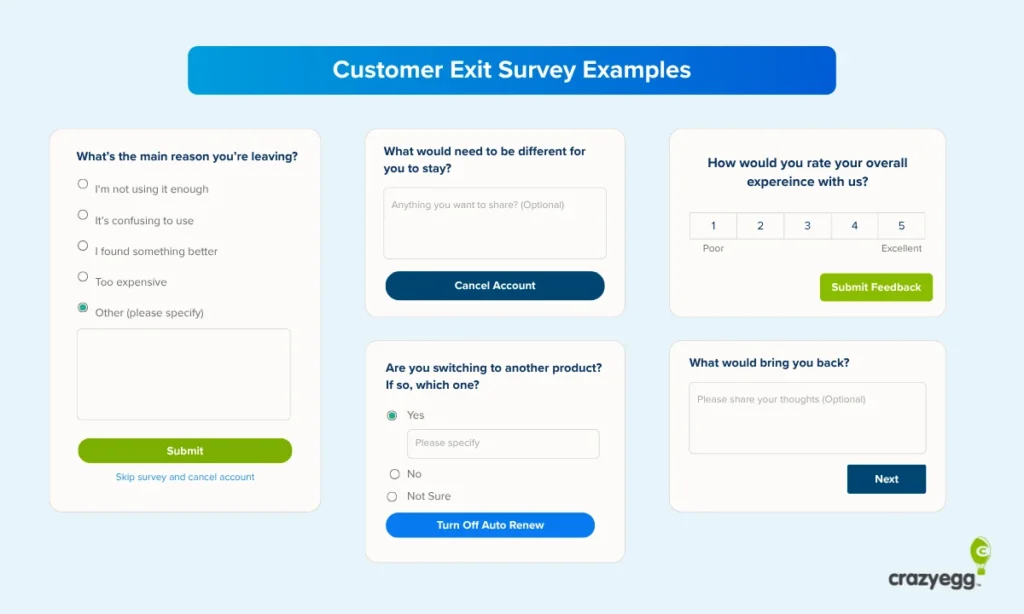
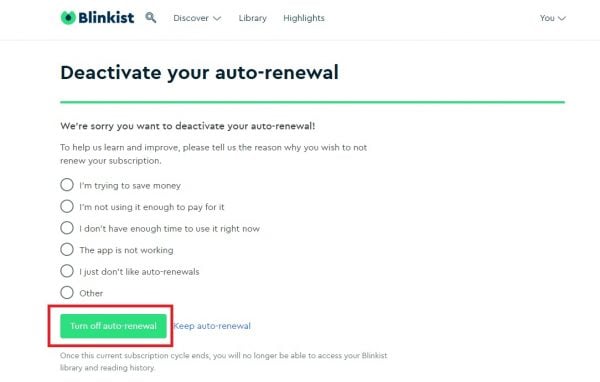
A customer exit survey, often termed a churn or cancellation survey, is a strategic, short-form inquiry designed to uncover the "why" behind a user’s decision to leave. Unlike generic feedback forms, these are high-intent questionnaires. They typically feature one mandatory single-choice question—to pinpoint the primary driver of the exit—supplemented by optional open-ended text fields for nuance.
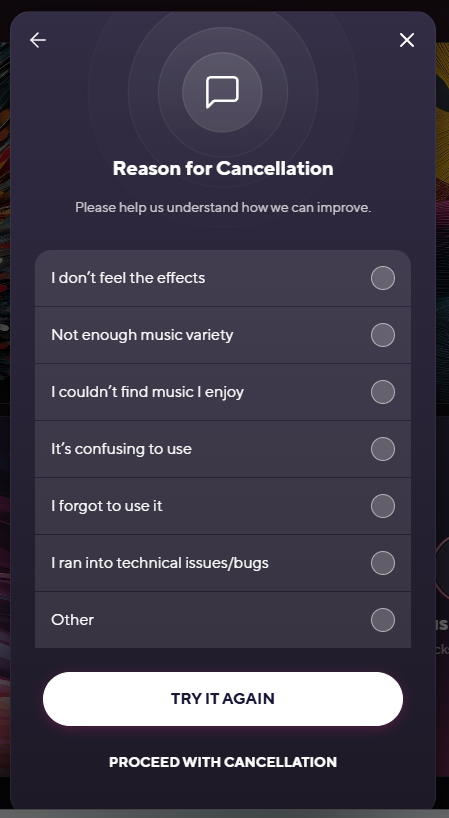
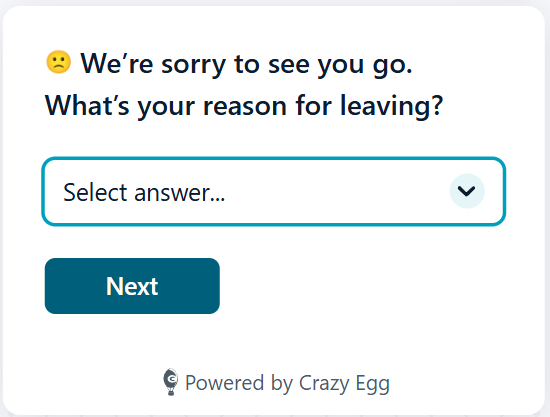
The goal is to gather quantitative data (e.g., "60% of users leave due to pricing") while keeping the barrier to entry low. For instance, platforms like BrainFM and Crazy Egg utilize these to offer a final touchpoint, ensuring that even as a user leaves, the brand maintains a data-driven understanding of its service gaps.
Exit Surveys vs. Exit Interviews
While both tools aim to extract truth from departing customers, they serve different operational needs:
- Exit Surveys: Automated, scalable, and low-friction. They are the standard for self-serve products where volume makes manual outreach impossible. They provide the "what"—the broad trends that allow teams to quantify issues.
- Exit Interviews: High-touch, deep-dive conversations. These are reserved for high-value enterprise accounts. While time-intensive, they offer the "why" behind complex, multi-layered business decisions.
The most sophisticated organizations use a hybrid approach: they run automated surveys for every cancellation and trigger manual exit interviews only when survey data suggests a systemic issue or involves a high-revenue client.
Strategic Timing: Where and When to Engage
The effectiveness of an exit survey is governed by the "Freshness Principle"—the idea that feedback is most accurate when the motivation is still top-of-mind.
1. Within the Cancellation Flow
This is the gold standard for SaaS. By placing the survey after the user clicks "Cancel" but before the final confirmation, you capture the user in their moment of highest clarity.
- Pro-tip: Keep it optional. Forcing a survey creates friction, which is not only poor UX but can also run afoul of consumer protection laws, such as the California Consumer Privacy Act (CCPA), which mandates that cancellation must remain an easy, unobstructed process.
2. Post-Cancellation Email
For businesses where cancellations occur via support tickets or billing providers, an email survey is the primary vehicle. While response rates are naturally lower than in-product prompts, sending this within hours of the cancellation ensures the sentiment remains relevant.
3. Website Exit Intent
For e-commerce, the "exit" occurs when a visitor leaves a shopping cart or pricing page without converting. Using exit-intent triggers—monitoring mouse movement or scroll depth—allows you to fire a survey precisely when the user is about to abandon the session. This is vital for identifying checkout friction, such as unexpected shipping costs or confusing navigation.
Crafting the Perfect Questionnaire
To maintain high completion rates, brevity is key. Research suggests that surveys with two to three questions maintain a median completion rate of nearly 87%, which plummets as the length increases.
Recommended Question Hierarchy:
- The Primary Driver: "What is the main reason you are leaving?" (Single-choice, 4–6 options).
- The Nuance: "What would need to be different for you to stay?" (Optional open-ended).
- The Competitor Check: "Are you switching to another service?" (Optional).
- The Sentiment Metric: "How would you rate your overall experience?" (1–5 scale).
The 20/3% Rule for Refinement: To keep your data clean, periodically audit your multiple-choice options. If a category receives more than 20% of responses, break it into more granular sub-options. If an option receives less than 3%, it is likely noise and should be removed or merged.
Validating Feedback: The Role of Behavioral Analytics
A common pitfall in customer research is taking user feedback at face value. Users often cite "price" as their reason for leaving, when in reality, they never engaged with the core features that would have justified the cost.
Comparing Words with Actions
You must cross-reference survey results with session recordings and heatmaps. If a user claims they left because a feature was "too complicated," but your analytics show they never actually clicked on that feature, you have identified an onboarding or discoverability issue, not a product capability issue.
For example, SEO platform SEOJuice discovered that a significant portion of users who cited "too expensive" as their reason for canceling had never successfully completed their first audit. The issue wasn’t the price; it was the lack of realized value. By pairing qualitative survey data with quantitative usage logs, you can identify the "Aha!" moments your users are missing.
Implications: Turning Data into Product Fixes
Once you have the data, the final and most important phase is internal routing.
Tagging and Ownership
Every survey response should be tagged and routed to the appropriate department:
- Missing Features/Bugs: Product & Engineering.
- Onboarding Issues: Customer Success.
- Pricing/Market Fit: Product Marketing.
The "Close the Loop" Strategy
The most mature organizations use feedback to foster loyalty, even among those who have left. When you ship a fix based on user feedback, notify the churned customers who requested it. This demonstrates that you value their voice, which can be a powerful engine for "win-back" campaigns.
Legal and Ethical Considerations
In an era of increased regulation, the design of your exit flow is a compliance issue. As mentioned, regulations in jurisdictions like California strictly prohibit "dark patterns" that make it difficult to cancel.
- Never hide the exit: The option to confirm cancellation must be just as visible as the survey.
- Transparency: Always disclose that the survey is optional.
- Anonymity: While keeping surveys linked to user IDs is vital for analysis, ensure your internal privacy policies handle this data with the same security as other user profile information.
Conclusion: The Path to Retention
Customer exit surveys are not merely "post-mortems" for lost revenue. They are a diagnostic tool that provides a direct window into the friction points of your user experience. By acknowledging that what customers say and what they do are often two different things, companies can use these surveys to bridge the gap between perceived value and actual product utility.
Start small: implement a simple, one-question survey, monitor the results for 30 days, and iterate. By listening to the reasons behind the exit, you aren’t just preventing the next cancellation—you are building a better product for everyone who remains.
