
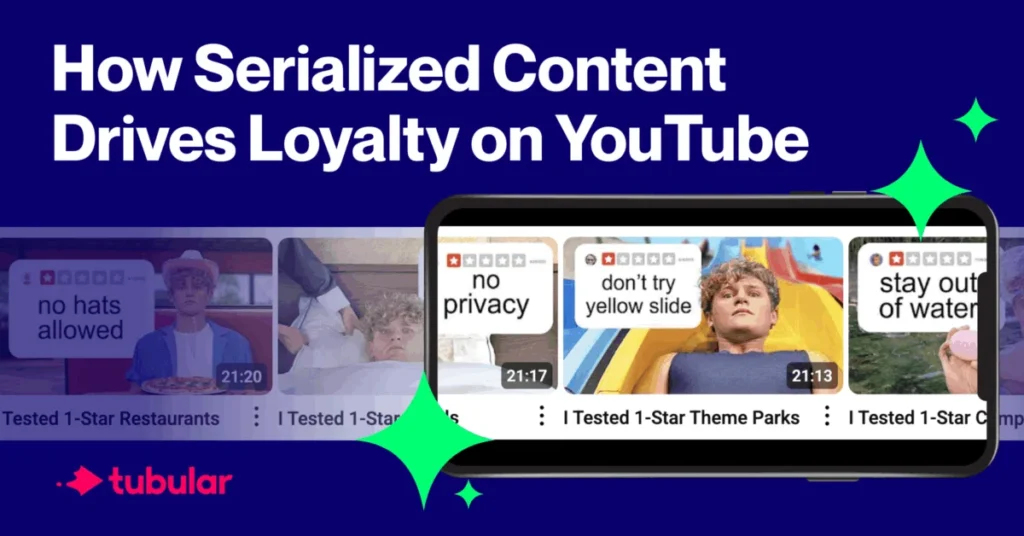
The Serialized Revolution: Why YouTube is Transforming Into the New "Must-See TV"
As the living room television continues to consolidate its position as the primary screen for YouTube viewership, the content landscape is undergoing a fundamental shift. For years, YouTube was defined by the "short-form" aesthetic—snappy, rapid-fire editing designed for mobile scrolling. However, the migration of audience habits toward connected TVs (CTV) has ushered in an era where YouTube content is increasingly mimicking the structures of traditional broadcast television.
The most successful creators and brands are no longer merely chasing viral individual hits; they are architecting serialized, long-form narratives that drive consistent, repeated tune-ins. This evolution is not just a stylistic preference; it is a calculated response to a changing digital ecosystem where the "binge-watch" model has become the gold standard for audience retention.
The Shift Toward Serialized Content: A Chronology of Change
The history of YouTube content has historically been one of fragmented discovery. Users would stumble upon a video, watch it, and move on. The "serialized" model—a format rooted in the golden age of cable television—changes this dynamic by creating an expectation of continuity.
The Rise of the Creator-Led Travelogue (Mid-2025)
The recent success of creator Ryan Trahan serves as a primary case study in this shift. In mid-2025, Trahan achieved a personal peak in watch-time by reviving the classic "road trip" genre, but applying a rigorous, episodic discipline to it. His "50 States in 50 Days" project was not just a video; it was a daily commitment. By committing to a consistent, high-stakes narrative, Trahan transformed his channel into a destination.
The Corporate Pivot to Niche Entertainment
Simultaneously, brands began to realize that one-off commercials were losing their impact. State Farm’s Gamerhood, launched in 2022, serves as the benchmark for this transition. Now in its fourth season, the series demonstrates that a brand can effectively function as a publisher. By leaning into gaming culture—a niche with high engagement—and wrapping it in a reality competition format, State Farm has moved beyond "advertising" and into the realm of genuine content creation.
The Revival of Legacy Intellectual Property
Even established media outlets are pivoting. Vice Media’s decision to reimagine the Naked Truths series—originally a short-form, punchy social video project—into a long-form documentary series highlights a broader industry trend: the realization that audiences are willing to invest more time in deeper storytelling when the format is right.
Supporting Data: By the Numbers
The shift toward long-form, serialized content is supported by compelling metrics. As viewers transition from mobile devices to the living room, the tolerance for longer runtimes has increased exponentially.
- The Trahan Effect: In June 2025, Ryan Trahan’s U.S. watch-time surged by 120% month-over-month, reaching a staggering 569.8 million minutes. This placed him at No. 24 among all U.S. accounts, outpacing major legacy TV networks and mainstream news organizations.
- Brand Engagement: State Farm’s Gamerhood has proven that branded content can command "appointment viewing." With the Season 4 premiere drawing 152,000 viewers, the brand consistently secures over 5 million minutes watched per month, with individual sessions often exceeding two hours—a duration that would be the envy of traditional cable networks.
- The Monetization Pivot: Vice Media’s pivot for Naked Truths illustrates the economic logic of this shift. By moving from 1–5 minute clips to 15-minute-plus episodes, the publisher gains the real estate necessary for integrated ad breaks. This shift allows for a viable, self-sustaining monetization strategy that bypasses the need for traditional linear TV distribution.
Implications for Creators and Publishers
The transition to serialized, TV-like formats carries significant implications for anyone looking to scale a channel or brand presence on YouTube.
1. The Power of "Appointment Viewing"
The primary advantage of a series is the habit loop. When an audience knows that a new episode of a specific show will drop on a specific day, they are more likely to return. This reduces the reliance on YouTube’s algorithm to push content to them via the homepage; instead, the audience becomes the engine for discovery.
2. The "Peer-to-Peer" Advantage
While traditional television is often perceived as "top-down" communication, YouTube creators maintain a "peer-to-peer" connection. When Ryan Trahan explores the 50 states, he isn’t a polished TV host with a script; he is a creator experiencing the journey alongside his audience. This authenticity creates a level of parasocial trust that traditional media struggles to replicate.
3. Monetization Through Length
Long-form content is the "holy grail" for ad-supported platforms. As YouTube optimizes its ad inventory for the TV screen, creators who produce 20–30 minute episodes are positioned to capture higher-value, mid-roll ad placements. This effectively turns the YouTube channel into a mini-network, allowing for sustainable growth without relying on sponsorship alone.
Expert Perspective: The Strategic Blueprint
Industry analysts at Tubular Labs have noted that the "Hidden Trends" in social media point toward a blurring line between streaming services and YouTube. The data suggests that as long-form watch-time on connected devices increases, the creators who succeed will be those who prioritize "story arcs" over "isolated clips."
For those looking to adopt these lessons, the strategy is clear:
- Develop a Narrative Hook: Every series needs a clear beginning, middle, and end, or a recurring premise that evolves over time (e.g., the competitive nature of Gamerhood).
- Prioritize Pacing for the Big Screen: Creating content for a TV device requires a different visual language than mobile. Slowing down the edit and focusing on immersive storytelling, as seen in the new Naked Truths, allows the content to feel "premium."
- Leverage Playlist Functionality: The technical aspect of serializing content—using YouTube playlists to guide the viewer from one episode to the next—is critical to maintaining the momentum of a series.
Conclusion: The New Frontier of Digital Media
The transformation of YouTube from a repository of short clips into a powerhouse of serialized entertainment represents one of the most significant shifts in media consumption in the last decade. By adopting the pacing, structure, and episodic nature of television, creators and brands are successfully reclaiming the attention of a demographic that has largely abandoned linear cable.
As we move further into 2025 and beyond, the distinction between a "YouTuber" and a "Television Producer" will continue to dissolve. The future belongs to those who recognize that the audience is no longer looking for just a quick distraction—they are looking for a story they can follow, episode by episode, on the biggest screen in the house.
For more in-depth data on how watch-time for long-form video is shifting across devices, download the latest "Hidden Trends, Big Moves" report from Tubular Labs. Understanding these metrics is essential for navigating the next phase of the digital content revolution.
