
Decoding the Future: Why the ‘Martech for 2026’ Report is a Must-Read for Marketing Leaders
As the calendar turns toward December, the marketing industry is typically flooded with a deluge of speculative "prophecy" pieces—high-level, often hyperbolic predictions that lack the grounded reality required by today’s marketing operations (MOps) professionals. However, for the past several years, a counter-narrative has emerged from the partnership of Frans Riemersma and Scott Brinker (ChiefMartec). Their annual year-end assessment has become the gold standard for practitioners who prefer data-backed reality over "fever-dream" forecasts.
This year, the duo is set to release their most ambitious work to date: "Martech for 2026." Scheduled for a formal unveiling on Tuesday, December 2, this report serves as a pragmatic roadmap for the next 12 to 18 months, focusing on the actual integration of emerging technologies into the modern enterprise tech stack.
Main Facts: A Pragmatic Approach to Industry Evolution
The "Martech for 2026" report is not merely a collection of opinions; it is the culmination of rigorous research, surveying, and observation of real-world patterns. Unlike typical industry outlooks that focus on buzzwords, this report examines the mechanics of how marketing technology is being deployed, utilized, and optimized in live environments.
The core premise of the research is simple: marketing technology is no longer in a phase of unchecked expansion. Instead, it is entering a period of consolidation and refinement driven by the rapid adoption of AI agents. The report aims to strip away the marketing fluff and provide a clear, objective analysis of the state of the stack.
For those eager to get an early look, registration is currently open for an accompanying virtual event. Attendees will gain access to the 100+ page report and a deep-dive, hour-long keynote presentation where Brinker and Riemersma will dissect their most surprising findings.
Chronology: The Road to December 2
To understand the weight of this upcoming release, one must look at the timeline of its development:
- Q3 2025: Brinker and Riemersma initiated their annual AI & Data in Marketing survey, collecting data from global marketing leaders and operations professionals.
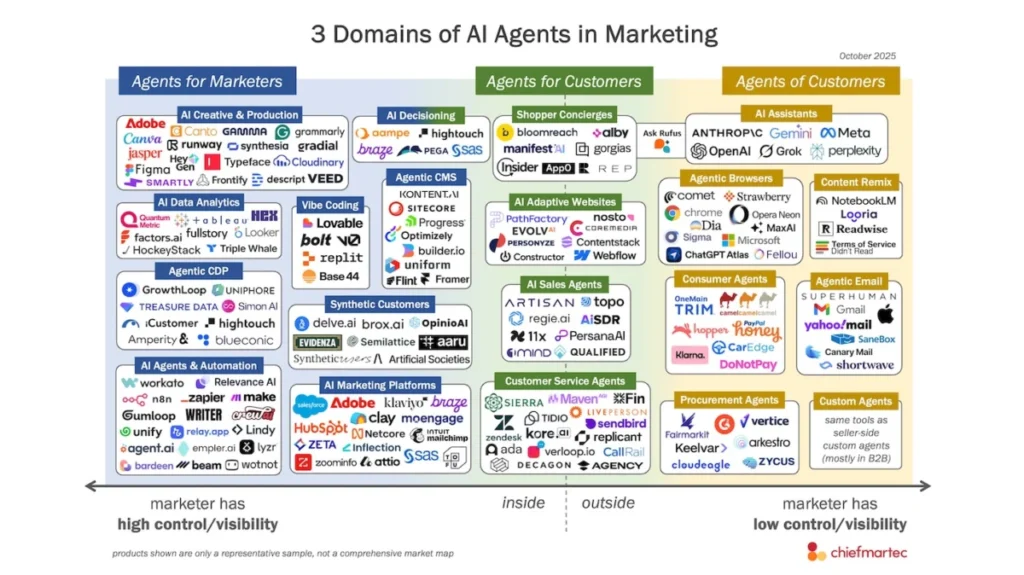
- October 2025: Initial data analysis began, focusing on the "three domains" of AI agents and their performance in production environments versus experimental sandboxes.
- November 2025: Finalization of the 100+ page report, incorporating qualitative interviews with industry partners and subject matter experts.
- December 2, 2025: Official launch of the report and the live keynote seminar.
- December 2025: A month-long period of on-demand access, including follow-up interviews with sponsor leadership to discuss real-world implementation challenges.
Supporting Data: The Rise of the AI Agent
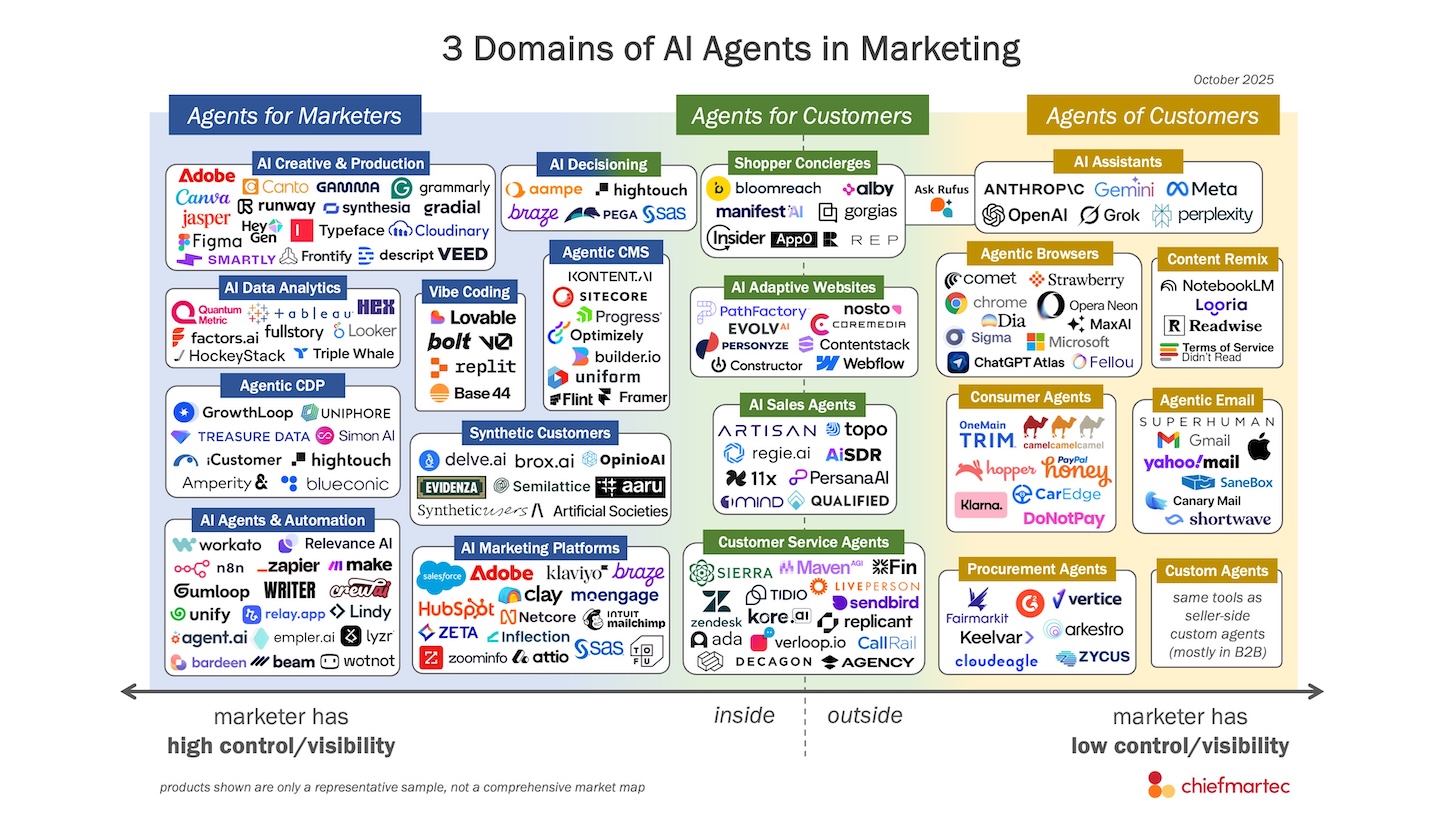
The centerpiece of the 2026 report is its investigation into the "AI Agent" phenomenon. While most industry commentators are content to discuss AI in abstract terms, this report categorizes the technology into three distinct domains. By analyzing data from the AI & Data in Marketing survey, the authors distinguish between agents that have successfully scaled in production and those that remain relegated to the "science fair" phase of development.
The Three Domains of AI
- Workflow Automation Agents: The workhorses of the stack, currently responsible for replacing manual, repetitive tasks in campaign management and lead routing.
- Creative and Content Agents: These are the most visible, yet the most volatile, as they navigate the complexities of brand voice and compliance.
- Strategic Analysis Agents: Emerging tools designed to synthesize vast amounts of customer data to inform high-level decision-making.
The report provides critical stats on the "art of context engineering," detailing how marketers are feeding these agents the right data to ensure output relevance. By connecting these agents to existing data sources—such as Customer Data Platforms (CDPs) and CRM systems—marketers are finally moving beyond "chatbots" to true operational partners.
Official Perspectives: Industry Leaders Weigh In
A unique feature of this year’s release is the inclusion of "no-sales-pitch" interviews with senior product and marketing leaders from key industry players. Rather than focusing on product features, these discussions aim to uncover the reality of AI deployment within their own organizations and those of their customers.
The organizations supporting this research include:
- GrowthLoop
- Hightouch
- Intuit Mailchimp
- MetaRouter
- Progress
- SAS
- Treasure Data
By bringing these leaders together, Brinker and Riemersma are attempting to foster a candid conversation about the friction points of AI integration. Whether it’s data privacy concerns, the challenge of legacy system interoperability, or the cultural shift required for AI-augmented teams, these discussions provide the human context behind the technical charts.
Implications: The Future of the Martech Stack
The overarching question the 2026 report seeks to answer is the fundamental tension between AI and the traditional SaaS platform.
Augmentation vs. Replacement
One of the most profound sections of the report analyzes whether AI agents are intended to be "add-ons" to existing SaaS platforms or if they are on a trajectory to replace them entirely.
- The Case for Augmentation: Many SaaS providers are integrating AI into existing workflows, effectively upgrading the "intelligence" of the current UI. This is the path of least resistance for most enterprises.
- The Case for Replacement: New, agent-native platforms are emerging that treat the software interface as secondary to the goal-oriented output. This represents a potential shift in how we define "software usage."
The "Context Engineering" Skillset
The report highlights a growing realization: the success of an AI agent is almost entirely dependent on the quality of context provided. "Context engineering" is identified as the most critical new skill for marketing operations professionals. This involves mastering the data pipeline that feeds into these agents, ensuring that they possess not just the data, but the strategic intent required to execute brand-compliant tasks.
Preparing for 2026
For the CMO and the MOps lead, the implications are clear: 2026 will not be about "adopting AI" as a singular action, but about architectural integration. The report argues that those who spend the holiday season understanding these patterns will be at a significant competitive advantage when the new budget cycle begins in January.
Conclusion: Why You Should Register
In an industry defined by rapid change, the "Martech for 2026" report offers a rare anchor of sanity. It acknowledges that while the hype cycle is loud, the actual work of marketing technology is happening in the trenches, through integration, data hygiene, and strategic workflow design.
The combination of a comprehensive, 100+ page report and an interactive, hour-long seminar provides both the depth required for long-term planning and the accessibility needed for immediate application. With the insights provided by sponsors and the data-driven methodology of Brinker and Riemersma, this event is positioned to be the defining intellectual moment of the year-end marketing calendar.
Ready to get ahead of the curve?
The opportunity to access this research is available to everyone, provided they take the step to register early. By securing your spot, you gain access to the full report and the ability to watch the keynote live or on-demand throughout the month of December.
Don’t enter 2026 relying on outdated playbooks or blind optimism. Secure your copy of the "Martech for 2026" report and start building a stack that is ready for the realities of the next generation of marketing.
To register for the event and secure your copy of the report, visit the official Martech for 2026 registration page.
