
The Rise of the Machine Counterparty: Navigating the Agentic Advertising Revolution
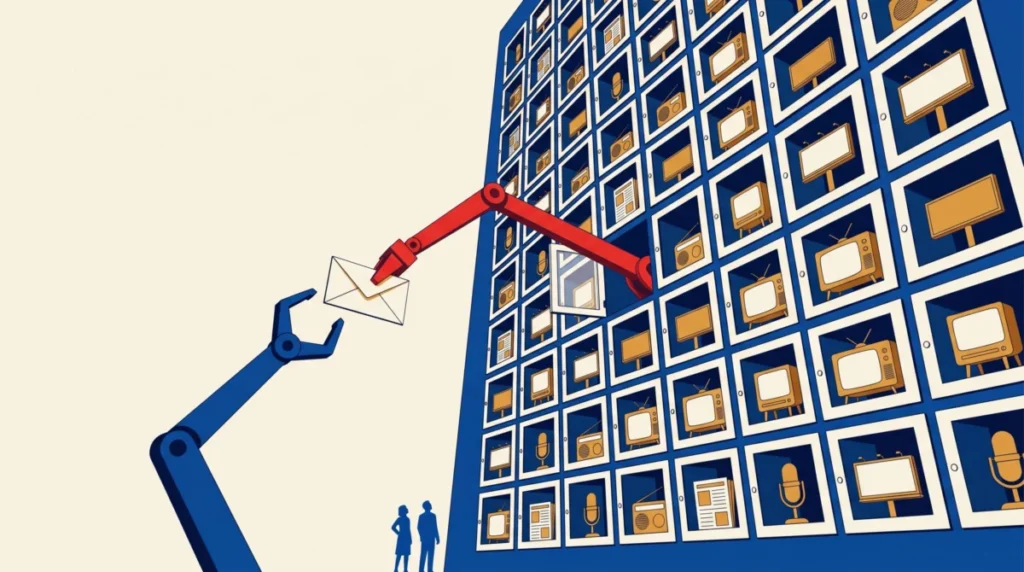
The programmatic advertising landscape, long defined by the frantic millisecond-speed auctions of Real-Time Bidding (RTB), is undergoing a tectonic shift. As Large Language Models (LLMs) permeate the enterprise, a new breed of software—the "Seller Agent"—is emerging to handle the complex, high-friction work of pre-auction negotiations. These autonomous systems, representing publishers, sales houses, and supply-side platforms (SSPs), are effectively acting as the digital concierges of the ad industry, transforming the way media inventory is discovered, priced, and purchased.
Understanding the Seller Agent
A seller agent is an AI-driven software entity that acts as the digital avatar for a publisher or an SSP. Its primary mission is to automate the "human" parts of the advertising business: reading campaign briefs, interpreting media kits, engaging in email-thread negotiations, and issuing insertion orders.
While traditional programmatic auctions are restricted to the millisecond-latency requirements of RTB, seller agents operate in the "pre-auction" phase. This is the territory of Requests for Proposal (RFPs) and long-form deal negotiations—tasks that previously occupied entire departments of human sales planners. By using LLMs to parse unstructured briefs and map them against structured inventory catalogs, these agents allow publishers to engage with buyer agents at scale, ensuring that machines can negotiate with machines in a common, structured language.
Whether operating under the Ad Context Protocol (AdCP) or the IAB Tech Lab’s Agentic Advertising Management Protocols (AAMP), the fundamental goal remains the same: to bridge the gap between a buyer’s intent and a seller’s availability without the overhead of human intervention for every minor adjustment.
A Chronology of the Agentic Shift
The evolution of agentic advertising has been rapid, moving from theoretical frameworks to live, if experimental, deployments in less than two years.
- October 2025: The Ad Context Protocol (AdCP) officially launches, backed by heavyweights like Scope3, Yahoo, and PubMatic. It introduces the
adagents.jsonfile—a pivotal security measure requiring publishers to publicly register which agents are authorized to act on their behalf. - December 2025 – January 2026: Initial commercial testing begins. Magnite initiates agentic tests, and PubMatic launches "AgenticOS." By January 29, 2026, the AdCP reference code is transitioned to Prebid.org, becoming the open-source "Prebid Sales Agent."
- February – March 2026: The IAB Tech Lab formalizes its involvement, rebranding its initiative as AAMP (Agentic Advertising Management Protocols). The industry begins to see a clear hierarchy of agents—inventory managers, channel specialists, and functional pricing agents. The IAB’s Agent Registry grows to ten major participants by mid-March.
- September 2026: The industry enters a phase of standardization and critique. IAB Tech Lab releases AAMP 3.0, introducing the "OpenProposal" specification—a massive 71-field object designed to standardize how deals are structured. Simultaneously, major players like ITN and Samsung Ads begin integrating these agents into broader orchestration layers.
- Late 2026: The discourse shifts from "is this possible?" to "how do we scale this?" as experts like Jochen Schlosser of Adform warn that the industry is currently fractured between two competing standards, creating unnecessary complexity for publishers.
Supporting Data: Efficiency vs. Reality
The promise of the seller agent is twofold: infinite reach for the buyer and optimized representation for the seller. However, the data reveals a nuanced reality.
The Efficiency Gains
Vendors point to dramatic reductions in setup time. Magnite reported that its first agentic campaign in the EMEA region, conducted with Amnet France, reduced setup time by approximately 70%. Similarly, VIOOH successfully automated over 100 curated digital out-of-home (DOOH) deal packages in the first half of 2026. For a buyer, this means the ability to query dozens of publishers simultaneously—a task that would be physically impossible for a human team of the same size.
The Economic Gap
Despite the engineering excitement, the financial impact remains modest. Estimates for 2027 agentic ad spend hover between $600 million and $700 million—a drop in the bucket compared to the broader, multi-billion-dollar programmatic market. Furthermore, data from DataBeat suggests a performance disparity: agentic buyers have been clearing at a $6.13 CPM, compared to $6.95 for conventional human-negotiated demand. This 13.4% gap indicates that, at least for now, publishers are often taking a revenue hit in exchange for the automation of these deals.
Complexity of Integration
The technical cost of entry is significant. Jochen Schlosser estimates that a custom SSP integration could take up to 350 days of development, whereas adhering to a shared standard like AAMP or AdCP reduces that burden to approximately 50 days. The incentive to standardize is high, but the existence of two competing protocols—AdCP and AAMP—threatens to duplicate the workload for publishers who must maintain descriptions of their inventory in multiple formats.
Official Responses and Industry Governance
The governing bodies of this technology, specifically the IAB Tech Lab and the AdCP consortium, are currently embroiled in a high-stakes effort to prevent "agentic fragmentation."
The IAB Tech Lab’s AAMP 3.0, released in late 2026, is a direct attempt to provide a definitive framework for the industry. By mandating a 71-field proposal structure, the IAB aims to eliminate the "creative accounting" that occurs when AI agents, lacking sufficient market data, attempt to fabricate pricing. The inclusion of a "pricing provenance" field in AAMP 2.3 was a proactive move to ensure transparency and accountability.
However, the industry is not unanimous. Skeptics, including independent fraud researchers like Augustine Fou, have pointed out that "more automation often means less transparency." The reliance on LLM vendors (like Anthropic’s Claude for the IAB reference agent or Google’s Gemini for the Prebid build) introduces a new dependency on Big Tech AI providers, raising questions about whether these agents are truly neutral or if they possess hidden biases toward the ecosystems that created them.
Implications for the Future of Media Buying
The rise of the seller agent forces a fundamental re-evaluation of the sales role in media.
The Death of the "Easy" Sale
The consensus among industry leaders is that seller agents can only handle "rate-card" transactions. If a deal requires complex, bespoke creative integrations or non-standard partnership structures, human intervention will remain the gold standard. As Schlosser aptly put it, these agents are excellent at doing things fast, but they are not yet capable of the nuanced relationship management that defines premium advertising.
The Regulatory and Security Frontier
The adagents.json file is emerging as the "ads.txt" of the agentic era. As this list grows—with some files reaching 2.6 megabytes for large networks like Raptive—the industry is learning that managing who has the "right" to speak for a publisher is as critical as the ad inventory itself. If an unauthorized agent can negotiate a deal on behalf of a publisher, the risk of brand damage and revenue leakage is immense.
The Three Potential Endings
As we look toward 2027 and beyond, the industry is eyeing three potential trajectories for these competing protocols:
- Consolidation: The IAB Tech Lab and AdCP factions merge their standards into a single, unified protocol, ending the duplication of effort.
- Survival of the Fittest: One protocol gains overwhelming market adoption, rendering the other obsolete.
- The Fragmented Status Quo: Both protocols continue to exist, forcing publishers to maintain dual-description pipelines, thereby slowing the overall adoption of agentic technology.
Conclusion
The seller agent is not merely a piece of software; it is a fundamental shift in the architecture of commerce. By automating the negotiation layer, the industry is moving toward a future where media buying is as fluid as a stock market transaction, yet as personal as a curated proposal. Whether this technology will live up to the multi-billion-dollar hype or settle into a niche utility for high-volume, low-margin inventory depends entirely on the industry’s ability to unify its standards and solve the transparency challenges inherent in autonomous, LLM-driven negotiation. For now, the machines are talking—but the industry is still deciding what they are allowed to say.
