
The Rise of Conscious Commerce: A Comprehensive Guide to Curating Genuinely Sustainable Print-on-Demand Catalogs
Introduction: The Green Shift in Modern Retail
The modern consumer is voting with their wallet, and the verdict is overwhelmingly in favor of environmental stewardship. According to PwC’s landmark Voice of the Consumer survey, shoppers are increasingly prioritizing ecological responsibility, demonstrating a willingness to pay nearly 10% more for goods verified as eco-friendly. For creators, entrepreneurs, and ecommerce brands, this shift represents a golden opportunity: building a product catalog centered around genuinely sustainable options.
However, capitalizing on this trend is not without its pitfalls. Navigating the print-on-demand (POD) landscape reveals a muddy reality. Countless suppliers market their items as "eco-friendly" or "green," yet frequently fail to provide the granular supply-chain details required to substantiate those claims. For merchants committed to maintaining ethical integrity and keeping the sustainability promises they make to their audiences, rigorous vetting is no longer optional—it is a fundamental business requirement.
What Makes a Product Genuinely Eco-Friendly?
The term "sustainable" is frequently weaponized by fast-fashion and mass-manufacturing industries as a marketing buzzword. To cut through the corporate greenwashing, merchants must understand the objective metrics that separate genuine ecological mindfulness from empty rhetoric.
Decoding Industry Certifications
When evaluating product catalogs, look past the marketing copy and demand internationally recognized certifications:
- GOTS (Global Organic Textile Standard): The gold standard for organic textiles, covering not just the harvesting of raw materials, but also environmentally and socially responsible manufacturing throughout the entire supply chain.
- OEKO-TEX Standard 100: Rigorously tests component materials for the presence of harmful substances, ensuring safety for both the consumer and the environment.
- GRS (Global Recycled Standard): Tracks and verifies the presence of recycled raw materials from the source to the final product, alongside strict social and environmental processing criteria.
- OCS (Organic Content Standard): Verifies the presence and amount of organically grown material in a final product.
- FSC (Forest Stewardship Council): Guarantees that paper and wood-based products originate from responsibly managed, socially beneficial, and environmentally conscious forests.
Beyond certifications, merchants must evaluate structural durability. True sustainability inherently means longevity; an eco-friendly garment that falls apart at the seams after three washes defeats its own purpose, forcing a premature replacement cycle that strains natural resources.
The 20 Best Sustainable Products Worth Selling
Curating an exceptional inventory requires balancing universal appeal with niche relevance. Below is a carefully vetted, categorized guide to twenty of the finest sustainable print-on-demand products available on the market today, complete with pricing insights and supplier breakdowns.
Sustainable T-Shirts
T-shirts remain the undisputed bedrock of any apparel catalog. They are universally desired, easily sourced, affordable to manufacture, and yield robust profit margins.
1. Stanley/Stella Organic Cotton T-Shirt
- Supplier: Fourthwall
- Pricing: Starting at $14.50
- Overview: Fabricated from 100% organic ring-spun cotton with broad unisex sizing, this is a premier foundational tee. While the wholesale cost is higher, a retail price of $30 yields a healthy $15.50 profit margin per unit. With zero minimum order quantities (MOQs), risk is minimized. Fourthwall offers extensive colorways and both standard DTG (Direct-to-Garment) printing and high-end embroidery.
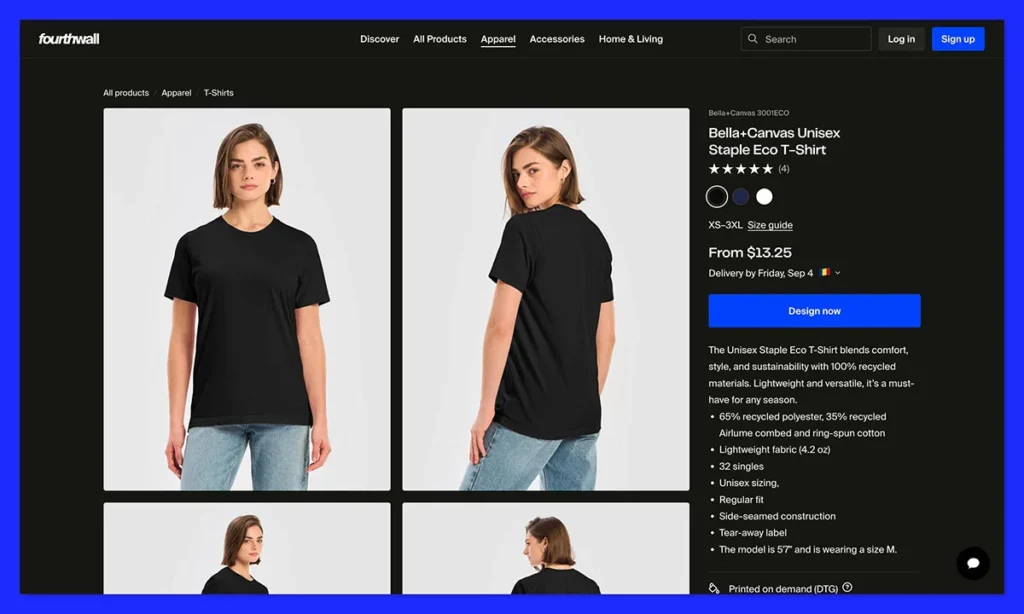
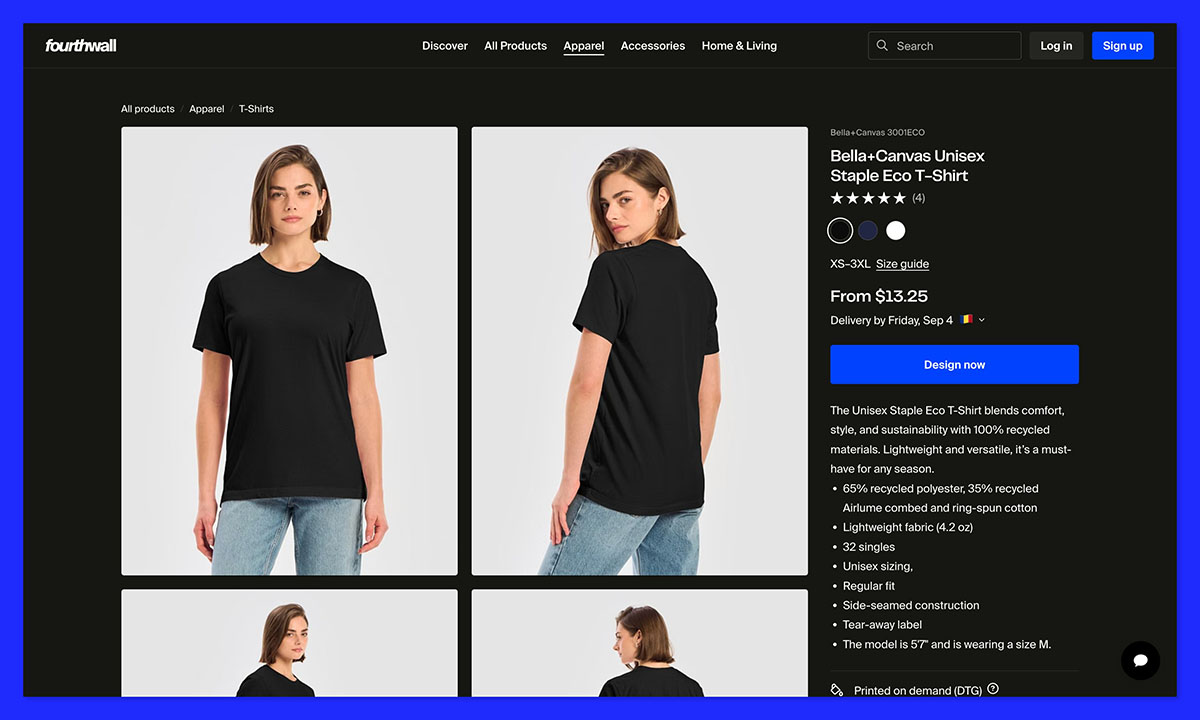
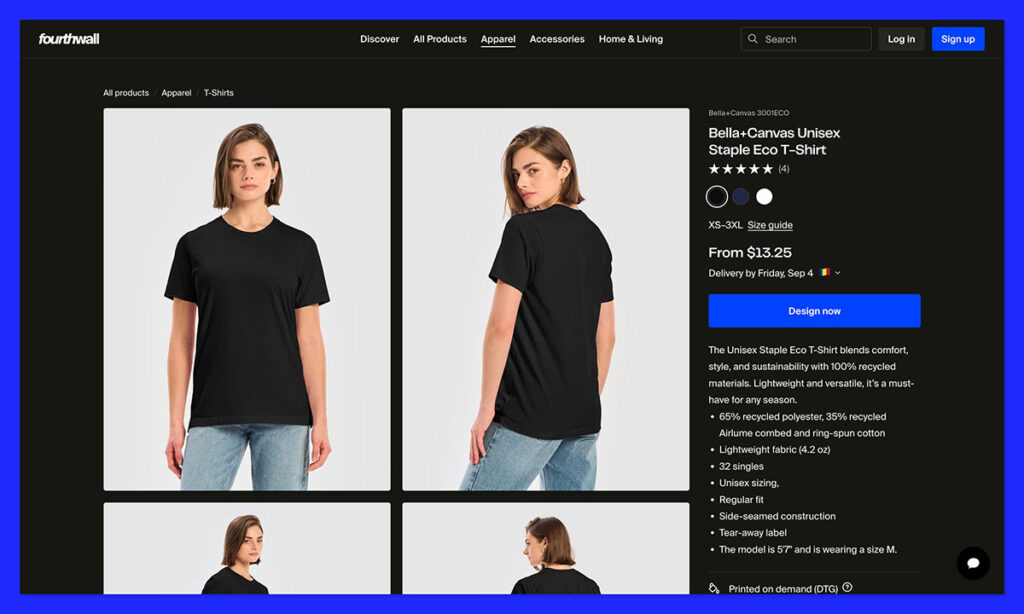
2. Bella+Canvas Unisex Staple Eco T-Shirt
- Supplier: Fourthwall
- Pricing: Starting at $13.25
- Overview: A more budget-conscious alternative, this shirt features a tear-away label for enhanced comfort. The fabric blend consists of 65% recycled polyester and 35% recycled Airlume cotton, striking a balance between softness and structural durability.
3. Organic Unisex Crewneck T-Shirt
- Supplier: Gelato
- Pricing: Localized pricing dependent on region
- Overview: Gelato offers an expansive organic apparel suite, featuring a classic crew-neck made from 100% certified organic ring-spun cotton. Gelato’s decentralized fulfillment network produces roughly 90% of orders locally, drastically cutting down carbon footprints associated with long-haul shipping.
4. Circular Organic T-Shirt
- Supplier: Teemill
- Pricing: Custom quote via Teemill platform
- Overview: Teemill pioneered a truly circular fashion model. Shirts are crafted from 100% organic cotton and printed with water-based vegan inks. Uniquely, every garment features a QR code on the label allowing customers to return worn-out products for raw-material recycling.
Hoodies and Sweatshirts
As customer loyalty grows, expanding into heavier apparel is a natural progression. Hoodies and sweatshirts command higher price points, provided they deliver superior tactile softness and structural integrity.
5. Stanley/Stella Essential Eco Hoodie
- Supplier: Fourthwall
- Pricing: Starting at $33.20
- Overview: An affordable entry point into premium eco-hoodies. The fabric blends 85% organic cotton with 15% recycled polyester. Fourthwall permits multi-placement printing (front, back, sleeves, wrists, and interior labels), allowing brands to justify premium price points.
6. SOL’s Eco Raglan Hoodie
- Supplier: Fourthwall
- Pricing: Starting at $35.70
- Overview: Highly customizable via print and embroidery, though material blends vary by color. For instance, the Charcoal variant utilizes a 60% cotton / 40% recycled polyester mix, whereas other shades feature an outer layer of 100% organic cotton backed by an organic cotton-recycled polyester interior fleece.
7. Gelato Organic Hoodies
- Supplier: Gelato
- Pricing: Localized pricing
- Overview: Available in pullover and zip-up configurations, Gelato’s organic hoodies utilize water-based inks and local fulfillment centers to minimize environmental strain.
8. Organic Stanley/Stella Oversized Sweatshirt
- Supplier: Fourthwall
- Pricing: Starting at $40.02
- Overview: Tailored specifically for the thriving streetwear segment, this oversized silhouette features a brushed interior, drop-shoulder volume, and heavy-duty ribbing. It holds GOTS, OEKO-TEX, and PETA-Approved vegan certifications.
9. Recycled Polyester Sweatshirt
- Supplier: Gelato
- Pricing: Localized pricing
- Overview: A pioneer in Gelato’s eco-conscious collection, this sweatshirt utilizes yarn spun entirely from post-consumer PET plastic bottles, offering robust durability without sacrificing comfort.
Totes, Hats, and Practical Accessories
Accessories bypass sizing hurdles completely, making them ideal low-cost add-ons or gift items.
10. Econscious Organic Cotton Tote
- Supplier: Fourthwall
- Pricing: Starting at $18.31
- Overview: Built to hold six gallons and up to 30 pounds, this substantial 20×14-inch bag is ideal for heavy daily use, grocery runs, or institutional events.
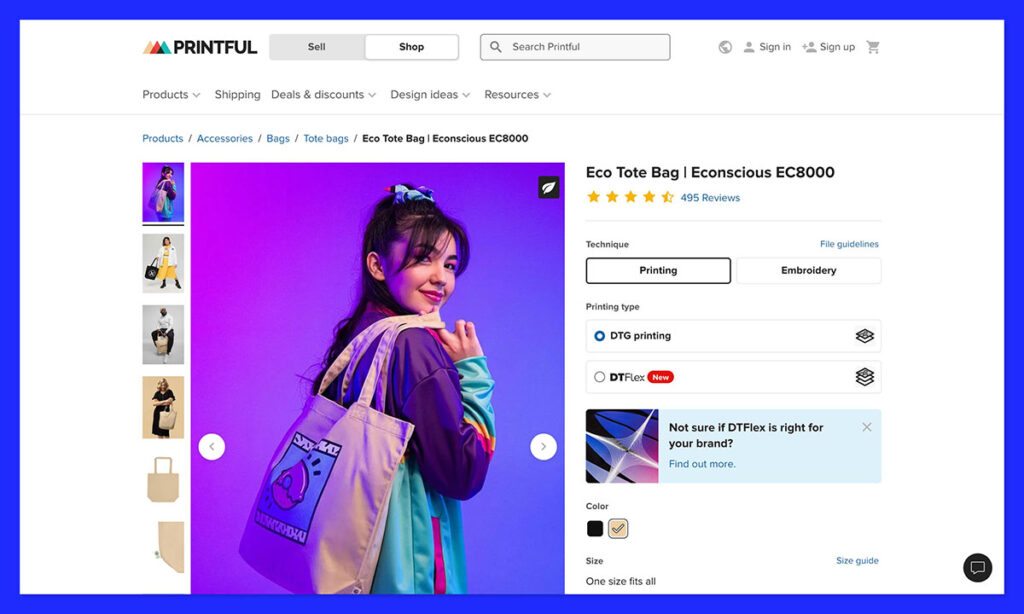
11. Printful Eco Tote Bag
- Supplier: Printful
- Pricing: Localized pricing
- Overview: A slightly smaller footprint than the Econscious bag, utilizing 8-ounce certified organic cotton twill while maintaining a 30-pound weight capacity. It supports DTG, DTFlex, and embroidery.
12. Econscious Organic Dad Hat
- Supplier: Fourthwall
- Pricing: Starting at $15.85
- Overview: Crafted from 8-ounce organic cotton twill, this timeless hat offers wide retail pricing headroom, comfortably retailing at $30.
13. Atlantis B50 Organic Ribbed Beanie
- Supplier: Fourthwall
- Pricing: Starting at $18.59
- Overview: An essential cold-weather item constructed from a 100% organic knit, highly rated for warmth, durability, and embroidery precision.
14. SOL’S Organic Cotton Apron
- Supplier: Fourthwall
- Pricing: Starting at $24.75
- Overview: Perfect for culinary, baking, or artisan craft brands. Features adjustable straps and a split front pocket. (Note: Currently restricted to EU fulfillment).
Kids, Activewear, and Lifestyle Products
For brands looking to break away from the standard t-shirt-and-mug catalog, specialized lifestyle goods offer unique differentiation.
15. Stanley/Stella Kids Organic T-Shirt
- Supplier: Fourthwall
- Pricing: Starting at $15.50
- Overview: Sized for ages 3–14, utilizing 100% organic ring-spun combed cotton. Ideal for family-focused creators and youth organizations.
16. Babybugz Organic Short-Sleeve Bodysuit
- Supplier: Printify
- Pricing: Starting at $15.64
- Overview: Exceptional gifting potential for newborns. Solid colors feature 100% GOTS-certified organic cotton.
17. Sublicolor All-Over Print Sports Jersey
- Supplier: Fourthwall
- Pricing: Starting at $30.55
- Overview: Engineered for esports teams and fitness communities. Moisture-wicking lightweight fabric with full-surface print capabilities across sizes up to 6XL.
18. Sublicolor Recycled String Bikini
- Supplier: Fourthwall
- Pricing: Starting at $27.49
- Overview: Constructed from 81%–88% recycled polyester with UPF 50+ sun protection, featuring OEKO-TEX and GRS certifications.
19. Biodegradable Phone Case
- Supplier: Printful
- Pricing: Starting at £13.25
- Overview: Designed to naturally decompose within a year under specific warm, moist conditions, without compromising day-to-day durability.
20. Scented Soy Candle with White Lid
- Supplier: Printify
- Pricing: Starting at $9.80
- Overview: Features 7.5 ounces of hand-poured soy wax from US-grown soybeans with a cotton wick and a 50–60 hour burn time. Jars are fully reusable.
Sustainable Products: Strategic Implementation
Launching a sustainable inventory requires discipline. Entrepreneurs should resist the urge to deploy all twenty products simultaneously. Instead, begin with a curated capsule collection—perhaps a signature organic tee, a hoodie, a tote bag, and a niche lifestyle item such as a soy candle.
Crucially, merchants must order physical samples to personally test wash durability, print accuracy, and sizing before listing items publicly. By leveraging the zero-minimum-order capabilities of modern POD suppliers, brands can safely test market appetite and scale their eco-friendly catalogs based on real consumer demand.
