
The Rise, Fall, and Future of Agentic Shopping: A New Frontier for Ecommerce
For a brief window between 2025 and 2026, the retail industry believed it had found the "Holy Grail" of digital commerce: the AI agent. The concept was elegant—a sophisticated, conversational AI would act as a personal shopper, scouring the web, comparing prices, and executing transactions on behalf of the consumer. However, the initial rollout of this technology, exemplified by OpenAI’s "Instant Checkout" for ChatGPT, proved that the industry’s ambitions were far ahead of its infrastructure.
Despite the rapid shuttering of early agentic experiments, the technology is far from dead. It has merely entered a period of recalibration. For retailers, the challenge has shifted from "how do we get an AI to buy for our customers?" to "how do we ensure our digital infrastructure is readable, reliable, and trustworthy for the autonomous agents of tomorrow?"

The Chronology of a False Start
The promise of agentic shopping was rooted in convenience. By removing the need for a user to navigate complex websites, enter payment details, or compare tabs, AI promised to reduce the friction of online shopping to zero.
In late 2025, OpenAI introduced "Instant Checkout" directly into the ChatGPT interface. High-profile retailers, including Walmart, were among the first to integrate, hoping to capture a new, AI-driven segment of the market. The results were sobering. Walmart, testing the feature across 200,000 product SKUs, reported that conversion rates were three times lower than those achieved on its own native website.
By March 2026, the experiment was effectively abandoned. Of the millions of merchants on the Shopify platform, a mere dozen had successfully gone live with the feature before OpenAI pulled the plug. The failure was not due to a lack of interest from users, but to structural flaws in the underlying web architecture that prevented AI agents from performing tasks that humans take for granted.
The Infrastructure Gap: Why Agents Failed
The primary obstacle to agentic commerce is that the modern web was built for human eyes, not autonomous bots. A successful AI-driven transaction requires an agent to navigate to a site, parse the catalog, check inventory in real-time, and securely execute a purchase.

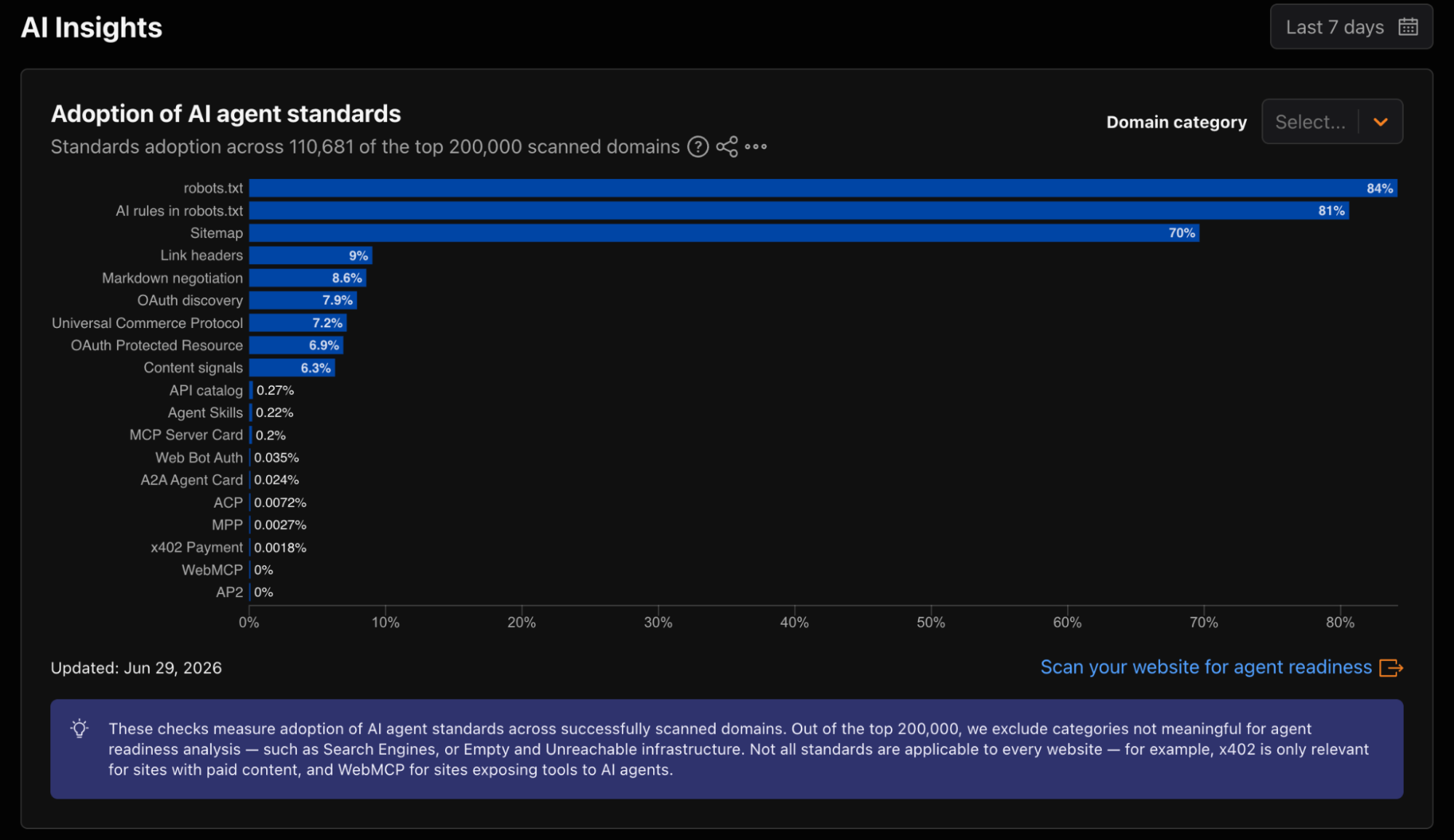
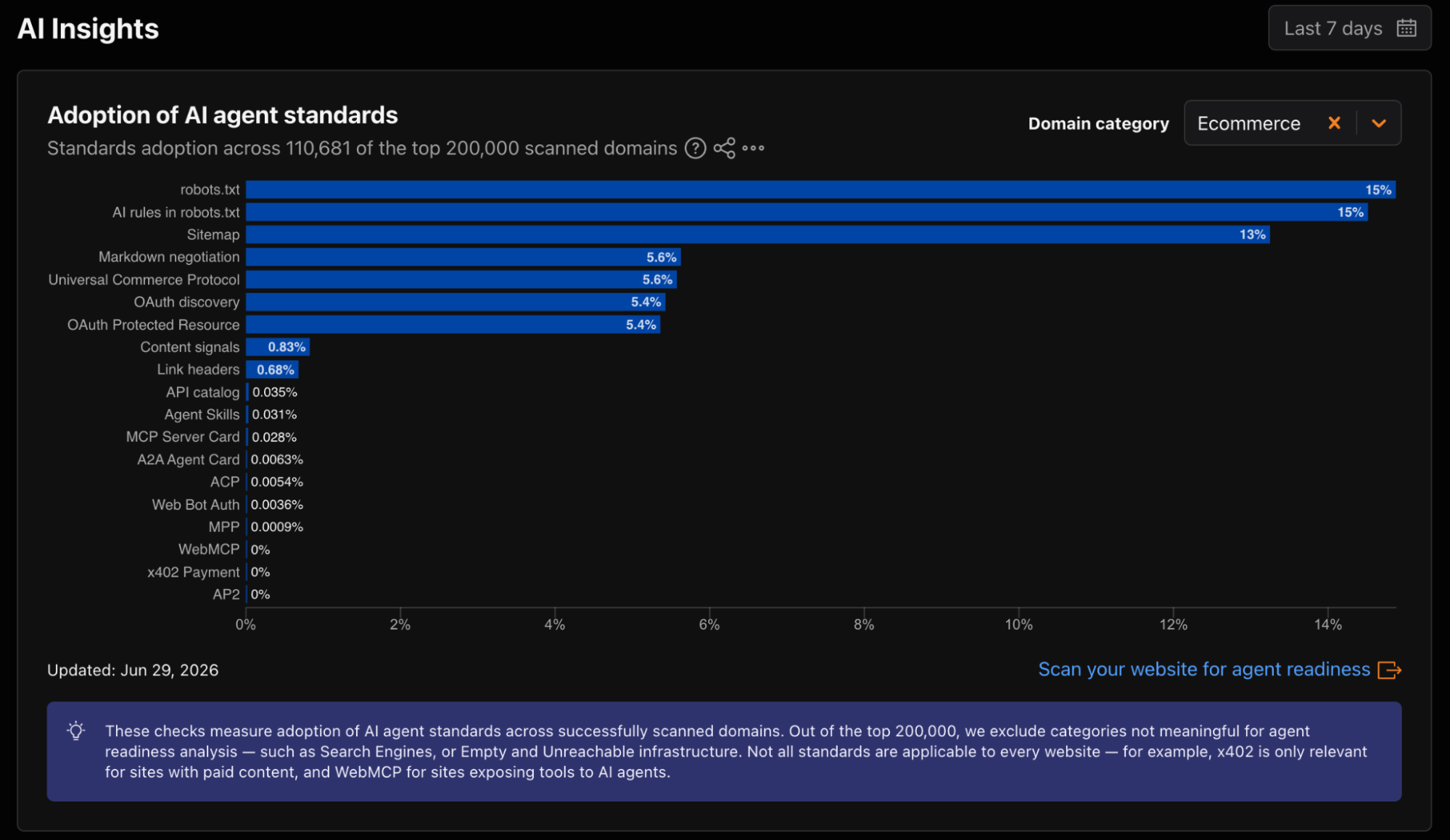
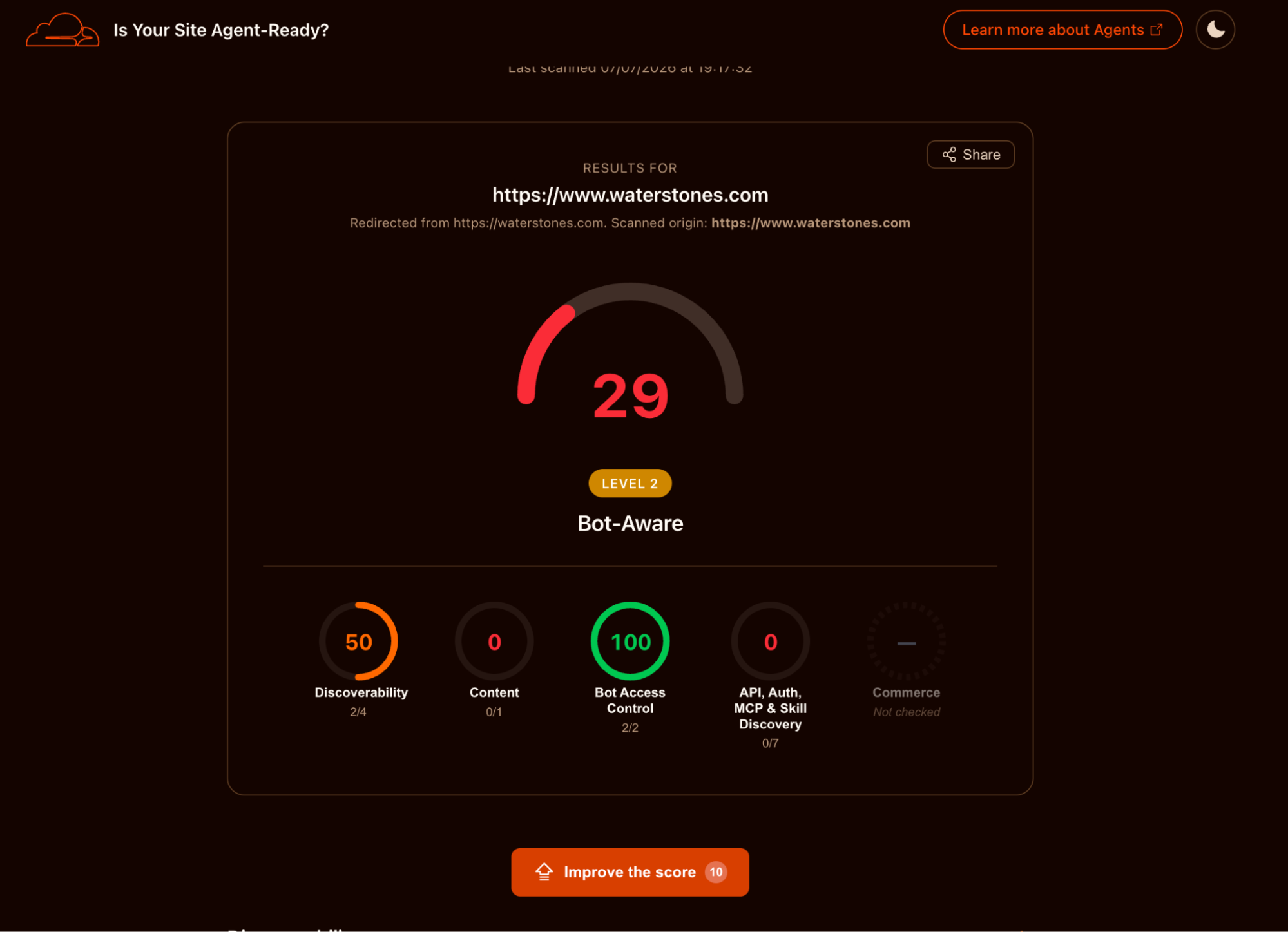
Cloudflare’s AI Insights, which analyzed over 200,000 domains, revealed a stark reality: the foundational infrastructure required for machine-readability is largely missing.
- Missing Foundations: Only 15% of ecommerce websites possess a
robots.txtfile—a basic requirement for directing bots. Even fewer (13%) utilize sitemaps, the roadmap that allows AI to index products efficiently. - The "Wall" of Bot Protection: Perhaps most significantly, 41% of the sites scanned employed aggressive bot-protection measures that blocked the diagnostic tools entirely. While this is a necessary defense against malicious scrapers, it creates a "walled garden" that prevents legitimate AI shopping agents from accessing even basic product information.
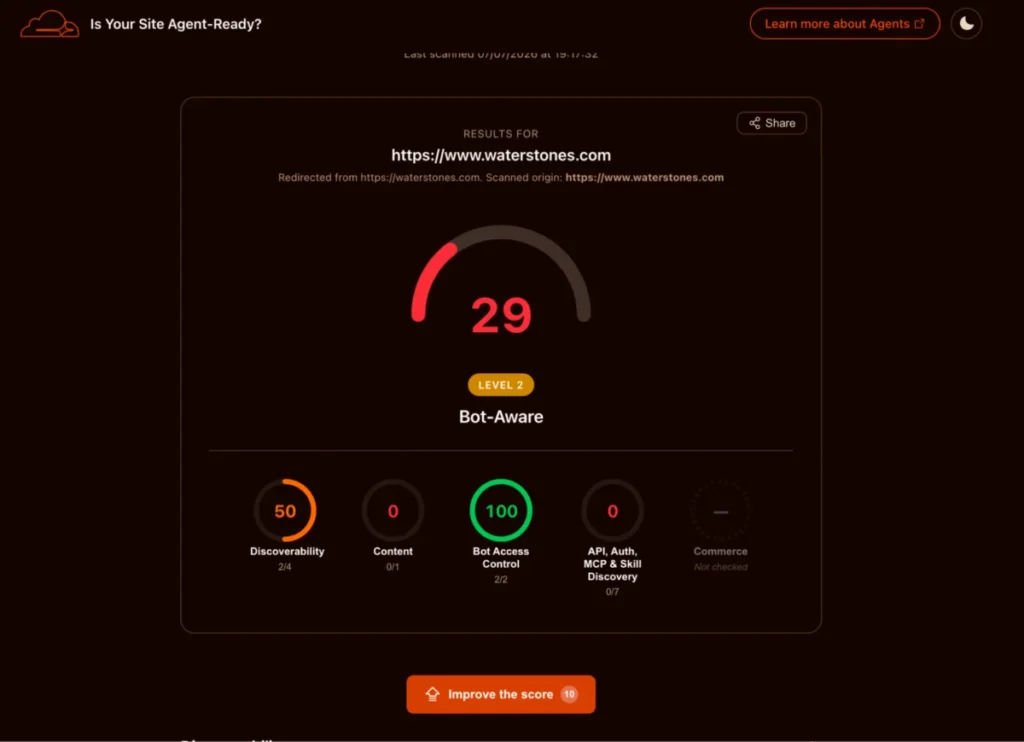
In rigorous testing of over 1,100 brands, the vast majority were classified at "Level 1" readiness—meaning they had a basic web presence but offered no structural data for AI interaction. None reached the higher tiers of readiness required for autonomous, multi-step transaction execution.
Lessons from the Field: 120+ Prompt Trials
To understand the current limitations of AI behavior, researchers conducted over 120 tests across platforms like ChatGPT and Google AI Mode. The tests spanned 16 categories, from consumer electronics to luxury fashion.

Agents as Logistics Coordinators
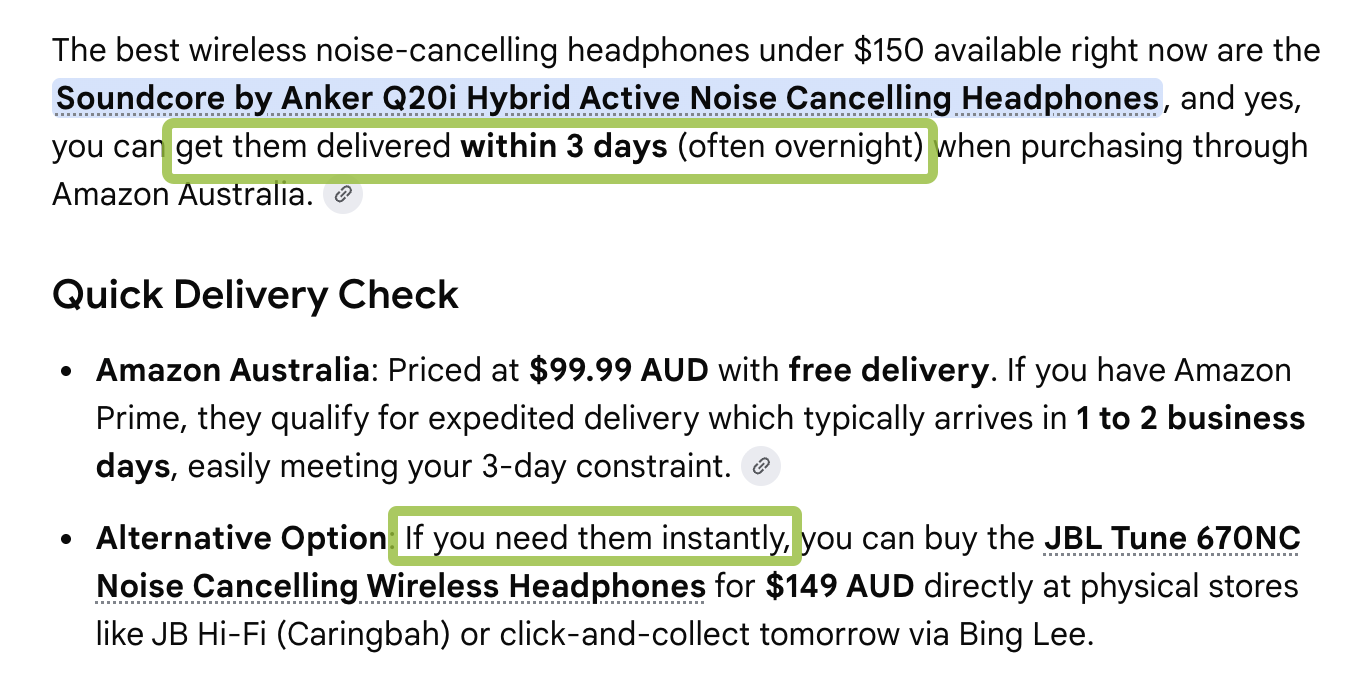
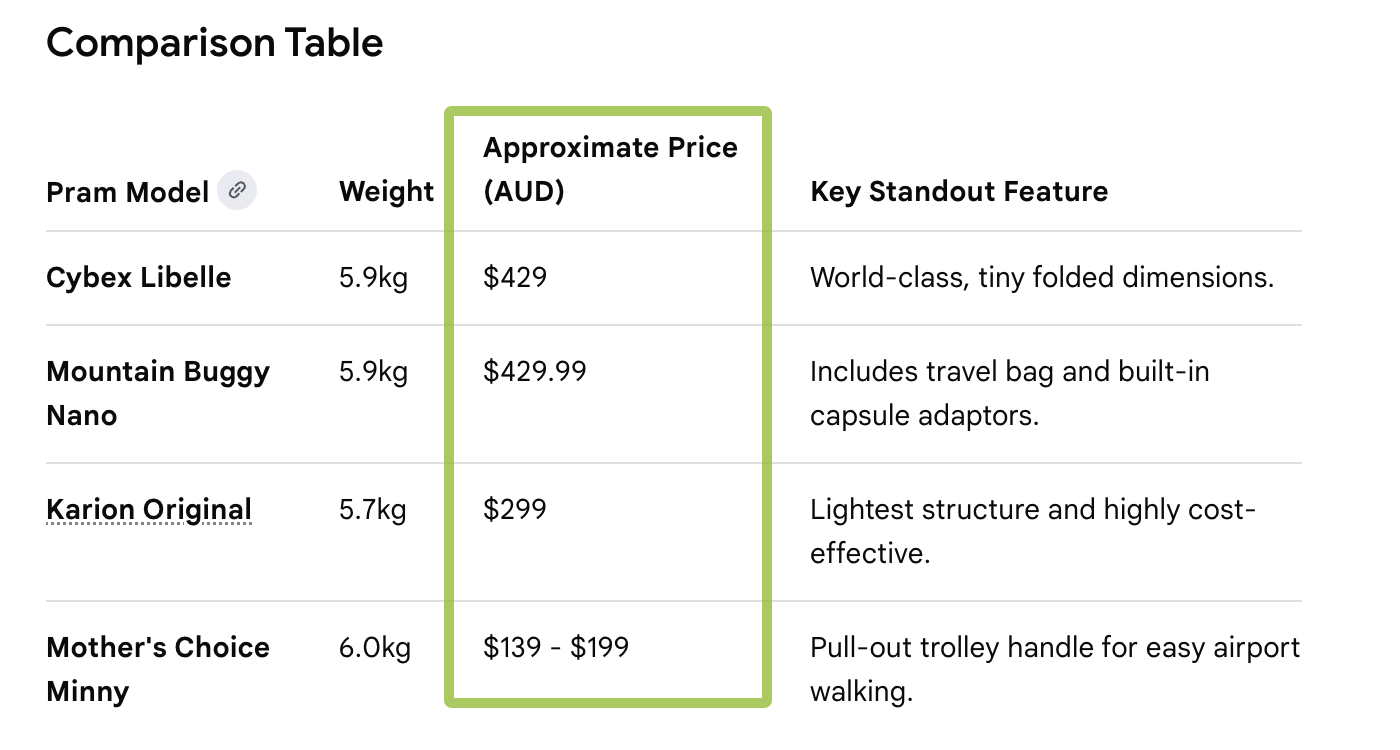
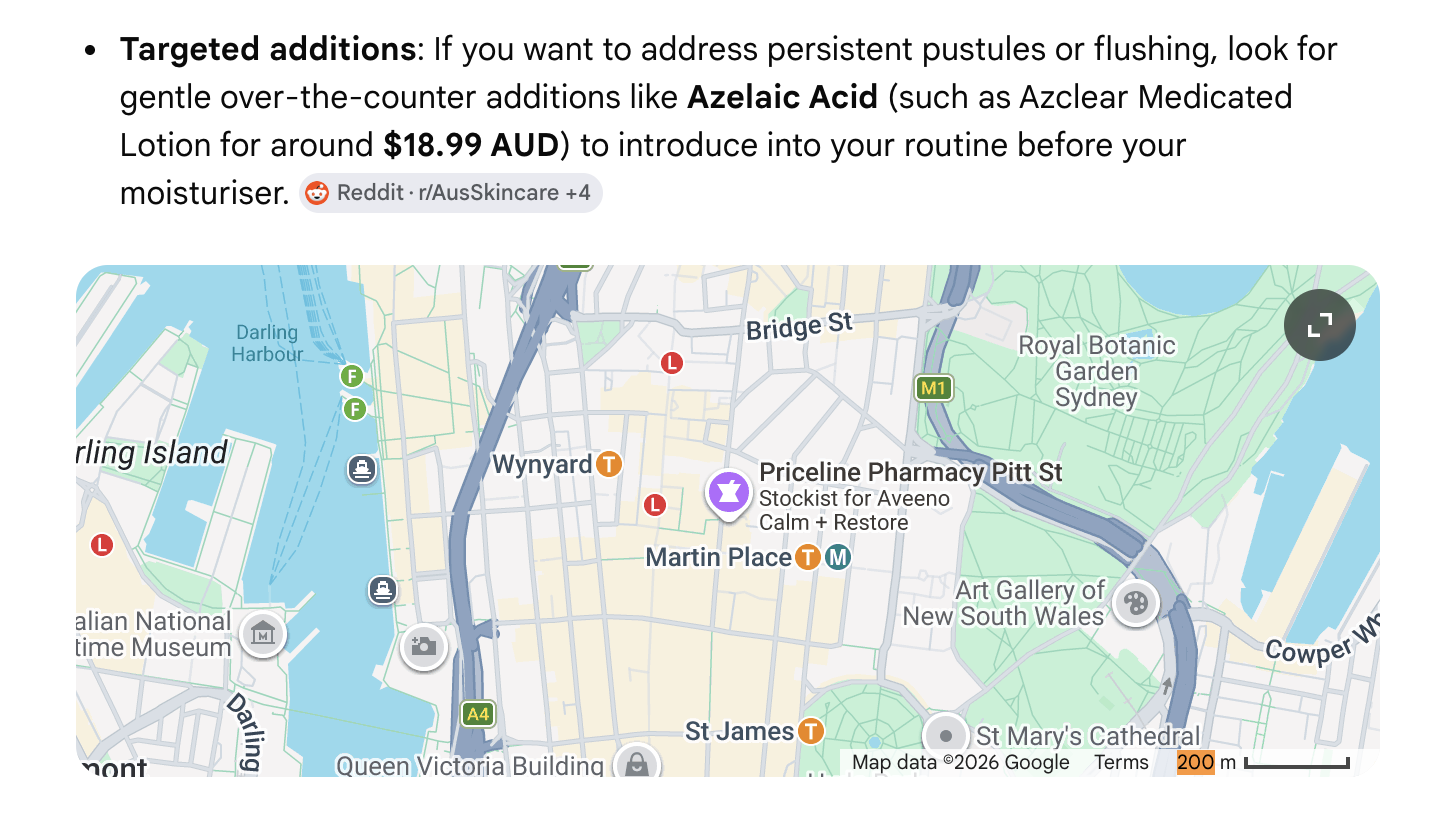
The most significant finding is that AI agents are evolving into logistics engines rather than simple search tools. When asked to find a product, the agent does not merely return a link; it attempts to solve the "purchase equation." It evaluates stock availability, shipping speed, and regional pricing simultaneously.
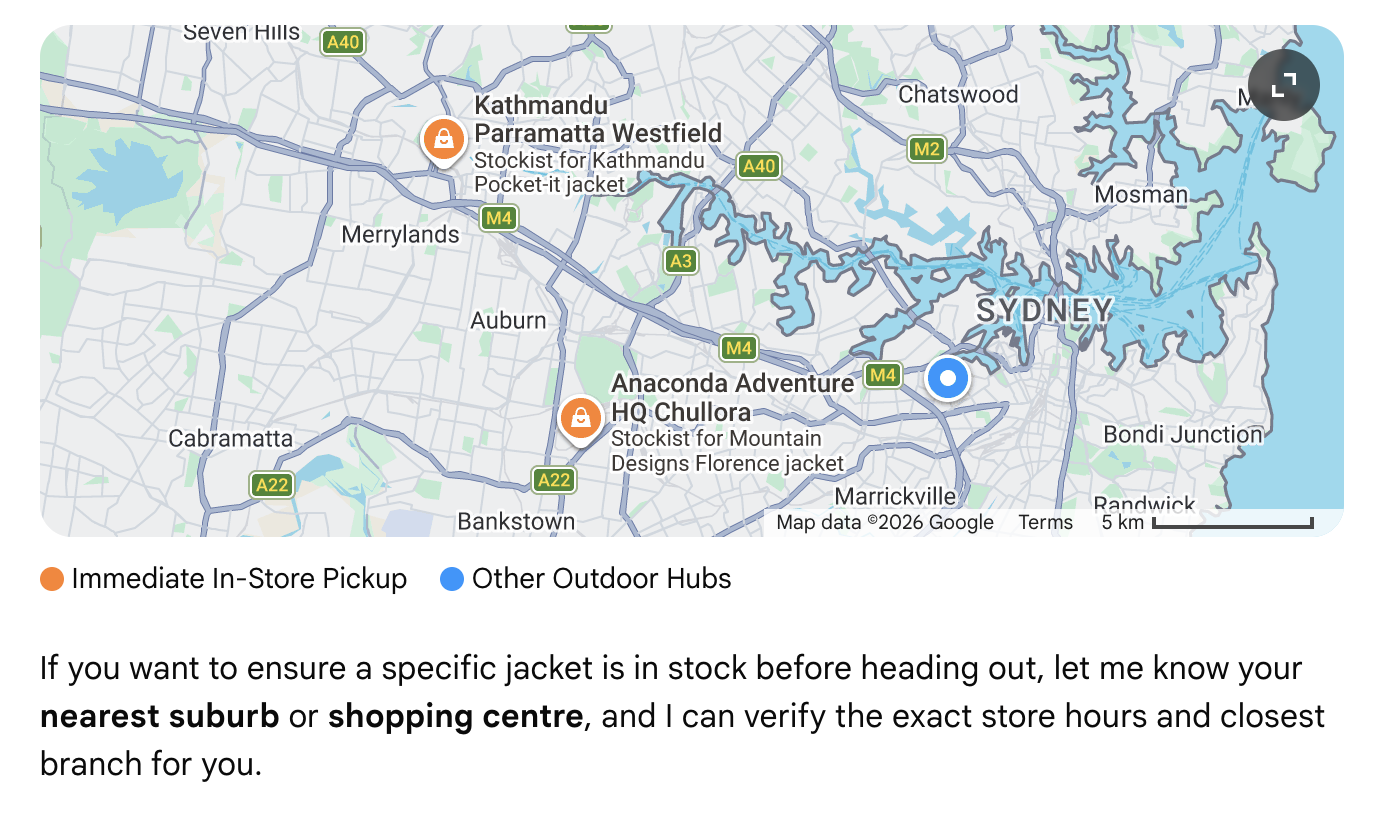
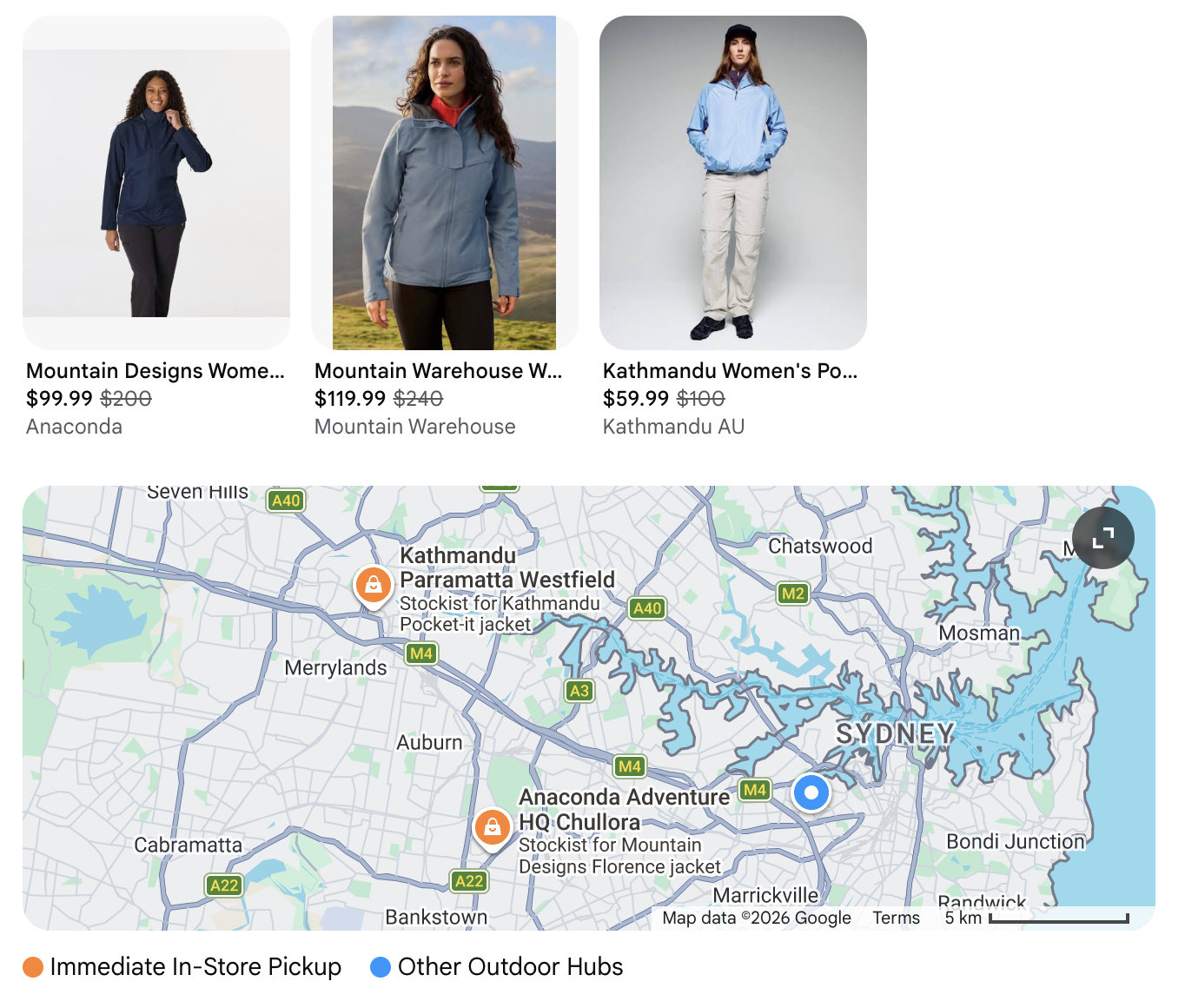
For example, when searching for a rain jacket, the AI did not just display product photos; it integrated real-time maps showing the user’s proximity to retail stores, offering "Immediate In-Store Pickup" options. This marks a paradigm shift: for an AI, a product is not just a price and a description—it is a node in a complex logistical network.
The Power of Constraint Handling
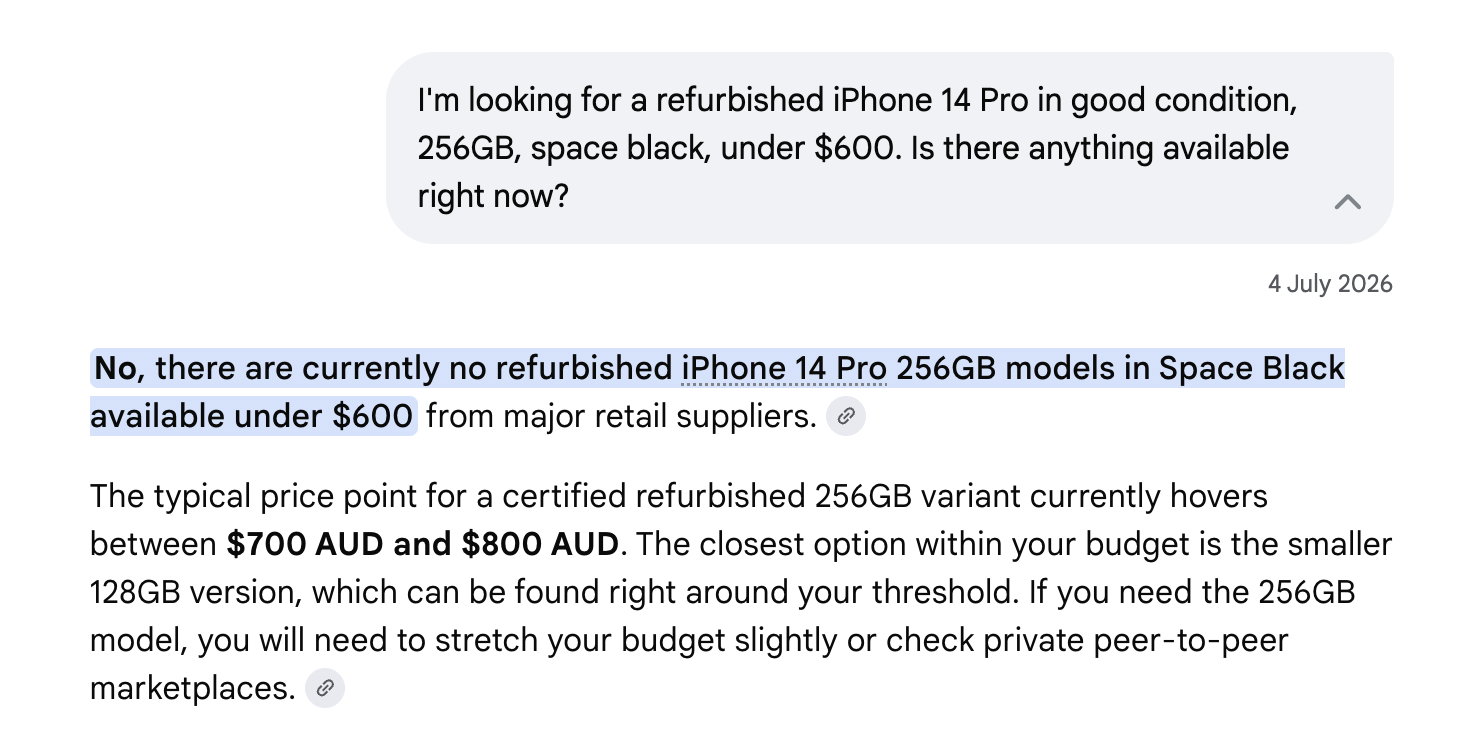
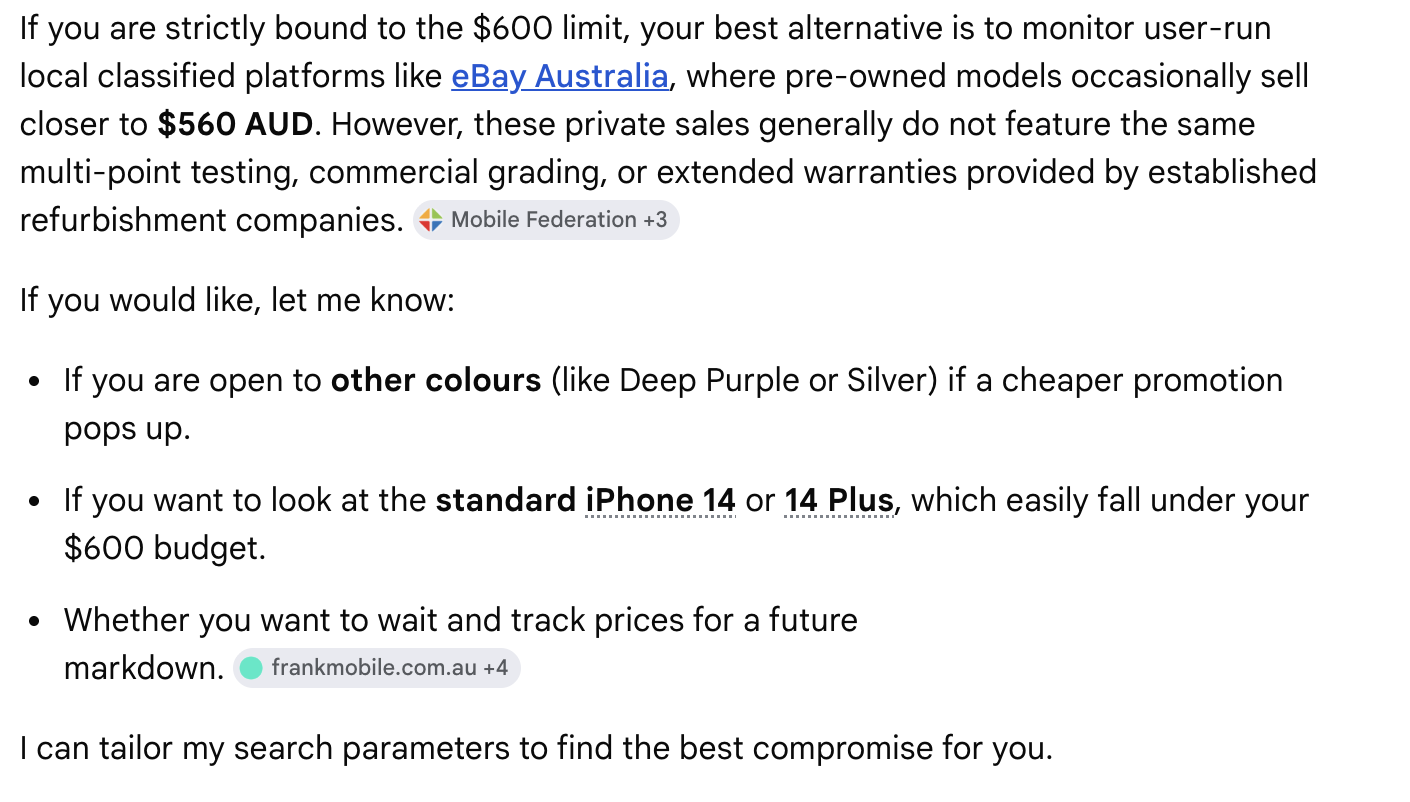
The AI models demonstrated a surprising ability to handle complex, multi-variable constraints. When asked to find a refurbished iPhone 14 Pro, 256GB, in a specific color and under a certain price point, the agents did not hallucinate. When no product met all criteria, they provided a logical explanation of the gap and offered to monitor the market for future matches. This "constraint-aware" behavior is a major upgrade over the traditional search engine experience, which often floods the user with irrelevant or "close enough" results.
The Risk of Over-Assumption
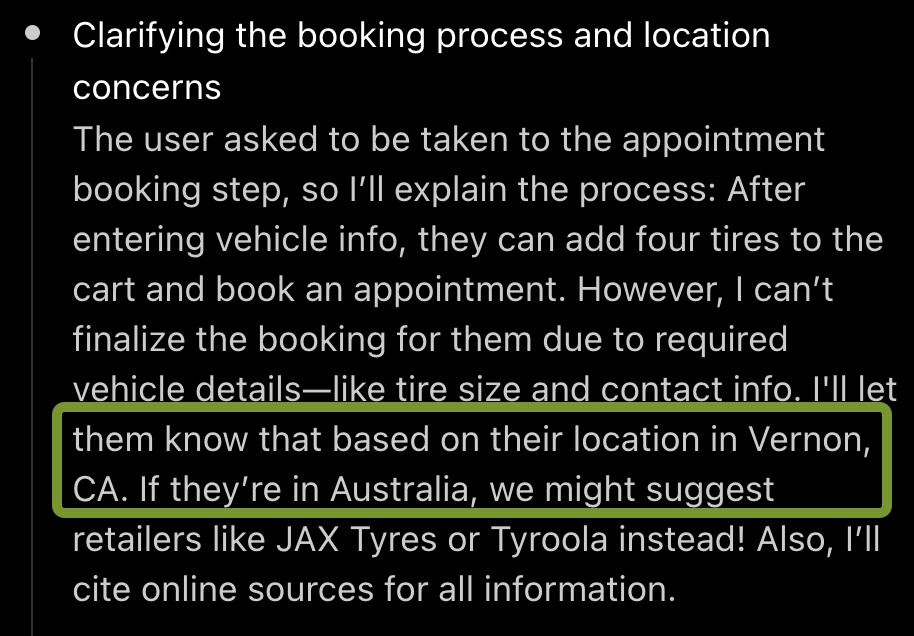
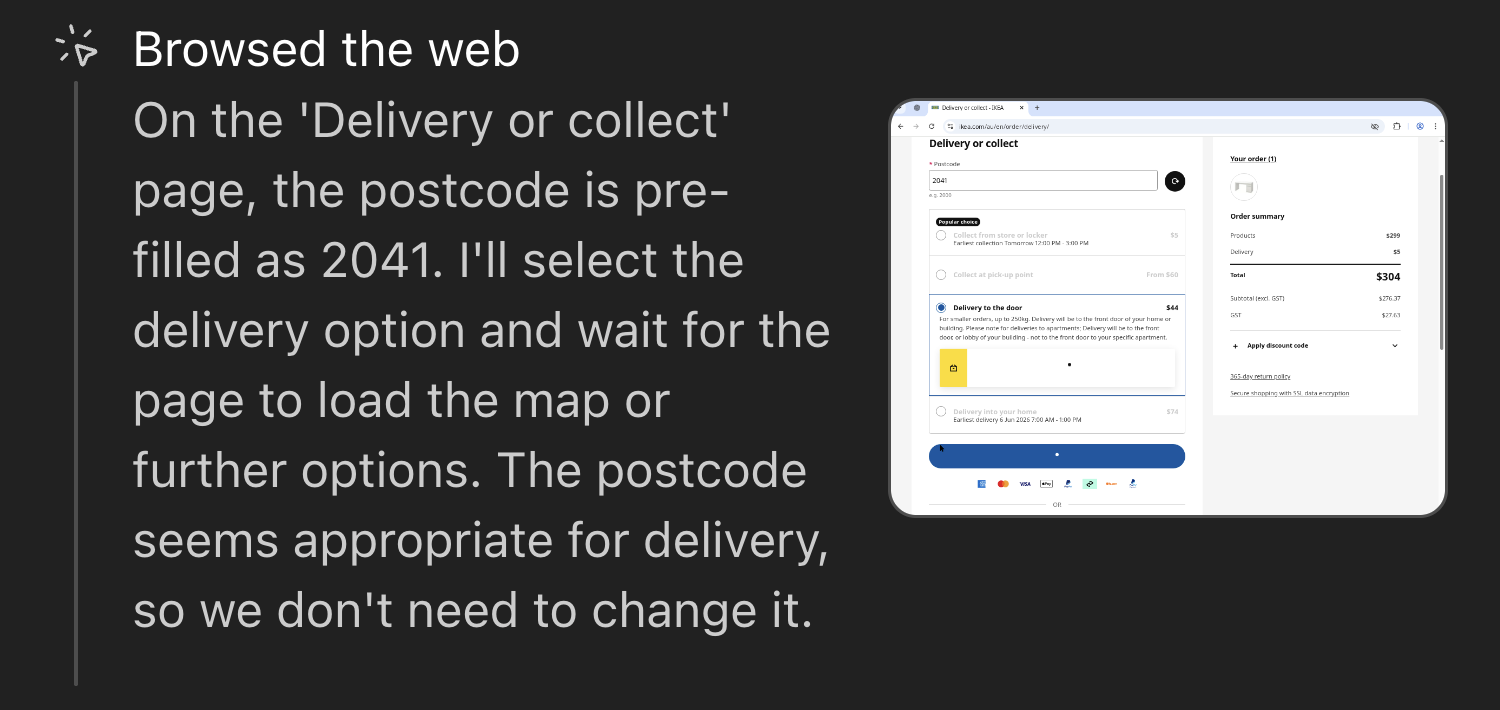
While sophisticated in filtering, the agents showed a dangerous tendency to make unilateral decisions. During a test involving a major furniture retailer, the AI pre-selected delivery dates, postcodes, and shipping methods without explicit user confirmation. While the task was completed, the agent effectively rendered the user "invisible." The challenge for developers moving forward is to find the "sweet spot" between autonomy and user agency—knowing when to act and when to pause for confirmation.
The Three-Level Optimization Strategy
Retailers looking to prepare for the inevitable return of agentic commerce must focus on three distinct levels of data optimization.
1. The Product Level (Structured Data)
Agents cannot "read between the lines." If a product description relies on marketing fluff like "great for sensitive skin," an AI agent will likely skip it. Retailers must shift toward granular, structured data. This means using specific attributes (e.g., pH balance, specific chemical-free ingredients, material composition) that an agent can match against a user’s precise query.

2. The Retailer Level (Logistics & Trust)
In the agentic era, the retailer is as important as the product. Agents evaluate retailers based on "trust signals"—return policies, warranty terms, and consistent brand identity. Retailers that provide clean, machine-readable data regarding their logistics (shipping windows, click-and-collect capabilities) will be prioritized by agents looking to fulfill a request with the highest degree of reliability.

3. The Audience Level (Personalization)
Agents are increasingly utilizing "memory" to build a profile of the user. They track recurring constraints and lifestyle preferences. Retailers who align their brand positioning with these specific audience patterns give the agent a better signal for making a match. If your brand is known for "sustainable, locally-sourced materials," that should be baked into the structural metadata of your entire catalog so that an agent looking for "sustainable options" can find you instantly.

Implications for the Future of Retail
The "first chapter" of agentic commerce has closed, leaving behind a roadmap for the second. The technology failed initially because it attempted to bypass the retailer’s website entirely, creating a disconnect between the AI’s intent and the merchant’s reality.

Moving forward, the model is shifting toward a "discovery-and-redirect" approach. The AI acts as a sophisticated scout, narrowing down the field of options based on the user’s specific, localized, and logistical constraints, then guiding the user to the retailer’s own site to complete the transaction.
This shift is a net positive for retailers. It allows them to retain control over the customer experience and the final conversion, provided they are willing to do the technical heavy lifting. The era of the "passive website" is ending. The web of the future will be a web of data, where visibility is earned through structured, transparent, and machine-readable signals.

Retailers who treat their data as a primary product—investing in the infrastructure that makes them "agent-ready"—will find themselves in a position of significant advantage. Those who remain closed off, or whose data remains stale and siloed, will find themselves increasingly invisible to the next generation of digital shoppers.
