

The New Frontier of Social Commerce: How TikTok Shop and Popunder Traffic are Redefining Affiliate ROI
The digital commerce landscape is undergoing a profound transformation, moving away from traditional search-engine-driven acquisition toward the frictionless, creator-led world of "social commerce." At the heart of this shift is TikTok Shop, a platform that has rapidly integrated the discovery, consideration, and transaction phases of the consumer journey into a single, seamless in-app experience.
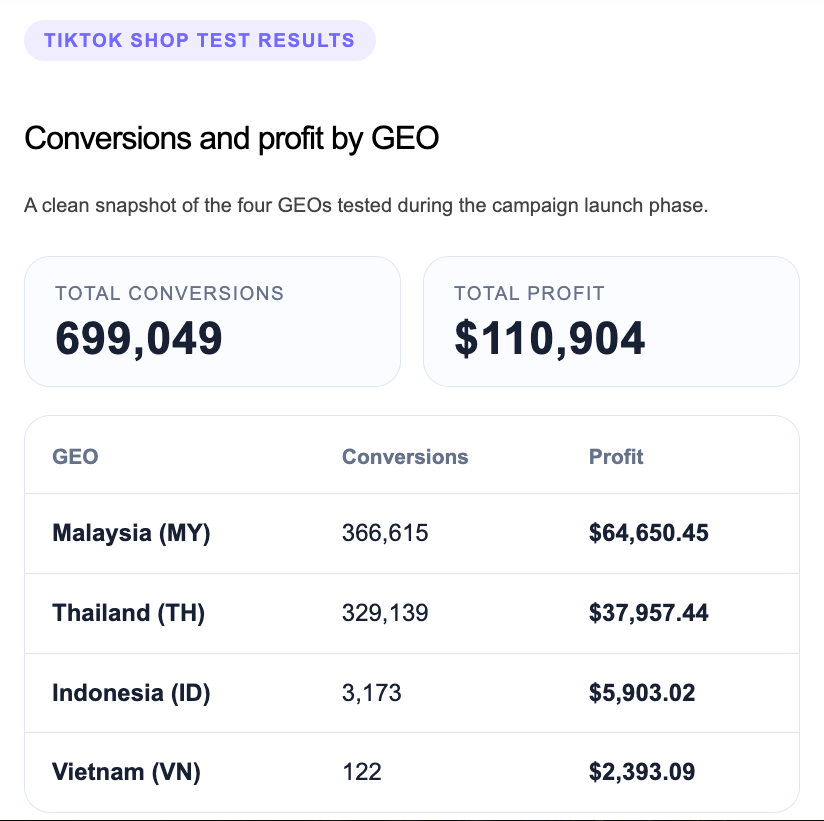
Recent data has highlighted just how lucrative this ecosystem can be for performance marketers. A groundbreaking case study released by PropellerAds has revealed that by leveraging non-traditional traffic sources—specifically Popunder advertising—affiliates can achieve massive scale. During Q1 2026, one savvy advertiser utilized this strategy to generate over 699,000 conversions and secure a total profit exceeding $110,000.
This article delves into the mechanics of this high-performance strategy, the implications for the future of ecommerce, and how affiliates can replicate these results in the rapidly expanding Asian markets.
The Genesis of the Strategy: Data-Driven Performance
The success of the aforementioned campaign was not the result of guesswork but rather a disciplined, data-first approach. TikTok Shop’s dominance in Southeast Asian markets, such as Malaysia, Indonesia, Thailand, and Vietnam, stems from the region’s high mobile penetration and an cultural inclination toward social discovery.
The advertiser in the PropellerAds study began with a "Run-On-Network" (RON) approach. Instead of attempting to pinpoint the perfect audience segment on day one, the strategy focused on broad, horizontal testing. By casting a wide net across these diverse Asian GEOs, the advertiser was able to collect critical conversion signals across varying device types, operating systems, and user demographics.
The Chronology of Optimization
The campaign followed a clear, three-phase trajectory:
- Phase One: Broad Network Testing: The advertiser deployed ads across the entire PropellerAds network. The goal here was not immediate profit, but the acquisition of high-quality data. By allowing the algorithms to track which sources were yielding the highest engagement, the campaign laid the groundwork for future efficiency.
- Phase Two: The Pivot to High Intent: Once sufficient data was harvested, the team moved away from broad targeting. They filtered out low-converting traffic sources and focused budget on high-intent publishers. During this phase, they pivoted from general CPM (Cost Per Mille) bidding to CPA (Cost Per Action) goals, ensuring that spend was directly tied to actual shop conversions.
- Phase Three: Regional Dominance: The campaign narrowed its focus to top-performing GEOs—specifically Malaysia and Thailand—where the cost-per-acquisition (CPA) reached its most efficient levels, ranging from as low as $0.04 to $0.20 per conversion.
Supporting Data: The Power of Targeted GEOs
The efficiency of this campaign was largely driven by the specific traffic formats employed. While social media is often the default choice for TikTok-related offers, the study proved that "alternative" traffic sources like Popunder and High-Intent CPM are significantly undervalued.
| Campaign GEO | Traffic Method | Key Performance Indicator |
|---|---|---|
| Malaysia | Popunder | High Click-Through Rate (CTR) |
| Thailand | CPA Goal | Lowest Cost-Per-Acquisition |
| Indonesia | SmartCPM | High Conversion Volume |
| Vietnam | High Intent CPM | High Purchase Intent |
With conversion rates peaking at 10% in top regions, the study illustrates a critical lesson: when you reduce the friction between "seeing" a product and "buying" it, the conversion rate climbs exponentially. TikTok Shop achieves this by keeping the user within the ecosystem, removing the need for external landing pages that often suffer from load-time abandonment.
Why TikTok Shop is a Game-Changer for Affiliates
The shift toward TikTok Shop is not merely a trend; it is a fundamental change in consumer psychology. In traditional ecommerce, the path to purchase involves multiple touchpoints: an ad, a landing page, a shopping cart, and a checkout portal. Each step is a point of potential drop-off.
TikTok Shop compresses this journey. By utilizing product tags within video content, the platform allows users to complete a purchase without ever leaving the app. For affiliates, this is a massive advantage.
The Frictionless Advantage
- Impulse Purchasing: Categories such as beauty, fashion, gadgets, and lifestyle products thrive on impulse. The ability to click a tag and buy in two taps aligns perfectly with these niches.
- Trust and Social Proof: Users are more likely to purchase items that are being showcased by creators they trust. The affiliate doesn’t just sell a product; they provide a demonstration.
- Alternative Traffic Scaling: The study highlights that affiliates should not limit themselves to Facebook or Google Ads. Formats like Popunder reach audiences that are not currently being bombarded by social media ads, effectively tapping into an "untapped" segment of the market.
Implications for the Future of Performance Marketing
The results reported in Q1 2026 suggest that the affiliate marketing industry is entering a new era. The focus is shifting away from "brand building" and toward "conversion facilitation."
Strategic Takeaways for Affiliates
If you are an affiliate looking to scale your ecommerce efforts, the following lessons from the PropellerAds case study are essential:
- Prioritize the "Shop" Experience: If you are running offers, ensure they link directly to an integrated social shop where possible. The easier it is for the user to buy, the higher your commission.
- Don’t Ignore "Secondary" Traffic Sources: Many affiliates overlook Popunder, Push, or Interstitial ads, assuming they are low-quality. However, when managed with sophisticated bidding tools (like SmartCPM), these sources can provide the volume needed to scale a campaign far faster than social algorithms.
- Test Broadly, Optimize Aggressively: The "Broad to Narrow" funnel remains the gold standard. Use your initial budget to identify the "low-hanging fruit" and then move your budget aggressively toward the GEOs and traffic sources that convert.
- Leverage Localized Content: The Asian market is not a monolith. The most successful campaigns in the study were those that understood the cultural nuances of individual countries, using localized creatives that resonated with the specific shopping behaviors of each region.
The Professional Outlook: A New Paradigm
As digital retail continues to evolve, the distinction between content and commerce will continue to blur. For the affiliate marketer, this represents a unique window of opportunity. The ability to bridge the gap between high-volume, cost-effective traffic sources and the high-conversion environment of TikTok Shop is the new "holy grail" of performance marketing.
Platforms like PropellerAds are increasingly positioning themselves as the infrastructure for this new model, providing the necessary tools for marketers to optimize their spend in real-time. Whether it is through AI-driven bidding or granular audience filtering, the ability to control the variables of a campaign has never been more important.
In conclusion, the case study serves as a masterclass in modern digital commerce. By combining the social discovery power of TikTok with the reach of broad-spectrum traffic networks, advertisers can bypass the traditional hurdles of the digital funnel. As we look toward the remainder of 2026 and beyond, those who master the art of the frictionless, social-integrated sale will undoubtedly lead the market.
About the Author:
Bogdan Rancea is the co-founder of Ecommerce-Platforms.com and lead curator of ecomm.design. With over 12 years of experience in the digital commerce space, he provides actionable insights into the platforms and technologies driving the future of online retail. His work focuses on the intersection of user experience, conversion rate optimization, and the emerging tools that empower store owners to succeed in a crowded global marketplace.
