
The New Digital Frontier: Why LLM Ranking is the Next SEO Revolution
Large Language Models (LLMs) have transcended the "tech buzzword" phase. They are no longer mere experimental chatbots; they are the primary interfaces through which a growing segment of the global population discovers information, researches services, and makes high-stakes purchasing decisions. If traditional Google Search was the static map of the internet, LLMs act as intelligent, conversational tour guides—synthesizing data, recommending products, and effectively pushing traditional blue-link search results into the digital periphery.
For brands, the implications are profound: "LLM Rankings"—the measure of your brand’s visibility within AI-generated responses—have become the most critical metric for modern digital survival. If you are not monitoring how your brand is cited (or ignored) by AI assistants, you are likely losing market share to competitors without ever seeing the battle take place.
The Evolution of Search: From Keywords to Conversations
To understand the urgency, one must look at the chronology of digital discovery. In the early 2000s, Search Engine Optimization (SEO) was the wild west. Brands that mastered the art of keyword density and backlink profiles dominated the landscape. As Google matured, it introduced complex algorithms (RankBrain, BERT, MUM) designed to understand intent rather than just matching text.
Today, we are witnessing a paradigm shift. The "Search Results Page" (SERP) is being cannibalized by "Answer Engines." Platforms like OpenAI’s ChatGPT, Google’s Gemini, Anthropic’s Claude, and Perplexity are providing direct, definitive answers to complex queries.
In this new ecosystem, a brand’s visibility is not determined by how many people click a blue link, but by whether the AI model selects your brand as a "source of truth." When a user asks, "What is the best CRM software for a mid-sized marketing agency?" they are no longer presented with a list of ten websites. They are presented with a curated recommendation. If your brand isn’t in that answer, you haven’t just lost a click—you’ve lost a highly qualified lead to whoever is.
The "Big Four" and the Fragmentation of Discovery
While the industry often focuses on OpenAI, the reality is that the AI landscape is becoming increasingly fragmented. Consumer preference is split across four major platforms, each with its own underlying logic and training data:
- OpenAI (ChatGPT): The market leader in general intelligence, heavily integrated into workflows and third-party applications.
- Google (Gemini): Leveraging its massive repository of real-time search data to power its AI-driven search experience.
- Anthropic (Claude): Favored for its nuanced reasoning and large context windows, becoming the go-to for professional and research-heavy tasks.
- Perplexity: The "answer engine" that prioritizes real-time citations, effectively acting as a bridge between traditional search and generative AI.
The challenge for brands is that these models do not all reach the same conclusions. Just as a user might prefer a specific restaurant, they now have a preferred "AI personality." Because you cannot assume your audience’s tool of choice, you must ensure brand presence across the entire spectrum. Ignoring this is akin to ignoring the rise of mobile browsing in 2010; you can opt out, but you will eventually find yourself irrelevant to the mobile-first (or in this case, AI-first) user.
Decoding the Mechanics: How LLM Rankings Work
Unlike traditional SEO, which relies on Google Search Console to provide data, there is currently no "LLM Search Console." Tracking these rankings requires a sophisticated, systematic approach involving API-based monitoring.
The Anatomy of an AI Query
AI rankings are governed by a combination of the model’s training data, its current "weights," and the specific "prompt" provided by the user. To measure performance, brands must:
- Define the Query Set: Create a comprehensive list of high-intent prompts that your target audience is likely to use.
- API-Driven Testing: Use current versions of models (e.g., GPT-4o, Claude 3.5 Sonnet) via API to generate consistent, repeatable results.
- Sentiment and Attribution Analysis: It is not enough to simply be mentioned. Is your brand being recommended as the "best" or the "cheapest"? Is the sentiment positive, neutral, or negative?
Why API Access is Mandatory
Generic web-based chat interfaces are insufficient for data collection. They are personalized, often biased by history, and impossible to scale. Only by using API calls can you ensure a clean, "incognito-style" testing environment that provides a consistent snapshot of how the model perceives your brand against the competition.
The Strategic Imperative: Why You Should Care Now
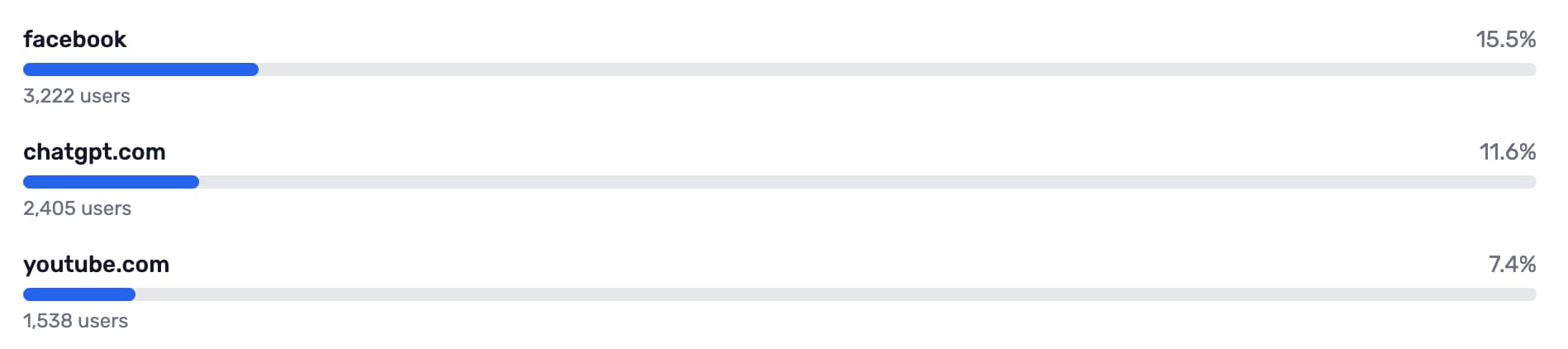
The data suggests that AI-driven discovery is not a fringe activity. Current estimates indicate that LLM-driven traffic accounts for 10–13% of total inbound visits for digitally native brands. However, the volume is less important than the intent quality.
Because users interacting with LLMs are typically in the middle-to-bottom of the sales funnel—asking specific questions like "Which software has the best integration for Salesforce?"—the conversion rate of a lead sourced from an AI recommendation is significantly higher than that of a random organic search visitor.
The Cost of Inaction
If we quantify the process, the "math" of AI visibility becomes clear. If a brand tracks 1,000 keyword-driven prompts across four models with multiple variations, the cost of API calls, data storage, and the inevitable manual review of "hallucinations" or biased outputs represents a new, non-negotiable marketing expenditure. However, the cost of not doing this—the opportunity cost of losing high-intent customers—is exponentially higher.
Toward AIO (AI Optimization)
Once you have gathered the data, the focus shifts from observation to influence. This is the dawn of AIO (AI Optimization). Unlike traditional SEO, which focuses on meta-tags and link-building, AIO focuses on:
- Content Authority: Ensuring your brand’s technical documentation and unique value propositions are clearly articulated in high-authority, crawlable formats.
- Direct Citations: Improving the likelihood of being cited by providing structured, data-rich content that AI models find easy to synthesize.
- Addressing Negatives: If an LLM consistently describes your product as "overpriced," you now have a roadmap to refine your messaging across your own digital properties to shift that perception.
At platforms like Growth OS, we have developed proprietary mathematical formulas to decode these outputs. By identifying exactly which modifiers and contextual elements trigger a recommendation, brands can move from being passive participants in the AI ecosystem to active influencers.
Conclusion: The New Battleground
The history of the internet is a history of changing discovery methods. We moved from web directories to search engines, and now we are moving to answer engines. The brands that win in this new era will be those that treat AI assistants not as black boxes, but as manageable channels.
LLM rankings are the new frontier of digital visibility. They are the ultimate "first point of contact." Brands that begin the process of tracking, analyzing, and optimizing their presence within these models today will own the conversation tomorrow. Those who remain tethered to the traditional SEO model, hoping that blue-link traffic will remain the primary driver of growth, are destined to watch their visibility evaporate as their customers move their search queries to the chat box.
The era of AI optimization is here. The question is no longer whether your brand is on the map, but whether you are the tour guide.
