
Precision Engagement: How Advanced Targeting is Transforming On-Site Surveys and CTAs
In the hyper-competitive landscape of digital commerce, the ability to deliver the right message to the right person at the exact right moment is the holy grail of conversion optimization. Historically, website owners have relied on broad-spectrum messaging, hoping that a single call-to-action (CTA) or survey would resonate with a diverse, multifaceted audience. However, as of October 2026, the paradigm of on-site interaction has shifted.
Crazy Egg has officially announced the rollout of advanced audience targeting for its Popup Surveys and CTA tools. By integrating the same granular targeting filters previously reserved for high-stakes A/B testing, the platform is empowering marketers to move away from "one-size-fits-all" messaging in favor of highly personalized, data-driven user experiences.
The Evolution of On-Site Communication
For years, Popup Surveys and CTAs served as the workhorses of digital marketing. They were designed for convenience—a way to capture feedback or drive conversions without requiring a developer to overhaul site architecture or launch a complex A/B test. Yet, their simplicity was also their limitation.
Previously, targeting options were restricted to basic parameters: device type, specific URL paths, and elementary on-page behaviors such as scroll depth, time on page, or exit intent. While effective for general engagement, these metrics often lacked the context necessary to distinguish between a first-time visitor from a social media ad and a returning customer arriving via an email campaign.
The new update bridges this gap. By unlocking the full suite of A/B testing audience filters for these tools, Crazy Egg allows businesses to segment their traffic with clinical precision.
Chronology: A Shift Toward Hyper-Personalization
The progression toward this update began with the increasing demand from B2B and e-commerce leaders for more nuanced user journeys.
- Phase 1 (The Foundation): Early implementation of on-site triggers allowed for basic engagement based on page movement and simple session data.
- Phase 2 (The Behavioral Layer): Integration of behavioral triggers, such as "time on page" and "exit intent," provided better control over when a popup appeared, but not necessarily to whom.
- Phase 3 (The Current Integration): As of October 16, 2026, the "Audience" settings for Surveys and CTAs now reflect the full spectrum of demographic and acquisition data. This marks a departure from static site-wide displays to dynamic, segment-specific interactions.
This evolution mirrors the broader industry trend of "Zero-Party Data" collection, where brands are increasingly prioritizing the acquisition of information shared intentionally by users through surveys rather than relying solely on third-party tracking cookies.
Supporting Data: Why Segmented Targeting Matters
The necessity for this level of control is backed by consistent industry data regarding user fatigue and conversion efficacy. According to recent marketing performance benchmarks, visitors who receive highly personalized, relevant prompts are significantly more likely to complete a conversion action than those subjected to generic site-wide banners.
The Impact of Contextual Targeting
- Relevance = Retention: When a user arrives from a specific UTM source—such as an email campaign—they are looking for continuity. If your CTA matches the messaging of that email, conversion rates typically climb by 20% to 40%.
- Reducing Friction: By excluding returning customers from a "Sign Up for Our Newsletter" popup (because they have already signed up), companies can reduce site friction and improve the overall brand perception.
- Geographic Sensitivity: Targeting by country allows businesses to display region-specific offers, pricing, or currency disclosures, ensuring compliance and maximizing relevance.
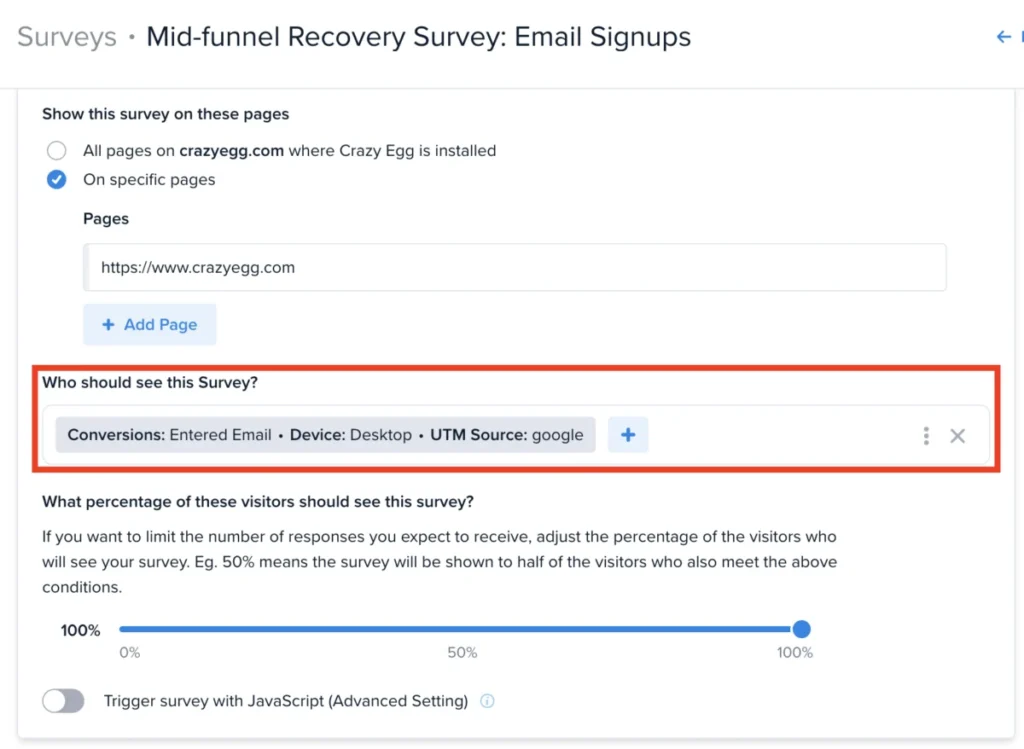
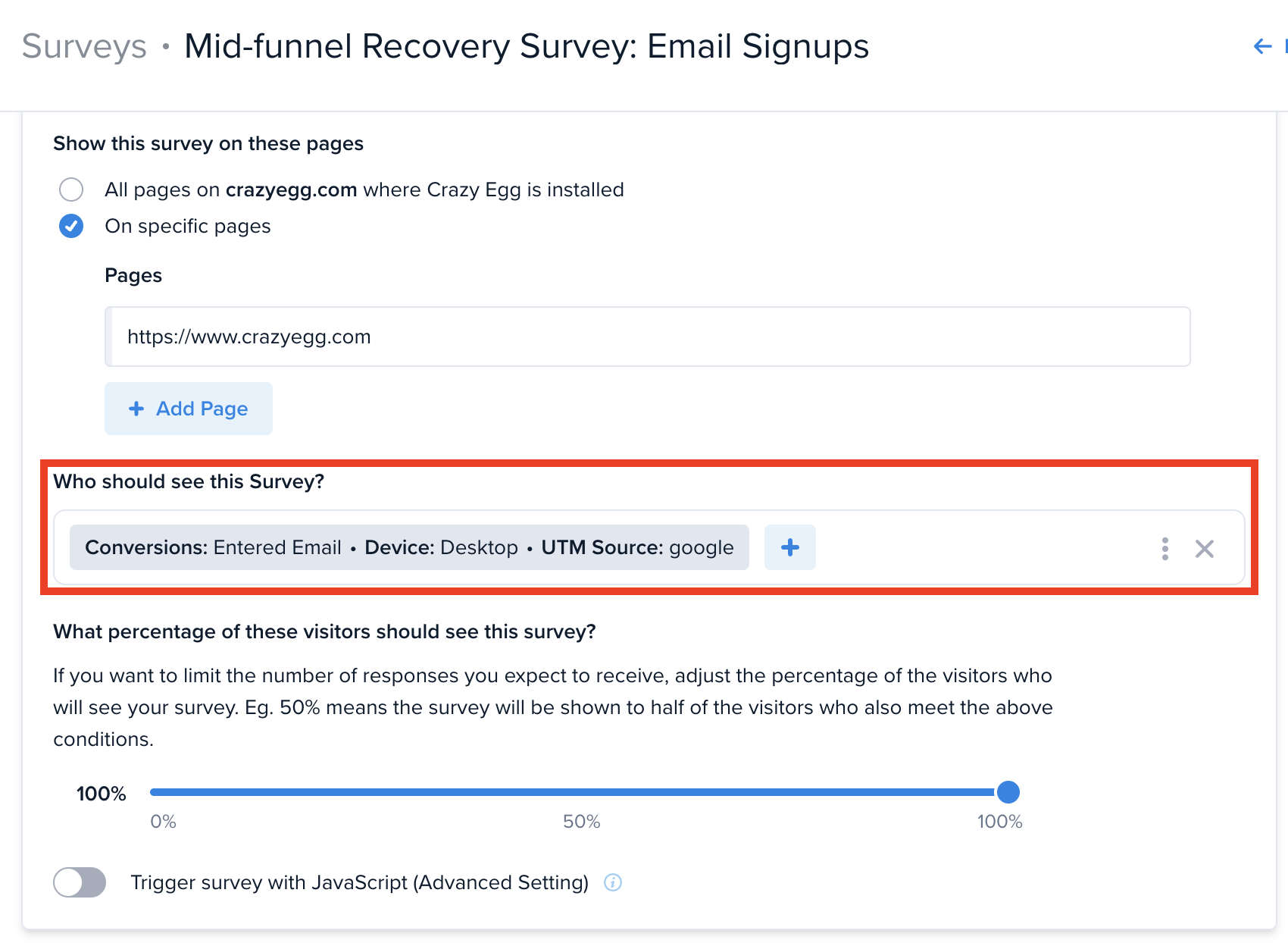
By leveraging these new filters, users can now create "AND/OR" logic scenarios. For instance, you can display a special survey only to visitors who:
- Are returning users,
- Arrived via a specific paid UTM campaign,
- And are located in a specific region.
Official Perspective: The Growth Strategy
Stephen Ngo, Director of Growth Marketing at Crazy Egg, emphasizes that this update is a direct response to the sophisticated needs of modern growth teams. "We wanted to ensure that our users could do more than just broadcast messages," Ngo noted in the company’s recent update. "We wanted to enable them to hold conversations with their specific customer segments."

The philosophy behind this update is rooted in the idea that a website is a living, breathing digital storefront. Just as a shop clerk would interact differently with a first-time browser versus a frequent buyer, a website should have the intelligence to recognize those nuances and adapt its tone and call-to-action accordingly.
Implications: The Future of Conversion Rate Optimization (CRO)
The implications of this update for digital marketers are profound.
1. The Demise of the Generic Popup
The "annoying" popup has long been a complaint of internet users. However, most popups are only annoying because they are irrelevant. By utilizing these new targeting tools, brands can finally solve the "irrelevance problem." If a popup is only shown to a user who has expressed interest in a specific product category via their UTM tags, that popup becomes a value-add rather than an obstacle.
2. Streamlined Testing Workflows
Previously, to test if a different offer resonated with a specific audience, a marketer might have needed to create a complex A/B test. Now, one can simply set up two separate, targeted CTAs. This allows for a more agile, "always-on" approach to experimentation. You can continuously optimize your messaging, headlines, and offers for distinct segments without the setup time associated with formal testing environments.
3. Deeper Insights Through Targeted Surveys
Surveys are most effective when the questions asked are relevant to the user’s experience. Asking a new visitor "How likely are you to recommend us?" is often premature. Asking that same question to a customer who has made three purchases in the last month, however, provides high-quality Net Promoter Score (NPS) data. With this new update, these surveys can be automated to trigger only after a user meets specific "returning" or "conversion" criteria.
How to Implement Advanced Targeting
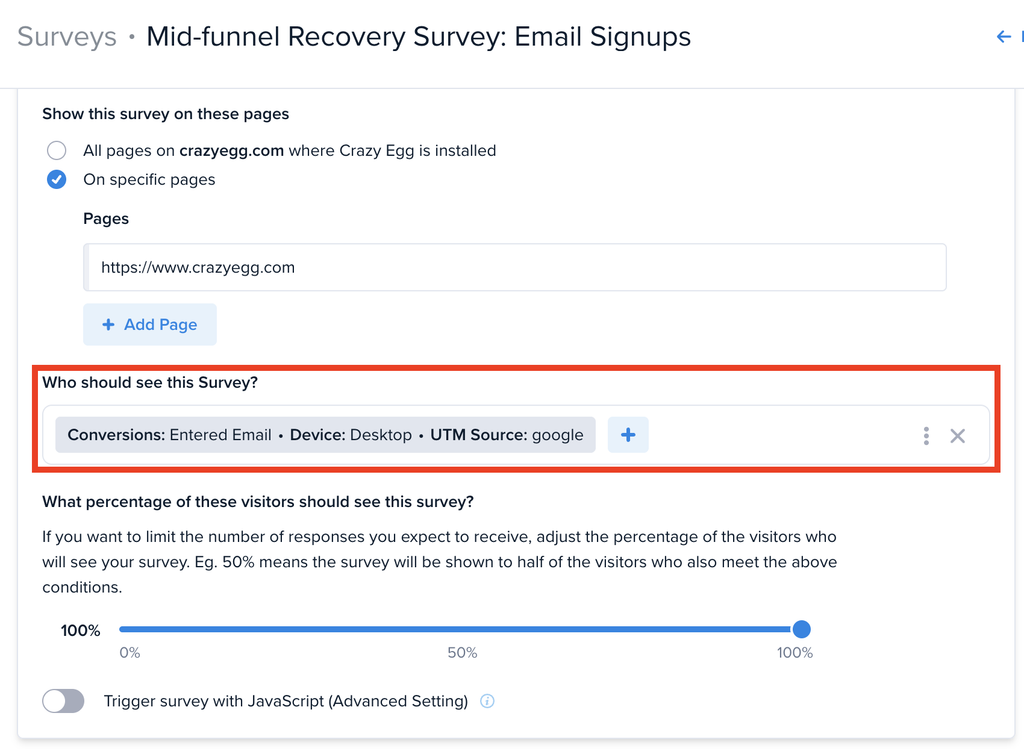
To access these features, users should navigate to the "Settings" tab of any active Survey or CTA within the Crazy Egg dashboard. Within the "Audience" section, you will find the prompt: "Who should see this Survey/CTA?"
From there, you can layer the following filters:
- Traffic Source: Filter by direct, organic, or specific UTM parameters.
- New vs. Returning: Create a distinct experience for first-time visitors versus loyal brand advocates.
- Conversion Status: Ensure you aren’t wasting real estate by showing CTAs to users who have already converted.
- Geographic Data: Tailor messaging for specific countries or regions.
The flexibility of the "AND/OR" logic allows for an infinite variety of combinations, making it possible to create highly specific segments that feel personal and thoughtful.
Conclusion: A New Standard for User Experience
The integration of advanced audience targeting into standard on-site tools represents a maturation of the digital marketing toolkit. As privacy regulations continue to evolve and user attention spans continue to shrink, the "blunt instrument" approach to marketing is no longer viable.
By enabling businesses to treat their visitors as individuals with distinct histories and needs, Crazy Egg is setting a new standard for how companies interact with their audience. The result is not just higher conversion rates, but a cleaner, more respectful, and more intuitive user experience. For growth-focused teams, the path forward is clear: stop broadcasting to the masses and start conversing with the individual.
