
The Intelligence Revolution: How AI is Transforming Social Listening in 2026
In the hyper-connected digital landscape of 2026, the volume of data generated by social media users has surpassed the capacity for human analysis. For modern enterprises, the ability to discern brand sentiment and market trends from this deluge of content is no longer a competitive advantage—it is a baseline requirement for survival. Enter AI-powered social listening: a transformative technological shift that has moved beyond simple keyword tracking to become a sophisticated, predictive engine for business strategy.

The Evolution of Listening: From Keywords to Cognitive Analysis
Social listening, at its core, is the process of monitoring digital channels for mentions of specific topics, brands, or competitors. However, the methodology has undergone a seismic shift. Traditional social listening tools were largely reactive, relying on Boolean search strings and exact keyword matches. If a user did not use your brand name explicitly, the data was effectively invisible.

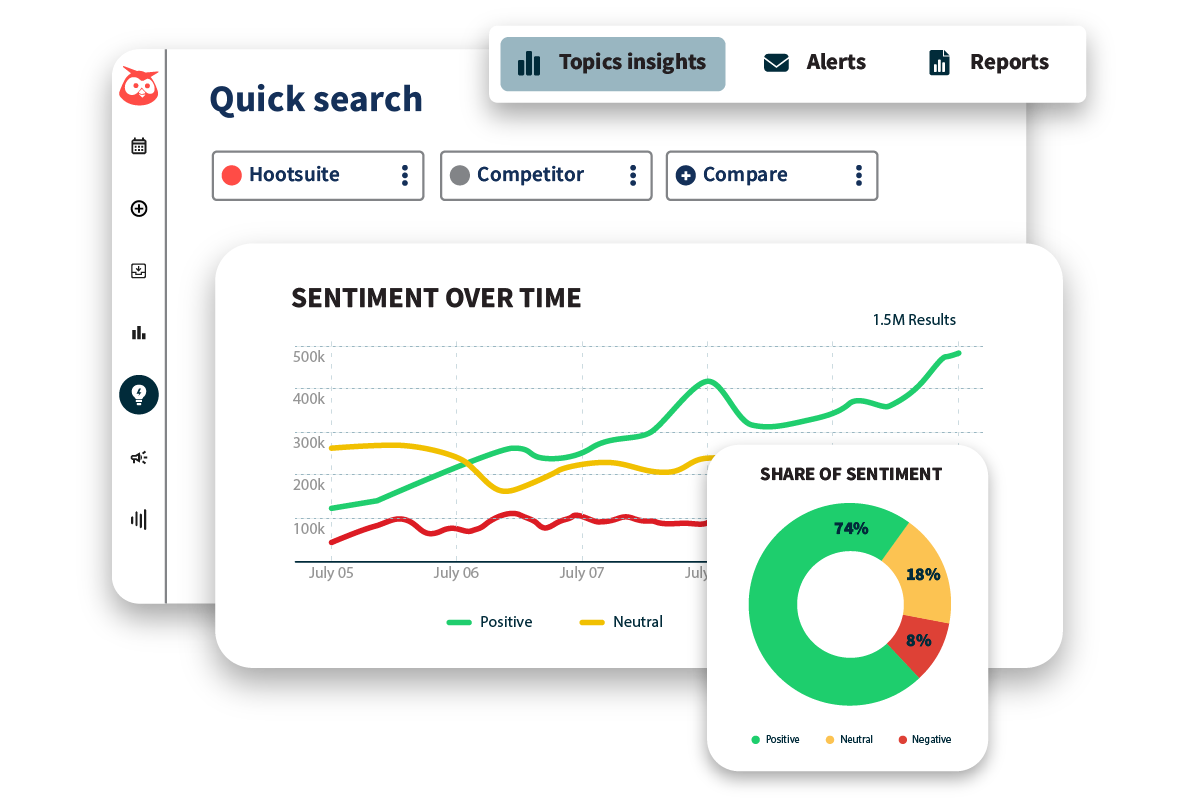
In 2026, AI-driven platforms have rewritten this script. By leveraging advanced Natural Language Processing (NLP), these tools can now interpret context, nuance, irony, and even regional slang. They don’t just count mentions; they synthesize meaning. According to recent industry data, 83% of B2C marketing executives are now integrating AI-powered social suites into their workflows to consolidate data and gain a unified view of the consumer.
Chronology of a Shift
The progression from basic monitoring to AI-driven intelligence has followed a distinct timeline:
- The Keyword Era (Pre-2020): Brands tracked hashtags and company names. Analysis was manual, slow, and prone to significant data gaps.
- The Sentiment Era (2020–2023): Introduction of basic positive/negative sentiment scoring. This allowed for rudimentary brand health checks but often failed to distinguish between sarcasm and genuine praise.
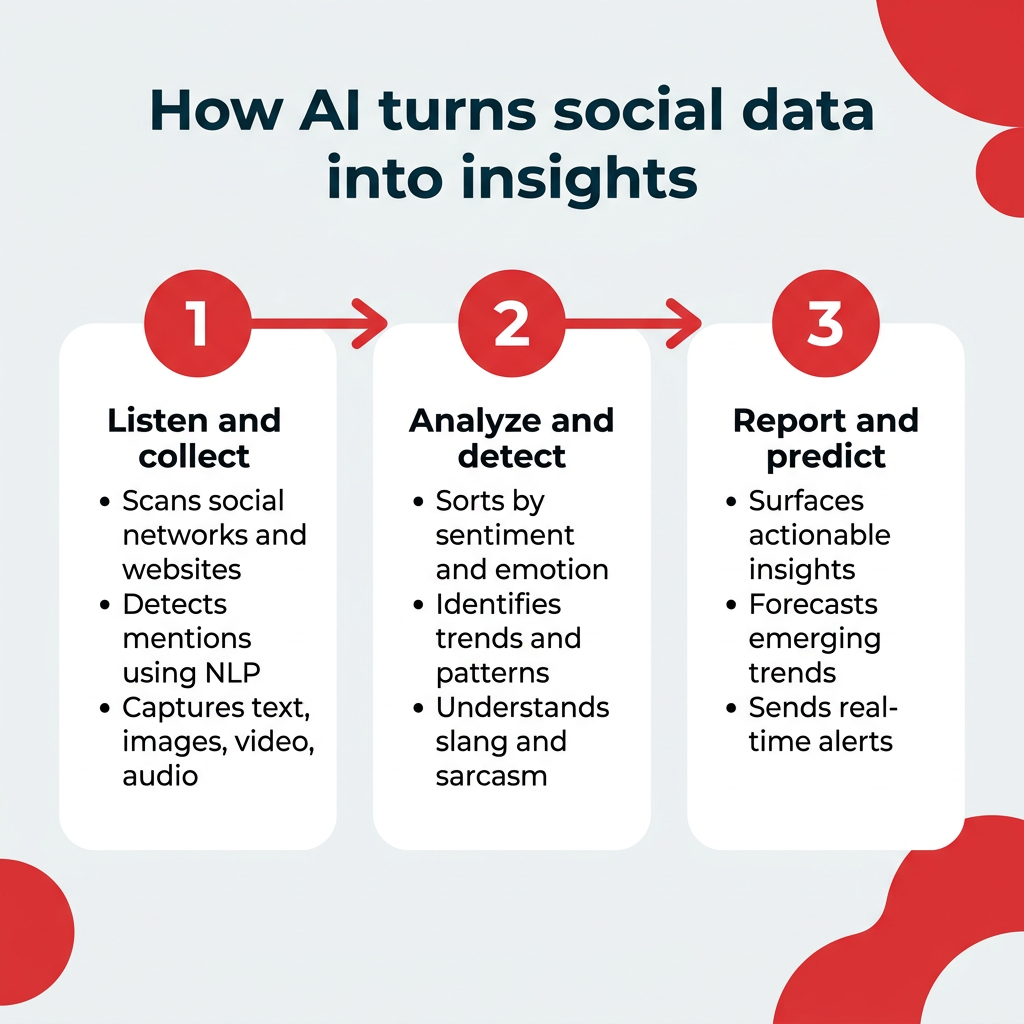
- The Cognitive Era (2024–Present): AI systems now utilize visual listening (object/logo detection), predictive analytics, and emotional nuance detection to offer a holistic, real-time view of market sentiment.
Supporting Data: Why Efficiency is the Primary Driver
The primary catalyst for this shift is the constant pressure on marketing budgets and the mandate for operational efficiency. Gartner’s 2025 CMO Spend Survey revealed that 49% of marketing leaders cite improved time efficiency as the top ROI driver for Generative AI.

When comparing traditional tools against modern AI-powered suites, the performance gap is stark:
| Feature | Traditional Listening | AI-Powered Listening |
|---|---|---|
| Data Scope | Exact keywords only | Contextual/Intent-based |
| Sentiment | Basic Pos/Neg scoring | Emotion & Sarcasm detection |
| Response Speed | Reactive (after a spike) | Proactive (predictive signals) |
| Multimedia | Text-heavy only | Video, Audio, & Image recognition |
| Scalability | Limited to 1–2 languages | Global/Multilingual at scale |
Strategic Implications: Moving Beyond the "Noise"
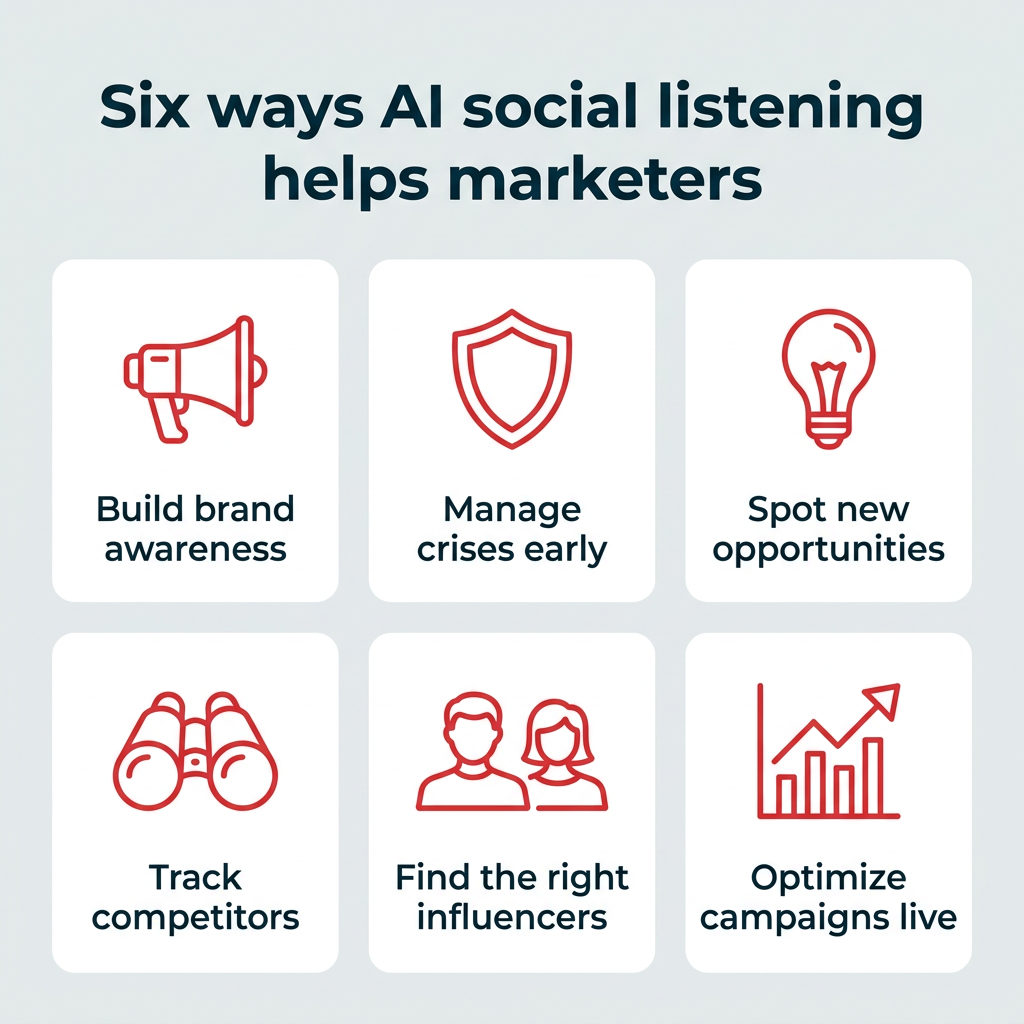
The transition to AI social listening has profound implications for how companies structure their marketing and product teams. The "noise" of the internet is no longer an obstacle; it is a source of proprietary intelligence.

1. Proactive Crisis Management
Modern AI platforms act as early warning systems. By monitoring for anomalies—such as an uncharacteristic spike in negative sentiment or the sudden association of a brand with a controversial topic—these tools alert communication teams before a minor social media complaint spirals into a full-scale public relations crisis.
2. Product Development and Market Gaps
By analyzing thousands of customer conversations, AI can identify patterns in pain points that aren’t being addressed by competitors. Whether it’s a desire for more sustainable packaging or a request for a specific software feature, these insights allow for data-backed innovation that reduces the risk of failed product launches.
3. Precision Influencer Marketing
AI tools have moved beyond tracking follower counts. They now analyze the impact of influencers by gauging their relevance to specific topics and the emotional resonance of their content with their audience. This ensures that brand partnerships are not just high-reach, but high-conversion.

Case Study: The NBA’s Slam Dunk in Engagement
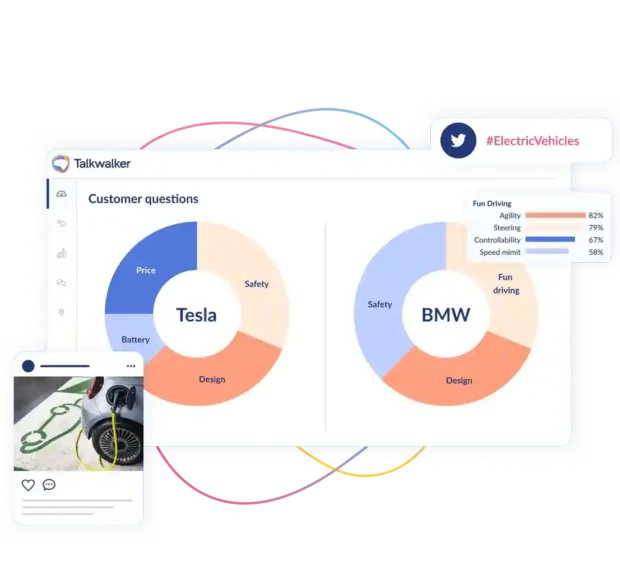
The tangible business impact of AI-driven intelligence is best illustrated by the experience of professional sports organizations. An NBA team recently pivoted its social media strategy by deploying Talkwalker by Hootsuite to analyze fan sentiment.

The AI identified that fans were fatigued by repurposed video clips and were actively craving original, behind-the-scenes content. By adjusting their content mix to 50–80% original footage, the team saw a 352% increase in video views season-over-season and a 46% growth in overall impressions. This is the definitive example of AI turning "social noise" into a bottom-line revenue driver.
The Future: Predictive Analytics and Beyond
As we look toward the remainder of 2026 and beyond, the next frontier for social listening is predictive forecasting. Rather than just reporting on what happened yesterday, the most advanced AI models are beginning to forecast market trends weeks in advance.

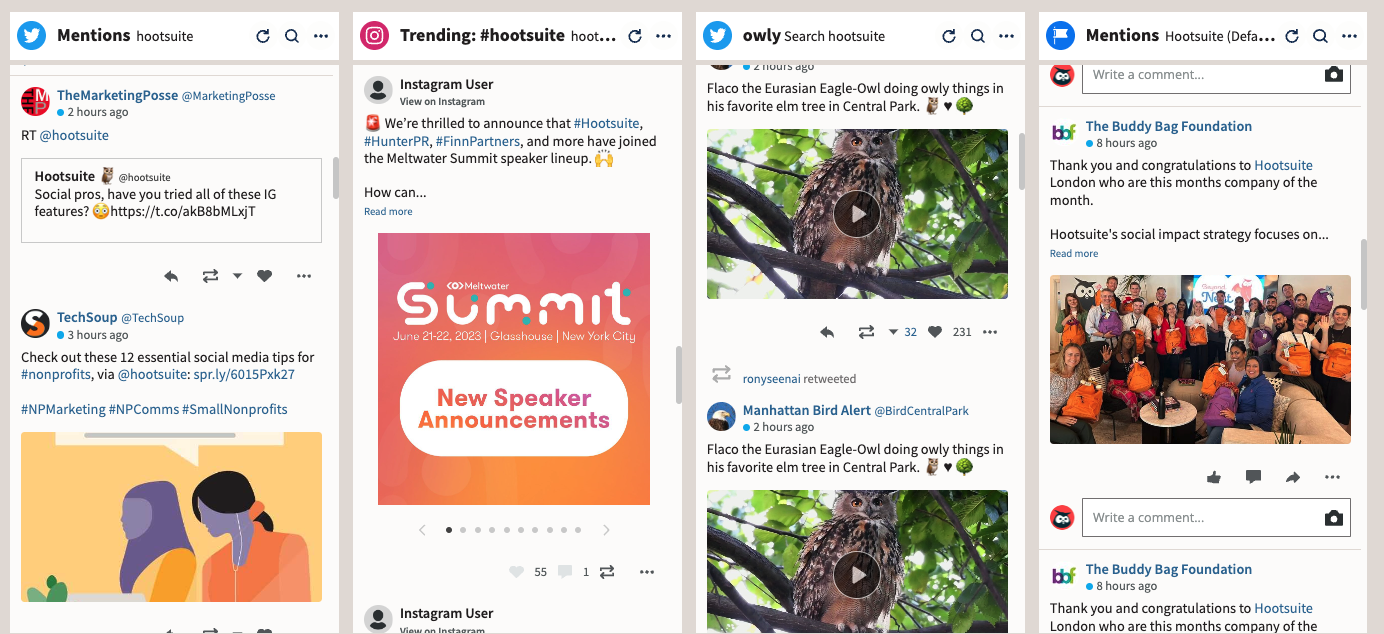
Brands like Brandwatch, Sprinklr, and YouScan are pushing the boundaries of visual AI, allowing companies to see their products being used in real-world environments—from street-style photography to user-generated reviews—without a single word of text ever being typed.

Conclusion: Selecting the Right Tool for the Enterprise
For the enterprise buyer, the selection of an AI social listening tool must be based on a rigorous evaluation of the tech stack and organizational needs. Key criteria should include:

- Data Breadth: Does the tool monitor the platforms where your specific audience hangs out (including niche forums and emerging apps)?
- Integration Capabilities: Can the tool feed insights directly into your existing CRM or customer support dashboards?
- Visual/Audio Intelligence: Can the software detect your logo in video or recognize spoken mentions in podcasts?
- Ease of Use: Is there a steep learning curve, or does the tool offer intuitive interfaces like the AI Query Builders found in platforms like Hootsuite?
The era of manual social monitoring is over. Today, intelligence is about consolidation—bringing listening, scheduling, publishing, and analytics under one umbrella. As marketing budgets flatten, the winners in this space will be the organizations that stop guessing what their customers want and start listening with the precision and speed that only AI can provide.

By integrating these advanced tools into your daily workflow, you aren’t just managing social media; you are capturing the pulse of the market in real-time, ensuring that your brand stays relevant in an increasingly crowded and noisy digital world.
